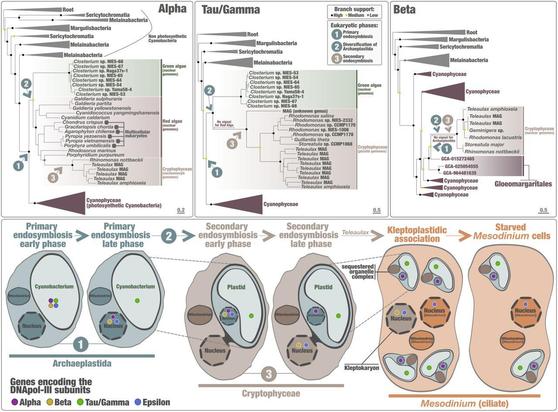
New #ISEPpapers #preprint by @DEEMteam: Re-evaluating the eukaryotic #TreeOfLife with independent phylogenomic data https://www.biorxiv.org/content/10.64898/2026.04.08.717153v1.abstract

"analyses confirm most eukaryotic supergroups previously observed, but suggest different positions for some lineages. Notably, Telonemia clusters with Haptophyta rather than SAR, and Ancyromonadida and Malawimonadida form a monophyletic group at the base of the Opimoda."

#Protists #Microbes #Evolution #Eukaryotes #Phylogeny #Bioinformatics #Algae

Accuracy of occurrence and abundance estimates from insect metabarcoding

#insect #metabarcoding #abundance #preprint

https://www.biorxiv.org/content/10.64898/2026.02.20.707016v1

Accuracy of occurrence and abundance estimates from insect metabarcoding

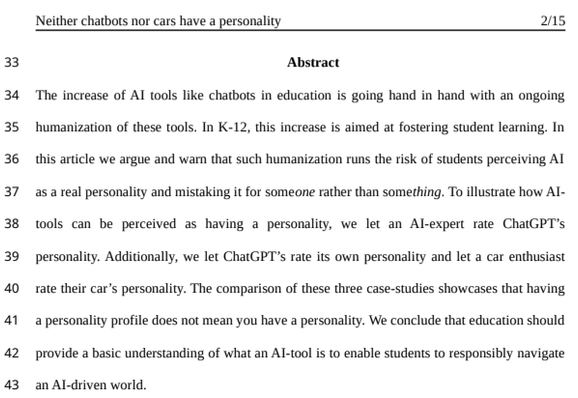
DNA metabarcoding - high-throughput sequencing of barcode regions from bulk samples - has become a key tool for insect biodiversity assessment. Yet, how methodological choices affect the accuracy of metabarcoding data remains insufficiently explored. In this paper, we ask: (1) How does the lysis method (non-destructive lysis vs. destructive homogenization) affect community recovery? (2) How comprehensively does metabarcoding capture species richness? (3) To what extent can spike-ins improve abundance estimates? (4) How accurately can species abundances be estimated? We evaluated the accuracy of insect metabarcoding using 4,749 bulk samples from a large-scale biodiversity survey subjected to mild lysis. Of these samples, 856 were also homogenized, allowing a systematic comparison of the effect of alternative treatments. To potentially improve abundance estimates, we added six biological spike-ins (i.e., foreign insects) to all samples, and two synthetic spike-ins (artificial DNA fragments) to the homogenization treatment. In addition, we established the contents of 15 samples by individually barcoding all specimens, enabling direct assessment of occurrence and abundance estimates. Our results revealed consistent differences between destructive and non-destructive treatments. While both methods reliably detected the majority of species, small and soft-bodied taxa were more often recovered after mild lysis than after homogenization, while the reverse was true for heavily sclerotized, hairy, and large taxa. Using biological spike-ins for calibration reduced the variance in read numbers per specimen considerably, especially in homogenized samples, while synthetic spike-ins were less effective. In a Bayesian analysis, where species data were matched to the best-fitting spike-in calibration curve, accurate abundance estimates (+/-1 individual) were obtained for 72.9% of species occurrences. Our results show that it is possible to obtain reasonably accurate abundance estimates from metabarcoding data, and that mild lysis and homogenization result in different taxon-specific biases in terms of occurrence data, with neither method outperforming the other. Accuracy is improved by homogenization rather than mild lysis of samples, and by the use of biological rather than synthetic spike-ins. Together, these findings provide a major step towards robust, quantitative biodiversity monitoring using DNA-metabarcoding. ### Competing Interest Statement The authors have declared no competing interest. Knut and Alice Wallenberg Foundation, https://ror.org/004hzzk67, 2017.088 Swedish Research Council, https://ror.org/03zttf063, 2021-04830 National Science Centre, https://ror.org/03ha2q922, 2018/31/B/NZ8/01158, 2021/43/B/NZ8/03376

bioRxiv

Biomonitoring 3.0: From Taxa Lists to
Interaction-Ready, Time-Resolved
Ecosystem Monitoring

https://www.preprints.org/manuscript/202603.2242

#preprint #Biomonitorint #eDNA #eRNA #operationalFrameworks

Are scientific publications always right? Not necessarily.

That is why we teach students to critically assess every study. In our Plant Bioinformatics course, students tried to reproduce research on quinoa leaf pigmentation.

Read our preprint:
“Lack of evidence for anthocyanins contributing to pigmentation of Chenopodium quinoa”
https://doi.org/10.64898/2026.04.07.717023

#OpenScience #Preprint #PlantScience #Bioinformatics #Reproducibility
@PuckerLab

Hi #neuromastodon, today the latest preprint of an extremely cool, 100% Uruguay-based team has been released  

A filopodia-based dendritic mechanosensory compartment in CSF-contacting neurons

There we show that, contrary to what zebrafish has taught, these spinal cord neurons from adult mice (CSF-cN) lack cilia. Furthermore, they show multiple filopodia and are able to sense mechanical stimuli through PKD2L1. That, and other nice stuff.

If you didn't know what to read this weekend, here you have it:

https://www.biorxiv.org/content/10.64898/2026.04.09.713694v1

Hope you enjoy it.

#neuro #neurons #spinal #spinalcord #cellbiology #biology #uruguay #science #research #preprint #openaccess #microscopy #electrophysiology #neuroscience #iibce #pedeciba

PREreview April 2026 Newsletter is out! Let’s dive into the turning season together:

🤝 PREreview joins forces to shape PRC Alliance

🔀 Test our experimental #preprint matchmaking feature!

📑 Learn about collaborative peer review & join a PREreview Club

💬 Catch PREreview team at the Council of Science Editors Meeting

📢 Events

💡 Community news, job opportunities, and more!

https://content.prereview.org/prereview-april-2026-newsletter/

PREreview April 2026 Newsletter

Lively conversations, renewed motivation, and stimulating challenges for this turning season. Let’s dive in together. Building alternative pathways: PREreview joins the PRC AlliancePREreview joined a working group convened by the Confederation of Open Access Repositories (COAR) and ASAPbio to shape a new PRC Alliance—a membership association designed to

PREreview Blog

Our workshop "Cross-government policy modelling of long-term health and wellbeing impacts" brought 5 #microsimulation teams together with policy makers, public sector and other researchers.

#HealthEconomics

SimPaths
https://www.microsimulation.ac.uk/jas-mine/simpaths/

SIPHER
https://www.gla.ac.uk/research/az/sipher/

WELLMOD
https://chanse.org/wellmod/

Sheffield Tobacco and Alcohol Policy Model
https://onlinelibrary.wiley.com/doi/full/10.1002/hec.3105

The event was part of our #UKRI #MRC funding
https://gtr.ukri.org/projects?ref=MR%2FX002837%2F1#/tabOverview

And a #PrePrint from our work:
https://eprints.whiterose.ac.uk/id/eprint/234125/

This preprint titled “Assessment of inter-individual variation in metabolism of flavonoids from bilberry and grape seed extracts using an in vitro digestion and faecal fermentation model“ by Dr. Teresa Grohmann et al attempts to identify gut-microbial candidates that are capable of metabolising flavonoids and anthocyanins in bilberry and grape seed extracts using the INFOGEST in vitro digestion model. Microbes that can metabolise these phytochemicals are expected to modulate metabolic and cardiovascular health outcomes by producing potent secondary metabolites.

The preprint can be accessed here: https://doi.org/10.64898/2026.03.02.709000

This manuscript was typeset by Typescholar.

#preprint #academia #openscience
@brembs @albertcardona
The thing funders COULD mandate is to always post a #preprint before, or simultaneously with, submitting to any journal.
https://journals.plos.org/plosbiology/article?id=10.1371/journal.pbio.3000273
Plan U: Universal access to scientific and medical research via funder preprint mandates

Preprint servers are a low-cost mechanism for providing free access to research findings, and can also significantly accelerate research itself by making results available immediately. This Perspective article proposes that funding agencies should mandate preprint posting to ensure universal free access to the world’s scientific output, as well as stimulate new peer review and research evaluation initiatives.