 Le Klan du Loup
L'association Le Klan du Loup vous souhaite une très belle fête d'Imbolc 🔥🏵️
#brigit
#brigit
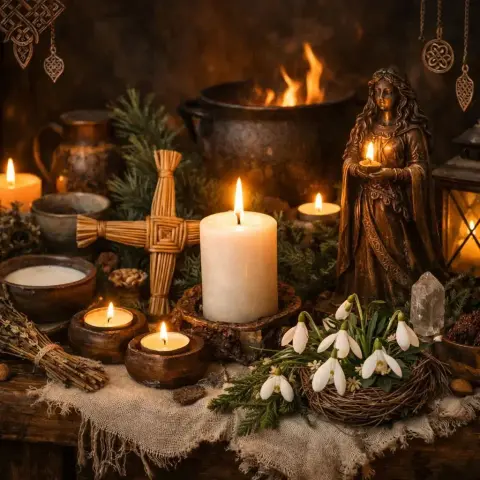
The festival is, without a doubt, associated primarily with #Brigit / #Brighid, who among other things is the Irish Dawn Goddess. Dawn festival -> Dawn goddess. The "Saint" version was born at imbolc, at dawn - but the Christian hagiography makes a point of saying that she was born on the 8th of the Lunar Month. Perhaps, we could read this as a hint as to when her festival might have been calculated? The 8th of the next lunar month after... solstice? Equinox?
Imbolc was xtianised early, so IDK.
The Dagda
Considered the great God of Irish Mythology. He’s the chief God of the Tuatha De Danann. The Dagda are portrayed as a father-figure, king, & druid. He’s associated with fertility, agriculture, masculinity, & strength. As well as magic, druidry, & wisdom. He can control life & death (with his staff), the weather & crops, as well as time & the seasons.
He’s often portrayed as a large bearded man or a giant wearing a hooded cloak. He owns a magic staff (lorc) of a dual nature: it kills with 1 end & brings to life with the other. He also owns a cauldron (the coire ansic), which never empties, & a magic harp (Uaithene, this may be the name of the harpist/player.).
The harp can’t be played unless called by its 2 bynames. The harp can fly itself to the Dagda when called. Think Thor’s hammer in the Marvel movies. He just sticks his hand out & the hammer comes to him. This is what happens with the Dagda & the harp.
He’s said to live in Bru na Boinne (Newgrange). Other places associated with or named after him include: Uisneach, Grianan of Aileach, Lough Neagh, & Knock Iveagh. The Dagda is said to be the husband of the Morrigan & the lover of Boann. His kids include: Aengus, Brigit, Bodb Derg, Cermait, Aed, & Midir.
The Dagda has several other names/epithets, that reflect aspects of his character:
The Dagda was 1 of the kings of the Tuatha De Danann. The Tuatha De Danann are the race of supernatural beings who overcame the Fomorians, who inhabited Ireland previously, prior to the coming of the Milesians.
The Morrigan is depicted as his wife, his daughter was Brigit, & his lover was Boann, after whom the River Boyne is named. Though she was married to Elcmar & with whom he had the Aengus. Before the battle with the Fomorians, he was coupled with the goddess of war, the Morrigan, on Samhain.
In the tract found in the Yellow Book of Lecan, there were 3 items the Dagda named together, his staff (lorc), the shirt (leine) of protection from sickness, & the cloak (lumman) of shape-shifting color-changing.
The “great staff” (lorg mor) had a smooth end that brought the dead back to life. He resuscitated his son, Cermait Milbel with the smooth end of the staff. But the staff’s rough end caused instant death. The staff/club is also described in the Ulster Cycle narrative, Mesca Ulad. Where it was called the “terrible iron staff” (lorg aduathmar iarnaidi).
The Cauldron of the Dagda is 1 of the Four Treasures of the Tuatha De Danann. It was said “an assembly used not to go unsatisfied from it.” The cauldron “signified plenty.” His magic cauldron was otherwise known as the coire ansic (“the un-dry cauldron”).
After Uaithne, the Dagda’s Harper was abducted by the Fomorians, the Dagda went to the enemy’s hall & received his magic harp, which had 2 names. When the Dagda called upon his harp by its 2 names (Daur Da Blao & Coir Cetharchair), the harp leapt off the wall & came to him.
The harp was forbidden by the Dagda from supplying any sound. Unless it was called upon by the names, which translated to “Oak of Two Meadows” & “the Four Angled Music.” Hence, the harp was a richly ornamental magic harp made of oak which, when the Dagda played it, put the seasons in their correct order.
The Dagda had the skillet to play the “Three Strains” (joy, sorrow, sleep) which he used to immobilize the Fomorians & escape.
He had 2 pigs. 1 of which was always growing whilst the other was always roasting & ever-laden fruit trees. He is also described as being the owner of a black-maned heifer that was given to him from his labors prior to the Second Battle of Moytura. When the heifer calls her calf, all the cattle of Ireland are taken by the Fomorians as a tribute graze.
The Dagda is said to be the husband of the Morrigan, who’s called his “envious wife.” His kids include: Aengus, Cermait, & Aed (often called the 3 sons of the Dagda), Brigit, & Bodb Derg. He’s said to have 2 brothers, Nuada & Ogma. But this may be an instance of the tendency to triplicate deities. Elsewhere, the Dagda is linked exclusively with Ogma. The 2 are called “the 2 brothers.”
In the Dindsenchas, the Dagda is given a daughter named Ainge, for whom he makes a twig basket or tub that always leaks when the tide is in & never leaks when it’s going out. The Dagda’s dad is named Elatha, son of Delbeath.
Englec, the daughter of Elcmar, is named as a consort of the Dagda & the mom of his “swift son.” Echtgi the loathsome is another daughter of the Dagda’s named in the Banshenchas. Before the Second Battle of Mag Tuired, the Dagda builds a fortress for Bres called Dun Brese & is also forced y the Fomorian kings Elatha, Indech, & Tethra to build raths.
Raths (also called ringforts/ring forts) are small circular fortified settlements built during the Bronze & Iron Age & early Middle Ages up to about the year 1000 AD. They’re found in Northern Europe, especially in Ireland.
In the lead up to the Second Battle of Mag Tuired, when Lugh asks Dagda what power he’ll wield over the Fomorian host, he responds that he “will take the side of the men of Erin both in mutual smiting & destruction & wizardry. Their bones under my club will be as many hailstones under the feet of herds of horses.”
The Dagda has an affair with Boann, the goddess of the River Boyne. She lives at Bru na Boinne with her husband, Elcmar. The Dagda impregnates her after sending Elcmar away on a 1-day errand.
To hide the pregnancy from Elcmar, the Dagda casts a spell on him, making “the sun stand still” so he will not notice the passing of time. Meanwhile, Boann gives birth to Aengus, who’s also known as Maccan Og (“the young son”). Eventually, Aengus learns that the Dagda is his true dad & asks him for a portion of land.
In some versions of the tale, the Dagda helps Aengus take ownership of the Bru from Elcmar. Aengus asks & is given the Bru for laa ocus aidche. Because in Old Irish, this could mean either “a day & a night” or “day & night,” Aengus claims it forever. Other versions have Aengus taking over the Bru from the Dagda himself by using the same trick.
The Tochmarc Etaine tells the story of how Boand conceives Aengus by the Dagda. In the Aislinge Oengusso or Dream of Aengus, the Dagda & Boand help Aengus to find a mysterious woman who he has fallen in love with his dreams.
In a poem about Mag Muirthemne, the Dagda banishes an octopus with his “mace of wrath” using the words: “Turn thy hollow head! Turn thy ravening body! Turn thy resorbent forehead! Avaunt! Begone!” The Sea receded with the creature & the plain of Mag Muirthemne was left behind.
In the Dindsenchas, the Dagda is described as swift with a poison draught & as a justly dealing lord. He’s also called a king of Erin with hosts of hostages, a noble, slender prince, & the dad of Cermait, Aengus, & Aed.
He’s credited with a 70 or 80-year reign over the Tuatha De Danann. This was before dying at Bru na Boinne, finally succumbing to a wound inflicted by Cethlenn during the battle of Mag Tuired. The Dagda has similarities with the later harvest figure Crom Dubh.
He also has similarities with the Gaulish god, Sucellos, who’s depicted with a hammer & a pot, & the Roman god, Dis Pater. Dis Pater (a.k.a. Rex Infernus or Pluto) is a Roman god of the underworld. Dis was originally associated with fertile agricultural land & mineral wealth.
Make a one-time donation
Your contribution is appreciated.
Donate
Make a monthly donation
Your contribution is appreciated.
Donate monthly
Make a yearly donation
Your contribution is appreciated.
Donate yearly
#1000AD #Aed #Aengus #Ainge #AislingeOengusso #Banshenchas #Boann #BodbDerg #Bres #Brigit #BronzeAge #BruNaBoinne #CauldronOfTheDagda #Cera #Cermait #CermaitMilbel #Cerrce #Cethlenn #CoirCetharchair #CoireAnsic #CromDubh #Daire #DaurDaBlao #Delbeath #Dindsenchas #DisPater #DreamOfAengus #Druid #Druidry #DunBrese #Easal #Echtgi #Elatha #Elcmar #Englec #Eochaid #Eochu #Eogabal #Erin #FerBenn #Fomorians #FourAngledMusic #FourTreasuresOfTheTuathaDeDanann #Gaul #Grianan #GriananOfAileach #Ireland #IrishMythology #IronAge #KingElatha #KingIndech #KingTethra #KnockIveagh #LaaOcusAidche #Leine #Lorc #LorgAduathmarIarnaidi #LorgMor #LoughNeagh #Lugh #Lumman #MaccanOg #MagMuirthemne #MescaUlad #MiddleAges #Midir #Milesians #Newgrange #NorthernEurope #Nuada #OakOfTwoMeadows #Ogma #OldIrish #Pluto #Raths #RexInfernus #RingForts #RiverBoyne #Rome #RuadRofhessa #Samhain #SecondBattleOfMagTuired #SecondBattleOfMoytura #Staff #Sucellos #TheDagda #TheMorrigan #TheTwoBrothers #ThreeSonsOfTheDagda #ThreeStrains #TochmarcEtaine #TuathaDéDanann #Uaithne #Uisneach #UlsterCycle #Underworld #Wizardy #YellowBookOfLecan

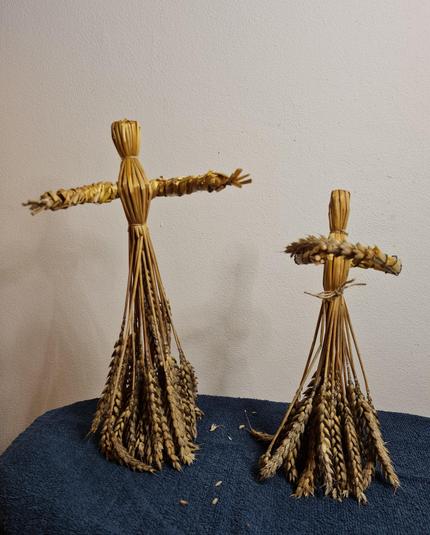

In #Irish #Mythology The #Fomorians are #hostile #monsters from under the #sea or in the #earth. They are #enemies and #opponents of the #TuathaDéDanann.They are #gods who represent the harmful or #destructive #powers of #nature; #chaos, #darkness and #death #keepingClassicsalive

The Lá 'le Bríde/Brigit's Festival/Imbolc/St. Brigid's Day event in Dublin seems to have ramped up a gear considerably this year. Lots of very interesting events planned over the few days.
 Seachaint
 Spirituality & Religious Studies
 1. Neu-Kelte 🌻💙💛🌻
 Holly Ann
 prainbow

 Ciarán Ferrie