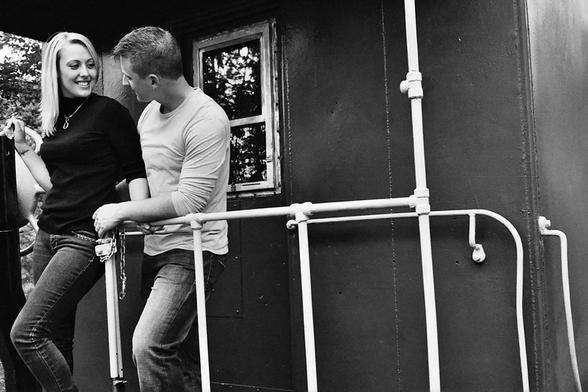
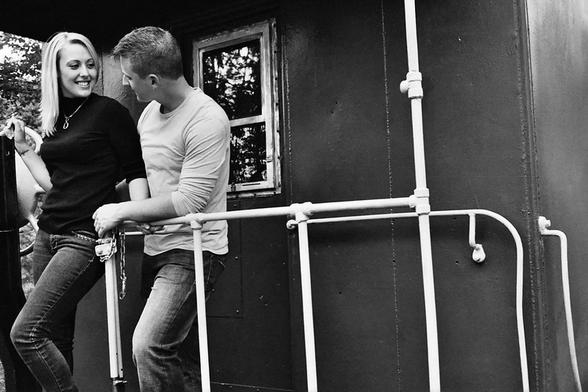
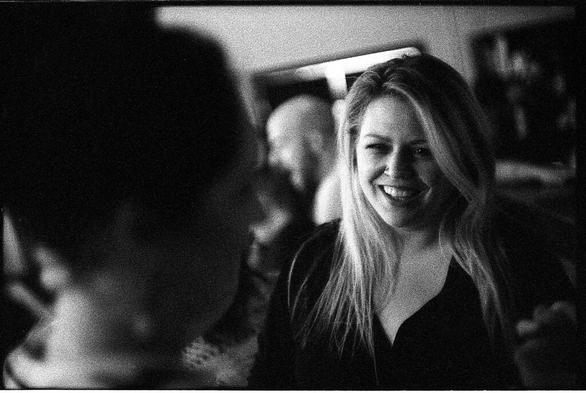
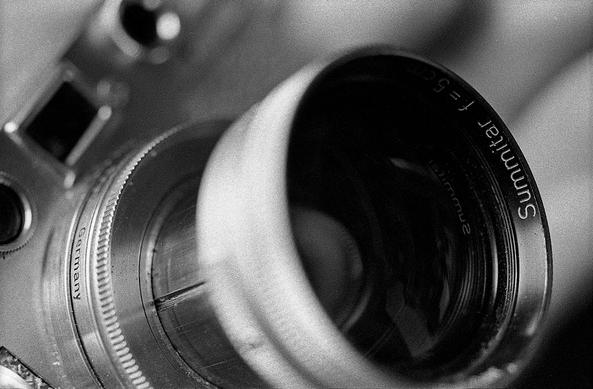
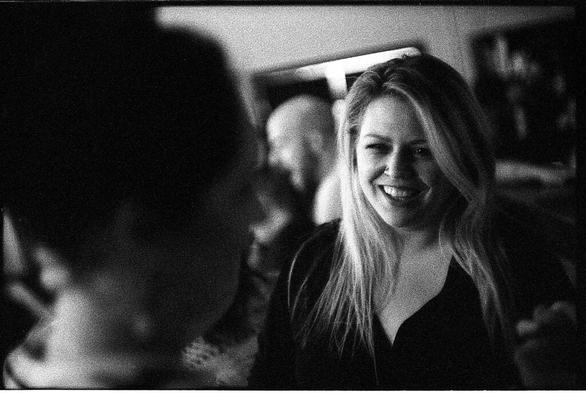
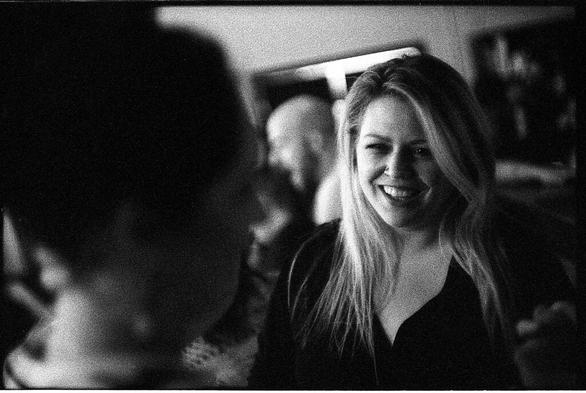
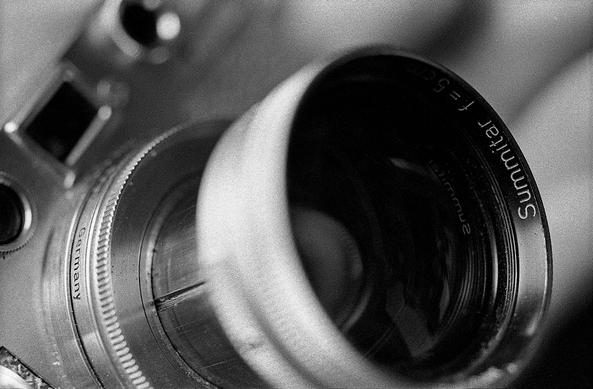
Some Film photographs from Big Star 50th at Cat's Cradle Saturday

Nikon F - Nikkor P 105mm - Tri-x 400 - f/2.8 - 35mm Film - HC110 1 + 50 - Unaltered Negative Scan
#35mmFilm #FilmPhotography #BlackAndWhiteFilm #Nikon
#BigStar #RockPhotography #REM #IndiePop #AlexChilton
#sharefilm #back2thebase #boxspeed #heyfsc #bwfilm #homedeveloped
#Nikon #KodakFilm

Ilford XP2 – A Smart Go-To B&W Film

Are you interested in shooting black and white and want to know what film to start with? Do you you use a lab to process your work, or do C41 at home?

I highly recommend giving Ilford XP2 a spin.

35mm Ilford XP2 400 Super rated at 1600, scanned without ICE

Ilford XP2 400 Super is a unique stock because it's a chromogenic (color) film that uses the common C41 type process, yet it yields monochromatic (black and white) negatives.

It's a really great general purpose film and is available in 35mm (both 24 and 36 exposures) and 120 as well as bulk rolls. You can also enjoy XP2 in Ilford brand disposable cameras. All these are available at B&H Photo.

35mm Ilford XP2 400 Super rated & processed at 400

35mm Ilford XP2 400 Super rated & processed at 400

35mm Ilford XP2 400 Super rated & processed at 400

XP2 has a box speed of 400 ISO, which is a good speed for shooting day to evening, indoors and outdoors, with the appropriate shutter and aperture. It can also be pushed, pulled, over and under rated. More on that in a minute.

You might see old school black and white photographers who poo poo C41 b&w film but its ease of use and special properties can't be ignored.

The first of which is that you can drop it off for processing pretty much anywhere that film can be processed and it can be processed right alongside color films. This kind of keeps a cap on processing cost and builds in flexibility of lab choice or home chemistry. If you shot color and conventional b&w film, you might have to use two different labs, and if processing at home, two different sets of chemistry. XP2 is content to get thrown in with your Portra, Ektar, Fujicolor, etc.

35mm Ilford XP2 400 Super rated & processed at 400

35mm Ilford XP2 400 Super rated & processed at 400

35mm Ilford XP2 400 Super rated & processed at 400, contrast adjusted

There are also some advantages when scanning a chromogenic b&w film.

Digital ICE is a technology that Kodak came up with in the 1960's to remove the appearance of dust and scratches from film as it was digitized. It works by comparing the multiple color layers of the film to determine if an element is on all the layers or only one. If only one, the element is identified by the software as dust, debris or a scratch which is only affecting the top-most layer of emulsion and the element is removed from the final scan.

Because traditional b&w film consists of only one layer of emulsion, Digital ICE does not have the multiple layers to compare and thus it cannot edit out dust. But because Ilford XP2 does consist of multiple layers, ICE will work just as it does with color film.

35mm Ilford XP2 400 Super rated & processed at 400

35mm Ilford XP2 400 Super rated & processed at 400

35mm Ilford XP2 400 Super rated at 1600 & processed normal

Another advantage, or perhaps just a neat characteristic of scanning XP2 is that, when scanned in full color mode, the resulting image has a cool sepia tone, thanks to the orangish color of the negative base. If you like this look, awesome. If you don't, simple change your edit mode to b&w to remove the tone.

35mm Ilford XP2 400 Super rated at 1600, processed normal & scanned in CMYK color

If you like really sharp/crisp negatives, you'll also find that Ilford XP2 is probably sharper and more crisp than a competing conventional b&w film at the same ISO. This is, in part, because images are formed by dye clouds, like color film, and not only the silver grains of true b&w. I have heard arguments about conventional b&w film being capable of producing sharper, higher resolving images than color film due to the lack of emulsion layers but it seems, at least in the case of XP2, the dye clouds win out, or at least they always seemed to with my work and APPARENT sharpness.

35mm Ilford XP2 400 Super rated & processed at 400

35mm Ilford XP2 400 Super rated & processed at 400

35mm Ilford XP2 400 Super rated at 6400, developed normal

Finally, XP2 has the massive dynamic range of modern color films. You can push, pull, over or under rate this film like crazy and still get excellent results. So while, on the surface, it may seem like a limitation that XP2 is only available as a 400 speed film if you play with it bit, you'll soon see that this isn't really much of a concern. Personally, I do not pull film much but Ilford states that XP2 can go down to about EL 50 in their datasheet. They also cap it at EL 800 but I really enjoy XP2 at 1600. Beyond 1600, the negatives can get pretty thin and shadows get blocky if not shooting in very contrasty light. Still, something to play with if you want to make XP2 the only b&w film that you carry.

If you're interested in learning more about how to expose XP2 at higher ratings for darker situations, I wrote about it here.

35mm Ilford XP2 400 Super rated at 3200, developed normal

35mm Ilford XP2 400 Super rated at 3200, developed normal, black levels adjusted

As you can see, Ilford XP2 400 Super is a crisp, tonal b&w stock that produces deep blacks, controlled highlights and can be exposed well in a multitude of lighting situations. Varying it's speed rating can tame or increase the appearance of XP2's pleasing grain.

I haven't shot XP2 or C41 film in some years, having fully transitioned to conventional b&w film. But what is so great about the film community is our diverse approaches to photography, both from a technical and stylistic standpoint. I used to love this film and still enjoy seeing new work on it. It's unfortunate that Kodak discontinued their b&w chromogenic film, BW400CN. This makes XP2 that much more a unique, useful and interesting product to keep enjoying. And I hope that you will!

Thanks for reading and happy shooting!

_Follow, Favorite, Like, Add, Insult, ContactJohnny Martyr _

#filmphotography #filmreview #ilford #martyrmusings #reviews #1600iso #3200iso #35mm #35mmfilm #6400iso #analog #availablelight #bw #bwfilm #blackandwhite #blackandwhitefilm #boxspeed #c41 #coloremulsion #colorprocessing #contrast #digitalice #dyeclouds #el1600 #el3200 #el6400 #exposure #film #filmscan #finegrain #grain #grainy #highspeed #ilford35mmfilm #ilfordxp2 #ilfordxp2super #ilfordxp2super400 #kodakbw400cn #lowlight #monochromatic #overrating #photography #portraits #pull #pullprocessing #push #pushprocessing #scans #sepiatone #sharp #speed #underrating #weddingphotography

Ilford XP2 – A Smart Go-To B&W Film

Johnny Martyr

Ilford XP2 – A Smart Go-To B&W Film

Are you interested in shooting black and white and want to know what film to start with? Do you you use a lab to process your work, or do C41 at home?

I highly recommend giving Ilford XP2 a spin.

35mm Ilford XP2 400 Super rated at 1600, scanned without ICE

Ilford XP2 400 Super is a unique stock because it's a chromogenic (color) film that uses the common C41 type process, yet it yields monochromatic (black and white) negatives.

It's a really great general purpose film and is available in 35mm (both 24 and 36 exposures) and 120 as well as bulk rolls. You can also enjoy XP2 in Ilford brand disposable cameras. All these are available at B&H Photo.

35mm Ilford XP2 400 Super rated & processed at 400

35mm Ilford XP2 400 Super rated & processed at 400

35mm Ilford XP2 400 Super rated & processed at 400

XP2 has a box speed of 400 ISO, which is a good speed for shooting day to evening, indoors and outdoors, with the appropriate shutter and aperture. It can also be pushed, pulled, over and under rated. More on that in a minute.

You might see old school black and white photographers who poo poo C41 b&w film but its ease of use and special properties can't be ignored.

The first of which is that you can drop it off for processing pretty much anywhere that film can be processed and it can be processed right alongside color films. This kind of keeps a cap on processing cost and builds in flexibility of lab choice or home chemistry. If you shot color and conventional b&w film, you might have to use two different labs, and if processing at home, two different sets of chemistry. XP2 is content to get thrown in with your Portra, Ektar, Fujicolor, etc.

35mm Ilford XP2 400 Super rated & processed at 400

35mm Ilford XP2 400 Super rated & processed at 400

35mm Ilford XP2 400 Super rated & processed at 400, contrast adjusted

There are also some advantages when scanning a chromogenic b&w film.

Digital ICE is a technology that Kodak came up with in the 1960's to remove the appearance of dust and scratches from film as it was digitized. It works by comparing the multiple color layers of the film to determine if an element is on all the layers or only one. If only one, the element is identified by the software as dust, debris or a scratch which is only affecting the top-most layer of emulsion and the element is removed from the final scan.

Because traditional b&w film consists of only one layer of emulsion, Digital ICE does not have the multiple layers to compare and thus it cannot edit out dust. But because Ilford XP2 does consist of multiple layers, ICE will work just as it does with color film.

35mm Ilford XP2 400 Super rated & processed at 400

35mm Ilford XP2 400 Super rated & processed at 400

35mm Ilford XP2 400 Super rated at 1600 & processed normal

Another advantage, or perhaps just a neat characteristic of scanning XP2 is that, when scanned in full color mode, the resulting image has a cool sepia tone, thanks to the orangish color of the negative base. If you like this look, awesome. If you don't, simple change your edit mode to b&w to remove the tone.

35mm Ilford XP2 400 Super rated at 1600, processed normal & scanned in CMYK color

If you like really sharp/crisp negatives, you'll also find that Ilford XP2 is probably sharper and more crisp than a competing conventional b&w film at the same ISO. This is, in part, because images are formed by dye clouds, like color film, and not only the silver grains of true b&w. I have heard arguments about conventional b&w film being capable of producing sharper, higher resolving images than color film due to the lack of emulsion layers but it seems, at least in the case of XP2, the dye clouds win out, or at least they always seemed to with my work and APPARENT sharpness.

35mm Ilford XP2 400 Super rated & processed at 400

35mm Ilford XP2 400 Super rated & processed at 400

35mm Ilford XP2 400 Super rated at 6400, developed normal

Finally, XP2 has the massive dynamic range of modern color films. You can push, pull, over or under rate this film like crazy and still get excellent results. So while, on the surface, it may seem like a limitation that XP2 is only available as a 400 speed film if you play with it bit, you'll soon see that this isn't really much of a concern. Personally, I do not pull film much but Ilford states that XP2 can go down to about EL 50 in their datasheet. They also cap it at EL 800 but I really enjoy XP2 at 1600. Beyond 1600, the negatives can get pretty thin and shadows get blocky if not shooting in very contrasty light. Still, something to play with if you want to make XP2 the only b&w film that you carry.

If you're interested in learning more about how to expose XP2 at higher ratings for darker situations, I wrote about it here.

35mm Ilford XP2 400 Super rated at 3200, developed normal

35mm Ilford XP2 400 Super rated at 3200, developed normal, black levels adjusted

As you can see, Ilford XP2 400 Super is a crisp, tonal b&w stock that produces deep blacks, controlled highlights and can be exposed well in a multitude of lighting situations. Varying it's speed rating can tame or increase the appearance of XP2's pleasing grain.

I haven't shot XP2 or C41 film in some years, having fully transitioned to conventional b&w film. But what is so great about the film community is our diverse approaches to photography, both from a technical and stylistic standpoint. I used to love this film and still enjoy seeing new work on it. It's unfortunate that Kodak discontinued their b&w chromogenic film, BW400CN. This makes XP2 that much more a unique, useful and interesting product to keep enjoying. And I hope that you will!

Thanks for reading and happy shooting!

_Follow, Favorite, Like, Add, Insult, ContactJohnny Martyr _

#filmphotography #filmreview #ilford #martyrmusings #reviews #1600iso #3200iso #35mm #35mmfilm #6400iso #analog #availablelight #bw #bwfilm #blackandwhite #blackandwhitefilm #boxspeed #c41 #coloremulsion #colorprocessing #contrast #digitalice #dyeclouds #el1600 #el3200 #el6400 #exposure #film #filmscan #finegrain #grain #grainy #highspeed #ilford35mmfilm #ilfordxp2 #ilfordxp2super #ilfordxp2super400 #kodakbw400cn #lowlight #monochromatic #overrating #photography #portraits #pull #pullprocessing #push #pushprocessing #scans #sepiatone #sharp #speed #underrating #weddingphotography

Ilford XP2 – A Smart Go-To B&W Film

Johnny Martyr

Rating + Processing for Available Light Portraits – EI 3200 ISO

It bears repeating:

International Center of Photography shooter James Mignogna once told me that a good photographer matches their light, lens, film and developer. Nowhere do I think these decisions are more critical than portraits in dim lighting.

That was the intro I used in my previous entry: Rating + Processing for Available Light Portraits - EL 1600 ISO and it's as relevant to the entry you're reading now, which will center around 3200 ISO films. Of which, there are only two currently available.

SHOOTING IN THE DARK: KODAK TMAX P3200 AND DELTA 3200

Okay, so what happens when the sun goes down? 1600 and a 50/2 lens will not cut it anymore so you have to go faster. Ilford Delta and Kodak TMAX 3200 films are here to the rescue!

Armchair available light photographers delight in pointing out that Delta 3200 has a native ISO of 1000 and TMAX P3200 has a native ISO of 800. On a technical level, this is not misinformation. However, I am of the opinion that the constant restating of this as well as some incomplete, inaccurate tutorials about how to shoot these films has spawned not only an inaccurate belief that these films are "best" shot at their native ISO but even a bit of FEAR of shooting them at their box speed or higher.

I say, forget about this native ISO stuff!

For all intents and purposes, 3200 ISO is the NORMAL speed of Delta 3200 and TMAX P3200.

The DX codes printed on their canisters read 3200 by cameras and minilabs. Therefore, this is how Ilford and Kodak want these films to be rated and processed.

The films are not called Delta 1000 or TMAX P800, they're called 3200. This is not just marketing as people will lament on the interwebs.

These films are intended by their designers, to be rated at 3200 and processed for 3200. They are also designed to function as "multiple ISO films," as has been worded in older Kodak literature.

I don't personally see the point of paying for higher priced 3200 ISO films and, rating them well within the range of what 400 ISO film can handle, without a more specific reason than because a few influencers have told followers that this is how these films "should" be used.

To be clear, I'm not discouraging anyone from exploring what these flexible films can do, I'm denouncing boxing oneself into this native ISO rating.

If you are shooting a brighter scene but enjoy grain, yes, go ahead and under-rate your film. Rate it at 1600 and process normal (at EI 3200) This will give you richer contrast, you don't have to pay your lab extra money or separate or mark your film.

Jill| Kodak TMAX P3200 rated at 1600 ISO and processed normal at EI 3200

I was on a Nikkormat kick for some time and the meters on these and other classic cameras top out at 1600, so this guided how I shot and processed my 3200 films. In the example above, I was shooting in flat light that needed the under-rating to bring contrast to the scene. Some Nikkor lenses are not very contrasty at full aperture, so under-rating the film helps balance this out too.

If you like grain and tonality and shooting at wider apertures (a dreamy look, if you will), you can rate 3200 films at box speed to achieve this.

Laurie | Kodak TMAX P3200 rated at 3200 ISO and processed normal at EI 3200

In fact, you can always rate your film at 3200 and process normal at EI 3200. This is what Kodak and Ilford designed the film for and is it's "normal" look. No pushing, no pulling, no over- or under-rating. This will give you a flatter, more tonal image which is perhaps a less popular look currently and the reason that you see people recommending against EI 3200. But look, it's all about assessing the quality of the light you're working in and deciding what style you want. You may also just NEED that extra stop because the light is too dim to shoot at 1600 handheld.

I encourage other photographers not to assign subjective judgement such as presuming more contrast is "better" or less grain is "better."

In truth, everything's about balancing what you are working with and what you are trying to achieve. Under-rating (overexposing) your film may increase contrast but it also reduces tonality and shadow detail. It also gives you fewer apertures from which to choose. A detail-oriented shooter is going to be ready to shoot/process these films several ways depending on what the scene is giving them, as oppose to prescribing one method or film for every situation.

What I do most of the time is rate my film at 6400 ISO and process for EI 6400 by pushing one stop. This is critical of shooting in low light and night time without a flash or camera support and slow shutter speeds. It's how I shoot weddings and concerts and pre-pandemic bar hopping with friends. My reasoning is multi-fold. One being that the light meters of my best cameras top out at 6400, so I can operate them without a shred of guess work. Another being that I'm using these films to do what they were intended. The higher sensitivity allows me to stop down if there's ample light, so I can control my DoF more. The tonality I get from not under-rating gives me more "information" to work with when editing. And the final one being that I very seldom encounter a situation worth photographing where ISO 6400 with a 1/60th shutter speed and a 1.4 aperture are not adequate at bare minimum. Yes, these films can be rated even faster and you may use a lens faster than 1.4. But in these conditions, even with current digital cameras, one encounters some insurmountable (in my opinion) aesthetic concerns.

Christi | Kodak TMAX P3200 rated at 6400 ISO and push processed in Kodak HC110b by one stop for EI 6400

Laurie| Kodak TMAX P3200 rated at 6400 ISO and push processed in Kodak HC110b by one stop for EI 6400

Aside from how to expose and process, the other big question is which to use, Ilford Delta 3200 or Kodak TMAX P3200. In HC110b, I find the Kodak to be softer and more tonal, whereas the Ilford is sharper and more contrasty. So, just as I recommend under-rating or push processing to bring contrast to a scene with flatter lighting, I would also recommend choosing Delta. The opposite would be true for a contrasty scene, reach for the TMAX to quell that contrast. OR, if you want to emphasize a contrasty scene, use Delta and to emphasize a flat, dreamy scene, use TMAX. And within each model of film, you can rate and process to add or calm contrast.

Is your head exploding with options?

Don't worry! My recommendation is to start at box speed and normal processing and learn what works and doesn't work with your particular lenses and your usual scenes. I DO NOT recommend starting out by under-rating these films as many influencers will encourage. These films simply are not a one-size-fits all solution. They're not meant to be. They're SUPPOSED to be personally tailored. Just doing whatever you're told to do with them is negating the entire point.

Steph | Ilford Delta 3200 rated at 6400 ISO and push processed in Kodak HC110b by one stop for EI 6400

Lipstick Lamarr | Ilford Delta 3200 rated at 6400 ISO and push processed in Kodak HC110b by one stop for EI 6400

Devon | Ilford Delta 3200 rated at 6400 ISO and push processed in Kodak HC110b by one stop for EI 6400

Another important thing to keep in mind, which I've talked about but maybe not explicitly enough, is not to confuse quantity and quality of light.

Just because a scene has a lower QUANTITY of light and necessitates a higher ISO, this does not mean that you can ignore the QUALITY of the light just because you are shooting at 1600 or 6400. I see so many available light portraits at high ISO's with shadows on faces or other important elements of the scene. I think photographers forget this because in 100 and 400 ISO conditions which are often sunlit, one needn't pay a lot of attention to the quality of light in order to return acceptable photos. A shadow on a face may not turn into a grainy mess in the same way it does at 6400. In fact, I find that the less and less light you shoot in, I find that more critical the quality of that light becomes. And maybe this is one of the main reasons that shooting in these conditions is so challenging.

Tricia| Ilford Delta 3200 rated at 6400 ISO and push processed in Kodak HC110b by one stop for EI 6400

Notice in all these photos, both in this and the 1600 blog, regardless of how dark/black the surrounded area, highlights are generally on the faces. The inclination with candid portraits sometimes is to squeeze the shutter release during the peak of action. But with available light photography, not only must you consider the peak of action but also, this moment has to agree with where the light falls on your subject.

So when working in EI 1600 and 3200; it sounds cheesy and maybe even obvious but… let the light be your guide!

Don't choose your film, rating and process because someone who takes great photos said something is "the best," or because you saw some photos at those specs that look good. Ask these photogs about the quality of light they were shooting in and assess the quality of light you're shooting in. Consider the character of your lenses. Make judgement calls based on those points and your desired outcome. Film responds different ways in different situations. That's why digital can never fully copy it. And it's also why there's a lot to learn in order to get the look you're after. It's very possible that of all my examples, you still don't see something that's right for you. And that's okay. The concept is there. From 1600 to 6400 ISO/EI, hopefully I've given you a springboard from which to find combinations that work for what you are trying to do. Go out and find your own method for shooting portraits in low, available light!

Thanks for reading and happy shooting!

_Follow, Favorite, Like, Add, Insult, ContactJohnny Martyr _

#filmphotography #filmreview #ilford #kodak #martyrmusings #portraits #tipstricksadvice #1600 #1600iso #3200 #3200iso #6400 #6400iso #availablelight #availablelightportrait #barhopping #blackandwhite #blackandwhitefilm #blackandwhitehighspeedfilm #blackandwhiteprocessing #boxspeed #candid #concerts #contrast #contrasty #delta #delta3200 #dim #documentary #dreamy #dxcode #ei1600 #ei3200 #ei6400 #existinglight #existinglightportrait #fastlens #flatter #girls #grain #grainy #handheldcamera #hc110 #hc110b #highiso #highisofilm #highspeedfilm #ilforddelta #ilforddelta3200 #kodakhc110 #kodakhc110b #kodaktmax #kodaktmax3200 #kodaktmaxp3200 #lessgrain #light #lowlight #lowlightfilm #moregrain #nativeiso #naturallight #naturallightportrait #noflash #normalprocessing #overrate #overexpose #p3200 #personal #portraiture #process #processing #pullprocess #pushprocess #qualityoflight #quantityoflight #rating #sharp #soft #tabulargrain #tmax #tonal #traditionalfilm #true #underrate #underexpose #weddings

Rating + Processing for Available Light Portraits – EI 3200 ISO

Johnny Martyr

Lens Hoods for the Leica Summitar

I touched on this topic a little bit in a previous blog about hoods for various LTM lenses entitled Throwing Shade, but I wanted to drill down on lens hood options for the Leitz 50mm f2 Summitar. As previously stated, I think that earlier Leitz lenses require a hood in many circumstances to perform their best. And there are a number of possible hoods for the Summitar that photographers may be interested in trying. The correct original hood is fairly unpopular due to its size, thus I often see photographers looking for an appropriate alternative. It's a little complicated a task though, because Summitars have an odd outer diameter of 41.5mm and their inner threads are 36mm and recessed within the front ring. This unusual design can make finding a well-fitting hood, or any accessory, a somewhat tricky.

The Leica Summitar is the predecessor of the fabled Leica 50mm f2 Summicron and later copies of the Summitar even share the lens barrel with the early Summicron. Consequently, most Summitars and the Version I 50 Summicron can accept the lens hoods that I'm about to discuss. I'm going to keep Summitar as my point of focus since it's what I use but if you're an early Summicron shooter, by all means, you're welcome to huddle in with us too!

And before we get into hoods, we need to talk about the two main versions of Summitars out there, because yes, which version you have will dictate which hoods you can run.

One might divide Summitar lens types into more categories, for the intens and purposes of this discussion, I'm going to simplify them into just two versions.

Summitar Version I (1939)

Summitars from the first decade of this models production run featured sought-after ten blade aperture diaphragms. The front element was uncoated until 1946. Summitars made in the small window between 1946 and 1949 are often regarded as the most desirable due to having both the ten blades and the UV coating. One problem, however, if you can call it that, is that these first generation Summitars do not have the provision for mounting clip-on hoods that Leica would develop and use for many following decades. Summitar Version II got this update.

If you want to use more common, clip-on Leica hoods, there's a simple way to do this. Screw an original Summitar filter onto your Summitar Version I. The tiny gap between the front ring of the lens and filter should create enough of a groove for the Leica clip-on hoods that we're about to examine, to fit onto Version I Summitars.

Being unfamiliar with this recommendation first-hand and wanting to provide accurate accounts here, I decided to try it with my Summitar Version II. I bought an original Type L green filter (GCYOO) in black paint, mounted it to my Summitar Version 2 and then tried both my ITDOO and SOOPD (hoods discussed below). It worked out great. The ITDOO clicked into place with a little play. The SOOPD fit pretty tightly though. Perhaps moreso than when fitted the standard way. I am unaware of any differences between screwing any Type L filter into a Summitar Version I, though admittedly, for every rule with early Leica, there do seem to be exceptions. Please do let me know in the comments if you know more!

Summitar Version II (1949)

Summitar received some revisions in 1949, the main one being what everyone talks about; the recycling of leftover Summar aperture assemblies. But the change that's important with regards to this discussion is the added groove around the front ring of the lens barrel which allows clip-on lens hoods to be fitted. In true Leica style, this tiny feature appears to be merely cosmetic as it perfectly fits the styling of the Summitar. But it adds considerable functionality to the lens, which can now accept both clamp-on and clip-on accessories. Which, as I'm about to get onto, opens up quite a number of options for future-built lens hoods.

SOOPD Version I (1939 - for 50/2 Summitar Version I)

The earliest hood made for Summitar was called SOOPD. SOOPD works with both Summitar versions because it employees a thumb-screw-adjusted circular clamp to attach to the outer circumference of the lens. SOOPD Version I was finished in either black paint or satin silver chrome. The rear section of black SOOPDS is finished in distinctive crinkle coat black. There were E. Leitz Wetzlar Germany and E. Leitz New York copies. Both feature the E. Leitz logo on the top-facing blade of this four blade barndoor assembly, along with the name "Summitar." The placement of this logo is an easy way to spot the difference between Version I and II SOOPDs in online listings. These hoods were sold in the old style, red boxes with gold text.

The old barndoor hoods opened and closed by means of a precise and elegant little spring mechanism. While this folding mechanism is intuitively useful for stowing the hood, what I find quite genius about it is that the closed position of SOOPD serves as a lens cap for Summitar. I like using SOOPD on faster-paced shoots where I wouldn't typically bother with lens caps. SOOPD can easily be closed very quickly to protect the vulnerable front element and cloth shutter, then opened again just as quickly, to get back to shooting.

SOOPD Version II (1949 - for 50/2 Summitar Version II)

The next version of SOOPD, features a faster push-button, clip-on mounting mechanism. As noted, SOOPD Version II is to be used with 1949/50 Summitars with the accessory groove around the front of the lens. Most of these Summitars, if not all, are the 6 aperture blade type.

On both sides of SOOPD Version II are rectangular, spring-loaded buttons. Press these in and, similar to most newer LTM and early M Leica hoods, little tabs are retracted from inside the circumference of the hood's collar. This allows the shooter to slip the shade over the front of the Summitar and release the buttons, deploying the tabs, such that they clip into the groove on the front of the lens barrel.

The push button arrangement makes for quick and easy installation and removal. However, of the two versions, I prefer the earlier, rarer clamp-on because the Version II SOOPD can rotate around the lens if jostled, throwing off it's proper positioning with the view and rangefinder windows.

The engraving on the top-facing blade of the barndoor of SOOPD Version I was relocated to the right-facing blade of the barndoor of SOOPD Version II. The location of the engraving is a GREAT way to tell SOOPD Versions I and II apart from one another in online listings. To my knowledge, there is not a New York copy of SOOPD Version II, only Wetzlar, Germany. And Version II was also sold in a variation of the textured red box with gold text.

SOOFM (1954 - for 50/2 Summitar Version II & 50/2 Summicron Version I)

In 1953, the Summicron was released and the Summitar was discontinued after a 14 year run. Accordingly, SOOPD was renamed SOOFM and repackaged.

The only difference between SOOPD Version II and SOOFM is the addition of "u. Summicron" on the right-facing barndoor blade text.

The box for SOOFM remained the plain red style for some time before upgrading to the mid-century modern style; beige with a stylized graphic of the hood on it.

SOOFM survived until 1960 when the 50mm Summicron shed the old 1930's style collapsible barrel and went rigid.

ITOOY (1956 - for 50/2.8 and 50/3.5 Elmar)

I've heard some fringe recommendations to run ITOOY with Summitar. Personally, though I haven't tried it because I expect that this hood is is too narrow. It was designed for use with the Elmar 50/2.8 and 3.5. While it would be very low profile in appearance on a Summitar, I have a feeling that it would vignette when used at full aperture. I'm noting it here simply because this hood will mechanically fit on the Summitar and might be an option for someone who doesn't use this lens at full aperture much and wants as small a hood for it as possible.

ITDOO (1956 - for 35/3.5 Summaron & 50/2 Summicron)

Before the presentation box for SOOFM was changed but after the Summitar had been discontinued, Leica released a more compact hood for the Summicron and 35mm Summaron, called ITDOO in 1956.

Like the SOOPD Version II and SOOFM, ITDOO was installed onto the lens via two little push-buttons that took advantage of the recessed ring on the front of these lenses. Unlike the push-button SOOPD and SOOFM, ITDOO is a circular shade, thus it doesn't matter if it is jostled while installed as it does not need to sit any particular way on the lens so as not to affect the viewfinder.

ITDOO originally sold with a plastic rear cap that was not available for SOOPD/SOOFM. And this is an important point of distinction in use between these hoods, in my opinion.

The idea with ITDOO was that the photographer could reverse mount it to the lens, then use the supplied rear cap to cap the hood and lens. I don't think most people even realise that ITDOO can be reverse-mounted and thus, you often see the hood for sale sans original cap. I prefer circular lens hoods whose front can be capped rather than needing to make a big effort to protect the lens. However, by reverse-mounting an ITDOO actually takes up less space in ones camera bag than a barndoor hood, providing that hte lens isn't collapsed. Because, when reverse mounted, ITDOO prevents Summitar from fully collapsing. So it's really just about personal preference at this point.

Capping inconveniences aside, ITDOO is more compact in use and just more conventional in appearance, and therefore has become more popular and more expensive than most copies of the SOOPD, which I feel, is one of the few undervalued Leica accessories available.

I am unaware of any cosmetic variation of the ITDOO. The conical part of the hood is black paint aluminum engraved with "Summaron 3.5cm Summicron 5cm" and the narrow chrome mounting ring is engraved with "Ernst Leitz GmbH Wetzlar" and "Germany" on the opposing face. ITDOO was packaged in the old textured red box with gold lettering and later, the beige box with graphics. Apparently it's not difficult to remove the black paint conical section of ITDOO from its silver chrome mounting band. So sometimes you'll see that someone has fitted another

SNHOO (1957 - for Summitar)

SNHOO isn't a hood but rather a special adaptor ring made specifically for the Summitar. You see, Summitar's filter thread is recessed and therefore requires Summitar-specific filters and accessories. The alternative is to screw in a SNHOO which is a step-up ring with a female 39mm thread. 39mm is a much more common accessory size and will then give the photographer access to any 39mm threaded hood.

Some nameless Chinese company makes cheap, modern aluminum SNHOO copies which are widely sold on eBay along with circular vented hoods that resemble the 1960's Summicron style hood. For lack of a simple list like I've compiled here, I stupidly purchased these poor quality, Chinese knock-off kits from a seller called heavystar and ran it on my Summitar until I found that the fake SNHOO got stuck and had to be twisted and cut out of the threads with wire cutters. The seller wouldn't return my messages, offering no help. So if you are going to run some other 39mm threaded hood on your Summitar, please, go to the trouble of tracking down a Leica-made SNHOO. Check the site or write to Tamarkin for help. Don't attach garbage to your Leica, it's not worth it.

IROOA/12571 (1959 - for 35/2, 35/2.8, 35/3.5 and 50/2, 50/2.8, 50/3.5)

Riding off the coattails of ITDOO, Leica came up with IROOA in 1959. Same basic shape/concept as ITDOO but the chrome band on IROOA is wider and sports two rows of tabs instead of just one row. This allows one to lengthen or shorten the hood and to fit a few other lenses. Additionally, when the IROOA is reverse-mounted to the lens for storage, that second set of tabs can clip onto the lens securely. Whereas when ITDOO is reverse-mounted to the lens, there is only a section of velvet lining in the hood that pressure fits it in place.

There were two versions of the IROOA but they differ only in their engravings and were always sold in the graphic laden boxes

Interestingly, I've noticed that there are some quite nice modern aftermarket IROOA copies for sale on eBay. They are made by a Japanese company called UM, look close to original and some even come in 1950's Leica style boxes. There are also IROOA copies made by a Chinese company called Light Lens Lab. They sell for considerably more than the UM copy, and even it seems, more than some original Leica copies. But Light Lens Lab makes their IROOA's in three colors; all black, all chrome or all gold. And of course, not to be outdone in obscurity, Japan Camera Hunter has shown off a rare distressed black and gold IROOA copy.

IROOA is a useful hood because it fits 50mm f2, 2.8 and 3.5 as well as 35 f2, 2.8 and 3.5 lenses.

12585 (1963 - for 35/2, 35/2.8, 35/3.5 and 50/2, 50/2.8, 50/3.5)

This is probably the hippest looking lens hood that anyone can own. The Leica 12585, when paired with a 50 or 35 Cron and a black and brassed M4 practically defined smart and stylish in the 1960's. Zeiss copied it. Voigtlander copied it. You even see some crazies using a hood this shape on their SLR's. The Leica 12585 is a work of art. Form and function fall in love. This circular hood contains the original ITDOO DNA in terms of its mounting and shape but features a reverse conical nose with three cutaways. It eliminates flaring and reduces viewfinder blockage, but is compact. The unusual shape also makes for a good grip when carrying a Leica by its lens. The 12585 simply redefined what a simple lens hood could look like. I run this hood design on my Voigtlander 40mm Nokton and used to run it on my Summitar. I found the 12585 a little large and modern looking for the 1930's style Summitar. But hey, maybe you have one for your newer lenses and don't feel like buying another hood. It will work fine with the Summitar.

CONCLUSION

From my research, that about wraps up all the hoods that I'd recommend to run on your Leica Summitar. Please don't hesitate to give me a shout if there's anything that I missed!

So, what Summitar hood am I using, you might ask. Well, I am tied between my push-button SOOPD and ITDOO. For sheer pragmatics, the SOOPD gets my vote. But so as not to cause my subjects to stare at my camera in bewilderment, which, yes, sometimes they do and it's distracting, the ITDOO serves nicely. If I were to make a single recommendation, I'd probably recommend the clamp-on SOOPD. Leica really did everything right with the first version of the Summitar hood. If I'd picked it up first, I probably wouldn't have sought out the ITDOO. But on a cosmetic level, the ITDOO seems to look the best on a Summitar in my opinion. While I wouldn't normally go out of my way to buy a camera accessory for mere cosmetics, I do find that the SOOPD draws more attention than I'd like, to the point of it being distracting. Old cameras inspire some amount of conversation with subjects but the SOOPD has a habit of really getting people engaged to the point that I've wound up talking about it with them more than actually shooting. Your mileage may vary though!

Much of the information I've noted here came straight from page 106 of the Leica Accessories Guide, exhaustive eBay window-shopping and talking to Leica experts like rock photographer Jason Nicholson.

All photos were taken with my Olympus OM-1n and 55mm 3.5 Zuiko on Kodak TMAX P3200 rated at 1600 and processed for 3200 in Kodak HC110b. Pictured is my 1947 Leica IIIc and 1954 Summitar with a SOOPD Version 2 hood, ITDOO and GCYOO green filter in black paint (I figured a black paint copy would look more distinct in photos for this blog!).

Thanks for reading and happy shooting!

_Follow, Favorite, Like, Add, Insult, ContactJohnny Martyr _

#accessoryreviews #filmphotography #leica #lensreview #martyrmusings #reviews #tipstricksadvice #12585 #1939 #35mm #35mmphotography #415mm #502 #50mmf2 #50mmsummicron #50mmsummitar #5cmf2 #5cmsummicron #5cmsummitar #accessories #accessory #bevel #blackandwhite #blackandwhitephotography #blackpaint #bnw #boxspeed #button #categories #chrome #clampon #clipon #collapsible #craftsmanship #flare #gcyoo #gegenlichtblende #gotolens #grainy #iiic #irooa #itdoo #itooy #kodakhc110 #kodakhc110b #kodaktmax3200 #kodaktmaxp3200 #leica12585 #leica50 #leica50mm #leicafilter #leicagcyoo #leicahood #leicaiiic #leicairooa #leicaitdoo #leicaitooy #leicalens #leicaltm #leicashade #leicasnhoo #leicasoofm #leicasoopd #leicasummicron #leicathreadmount #leitz #leitzltm #leitzsummicron #leitzsummitar #leitzthreadmount #lenscap #lenshood #lensprotection #lensshade #ltm #ltmlens #m39 #m39lens #macro #metal #micro #normallens #olympusmacro #olympuszuiko #pushbutton #rangefinderphotography #recessed #rigid #snhoo #soofm #soopd #summicron #summitar #summitargegenlichtblende #summitarhood #summitarshade #summitarsunshade #sunshade #thumbscrew #tmax3200 #tmaxp3200 #typelfilter #versioni #versions #vintage #zuiko55mm35macro

Lens Hoods for the Leica Summitar

Johnny Martyr

Rating + Processing for Available Light Portraits – EI 3200 ISO

It bears repeating:

International Center of Photography shooter James Mignogna once told me that a good photographer matches their light, lens, film and developer. Nowhere do I think these decisions are more critical than portraits in dim lighting.

That was the intro I used in my previous entry: Rating + Processing for Available Light Portraits - EL 1600 ISO and it's as relevant to the entry you're reading now, which will center around 3200 ISO films. Of which, there are only two currently available.

SHOOTING IN THE DARK: KODAK TMAX P3200 AND DELTA 3200

Okay, so what happens when the sun goes down? 1600 and a 50/2 lens will not cut it anymore so you have to go faster. Ilford Delta and Kodak TMAX 3200 films are here to the rescue!

Armchair available light photographers delight in pointing out that Delta 3200 has a native ISO of 1000 and TMAX P3200 has a native ISO of 800. On a technical level, this is not misinformation. However, I am of the opinion that the constant restating of this as well as some incomplete, inaccurate tutorials about how to shoot these films has spawned not only an inaccurate belief that these films are "best" shot at their native ISO but even a bit of FEAR of shooting them at their box speed or higher.

I say, forget about this native ISO stuff!

For all intents and purposes, 3200 ISO is the NORMAL speed of Delta 3200 and TMAX P3200.

The DX codes printed on their canisters read 3200 by cameras and minilabs. Therefore, this is how Ilford and Kodak want these films to be rated and processed.

The films are not called Delta 1000 or TMAX P800, they're called 3200. This is not just marketing as people will lament on the interwebs.

These films are intended by their designers, to be rated at 3200 and processed for 3200. They are also designed to function as "multiple ISO films," as has been worded in older Kodak literature.

I don't personally see the point of paying for higher priced 3200 ISO films and, rating them well within the range of what 400 ISO film can handle, without a more specific reason than because a few influencers have told followers that this is how these films "should" be used.

To be clear, I'm not discouraging anyone from exploring what these flexible films can do, I'm denouncing boxing oneself into this native ISO rating.

If you are shooting a brighter scene but enjoy grain, yes, go ahead and under-rate your film. Rate it at 1600 and process normal (at EI 3200) This will give you richer contrast, you don't have to pay your lab extra money or separate or mark your film.

Jill| Kodak TMAX P3200 rated at 1600 ISO and processed normal at EI 3200

I was on a Nikkormat kick for some time and the meters on these and other classic cameras top out at 1600, so this guided how I shot and processed my 3200 films. In the example above, I was shooting in flat light that needed the under-rating to bring contrast to the scene. Some Nikkor lenses are not very contrasty at full aperture, so under-rating the film helps balance this out too.

If you like grain and tonality and shooting at wider apertures (a dreamy look, if you will), you can rate 3200 films at box speed to achieve this.

Laurie | Kodak TMAX P3200 rated at 3200 ISO and processed normal at EI 3200

In fact, you can always rate your film at 3200 and process normal at EI 3200. This is what Kodak and Ilford designed the film for and is it's "normal" look. No pushing, no pulling, no over- or under-rating. This will give you a flatter, more tonal image which is perhaps a less popular look currently and the reason that you see people recommending against EI 3200. But look, it's all about assessing the quality of the light you're working in and deciding what style you want. You may also just NEED that extra stop because the light is too dim to shoot at 1600 handheld.

I encourage other photographers not to assign subjective judgement such as presuming more contrast is "better" or less grain is "better."

In truth, everything's about balancing what you are working with and what you are trying to achieve. Under-rating (overexposing) your film may increase contrast but it also reduces tonality and shadow detail. It also gives you fewer apertures from which to choose. A detail-oriented shooter is going to be ready to shoot/process these films several ways depending on what the scene is giving them, as oppose to prescribing one method or film for every situation.

What I do most of the time is rate my film at 6400 ISO and process for EI 6400 by pushing one stop. This is critical of shooting in low light and night time without a flash or camera support and slow shutter speeds. It's how I shoot weddings and concerts and pre-pandemic bar hopping with friends. My reasoning is multi-fold. One being that the light meters of my best cameras top out at 6400, so I can operate them without a shred of guess work. Another being that I'm using these films to do what they were intended. The higher sensitivity allows me to stop down if there's ample light, so I can control my DoF more. The tonality I get from not under-rating gives me more "information" to work with when editing. And the final one being that I very seldom encounter a situation worth photographing where ISO 6400 with a 1/60th shutter speed and a 1.4 aperture are not adequate at bare minimum. Yes, these films can be rated even faster and you may use a lens faster than 1.4. But in these conditions, even with current digital cameras, one encounters some insurmountable (in my opinion) aesthetic concerns.

Christi | Kodak TMAX P3200 rated at 6400 ISO and push processed in Kodak HC110b by one stop for EI 6400

Laurie| Kodak TMAX P3200 rated at 6400 ISO and push processed in Kodak HC110b by one stop for EI 6400

Aside from how to expose and process, the other big question is which to use, Ilford Delta 3200 or Kodak TMAX P3200. In HC110b, I find the Kodak to be softer and more tonal, whereas the Ilford is sharper and more contrasty. So, just as I recommend under-rating or push processing to bring contrast to a scene with flatter lighting, I would also recommend choosing Delta. The opposite would be true for a contrasty scene, reach for the TMAX to quell that contrast. OR, if you want to emphasize a contrasty scene, use Delta and to emphasize a flat, dreamy scene, use TMAX. And within each model of film, you can rate and process to add or calm contrast.

Is your head exploding with options?

Don't worry! My recommendation is to start at box speed and normal processing and learn what works and doesn't work with your particular lenses and your usual scenes. I DO NOT recommend starting out by under-rating these films as many influencers will encourage. These films simply are not a one-size-fits all solution. They're not meant to be. They're SUPPOSED to be personally tailored. Just doing whatever you're told to do with them is negating the entire point.

Steph | Ilford Delta 3200 rated at 6400 ISO and push processed in Kodak HC110b by one stop for EI 6400

Lipstick Lamarr | Ilford Delta 3200 rated at 6400 ISO and push processed in Kodak HC110b by one stop for EI 6400

Devon | Ilford Delta 3200 rated at 6400 ISO and push processed in Kodak HC110b by one stop for EI 6400

Another important thing to keep in mind, which I've talked about but maybe not explicitly enough, is not to confuse quantity and quality of light.

Just because a scene has a lower QUANTITY of light and necessitates a higher ISO, this does not mean that you can ignore the QUALITY of the light just because you are shooting at 1600 or 6400. I see so many available light portraits at high ISO's with shadows on faces or other important elements of the scene. I think photographers forget this because in 100 and 400 ISO conditions which are often sunlit, one needn't pay a lot of attention to the quality of light in order to return acceptable photos. A shadow on a face may not turn into a grainy mess in the same way it does at 6400. In fact, I find that the less and less light you shoot in, I find that more critical the quality of that light becomes. And maybe this is one of the main reasons that shooting in these conditions is so challenging.

Tricia| Ilford Delta 3200 rated at 6400 ISO and push processed in Kodak HC110b by one stop for EI 6400

Notice in all these photos, both in this and the 1600 blog, regardless of how dark/black the surrounded area, highlights are generally on the faces. The inclination with candid portraits sometimes is to squeeze the shutter release during the peak of action. But with available light photography, not only must you consider the peak of action but also, this moment has to agree with where the light falls on your subject.

So when working in EI 1600 and 3200; it sounds cheesy and maybe even obvious but… let the light be your guide!

Don't choose your film, rating and process because someone who takes great photos said something is "the best," or because you saw some photos at those specs that look good. Ask these photogs about the quality of light they were shooting in and assess the quality of light you're shooting in. Consider the character of your lenses. Make judgement calls based on those points and your desired outcome. Film responds different ways in different situations. That's why digital can never fully copy it. And it's also why there's a lot to learn in order to get the look you're after. It's very possible that of all my examples, you still don't see something that's right for you. And that's okay. The concept is there. From 1600 to 6400 ISO/EI, hopefully I've given you a springboard from which to find combinations that work for what you are trying to do. Go out and find your own method for shooting portraits in low, available light!

Thanks for reading and happy shooting!

_Follow, Favorite, Like, Add, Insult, ContactJohnny Martyr _

#filmphotography #filmreview #ilford #kodak #martyrmusings #portraits #tipstricksadvice #1600 #1600iso #3200 #3200iso #6400 #6400iso #availablelight #availablelightportrait #barhopping #blackandwhite #blackandwhitefilm #blackandwhitehighspeedfilm #blackandwhiteprocessing #boxspeed #candid #concerts #contrast #contrasty #delta #delta3200 #dim #documentary #dreamy #dxcode #ei1600 #ei3200 #ei6400 #existinglight #existinglightportrait #fastlens #flatter #girls #grain #grainy #handheldcamera #hc110 #hc110b #highiso #highisofilm #highspeedfilm #ilforddelta #ilforddelta3200 #kodakhc110 #kodakhc110b #kodaktmax #kodaktmax3200 #kodaktmaxp3200 #lessgrain #light #lowlight #lowlightfilm #moregrain #nativeiso #naturallight #naturallightportrait #noflash #normalprocessing #overrate #overexpose #p3200 #personal #portraiture #process #processing #pullprocess #pushprocess #qualityoflight #quantityoflight #rating #sharp #soft #tabulargrain #tmax #tonal #traditionalfilm #true #underrate #underexpose #weddings

Rating + Processing for Available Light Portraits – EI 3200 ISO

Johnny Martyr

Rating + Processing for Available Light Portraits – EI 3200 ISO

It bears repeating:

International Center of Photography shooter James Mignogna once told me that a good photographer matches their light, lens, film and developer. Nowhere do I think these decisions are more critical than portraits in dim lighting.

That was the intro I used in my previous entry: Rating + Processing for Available Light Portraits - EL 1600 ISO and it's as relevant to the entry you're reading now, which will center around 3200 ISO films. Of which, there are only two currently available.

SHOOTING IN THE DARK: KODAK TMAX P3200 AND DELTA 3200

Okay, so what happens when the sun goes down? 1600 and a 50/2 lens will not cut it anymore so you have to go faster. Ilford Delta and Kodak TMAX 3200 films are here to the rescue!

Armchair available light photographers delight in pointing out that Delta 3200 has a native ISO of 1000 and TMAX P3200 has a native ISO of 800. On a technical level, this is not misinformation. However, I am of the opinion that the constant restating of this as well as some incomplete, inaccurate tutorials about how to shoot these films has spawned not only an inaccurate belief that these films are "best" shot at their native ISO but even a bit of FEAR of shooting them at their box speed or higher.

I say, forget about this native ISO stuff!

For all intents and purposes, 3200 ISO is the NORMAL speed of Delta 3200 and TMAX P3200.

The DX codes printed on their canisters read 3200 by cameras and minilabs. Therefore, this is how Ilford and Kodak want these films to be rated and processed.

The films are not called Delta 1000 or TMAX P800, they're called 3200. This is not just marketing as people will lament on the interwebs.

These films are intended by their designers, to be rated at 3200 and processed for 3200. They are also designed to function as "multiple ISO films," as has been worded in older Kodak literature.

I don't personally see the point of paying for higher priced 3200 ISO films and, rating them well within the range of what 400 ISO film can handle, without a more specific reason than because a few influencers have told followers that this is how these films "should" be used.

To be clear, I'm not discouraging anyone from exploring what these flexible films can do, I'm denouncing boxing oneself into this native ISO rating.

If you are shooting a brighter scene but enjoy grain, yes, go ahead and under-rate your film. Rate it at 1600 and process normal (at EI 3200) This will give you richer contrast, you don't have to pay your lab extra money or separate or mark your film.

Jill| Kodak TMAX P3200 rated at 1600 ISO and processed normal at EI 3200

I was on a Nikkormat kick for some time and the meters on these and other classic cameras top out at 1600, so this guided how I shot and processed my 3200 films. In the example above, I was shooting in flat light that needed the under-rating to bring contrast to the scene. Some Nikkor lenses are not very contrasty at full aperture, so under-rating the film helps balance this out too.

If you like grain and tonality and shooting at wider apertures (a dreamy look, if you will), you can rate 3200 films at box speed to achieve this.

Laurie | Kodak TMAX P3200 rated at 3200 ISO and processed normal at EI 3200

In fact, you can always rate your film at 3200 and process normal at EI 3200. This is what Kodak and Ilford designed the film for and is it's "normal" look. No pushing, no pulling, no over- or under-rating. This will give you a flatter, more tonal image which is perhaps a less popular look currently and the reason that you see people recommending against EI 3200. But look, it's all about assessing the quality of the light you're working in and deciding what style you want. You may also just NEED that extra stop because the light is too dim to shoot at 1600 handheld.

I encourage other photographers not to assign subjective judgement such as presuming more contrast is "better" or less grain is "better."

In truth, everything's about balancing what you are working with and what you are trying to achieve. Under-rating (overexposing) your film may increase contrast but it also reduces tonality and shadow detail. It also gives you fewer apertures from which to choose. A detail-oriented shooter is going to be ready to shoot/process these films several ways depending on what the scene is giving them, as oppose to prescribing one method or film for every situation.

What I do most of the time is rate my film at 6400 ISO and process for EI 6400 by pushing one stop. This is critical of shooting in low light and night time without a flash or camera support and slow shutter speeds. It's how I shoot weddings and concerts and pre-pandemic bar hopping with friends. My reasoning is multi-fold. One being that the light meters of my best cameras top out at 6400, so I can operate them without a shred of guess work. Another being that I'm using these films to do what they were intended. The higher sensitivity allows me to stop down if there's ample light, so I can control my DoF more. The tonality I get from not under-rating gives me more "information" to work with when editing. And the final one being that I very seldom encounter a situation worth photographing where ISO 6400 with a 1/60th shutter speed and a 1.4 aperture are not adequate at bare minimum. Yes, these films can be rated even faster and you may use a lens faster than 1.4. But in these conditions, even with current digital cameras, one encounters some insurmountable (in my opinion) aesthetic concerns.

Christi | Kodak TMAX P3200 rated at 6400 ISO and push processed in Kodak HC110b by one stop for EI 6400

Laurie| Kodak TMAX P3200 rated at 6400 ISO and push processed in Kodak HC110b by one stop for EI 6400

Aside from how to expose and process, the other big question is which to use, Ilford Delta 3200 or Kodak TMAX P3200. In HC110b, I find the Kodak to be softer and more tonal, whereas the Ilford is sharper and more contrasty. So, just as I recommend under-rating or push processing to bring contrast to a scene with flatter lighting, I would also recommend choosing Delta. The opposite would be true for a contrasty scene, reach for the TMAX to quell that contrast. OR, if you want to emphasize a contrasty scene, use Delta and to emphasize a flat, dreamy scene, use TMAX. And within each model of film, you can rate and process to add or calm contrast.

Is your head exploding with options?

Don't worry! My recommendation is to start at box speed and normal processing and learn what works and doesn't work with your particular lenses and your usual scenes. I DO NOT recommend starting out by under-rating these films as many influencers will encourage. These films simply are not a one-size-fits all solution. They're not meant to be. They're SUPPOSED to be personally tailored. Just doing whatever you're told to do with them is negating the entire point.

Steph | Ilford Delta 3200 rated at 6400 ISO and push processed in Kodak HC110b by one stop for EI 6400

Lipstick Lamarr | Ilford Delta 3200 rated at 6400 ISO and push processed in Kodak HC110b by one stop for EI 6400

Devon | Ilford Delta 3200 rated at 6400 ISO and push processed in Kodak HC110b by one stop for EI 6400

Another important thing to keep in mind, which I've talked about but maybe not explicitly enough, is not to confuse quantity and quality of light.

Just because a scene has a lower QUANTITY of light and necessitates a higher ISO, this does not mean that you can ignore the QUALITY of the light just because you are shooting at 1600 or 6400. I see so many available light portraits at high ISO's with shadows on faces or other important elements of the scene. I think photographers forget this because in 100 and 400 ISO conditions which are often sunlit, one needn't pay a lot of attention to the quality of light in order to return acceptable photos. A shadow on a face may not turn into a grainy mess in the same way it does at 6400. In fact, I find that the less and less light you shoot in, I find that more critical the quality of that light becomes. And maybe this is one of the main reasons that shooting in these conditions is so challenging.

Tricia| Ilford Delta 3200 rated at 6400 ISO and push processed in Kodak HC110b by one stop for EI 6400

Notice in all these photos, both in this and the 1600 blog, regardless of how dark/black the surrounded area, highlights are generally on the faces. The inclination with candid portraits sometimes is to squeeze the shutter release during the peak of action. But with available light photography, not only must you consider the peak of action but also, this moment has to agree with where the light falls on your subject.

So when working in EI 1600 and 3200; it sounds cheesy and maybe even obvious but… let the light be your guide!

Don't choose your film, rating and process because someone who takes great photos said something is "the best," or because you saw some photos at those specs that look good. Ask these photogs about the quality of light they were shooting in and assess the quality of light you're shooting in. Consider the character of your lenses. Make judgement calls based on those points and your desired outcome. Film responds different ways in different situations. That's why digital can never fully copy it. And it's also why there's a lot to learn in order to get the look you're after. It's very possible that of all my examples, you still don't see something that's right for you. And that's okay. The concept is there. From 1600 to 6400 ISO/EI, hopefully I've given you a springboard from which to find combinations that work for what you are trying to do. Go out and find your own method for shooting portraits in low, available light!

Thanks for reading and happy shooting!

_Follow, Favorite, Like, Add, Insult, ContactJohnny Martyr _

#filmphotography #filmreview #ilford #kodak #martyrmusings #portraits #tipstricksadvice #1600 #1600iso #3200 #3200iso #6400 #6400iso #availablelight #availablelightportrait #barhopping #blackandwhite #blackandwhitefilm #blackandwhitehighspeedfilm #blackandwhiteprocessing #boxspeed #candid #concerts #contrast #contrasty #delta #delta3200 #dim #documentary #dreamy #dxcode #ei1600 #ei3200 #ei6400 #existinglight #existinglightportrait #fastlens #flatter #girls #grain #grainy #handheldcamera #hc110 #hc110b #highiso #highisofilm #highspeedfilm #ilforddelta #ilforddelta3200 #kodakhc110 #kodakhc110b #kodaktmax #kodaktmax3200 #kodaktmaxp3200 #lessgrain #light #lowlight #lowlightfilm #moregrain #nativeiso #naturallight #naturallightportrait #noflash #normalprocessing #overrate #overexpose #p3200 #personal #portraiture #process #processing #pullprocess #pushprocess #qualityoflight #quantityoflight #rating #sharp #soft #tabulargrain #tmax #tonal #traditionalfilm #true #underrate #underexpose #weddings

Rating + Processing for Available Light Portraits – EI 3200 ISO

Johnny Martyr

Lens Hoods for the Leica Summitar

I touched on this topic a little bit in a previous blog about hoods for various LTM lenses entitled Throwing Shade, but I wanted to drill down on lens hood options for the Leitz 50mm f2 Summitar. As previously stated, I think that earlier Leitz lenses require a hood in many circumstances to perform their best. And there are a number of possible hoods for the Summitar that photographers may be interested in trying. The correct original hood is fairly unpopular due to its size, thus I often see photographers looking for an appropriate alternative. It's a little complicated a task though, because Summitars have an odd outer diameter of 41.5mm and their inner threads are 36mm and recessed within the front ring. This unusual design can make finding a well-fitting hood, or any accessory, a somewhat tricky.

The Leica Summitar is the predecessor of the fabled Leica 50mm f2 Summicron and later copies of the Summitar even share the lens barrel with the early Summicron. Consequently, most Summitars and the Version I 50 Summicron can accept the lens hoods that I'm about to discuss. I'm going to keep Summitar as my point of focus since it's what I use but if you're an early Summicron shooter, by all means, you're welcome to huddle in with us too!

And before we get into hoods, we need to talk about the two main versions of Summitars out there, because yes, which version you have will dictate which hoods you can run.

One might divide Summitar lens types into more categories, for the intens and purposes of this discussion, I'm going to simplify them into just two versions.

Summitar Version I (1939)

Summitars from the first decade of this models production run featured sought-after ten blade aperture diaphragms. The front element was uncoated until 1946. Summitars made in the small window between 1946 and 1949 are often regarded as the most desirable due to having both the ten blades and the UV coating. One problem, however, if you can call it that, is that these first generation Summitars do not have the provision for mounting clip-on hoods that Leica would develop and use for many following decades. Summitar Version II got this update.

If you want to use more common, clip-on Leica hoods, there's a simple way to do this. Screw an original Summitar filter onto your Summitar Version I. The tiny gap between the front ring of the lens and filter should create enough of a groove for the Leica clip-on hoods that we're about to examine, to fit onto Version I Summitars.

Being unfamiliar with this recommendation first-hand and wanting to provide accurate accounts here, I decided to try it with my Summitar Version II. I bought an original Type L green filter (GCYOO) in black paint, mounted it to my Summitar Version 2 and then tried both my ITDOO and SOOPD (hoods discussed below). It worked out great. The ITDOO clicked into place with a little play. The SOOPD fit pretty tightly though. Perhaps moreso than when fitted the standard way. I am unaware of any differences between screwing any Type L filter into a Summitar Version I, though admittedly, for every rule with early Leica, there do seem to be exceptions. Please do let me know in the comments if you know more!

Summitar Version II (1949)

Summitar received some revisions in 1949, the main one being what everyone talks about; the recycling of leftover Summar aperture assemblies. But the change that's important with regards to this discussion is the added groove around the front ring of the lens barrel which allows clip-on lens hoods to be fitted. In true Leica style, this tiny feature appears to be merely cosmetic as it perfectly fits the styling of the Summitar. But it adds considerable functionality to the lens, which can now accept both clamp-on and clip-on accessories. Which, as I'm about to get onto, opens up quite a number of options for future-built lens hoods.

SOOPD Version I (1939 - for 50/2 Summitar Version I)

The earliest hood made for Summitar was called SOOPD. SOOPD works with both Summitar versions because it employees a thumb-screw-adjusted circular clamp to attach to the outer circumference of the lens. SOOPD Version I was finished in either black paint or satin silver chrome. The rear section of black SOOPDS is finished in distinctive crinkle coat black. There were E. Leitz Wetzlar Germany and E. Leitz New York copies. Both feature the E. Leitz logo on the top-facing blade of this four blade barndoor assembly, along with the name "Summitar." The placement of this logo is an easy way to spot the difference between Version I and II SOOPDs in online listings. These hoods were sold in the old style, red boxes with gold text.

The old barndoor hoods opened and closed by means of a precise and elegant little spring mechanism. While this folding mechanism is intuitively useful for stowing the hood, what I find quite genius about it is that the closed position of SOOPD serves as a lens cap for Summitar. I like using SOOPD on faster-paced shoots where I wouldn't typically bother with lens caps. SOOPD can easily be closed very quickly to protect the vulnerable front element and cloth shutter, then opened again just as quickly, to get back to shooting.

SOOPD Version II (1949 - for 50/2 Summitar Version II)

The next version of SOOPD, features a faster push-button, clip-on mounting mechanism. As noted, SOOPD Version II is to be used with 1949/50 Summitars with the accessory groove around the front of the lens. Most of these Summitars, if not all, are the 6 aperture blade type.

On both sides of SOOPD Version II are rectangular, spring-loaded buttons. Press these in and, similar to most newer LTM and early M Leica hoods, little tabs are retracted from inside the circumference of the hood's collar. This allows the shooter to slip the shade over the front of the Summitar and release the buttons, deploying the tabs, such that they clip into the groove on the front of the lens barrel.

The push button arrangement makes for quick and easy installation and removal. However, of the two versions, I prefer the earlier, rarer clamp-on because the Version II SOOPD can rotate around the lens if jostled, throwing off it's proper positioning with the view and rangefinder windows.

The engraving on the top-facing blade of the barndoor of SOOPD Version I was relocated to the right-facing blade of the barndoor of SOOPD Version II. The location of the engraving is a GREAT way to tell SOOPD Versions I and II apart from one another in online listings. To my knowledge, there is not a New York copy of SOOPD Version II, only Wetzlar, Germany. And Version II was also sold in a variation of the textured red box with gold text.

SOOFM (1954 - for 50/2 Summitar Version II & 50/2 Summicron Version I)

In 1953, the Summicron was released and the Summitar was discontinued after a 14 year run. Accordingly, SOOPD was renamed SOOFM and repackaged.

The only difference between SOOPD Version II and SOOFM is the addition of "u. Summicron" on the right-facing barndoor blade text.

The box for SOOFM remained the plain red style for some time before upgrading to the mid-century modern style; beige with a stylized graphic of the hood on it.

SOOFM survived until 1960 when the 50mm Summicron shed the old 1930's style collapsible barrel and went rigid.

ITOOY (1956 - for 50/2.8 and 50/3.5 Elmar)

I've heard some fringe recommendations to run ITOOY with Summitar. Personally, though I haven't tried it because I expect that this hood is is too narrow. It was designed for use with the Elmar 50/2.8 and 3.5. While it would be very low profile in appearance on a Summitar, I have a feeling that it would vignette when used at full aperture. I'm noting it here simply because this hood will mechanically fit on the Summitar and might be an option for someone who doesn't use this lens at full aperture much and wants as small a hood for it as possible.

ITDOO (1956 - for 35/3.5 Summaron & 50/2 Summicron)

Before the presentation box for SOOFM was changed but after the Summitar had been discontinued, Leica released a more compact hood for the Summicron and 35mm Summaron, called ITDOO in 1956.

Like the SOOPD Version II and SOOFM, ITDOO was installed onto the lens via two little push-buttons that took advantage of the recessed ring on the front of these lenses. Unlike the push-button SOOPD and SOOFM, ITDOO is a circular shade, thus it doesn't matter if it is jostled while installed as it does not need to sit any particular way on the lens so as not to affect the viewfinder.

ITDOO originally sold with a plastic rear cap that was not available for SOOPD/SOOFM. And this is an important point of distinction in use between these hoods, in my opinion.

The idea with ITDOO was that the photographer could reverse mount it to the lens, then use the supplied rear cap to cap the hood and lens. I don't think most people even realise that ITDOO can be reverse-mounted and thus, you often see the hood for sale sans original cap. I prefer circular lens hoods whose front can be capped rather than needing to make a big effort to protect the lens. However, by reverse-mounting an ITDOO actually takes up less space in ones camera bag than a barndoor hood, providing that hte lens isn't collapsed. Because, when reverse mounted, ITDOO prevents Summitar from fully collapsing. So it's really just about personal preference at this point.

Capping inconveniences aside, ITDOO is more compact in use and just more conventional in appearance, and therefore has become more popular and more expensive than most copies of the SOOPD, which I feel, is one of the few undervalued Leica accessories available.

I am unaware of any cosmetic variation of the ITDOO. The conical part of the hood is black paint aluminum engraved with "Summaron 3.5cm Summicron 5cm" and the narrow chrome mounting ring is engraved with "Ernst Leitz GmbH Wetzlar" and "Germany" on the opposing face. ITDOO was packaged in the old textured red box with gold lettering and later, the beige box with graphics. Apparently it's not difficult to remove the black paint conical section of ITDOO from its silver chrome mounting band. So sometimes you'll see that someone has fitted another

SNHOO (1957 - for Summitar)

SNHOO isn't a hood but rather a special adaptor ring made specifically for the Summitar. You see, Summitar's filter thread is recessed and therefore requires Summitar-specific filters and accessories. The alternative is to screw in a SNHOO which is a step-up ring with a female 39mm thread. 39mm is a much more common accessory size and will then give the photographer access to any 39mm threaded hood.

Some nameless Chinese company makes cheap, modern aluminum SNHOO copies which are widely sold on eBay along with circular vented hoods that resemble the 1960's Summicron style hood. For lack of a simple list like I've compiled here, I stupidly purchased these poor quality, Chinese knock-off kits from a seller called heavystar and ran it on my Summitar until I found that the fake SNHOO got stuck and had to be twisted and cut out of the threads with wire cutters. The seller wouldn't return my messages, offering no help. So if you are going to run some other 39mm threaded hood on your Summitar, please, go to the trouble of tracking down a Leica-made SNHOO. Check the site or write to Tamarkin for help. Don't attach garbage to your Leica, it's not worth it.

IROOA/12571 (1959 - for 35/2, 35/2.8, 35/3.5 and 50/2, 50/2.8, 50/3.5)

Riding off the coattails of ITDOO, Leica came up with IROOA in 1959. Same basic shape/concept as ITDOO but the chrome band on IROOA is wider and sports two rows of tabs instead of just one row. This allows one to lengthen or shorten the hood and to fit a few other lenses. Additionally, when the IROOA is reverse-mounted to the lens for storage, that second set of tabs can clip onto the lens securely. Whereas when ITDOO is reverse-mounted to the lens, there is only a section of velvet lining in the hood that pressure fits it in place.

There were two versions of the IROOA but they differ only in their engravings and were always sold in the graphic laden boxes

Interestingly, I've noticed that there are some quite nice modern aftermarket IROOA copies for sale on eBay. They are made by a Japanese company called UM, look close to original and some even come in 1950's Leica style boxes. There are also IROOA copies made by a Chinese company called Light Lens Lab. They sell for considerably more than the UM copy, and even it seems, more than some original Leica copies. But Light Lens Lab makes their IROOA's in three colors; all black, all chrome or all gold. And of course, not to be outdone in obscurity, Japan Camera Hunter has shown off a rare distressed black and gold IROOA copy.

IROOA is a useful hood because it fits 50mm f2, 2.8 and 3.5 as well as 35 f2, 2.8 and 3.5 lenses.

12585 (1963 - for 35/2, 35/2.8, 35/3.5 and 50/2, 50/2.8, 50/3.5)

This is probably the hippest looking lens hood that anyone can own. The Leica 12585, when paired with a 50 or 35 Cron and a black and brassed M4 practically defined smart and stylish in the 1960's. Zeiss copied it. Voigtlander copied it. You even see some crazies using a hood this shape on their SLR's. The Leica 12585 is a work of art. Form and function fall in love. This circular hood contains the original ITDOO DNA in terms of its mounting and shape but features a reverse conical nose with three cutaways. It eliminates flaring and reduces viewfinder blockage, but is compact. The unusual shape also makes for a good grip when carrying a Leica by its lens. The 12585 simply redefined what a simple lens hood could look like. I run this hood design on my Voigtlander 40mm Nokton and used to run it on my Summitar. I found the 12585 a little large and modern looking for the 1930's style Summitar. But hey, maybe you have one for your newer lenses and don't feel like buying another hood. It will work fine with the Summitar.

CONCLUSION

From my research, that about wraps up all the hoods that I'd recommend to run on your Leica Summitar. Please don't hesitate to give me a shout if there's anything that I missed!

So, what Summitar hood am I using, you might ask. Well, I am tied between my push-button SOOPD and ITDOO. For sheer pragmatics, the SOOPD gets my vote. But so as not to cause my subjects to stare at my camera in bewilderment, which, yes, sometimes they do and it's distracting, the ITDOO serves nicely. If I were to make a single recommendation, I'd probably recommend the clamp-on SOOPD. Leica really did everything right with the first version of the Summitar hood. If I'd picked it up first, I probably wouldn't have sought out the ITDOO. But on a cosmetic level, the ITDOO seems to look the best on a Summitar in my opinion. While I wouldn't normally go out of my way to buy a camera accessory for mere cosmetics, I do find that the SOOPD draws more attention than I'd like, to the point of it being distracting. Old cameras inspire some amount of conversation with subjects but the SOOPD has a habit of really getting people engaged to the point that I've wound up talking about it with them more than actually shooting. Your mileage may vary though!

Much of the information I've noted here came straight from page 106 of the Leica Accessories Guide, exhaustive eBay window-shopping and talking to Leica experts like rock photographer Jason Nicholson.

All photos were taken with my Olympus OM-1n and 55mm 3.5 Zuiko on Kodak TMAX P3200 rated at 1600 and processed for 3200 in Kodak HC110b. Pictured is my 1947 Leica IIIc and 1954 Summitar with a SOOPD Version 2 hood, ITDOO and GCYOO green filter in black paint (I figured a black paint copy would look more distinct in photos for this blog!).

Thanks for reading and happy shooting!

_Follow, Favorite, Like, Add, Insult, ContactJohnny Martyr _

#accessoryreviews #filmphotography #leica #lensreview #martyrmusings #reviews #tipstricksadvice #12585 #1939 #35mm #35mmphotography #415mm #502 #50mmf2 #50mmsummicron #50mmsummitar #5cmf2 #5cmsummicron #5cmsummitar #accessories #accessory #bevel #blackandwhite #blackandwhitephotography #blackpaint #bnw #boxspeed #button #categories #chrome #clampon #clipon #collapsible #craftsmanship #flare #gcyoo #gegenlichtblende #gotolens #grainy #iiic #irooa #itdoo #itooy #kodakhc110 #kodakhc110b #kodaktmax3200 #kodaktmaxp3200 #leica12585 #leica50 #leica50mm #leicafilter #leicagcyoo #leicahood #leicaiiic #leicairooa #leicaitdoo #leicaitooy #leicalens #leicaltm #leicashade #leicasnhoo #leicasoofm #leicasoopd #leicasummicron #leicathreadmount #leitz #leitzltm #leitzsummicron #leitzsummitar #leitzthreadmount #lenscap #lenshood #lensprotection #lensshade #ltm #ltmlens #m39 #m39lens #macro #metal #micro #normallens #olympusmacro #olympuszuiko #pushbutton #rangefinderphotography #recessed #rigid #snhoo #soofm #soopd #summicron #summitar #summitargegenlichtblende #summitarhood #summitarshade #summitarsunshade #sunshade #thumbscrew #tmax3200 #tmaxp3200 #typelfilter #versioni #versions #vintage #zuiko55mm35macro

Lens Hoods for the Leica Summitar

Johnny Martyr