Batteries made in Europe – right on our doorstep. 🔋
// Lena Stache – DeepTech & Climate Fonds
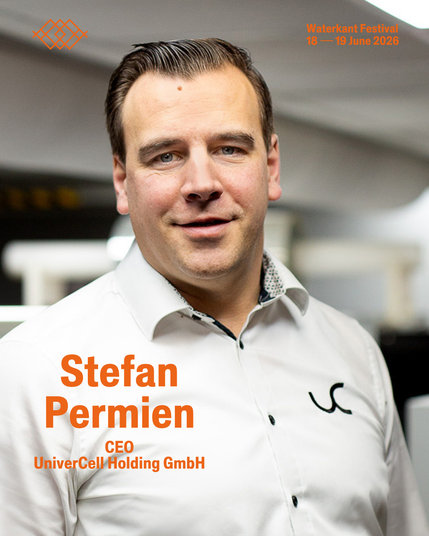
// Stefan Permien – CEO, UniverCell

European battery production has faced many setbacks. Univercell takes a different path: no joint venture with Chinese companies, no mass market dependency – instead sovereign European technology for aerospace, critical infrastructure and medical tech. Serial production of their own battery cells starts in June.

// At #Waterkant26: how does the startup-investor relationship work on the road to a gigafactory?

18 – 19 June 2026 // MFG5 Kiel // GET YOUR TICKETS NOW:
https://www.talque.com/go/ticket/acLVSX2j1VHLqMuRtTn0/shop

#battery #deeptech #greentech #sovereignty #europeantech #madeineurope #techindependence #supplychain #cleantech #climatetech #batterytechnology #gigafactory#energytransition #waterkant26

The battery miracle online is doing the most

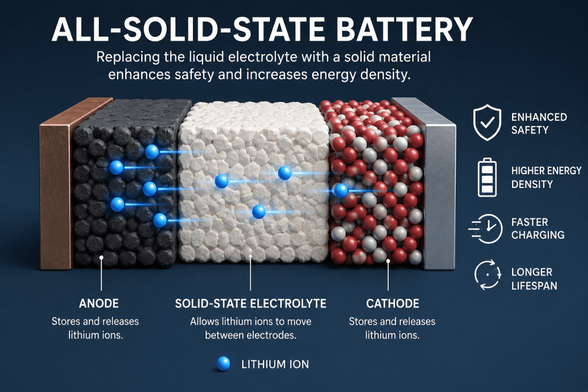
All-solid-state battery diagram by Luca Bertoli, CC BY-SA 4.0, via Wikimedia Commons.

Dear Cherubs, the internet has once again discovered a battery so perfect it sounds like it came from a pitch deck written by a caffeinated intern and approved by gravity itself. The specific 90-second charge, 99.7% storage retention, and 5,000-cycle package circulating online was not verifiable from primary sources I checked, so the smart move is to treat it as a viral claim, not a finished breakthrough.

Reality check

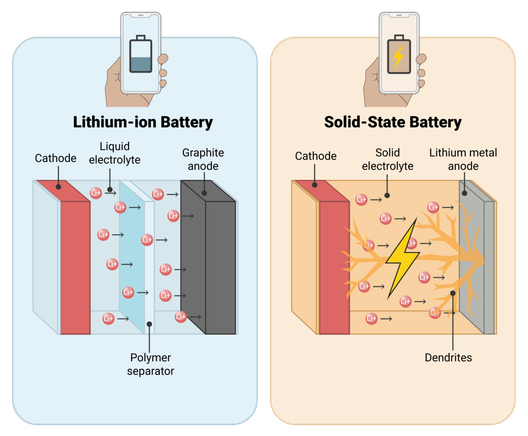
What is real is the bigger trend: solid-state batteries replace the flammable liquid electrolyte used in conventional lithium-ion cells with a solid ion conductor, which can improve safety and potentially raise energy density. MIT has been making that case for years, while also pointing out that the interface between materials is still the part where the dream gets stuck in traffic.

That interface problem is not a footnote. MIT’s recent coverage says solid-state cells are still plagued by dendrites that can short-circuit the battery, and a 2020 MIT review lays out the rest of the mess: chemical stability, mechanical stability, processing, and long-term performance. In other words, the field is advancing, just not in the magical “plug in for 90 seconds and disappear for six months” way social media likes to sell it.

DOE’s battery overview says solid-state batteries can be safer because they are less prone to leakage from damage or swelling in hot temperatures, but it also notes that some designs still use a little liquid at the cathode to reduce interfacial resistance. Translation: progress, yes. Fairy dust, no.

Why it matters

The good news is that the field is moving. In 2025, Stellantis and Factorial Energy said they validated automotive-sized solid-state cells with 375 Wh/kg energy density and fast charging from 15% to 90% in 18 minutes, with a demonstration fleet planned for 2026. That is not “two-minute EV charging,” but it is a serious step forward, which is how real engineering usually behaves when nobody is trying to go viral.

So the right takeaway is not that battery problems have been solved. It is that researchers keep making the hard part less impossible. If the viral post was pointing at a real advance, it was probably one brick in a wall, not the wall itself. The upside is still huge: safer packs, longer life, and faster charging. The downside is that physics remains deeply committed to being inconvenient.

Sources:
MIT Department of Materials Science and Engineering — https://dmse.mit.edu/news/why-solid-state-batteries-keep-short-circuiting/
MIT News — https://news.mit.edu/2017/toward-solid-lithium-batteries-0202
MIT Review PDF — https://ecm.mit.edu/pubs/articles/10.1002_aenm.202002689.pdf
U.S. Department of Energy — https://www.energy.gov/cmei/ammto/breaking-it-down-next-generation-batteries
Stellantis — https://www.stellantis.com/en/news/press-releases/2025/april/stellantis-and-factorial-energy-reach-key-milestone-in-solid-state-battery-development
Wikimedia Commons image source — https://commons.wikimedia.org/wiki/File:All-Solid-State_Battery.png

The Thisclaimer logo blends a classic warning symbol with a brain icon to represent critical thinking, curiosity, and thoughtful disclaimers. #batterySafety #batteryTechnology #cleanEnergy #electricVehicles #energyStorage #fastCharging #lithiumIon #mit #research #solidStateBatteries
@bielsubob
Wow… onward and upward with an end to fossil fuel use…
#BatteryTechnology is getting better by leaps and bounds at last.
Understanding the short circuit in solid-state batteries

A researcher team of the Max Planck Institute for Sustainable Materials uncovers the mechanisms behind dendrite-induced fractures in solid-state batteries, paving the way for their commercialization.

Job Alert

Industry Expert & Senior Research Lead (f/m/d) For Battery Cell Manufacturing

Deadline: open until filled  
Location: Austria - Vienna  

https://www.academiceurope.com/ads/industry-expert-senior-research-lead-f-m-d-for-battery-cell-manufacturing/

#hiring #BatteryTechnology #materialscience #BatteryManufacturing #physics #Innovation #ResearchLeadership

📊 Pembaruan data analitik telah tersedia.

"The End of an Era: Elon Musk's Last Cofounder Departs – What Does It Mean for the Future?"

🔗 Akses repositori/dokumentasi: https://www.mswobbles.com/genosida-kreativitas-mengapa-strategi-kesejahteraan-2026-membunuh-karir-anda/

#Tesla #ElonMusk #BatteryTechnology

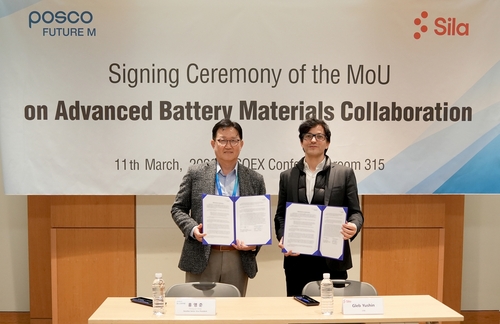
POSCO Future M partners with US battery materials firm Sila to develop advanced silicon anode technology using carbon nanomaterials, aiming to enhance EV battery performance by suppressing volume expansion and improving cost competitiveness while targeting future supply chain collaboration
#YonhapInfomax #POSCOFutureM #Sila #SiliconAnodeMaterials #BatteryTechnology #CarbonNanomaterials #Economics #FinancialMarkets #Banking #Securities #Bonds #StockMarket
https://en.infomaxai.com/news/articleView.html?idxno=109707
POSCO Future M Signs MOU with US-Based Sila for Advanced Battery Material Technology

POSCO Future M partners with US battery materials firm Sila to develop advanced silicon anode technology using carbon nanomaterials, aiming to enhance EV battery performance by suppressing volume expansion and improving cost competitiveness while targeting future supply chain collaboration

Yonhap Infomax

The “Cybercell” Efficiency Paradox: Analyzing Tesla’s 4680 Dry Electrode vs. The Industry Standard

Tesla 4680 Battery Analysis 2026: Dry Electrode vs. Traditional Cells

As Tesla navigates 2026, the success of the 4680 battery—specifically its “Dry Battery Electrode” (DBE) process—has become the definitive litmus test for the company’s manufacturing supremacy. This isn’t just about a bigger cell; it’s about a chemical and mechanical overhaul that promises a 50% reduction in production costs.

The Core Innovation: Moving Beyond the “Wet” Slurry

To understand the 2026 efficiency gains, one must first look at the traditional manufacturing method. For decades, the industry relied on a “wet” process where active battery materials are mixed into a toxic solvent (NMP), coated onto foils, and then run through massive, energy-intensive drying ovens.

Tesla’s Dry Battery Electrode (DBE) technology, perfected through the “4680D” project, skips this entirely. By using a dry powder mixture combined with a binder that “fibrillates” (forms tiny threads) under mechanical pressure, Tesla creates a self-supporting film.

Why It Matters:

  • Energy Efficiency: The removal of massive drying ovens reduces the energy footprint of a Gigafactory by over 70%.
  • Space Optimization: Eliminating the drying stage shrinks the factory floor requirements for electrode production by roughly 10x.
  • Chemical Density: Without solvents occupying space during the coating process, the electrodes can be made thicker and denser, leading to a theoretical 5-10% boost in energy density.

Comparative Metrics: 2170 vs. 4680 Gen 2 vs. 2026 “Cybercell”

The transition has not been without friction. Early 2024 versions of the 4680 faced criticism for having lower energy density than the legacy 2170 cells. However, the 2026 technical data shows a significant reversal.

Metric2170 (Standard)4680 Gen 2 (2024)4680 “Cybercell” (2026)Manufacturing ProcessWet CoatingDry Anode / Wet CathodeFull Dry (DBE)Energy Density~260 Wh/kg~244 Wh/kg~300+ Wh/kgCost per kWhBase ($100%)-15%-50% (Projected)Charging Speed (10-80%)25-30 mins20-25 mins~15 mins (Gen 3 All-Tab)

The 2026 “All-Tab” or Tabless architecture is the secret sauce for charging. By using the entire edge of the copper and aluminum foil as the “tab,” internal resistance is slashed. This prevents the “hot spots” that typically plague large cylindrical cells, allowing for sustained high-speed charging without degrading the battery’s chemistry.

The 2026 Roadblocks: Yield and Uniformity

Despite the theoretical brilliance, the “Humanized” truth of 2026 is that mass-producing dry cathodes is incredibly difficult. As of late 2025, reports indicated that while the dry anode (negative) was perfected, the dry cathode (positive) initially suffered from low yields—sometimes losing significant material to uniformity issues.

To combat this, Tesla’s 2026 strategy includes four new variants of the 4680 (NC05, NC20, NC30, NC50). The NC05 is specifically optimized for the Robotaxi, prioritizing cycle life (longevity) over sheer range. Meanwhile, the NC50 explores silicon-carbon anodes, aimed at high-performance models like the next-gen Roadster and the Plaid variants.

A High-Stakes Gamble

Tesla’s 2026 battery strategy is a classic example of “First Principles” engineering. By removing the solvent, they removed the cost. By removing the tab, they removed the heat. While rivals like BYD have focused on the “Blade” prismatic format for space efficiency, Tesla has bet the future on the cylindrical 4680’s ability to be manufactured like a high-speed soda bottling line.

If 2026 is the year these lines hit full speed, the price of EVs will no longer be a barrier—it will be a competitive advantage that traditional manufacturers may find impossible to match.

References and Further Reading

👉 Share your thoughts in the comments, and explore more insights on our Journal and Magazine. Please consider becoming a subscriber, thank you: https://borealtimes.org/subscriptions – Follow The Boreal Times on social media. Join the Oslo Meet by connecting experiences and uniting solutions: https://oslomeet.org

#BatteryTechnology #DryElectrode #Tesla4680