Side-Channel Attacks Against LLMs - Schneier on Security

Here are three papers describing different side-channel attacks against LLMs. “Remote Timing Attacks on Efficient Language Model Inference“: Abstract: Scaling up language models has significantly increased their capabilities. But larger models are slower models, and so there is now an extensive body of work (e.g., speculative sampling or parallel decoding) that improves the (average case) efficiency of language model generation. But these techniques introduce data-dependent timing characteristics. We show it is possible to exploit these timing differences to mount a timing attack. By monitoring the (encrypted) network traffic between a victim user and a remote language model, we can learn information about the content of messages by noting when responses are faster or slower. With complete black-box access, on open source systems we show how it is possible to learn the topic of a user’s conversation (e.g., medical advice vs. coding assistance) with 90%+ precision, and on production systems like OpenAI’s ChatGPT and Anthropic’s Claude we can distinguish between specific messages or infer the user’s language. We further show that an active adversary can leverage a boosting attack to recover PII placed in messages (e.g., phone numbers or credit card numbers) for open source systems. We conclude with potential defenses and directions for future work...

Schneier on Security

This Punchbowl Phish Is Bypassing 90% Of Email Filters Right Now

997 words, 5 minutes read time.

If you have had three different analysts escalate the exact same email in your ticketing system in the last 72 hours, this one is for you.

This is not a Nigerian prince scam. This is not a fake Amazon order. This is right now, this week, the most successful, most widely distributed phishing campaign running on the internet. And almost nobody is talking about just how good it is.

What this scam actually is

You get an email. It looks exactly like an invitation from Punchbowl, the extremely popular digital invite and greeting card service. There’s no misspelled logo. There’s no broken grammar. There is absolutely nothing that jumps out as fake.

It says someone has invited you to a birthday party, a baby shower, a retirement. At the very bottom, there is one single line that almost everyone misses:

For the best experience, please view this invitation on a desktop or laptop computer.

If you click the link, you do not get an invitation. You get malware. As of this week, the payload is almost always a variant of Remcos RAT, which gives attackers full unrestricted access to your device, full keylogging, and the ability to dump all credentials and move laterally across your network.

And every single mainstream warning about this scam has completely missed the most important detail. That line about the desktop? That is not a throwaway line. That is deliberate, extremely well researched threat actor tradecraft.

Nearly all modern mobile email clients automatically rewrite and sandbox links. Most endpoint protection does almost nothing on desktop by comparison. The attackers know this. They are actively telling you to defeat your own security for them. And it works.

Why this is an absolute nightmare for security teams

Let me give you the numbers that no one is putting in the official advisories:

  • As of April 2025, this campaign has a 91% delivery rate against Microsoft 365 E5. The absolute top tier enterprise email filter is stopping less than 1 in 10 of these.
  • Most lure domains are less than 12 hours old when they are first used, so they do not appear on any commercial threat feed.
  • This is not just targeting consumers. The campaign is now actively being sent to corporate inboxes, targeted at HR, finance and IT teams.
  • Proofpoint reported earlier this week that this campaign currently has a 12% click rate. For context, the average phish has a click rate of 0.8%.

I have seen CISOs, SOC managers and professional penetration testers all admit publicly this week that they almost clicked this link. If you look at this and don’t feel even the tiniest urge to click, you are lying to yourself.

This is what good phishing looks like. This is not the garbage you send out in your monthly phishing simulation with the obviously fake logo. This is the stuff that actually works.

How to not get burned

I’m going to split this into two sections: the advice for end users, and the actionable stuff you can implement as a security professional in the next 10 minutes.

For everyone

  • Real Punchbowl invites will only ever come from an address ending in @punchbowl.com. There are no exceptions. If it comes from anywhere else, delete it immediately.
  • Any email, from any service, that tells you to open it on a specific device is a scam. Full stop. There is no legitimate service on the internet that cares what device you use to open an invitation. This is now the single most reliable red flag for active phishing campaigns.
  • Do not go to Punchbowl’s website to “check if the invite is real”. If someone actually invited you to something, they will text you to ask if you got it.

For SOC Analysts and Security Teams

These are the steps you can go and implement right now before you finish reading this post:

  • Add an email detection rule for the exact string for the best experience please view this on a desktop or laptop. At time of writing this rule has a 0% false positive rate.
  • Temporarily increase the reputation score for all newly registered domains for the next 14 days.
  • Add this exact lure to your phishing simulation program immediately. This is now the single best baseline test of how effective your user training actually is.
  • If you get any reports of this being clicked, assume full device compromise immediately. Do not waste time triaging. Isolate the host.
  • Closing Thought

    The worst part about this scam is how predictable it is. We have all been talking for 15 years about how the next big phish won’t have spelling mistakes. We all said it will look perfect. It will be something you actually expect. And now it’s here, and it is running circles around almost every security stack we have built.

    If you see this email, report it. If you are on shift right now, go push that detection rule. And for the love of god, stop laughing at people who almost clicked it.

    Call to Action

    If this breakdown helped you think a little clearer about the threats out there, don’t just click away. Subscribe for more no-nonsense security insights, drop a comment with your thoughts or questions, or reach out if there’s a topic you want me to tackle next. Stay sharp out there.

    D. Bryan King

    Sources

    Disclaimer:

    The views and opinions expressed in this post are solely those of the author. The information provided is based on personal research, experience, and understanding of the subject matter at the time of writing. Readers should consult relevant experts or authorities for specific guidance related to their unique situations.

    #attackVector #boardroomRisk #breachPrevention #CISAAlert #CISO #credentialTheft #cyberResilience #cyberattack #cybercrime #cybersecurityAwareness #defenseInDepth #desktopOnlyPhishing #detectionRule #DKIM #DMARC #emailFilterBypass #emailGateway #emailHygiene #emailSecurity #emailSecurityGateway #endpointProtection #incidentResponse #indicatorsOfCompromise #initialAccess #IoCs #lateralMovement #linkSafety #logAnalysis #maliciousLink #malware #MITREATTCK #mobileEmailRisk #phishingCampaign #phishingDetection #phishingScam #phishingSimulation #phishingStatistics #PunchbowlPhishing #ransomwarePrecursor #RemcosRAT #sandboxEvasion #securityAlert #SecurityAwarenessTraining #securityBestPractices #securityLeadership #securityMonitoring #securityOperationsCenter #securityStack #SOCAnalyst #socialEngineering #spearPhishing #SPF #suspiciousEmail #T1566001 #threatActor #threatHunting #threatIntelligence #userTraining #zeroTrust

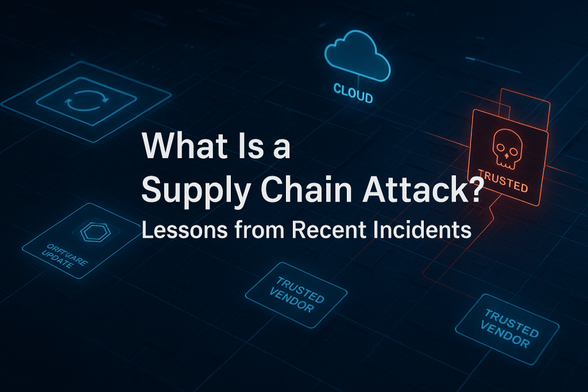
    What Is a Supply Chain Attack? Lessons from Recent Incidents

    924 words, 5 minutes read time.

    I’ve been in computer programming with a vested interest in Cybersecurity long enough to know that your most dangerous threats rarely come through the obvious channels. It’s not always a hacker pounding at your firewall or a phishing email landing in an inbox. Sometimes, the breach comes quietly through the vendors, service providers, and software updates you rely on every day. That’s the harsh reality of supply chain attacks. These incidents exploit trust, infiltrating organizations by targeting upstream partners or seemingly benign components. They’re not theoretical—they’re real, costly, and increasingly sophisticated. In this article, I’m going to break down what supply chain attacks are, examine lessons from high-profile incidents, and share actionable insights for SOC analysts, CISOs, and anyone responsible for protecting enterprise assets.

    Understanding Supply Chain Attacks: How Trusted Vendors Can Be Threat Vectors

    A supply chain attack occurs when a threat actor compromises an organization through a third party, whether that’s a software vendor, cloud provider, managed service provider, or even a hardware supplier. The key distinction from conventional attacks is that the adversary leverages trust relationships. Your defenses often treat trusted partners as safe zones, which makes these attacks particularly insidious. The infamous SolarWinds breach in 2020 is a perfect example. Hackers injected malicious code into an update of the Orion platform, and thousands of organizations unknowingly installed the compromised software. From the perspective of a SOC analyst, it’s a nightmare scenario: alerts may look normal, endpoints behave according to expectation, and yet an attacker has already bypassed perimeter defenses. Supply chain compromises come in many forms: software updates carrying hidden malware, tampered firmware or hardware, and cloud or SaaS services used as stepping stones for broader attacks. The lesson here is brutal but simple: every external dependency is a potential attack vector, and assuming trust without verification is a vulnerability in itself.

    Lessons from Real-World Supply Chain Attacks

    History has provided some of the most instructive lessons in this area, and the pain was often widespread. The NotPetya attack in 2017 masqueraded as a routine software update for a Ukrainian accounting package but quickly spread globally, leaving a trail of destruction across multiple sectors. It was not a random incident—it was a strategic strike exploiting the implicit trust organizations placed in a single provider. Then came Kaseya in 2021, where attackers leveraged a managed service provider to distribute ransomware to hundreds of businesses in a single stroke. The compromise of one MSP cascaded through client systems, illustrating that upstream vulnerabilities can multiply downstream consequences exponentially. Even smaller incidents, such as a compromised open-source library or a misconfigured cloud service, can serve as a launchpad for attackers. What these incidents have in common is efficiency, stealth, and scale. Attackers increasingly prefer the supply chain route because it requires fewer direct compromises while yielding enormous operational impact. For anyone working in a SOC, these cases underscore the need to monitor not just your environment but the upstream components that support it, as blind trust can be fatal.

    Mitigating Supply Chain Risk: Visibility, Zero Trust, and Preparedness

    Mitigating supply chain risk requires a proactive, multifaceted approach. The first step is visibility—knowing exactly what software, services, and hardware your organization depends on. You cannot defend what you cannot see. Mapping these dependencies allows you to understand which systems are critical and which could serve as entry points for attackers. Second, you need to enforce Zero Trust principles. Even trusted vendors should have segmented access and stringent authentication. Multi-factor authentication, network segmentation, and least-privilege policies reduce the potential blast radius if a compromise occurs. Threat hunting also becomes crucial, as anomalies from trusted sources are often the first signs of a breach. Beyond technical controls, preparation is equally important. Tabletop exercises, updated incident response plans, and comprehensive logging equip teams to react swiftly when compromise is detected. For CISOs, it also means communicating supply chain risk clearly to executives and boards. Stakeholders must understand that absolute prevention is impossible, and resilience—rapid detection, containment, and recovery—is the only realistic safeguard.

    The Strategic Imperative: Assume Breach and Build Resilience

    The reality of supply chain attacks is unavoidable: organizations are connected in complex webs, and attackers exploit these dependencies with increasing sophistication. The lessons are clear: maintain visibility over your entire ecosystem, enforce Zero Trust rigorously, hunt for subtle anomalies, and prepare incident response plans that include upstream components. These attacks are not hypothetical scenarios—they are the evolving face of cybersecurity threats, capable of causing widespread disruption. Supply chain security is not a checkbox or a one-time audit; it is a mindset that prioritizes vigilance, resilience, and strategic thinking. By assuming breach, questioning trust, and actively monitoring both internal and upstream environments, security teams can turn potential vulnerabilities into manageable risks. The stakes are high, but so are the rewards for those who approach supply chain security with discipline, foresight, and a relentless commitment to defense.

    Call to Action

    If this breakdown helped you think a little clearer about the threats out there, don’t just click away. Subscribe for more no-nonsense security insights, drop a comment with your thoughts or questions, or reach out if there’s a topic you want me to tackle next. Stay sharp out there.

    D. Bryan King

    Sources

    Disclaimer:

    The views and opinions expressed in this post are solely those of the author. The information provided is based on personal research, experience, and understanding of the subject matter at the time of writing. Readers should consult relevant experts or authorities for specific guidance related to their unique situations.

    #anomalyDetection #attackVector #breachDetection #breachResponse #CISO #cloudSecurity #cyberattackLessons #cybersecurity #cybersecurityGovernance #cybersecurityIncident #cybersecurityMindset #cybersecurityPreparedness #cybersecurityResilience #cybersecurityStrategy #EndpointSecurity #enterpriseRiskManagement #enterpriseSecurity #hardwareCompromise #hardwareSecurity #incidentResponse #incidentResponsePlan #ITRiskManagement #ITSecurityPosture #ITSecurityStrategy #Kaseya #maliciousUpdate #MFASecurity #MSPSecurity #networkSegmentation #NotPetya #organizationalSecurity #perimeterBypass #ransomware #riskAssessment #SaaSRisk #securityAudit #securityControls #SOCAnalyst #SOCBestPractices #SOCOperations #softwareSecurity #softwareSupplyChain #softwareUpdateThreat #SolarWinds #supplyChainAttack #supplyChainMitigation #supplyChainRisk #supplyChainSecurityFramework #supplyChainVulnerabilities #thirdPartyCompromise #threatHunting #threatLandscape #trustedVendorAttack #upstreamCompromise #upstreamMonitoring #vendorDependency #vendorRiskManagement #vendorSecurity #vendorTrust #zeroTrust

    Interesting piece on Reddit as an attack vector to poison Google searches and LLMs via control over a subreddit: https://larslofgren.com/codesmith-reddit-reputation-attack/

    In that case it was a business competitor, but there are more system-level risks to democracy too, I think.

    #Reddit #AttackVector #LLM #Google

    The Story of Codesmith: How a Competitor Crippled a $23.5M Bootcamp By Becoming a Reddit Moderator

    Let’s say you decide to start a coding bootcamp. Your background is in pedagogy and you love teaching. Your parents were teachers. You find a co-founder, raise a bit of money, and pour your soul into your company. The first couple of years, students love your program. Positive feedback, extraordinary student outcomes, employees love the mission. You are quite literally […]

    Lars Lofgren

    I really like this kind of content that breaks down research papers for the rest of us. I had no idea that BGP hijacking was such a threat.

    I wonder if any security folks out there have more up-to-date information on the resilience of OVH, Hetzner, DigitalOcean and other major provider networks. Are Counter-RAPTOR guards, counter-fingerprinting measures, BGP monitoring and RPKI being deployed in the wild?

    https://youtu.be/XDsLDhKG8Cs

    #Security #BGP #Networking #Tor #AttackVector #Deanonymization

    For 9 Years Tor Ignored Princeton's Proof: BGP Attacks Can Unmask Millions of Users

    YouTube

    This is crazy! Be careful with browser extensions that simulate payment tools, password managers, security tools, etc.

    https://youtu.be/oWtR8vqbYX4

    #PolymorphicExtensions #AttackVector #Cybersecurity #Infosec #BrowserSecurity

    this browser hack can steal everything

    YouTube

    Graphene Tattoos: The Future Of Continuous Health Monitoring?

    https://hackaday.com/2025/02/16/graphene-tattoos-the-future-of-continuous-health-monitoring/

    The #tech part of me thinks this is cool, but my #paranoid part immediately thinks, "the road to Hell is paved with good intentions."

    #technology #health #medicine #healthcare #attackvector #dataprivacy #datasecurity #surveillance

    Graphene Tattoos: The Future Of Continuous Health Monitoring?

    In the near future, imagine a world where your health is continuously monitored, not through bulky devices but through an invisible graphene tattoo. Developed at the University of Massachusetts Amh…

    Hackaday
    Fake CrowdStrike Job Interviews Become Latest Hacker Tactic

    Cybercriminals are luring victims into downloading the XMRig cryptomining malware via convincing emails, inviting them to schedule fake interviews using a malicious link.

    Mitigating Attack Vectors in GitHub Workflows – Open Source Security Foundation

    The Register: SafeBreach presented at the Black Hat Asia conference on Friday that flaws in Microsoft and Kaspersky security products could potentially allow the remote deletion of files. Microsoft Defender and Kaspersky's Endpoint Detection and Response (EDR) can be made to detect false positive indicators of malicious files – and then to delete them. The attack relies on the fact that Microsoft and Kaspersky use byte signatures – unique sequences of bytes in file headers – to detect malware. "Our goal was to confuse EDR by implanting malware signatures into legit files and make them think its malicious" 🔗 https://www.theregister.com/2024/04/22/edr_attack_remote_data_deletion/

    #MicrosoftDefender #Kaspersky #attackvector #EDR

    Researchers claim Windows Defender can be fooled into deleting databases

    Two rounds of reports and patches may not have completely closed this hole

    The Register