Prachtmuziek uit Griekenland en Franse chansons

Het is even wennen. Na vier weken offline door Duitsland gefietst te hebben, keerde ik enkele dagen geleden weer terug op mijn stek. Tijdens mijn tochten door het fraaie Münsterland was ik geheel afgekickt van de sociale media, en het opnieuw opstarten doet mijn motortje even pruttelen.

Geheel verstoken van internet was ik al die tijd nou ook weer niet, maar slechts zeer zelden bleek een café of restaurant te beschikken over (gratis) Wi-Fi. Onze Oosterburen zijn wat meer van de oude stempel en verkiezen fysiek contact boven een virtuele werkelijkheid. Daar valt iets voor te zeggen. En eerlijk is eerlijk: wat wás het heerlijk om een praatje te maken met een willekeurige passant bij de supermarkt, of een biertje te drinken met een collega-fietser.

Alleen maar luieren was er trouwens ook niet bij: halverwege mijn vakantie publiceerde ik een bespreking van de cd ‘Sax avec Elan!’ van het Amstel Quartet en de Franse chansonnier Philippe Elan. De vier saxofonisten leerden de in Nederland wonende zanger kennen dankzij de componist Ton de Kruyf, die mij zeer geholpen heeft met mijn biografie van Reinbert de Leeuw. Zoals altijd spelen de saxofonisten perfect en met veel schwung, maar de combinatie met Elan is niet helemaal mijn kopje thee: door de drukke arrangementen trekt het kwartet iets te sterk de aandacht.


Naast de cd met chansons gezongen door een Franse Nederlander, lagen er ook twee schijfjes in de bus van de Grieks-Nederlandse componist Aspasia Nasopoulou. Eindelijk eens goed nieuws uit Griekenland! Nasopoulou heeft grote affiniteit met oude muziek en weet deze op een vanzelfsprekende manier te koppelen aan moderne speelwijzen, zoals te horen in het op een middeleeuwse cantiga gebaseerde Lelia doura, dat door het blokfluitkwintet Seldom Sene voorbeeldig wordt uitgevoerd.

Bijzonder ook is de muziek die Nasopoulou schreef bij de zevendelige gedichtencyclus Nachtwerk van Micha Hamel, die zelf zijn verzen voordraagt. Het Doelen Kwartet tekent voor de muzikale begeleiding. Bij elke tekst weet Nasopoulou precies de juiste sfeer te treffen, met vrolijk vogelgekwetter, aarzelende staccati of geheimzinnige flageoletten.

Gisteren had ik een inspirerend gesprek over nieuwe muziek met Jan Vredenburg van het muziektijdschrift LuisterWe spraken onder andere over de nieuwe opera over Mariken van Nieweghen van Calliope Tsoupaki, die in oktober in première gaat en waarover ik haar voor het blad ga interviewen. Net als haar landgenote Nasopoulou koppelt Tsoupaki op organische wijze oude en nieuwe muziek aan elkaar.

Mariken in de tuin der lusten

De muziek van Tsoupaki heeft altijd een betoverende lyriek, of het nu de op Monteverdi geïnspireerde madrigaalreeks E guerra e morte uit 1997 betreft,  haar  Lucas Passie (2008), haar reflectie op een bewegend icoon van Maria uit 2012 of haar visie op de Griekse held Oedipus, die vorig jaar in première ging in het Holland Festival. Ik verheug mij zeer op ons gesprek en op haar opera Mariken in de tuin der lusten. 

Dit nieuwe werk wordt uitgevoerd door o.a. het Asko|Schönberg, maar niet met chef-dirigent Reinbert de Leeuw, die vanavond weer centraal staat in mijn programma ‘Panorama de Leeuw’ op de Concertzender. Ditmaal klinkt een herhaling van de eerste aflevering, waarin ik Reinbert volg in zijn kennismaking met klassieke muziek. Met o.a. werk van Chopin en Satie en van De Leeuw zelf.Ook tijdens mijn concertlezing Kantelend muzieklandschap op zondag 6 september om 16.00 uur in de OBA (Openbare Bibliotheek Amsterdam) zullen stukken klinken van deze componisten, gespeeld door de pianist Marcel Worms. Met mijn biografie als leidraad, maken we een tocht langs de ontwikkeling van de klassieke muziek, van de rotsvaste tonaliteit van Chopin in de 19e eeuw, tot  de atonaliteit van Schönberg in de vroege 20e eeuw, de toevalsmuziek van Cage in het midden van de vorige eeuw en het meedogenloze gebeuk van Oestvolskaja tegen het einde van dat tijdperk.

Ik zie uit naar deze eerste concertlezing met Marcel Worms en hoop u zondag 6 september te mogen begroeten.

#AmstelQuartet #AspasiaNasopoulou #CalliopeTsoupaki #Cultuurpers #DoelenKwartet #Donemus #LeliaDoura #LucasPassie #MarcelWorms #MichaHamel #Monteverdi #Nachtwerk #OBA #Oestvolskaja #PanoramaDeLeeuw #PhilippeElan #ReinbertDeLeeuw #SaxAvecElan #SeldomSene #TheaDerks #TonDeKruyf

#Corona-classics 2: Maxim Shalygin: growling & screeching saxophones on CD ‘Todos los fuegos el fuego’

A rainy day in #corona quarantine seems the ideal moment to listen to a CD about fire. So I slide Todos los fuegos el fuego by the Ukrainian-Dutch composer Maxim Shalygin into my laptop.

‘All fires the fire’ is named after the collection of eight short stories by Julio Cortázar. The CD also  contains eight pieces, which together form a suite for the exceptional line-up of saxophone octet.

Maxim Shalygin composed it in 2019 for the Amstel Quartet and the Keuris Quartet, who also recorded it.

Since you’re here: due to the corona lockdown my income has dwindled to virtualy nill. Your support is welcome, however small the amount. Thanks, Thea! 

Transfer to NL82 INGB 0004261694, TJM Derks Amsterdam or through PayPal (friends option).

Shalygin (Kamianske 1985) studied composition at the conservatories of St. Petersburg, Kiev and The Hague. Since 2011 he has lived in the Netherlands, and four years later I met him personally. He helped me out when I went to interview his compatriot Valentin Silvestrov for Radio 4 and learnt that the reclusive composer only speaks Russian. Shalygin gratefully seized the opportunity to meet his idol. We had a very animated conversation, in which Silvestrov’s loquaciousness was matched by Shalygin’s enthusiastic interpretation.

Exploring boundaries

As a matter of course I hereafter immersed myself in Shalygin’s own music. This is characterized by a great intensity and a zest for exploring boundaries. He challenges musicians to conjure sounds from their instruments that they never suspected existed. Shalygin’s work often has a spiritual slant, making him a kindred spirit of Silvestrov.

In 2017, during the Gaudeamus Music Week, I was captivated by his Lacrimosa, composed for seven violins. A year later he composed the impressive cycle Canti d’inizio e fine for the intrepid cellist Maya Fridman. In this cycle he not only asks her to fiercely flog her instrument, but to simultaneously sing.

Todos los fuegos el fuego also presents a wide range of playing techniques. Thus Shalygin tries to create a musical equivalent of the storytelling techniques with which Cortázar shapes his magical-realistic world. The Argentine author himself described his prose as incantatoria, that has the double meaning of ‘enchantment’ (in the sense of a magic spell) and ‘chant’ (as in song, singing). This concept refers both to the hypnotic atmosphere in Cortázar’s work, and to the care he dedicated to constructing his sentences. His syntax arose partly intuitively, from delays and accelerations that express the underlying emotion or atmosphere rather than the message itself.

Shifting layers

This is exactly how Shalygin goes about in Todos los fuegos el fuego. All eight pieces consist of different layers that slide over, under and through each other in ever changing formations and tempi. The pace is usually low, with elongated lines meandering through the space without any recognisable metre – there is no such thing as thumping along with the beat. Nor loudly singing along for that matter. Shalygin does not write Ohrwurms, but concentrates on contrasts between slow movements in one register versus faster motifs in the other. Like a shaman he draws attention to the sound itself and invites us to listen to our inner self.

International Combustion Engine opens with sustained tones that are slowly layered on top of each other, cautiously ornamented with languid trills. A melody built from small steps in the upper voices is interspersed with fierce growls in the lower registers. Death of a Mosasaur has a more narrative nature. A wistful motif of one step up, one step down followed by a jump up wanders desolately through the various registers. Gradually an unwieldy pulse develops, as if a waddling Mosasaur is approaching. A soprano sax blasts out piercing, staccato cries like morse-signs. This apparent cry for help is smothered in low roars and ends in abrupt silence.

Incantation

The other movements also abound in overlapping and repetitive patterns, sudden interruptions, decelerations and accelerations. Tones mysteriously swell up out of nowhere, are played with audible breath or with tongue-slaps that create ear-splitting attacks. At other times, the saxophonists make their lips vibrate while playing, like a softly snorting horse. Spring, Breaking creates an intoxicating atmosphere with subtly pulsating sounds, Endless Mordent is a study in eruptive grace notes.

In Ashes in Birth screeching and rhythmically teeming lines gradually advance towards rattling valves that die away into nothingness. But the most beautiful movement is Stairway to Decay, a melancholic lament that is roughly disturbed by ‘out of tune’ sounds, as if decay sets in. The texture gradually becomes more dissonant, while from afar a mumbled prayer develops, like an incantation. When the saxophonists start articulating more clearly, we finally discern the text: ‘Todos los fuegos el fuego’. – Mesmerizing and haunting.

The eight saxophonists effortlessly master the extended techniques in Shalygin’s score. Moreover they are completely attuned to each other: breathing and playing as one living entity they sound like a majestic organ.

– Thanks to Todos los fuegos el fuego the drizzly day was over before I knew it.

#AmstelQuartet #corona #JulioCortázar #KeurisQuartet #MaximShalygin #MayaFridman #TodosLosFuegosElFuego #ValentinSilvestrov

Cover-12-768×1036

Contemporary Classical - Thea Derks

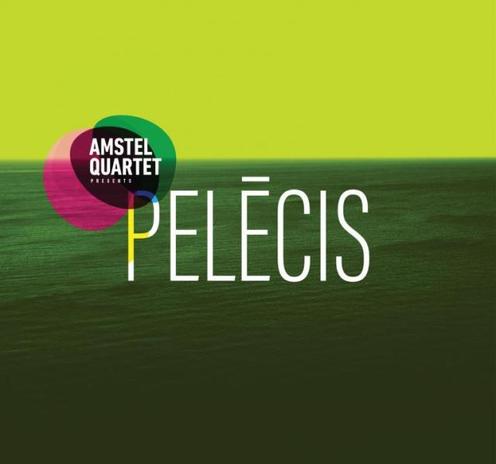
Amstel Quartet: CD portrait of Georgs Pelēcis

‘All of my creative inspiration comes from music, from euphony that acts as an ideal reflection or embodiment of a homeland. Aspiring for this ideal is the most important theme in my work.’

This is the motto of the Latvian composer Georgs Pelēcis, to whom the Amstel Saxophone Quartet has dedicated a full CD. This will be presented at Orgelpark Amsterdam on 10 December 2021.

Georgs Pelēcis was born in Riga in 1947 and started out his musical career at the Emīls Dārziņš Music School, the junior department of the Riga Conservatoire (today called the Jāzeps Vītols Latvian Academy of Music). He was a chorister in the renowned Dārziņš School boys’ choir, and also took lessons in piano and violin and studied composition with Ģederts Ramans.

After finishing this musical college he moved to Moscow, to study composition with Aram Khachaturian at the Piotr Tchaikovsky State Conservatory. In 1970 he graduated with the Double Concerto for Balalaika, Baritone-Saxophone and Orchestra. He returned to Riga, where, much to his surprise, he was at once invited to teach polyphony at the Music Academy. ‘I didn’t have any particular interest in the subject. On the contrary, I had passed the exam and was happy it was over’, he confessed in an interview with his composer colleague Jānis Petraškevičs in 2018.

 Yet Pelēcis felt honoured by the request and accepted the position anyway, even though a serious methodology for teaching polyphony was not at hand. After having taught the subject for four years, he realized that he ‘did not know anything’, and decided to move back to Moscow.

FLEMISH POLYPHONY

He studied with Professor Vladimir Protopopov, fnishing his studies in 1977 with a dissertation on the Flemish polyphonist Johannes Ockeghem. Hereafter he quickly developed into one of the foremost researchers in this field, publishing over thirty academic works. In 1993 his study of Pierluigi Palestrina was awarded a medal by the International Palestrina Centre.

It proved not always easy to balance his research with his compositional activities, though. In the seventies and eighties there were times when he feared he might never compose again. Yet, while he never gave up his position as a professor of counterpoint and fugue at the Latvian Academy of Music, he soon realized that ‘writing music is definitely my priority’, and concentrated more on composing.

Georgs Pelēcis: ‘Minimalists such as Steve Reich and Simeon ten Holt make euphony a colossal source of joy.’

Tweet

Pelēcis is a great admirer of the clever and intricate polyphony of Bach and Palestrina and is averse to the quest for innovation that so long dominated the musical avant-garde. To his view composers must not approach music in a dialectic way: rather than feeling obliged to always be in a metaphoric ‘military front line’, he chooses to also cherish the achievements of the past. The influence of early music clearly shines through his own music, which is always melodic and euphonious.

EUPHONY

This does not mean he rejects all modern developments, though. He highly values the repetitive patterns of minimalists such as Steve Reich and Simeon ten Holt. ‘They make euphony a colossal source of joy’, he confided to Petraškevičs in 2018. ‘All of those rhythm patterns they play around with, it’s a creative and perceptive joy!’ In his own compositions he makes abundant use of repetitive patterns, though he would never call this approach ‘minimalist’. He prefers the term ‘maximalism’, for after all, the composer squeezes a maximum of musical material from one single pattern.

Though using polyphonic techniques, the music of Pelēcis is never ponderous or academic. He creates a simple, open and sometimes humorous voice that immediately speaks to our heart and soul. Because of its spiritual connotations his work is often mentioned in one breath with that of composers such as Arvo Pärt or John Tavener. To his own detriment he is sometimes even dubbed ‘the naïvist of Latvian music’.

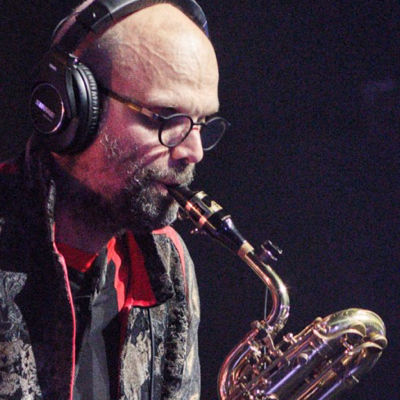
This epithet does not do justice to his warm and lively style that is brimming with zest for life. As the Latvian composer and teacher Imants Zemzaris once suggested, we should rather speak of ‘new consonant music, where euphony is the harmonic ideal’. Or, to quote tenor saxophonist Bas Apswoude of the Amstel Quartet: ‘Despite its simplicity the music of Pelēcis is never superficial, perhaps because of its sincerity, effective use of counterpoint and sophisticated rhythmicality.’

#AmstelQuartet #ArvoPärt #GeorgsPelēcis #Orgelpark

Georgs Pelēcis - Wikipedia

I played for 20 years in the Amstel Quartet. This is one of the tunes I am most proud of. No one can equal this performance of Xenakis’ XAS. Don’t get me wrong, I have plenty of self critique, but this is truly something special. And we were also able to do this live!

https://open.spotify.com/track/5kpTHsfe1UBINDg1EFhlMO?si=GfysoHEuRbuDCuSm-Brt8A

#amstelquartet #iannisxenakis #xenakis #classicalmusic #avantgardemusic #atonalmusic #microtonal #saxophone #saxophonequartet #classicalsaxophone

XAS - 1987

Iannis Xenakis · Song · 2005

Spotify