 Palm Oil Detectives
Food giants #SimeDarby, #Nestle, #Cargill, Adani #Wilmar are #RSPO members 💰 yet buy “sustainable” #palmoil linked to #humanrights abuses in #Guatemala 🇬🇹 Resist in solidarity and #Boycottpalmoil 🌴🪔☠️🔥⛔️ #Boycott4Wildlife @palmoildetectives https://palmoildetectives.com/2022/11/28/spoiled-fruit-land-grabbing-violence-and-slavery-for-sustainable-palm-oil/?utm_source=mastodon&utm_medium=Palm+Oil+Detectives&utm_campaign=publer
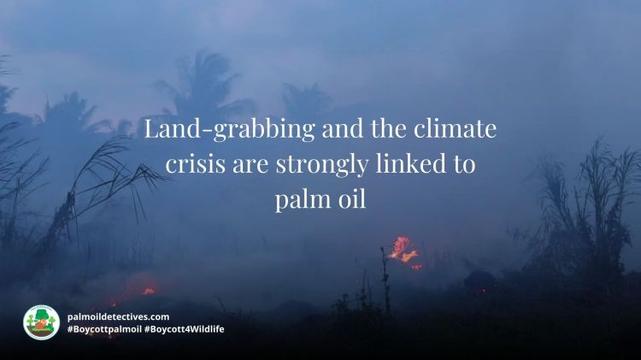
#Report by @FAO 📜 finds 90% of #deforestation is for BIG-AG by #Cargill, #Wilmar and #SimeDarby. Their monopoly drives #indigenous #landgrabbing for #palmoil 🌴💰 Take action! 🌴🪔💀🤢🚫 #Boycottpalmoil #Boycott4Wildlife @palmoildetectives https://palmoildetectives.com/2022/11/20/land-grabbing-and-the-climate-crisis-are-strongly-linked-to-palm-oil/?utm_source=mastodon&utm_medium=Palm+Oil+Detectives&utm_campaign=publer
 Dragofix
Judges charged in Indonesian bribery scandal after clearing palm oil giants of corruption https://news.mongabay.com/2025/04/judges-charged-in-indonesian-bribery-scandal-after-clearing-palm-oil-giants-of-corruption/
#Indonesia #environment #corruption #PalmOil #PermataHijau #Wilmar #MusimMas

Judges charged in Indonesian bribery scandal after clearing palm oil giants of corruption
JAKARTA — Prosecutors in Indonesia have charged four judges and two lawyers accused of bribery in a recently concluded trial involving palm oil giants Permata Hijau, Wilmar and Musim Mas. The Attorney General’s Office made a late-night announcement on April 13 that it had charged Jakarta-based judges Muhammad Arif Nuryanta, Agam Syarif Baharuddin, Ali Muhtarom […]
 Salva la Selva
#Honduras #CartaAbierta #AceiteDePalma
Por violencia en el Valle del Aguán, exigimos junto + 30 organizaciones responsabilidad a gigantes de la #palmaaceitera
A las empresas #Cargill #Mondelez #Pepsico #ArcherDanielsMidland ADM #PasternakBaum #FloraFood, #Friesland-Campina #Olenex #Wilmar #Vandemoortele que compran, venden, comercian o procesan aceite de palma de #CorporaciónDinant
Decimos: detengan la violencia en #Agúan #Honduras, protejan los derechos humanos

Honduras: por violencia en el Aguán exigimos responsabilidad a gigantes de la palma aceitera
Junto a la producción del aceite de palma de la Corporación Dinant, se ha producido una escalada de violencia y estamos ante una situación grave en el Valle de Aguán. Organizaciones de derechos humanos y ambientales nos hemos unido para denunciar violaciones de derechos humanos, desplazamientos forzados y asesinatos asociados con las plantaciones de palma aceitera de la mencionada empresa.
 Peter Riley
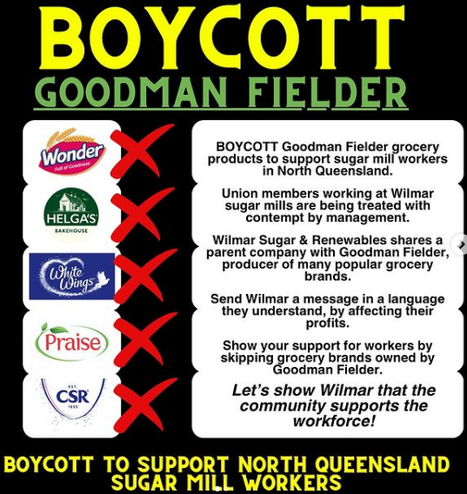
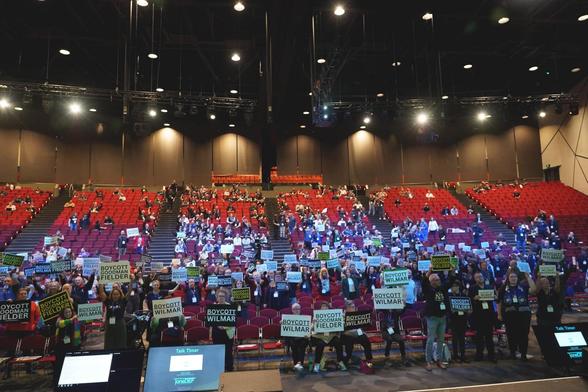
workers from eight plants of #sugar giant #Wilmar International rejected wage offer 11th June. Some 84.7% of 1,200 workers voted against the pay proposal from the Singapore-owned company. Unions have temporarily suspended industrial action at mills run by Australia's largest sugar producer as negotiations over worker pay resume. My guest later in the program today is Jim Wilson from the AWU - Australian Workers #Union.
https://www.3cr.org.au/sticktogether/episode/wilmar-sugar-dispute


Wilmar Sugar Dispute
On this week’s episode of Stick Together, focus on the Wilmar Sugar dispute in Queensland, which we’ve been providing you with updates over the past year or so. Just a reminder, workers from eight plants of sugar giant Wilmar International have rejected its new wage offer as of 11th June.Some 84.7% of 1,200 workers voted against the pay proposal from the Singapore-owned company. Unions have temporarily suspended industrial action at mills run by Australia's largest sugar producer as negotiations over worker pay resume.
 Stef's Picks
@amazing_wilmar
#Wilmar #Stef #StefsPicks #MilaAzul #HerLimit #MilaAmour #AngelaWhite #JaclynSwedberg #ViktoriiaAliko #LilyChey #KatyPerry #MileyCyrus #EmilyRatajkowski #Variety #NSFW
All my
Thread Sets/Series
Courtesy
1x For
MutualFollow AW
+
NSFWers who need.
Mila Azul Sets 21-13
https://mastodon.social/@StefsPicks/111954853234992316
Mila Azul Sets 12-1
https://mastodon.social/@StefsPicks/111954874816389593
1-Sets
https://mastodon.social/@StefsPicks/111860365943218737
NSFW Series
https://mastodon.social/@StefsPicks/111787576817547541
SFW/NSFW
https://mastodon.social/@StefsPicks/111862225512215845
Mila Azul Set-21 Sample

 Palm Oil Detectives
Land-grabbing for palm oil and the climate crisis
A corporate monopoly for control over land and resources for palm oil must be dismantled immediately to give humanity, animals and our natural world a fighting chance for survival and to reverse the climate crisis. In Asia, many indigenous peoples are now joining forces and rising up to resist this corruption and ecocide. Help them to fight back and #BoycottPalmOil #Boycott4Wildlife
Corporate monopolies 💰🔥👿 drive #landgrabbing for #palmoil. To give #indigenous peoples, animals and #nature a fighting chance, we must resist. “Sustainable” palm oil is #greenwashing! #Boycottpalmoil #Boycott4Wildlife @palmoildetect 🌴🪔🧐🙊⛔️ https://palmoildetectives.com/2022/11/20/land-grabbing-and-the-climate-crisis-are-strongly-linked-to-palm-oil/
Share to BlueSky Share to Twitter#Report by @FAO 📜 finds 90% of #deforestation is for BIG-AG by #Cargill, #Wilmar and #SimeDarby. Their monopoly drives #indigenous #landgrabbing for #palmoil 🌴💰 Take action! 🌴🪔💀🤢🚫 #Boycottpalmoil #Boycott4Wildlife @palmoildetect https://palmoildetectives.com/2022/11/20/land-grabbing-and-the-climate-crisis-are-strongly-linked-to-palm-oil/
Share to BlueSky Share to TwitterOriginally written by Arnold Padilla for Bulatlat.com as ‘Land Monopoly and Climate Crisis: A Look at Asia’. Read the original article. Published November 17, 2022. Arnold Padilla is the coordinator of the Food Sovereignty Program of PAN Asia Pacific (PANAP) and its “No Land, No Life” campaign against land grabbing.
Some closely following the UN Framework Convention on Climate Change (UNFCCC) say that the 27th session of its Conference of the Parties (COP27) puts more attention on food and agriculture than in previous years.
For instance, the International Panel of Experts on Sustainable Food Systems (IPES) noted that the climate gathering in Egypt features four pavilions and about 200 events on food and farming. But these are still outside official negotiations, where states do the actual policymaking and commitments.
No meaningful focus at COP27 on accountability of industrial farming
It is apparent in the discussions that matter in the COP process that there is no meaningful focus on the role and accountability of corporate farming in warming the planet.
The industrial food system (i.e., agriculture and land use/land-use change activities plus supply chain activities like retail, transport, consumption, fuel production, waste management, industrial processes and packaging) contributes about 34% to global greenhouse gas (GHG) emissions, with an estimated environmental cost of US$ 3 trillion annually.
Yet, addressing and reversing the climate impacts of corporate farming through radical food systems transformation is not a priority among the COP27 negotiators.
6 out of 10 of the worst affected countries for climate change are in Asia
- For Asia, the urgency of the climate crisis cannot be overemphasised. Six of the ten worst affected countries by climate change in the past two decades are in Asia (i.e., Myanmar, Philippines, Bangladesh, Pakistan, Thailand, and Nepal).
- This year alone, heavy monsoon rains caused unprecedented flooding in Pakistan, affecting 33 million people and inflicting over US$ 30 billion in damages and economic losses.
- Consecutive typhoons – Noru and Nalgae – hit the Philippines in the two months leading to COP27.
- These disasters affected more than four million people, displaced more than 241,000, left more than 150 dead, and caused more than US$50 million in damages to agriculture alone.
Land monopoly: an indispensable requirement of corporate farming
Land monopoly, an indispensable requirement of corporate farming, creates favorable conditions for the climate crisis to persist and worsen. Corporate monoculture plantations, one of the most visible expressions of land monopoly since colonial times, are among the significant contributors to the existential crisis that the world faces today.
Food and Agriculture Organisation (FAO): 90% of global deforestation is driven by agriculture
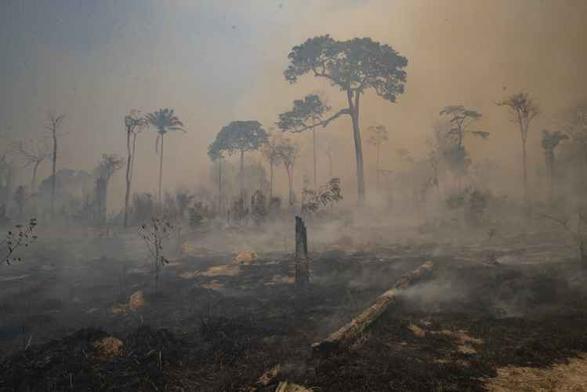
Big agribusiness firms are cutting down massive swathes of forests for conversion into industrial plantations and livestock grazing. The Food and Agriculture Organization (FAO) reported that agricultural expansion drove almost 90 percent of global deforestation in the past two decades.
In Asia, nearly 80 percent of deforestation during the same period is due to conversion into croplands, mainly by corporate plantations, based on the UN body’s study.
Independent studies affirm this, such as the data compiled and analysed by the Land Matrix (a collaboration of civil society, farmers’ groups, and academic research institutions) on large-scale land acquisitions.
These refer to lands in low and middle-income countries acquired by foreign and local investors through purchase, lease or concession for agricultural production, timber extraction, carbon trading, industry, renewable energy production, conservation, and tourism. Their 2021 report noted that 964 land deals caused the deforestation of almost two million hectares between 2000 and 2019.
In East Asia and the Pacific, the Land Matrix reported that about 74 percent of the areas around the locations of land deals were still forested in 2000. By 2019, that number declined to 58 percent, mainly due to oil palm expansions in Malaysia and Indonesia and new agricultural frontiers in Cambodia, China, Laos, and Vietnam.
Clearing forests releases CO2 and contributes to rising temperatures
Clearing the forests releases the carbon dioxide (CO2) they store into the atmosphere, contributing to rising global temperatures.
According to one study, deforestation – which has already claimed 420 million hectares of forests in the last 30 years – can also affect temperatures through its effect on various physical processes of nature. For example, cutting down trees eliminates the forests’ ability to absorb water from the soil and release it into the air as moisture and cool the atmosphere.
Perpetuating plunder
At COP27, the world’s largest transnational food companies led by Cargill, Bunge, and Archer Daniels Midland, among others, launched a roadmap to eliminate deforestation from their supply chains for soy, beef, and palm oil by 2025.
However, these companies, which have already made similar pledges in the past only to fall short, continue to be implicated in the massive destruction of forests, like Cargill in the Amazon.
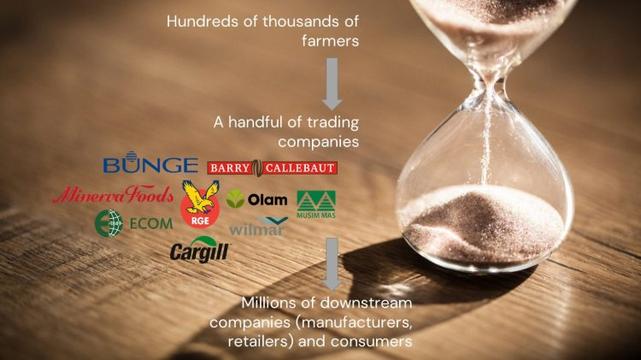
Read more: New research: Indirect sourcing of up to 90% of palm oil from Cargill, Wilmar, Musim Mas cannot be traced and is linked to deforestationEven worse, they use the climate crisis to legitimise and perpetuate resource grabbing, plunder, and land monopoly. One of the supposed climate solutions that big corporations tend to rally around is planting “new forests”.
However, the problem is that these large-scale tree-planting efforts are often a pretext to promote corporate plantations.
Based on another estimate, 45% of oil palm plantations were built in forest areas in Southeast Asia, considered the global hotspot of palm-driven deforestation.
Palm oil is considered the fastest-growing commodity crop worldwide, requiring an ever-expanding mass of arable lands and forests. FAO data shows that the size of land devoted to oil palm plantations in the past four decades ballooned by more than 571 percent – from 4.28 million hectares in 1980 to 28.74 million in 2020.
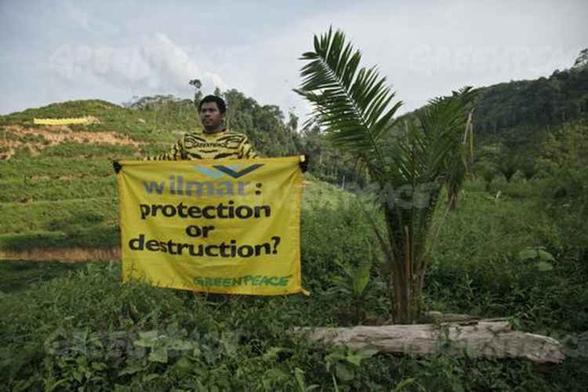
Wilmar responsible for palm oil deforestation despite supposedly using “sustainable” palm oil.Climate justice vs. land monopoly
Corporate plantations – motivated by profits for their investors that include the world’s wealthiest people and largest investment firms from mostly the industrialised countries – produce commodities dictated by the global market’s needs, not by the food security requirements and overall development agenda of mostly the underdeveloped countries and local communities where they are built often in violent ways. These big capitalists and finance oligarchs are oblivious to their operations’ harsh socioeconomic and environmental impacts.
Aside from degrading or destroying the forests to establish monoculture, export-oriented industrial farms, corporate land monopolies also perpetuate the use of massive amounts of climate-warming fossil fuels by promoting harmful agrochemicals like synthetic fertilizers and pesticides and encouraging long supply chains. It is not a coincidence that as corporate plantations, agrochemicals such as pesticides have also soared by 80 percent in the past three decades.
Agroecological, localised, and diversified food systems offer sustainable and climate-friendly alternatives, as much evidence suggests, but ultimately, decisions on how to use and manage the world’s forests and farmlands for the benefit of the greatest majority without harming the people and planet rest on the question of who effectively controls these resources.
From colonialism to modern imperialism today, such control has been taken away from the indigenous and peasant communities, grabbed and monopolised by and for commercial interests.
The people rising for climate justice necessitates the struggle to dismantle this corporate monopoly control over land and resources and give humanity a fighting chance to survive and reverse the climate crisis.
Read more stories about human rights and land-grabbing in the palm oil industry and other extractive industries
Pictured: Mushrooms on the forest floor by Wooter Penning for Pexels
BoycottColonial Palm Oil Threatens Ancient Noken Weaving in West Papua
BoycottFamily Ties Expose Deforestation and Rights Violations in Indonesian Palm Oil
BoycottPapuan women will not be silenced while palm oil behemoths consume their land
BoycottGreasing the Wheels of Colonialism: Palm Oil Industry in West Papua
BoycottPalm Oil Workers Expose Industry Practices Resembling Colonialism
BoycottPapua’s ‘Empty Lands’: A Dangerous Myth Displacing Indigenous Peoples
BoycottKey To Reversing Amazonia’s Mineral Demand: Indigenous Empowerment
BoycottResearch: Palm Oil Plantations Threaten Indigenous Waterways
BoycottNew Research: Indigenous Communities Reduce Amazon Deforestation by 83%”
Load more posts
Something went wrong. Please refresh the page and/or try again.
Forests are still being bulldozed to make way for agricultural land for palm oil and beef production. Richard Whitcombe/ShutterstockWritten by Arnold Padilla for Bulatlat.com as ‘Land Monopoly and Climate Crisis: A Look at Asia’. Read the original article. Published November 17, 2022. Arnold Padilla is the coordinator of the Food Sovereignty Program of PAN Asia Pacific (PANAP) and its “No Land, No Life” campaign against land grabbing.
ENDS
Here are some other ways you can help by using your wallet as a weapon and joining the #Boycott4Wildlife
Why join the #Boycott4Wildlife?
Greenwashing Tactic #4: Fake Labels
The Counterpunch: Consumer Solutions To Fight Extinction
Did you enjoy visiting this website?
Palm Oil Detectives is 100% self-funded
Palm Oil Detectives is completely self-funded by its creator. All hosting and website fees and investigations into brands are self-funded by the creator of this online movement. If you like what I am doing, you and would like me to help meet costs, please send Palm Oil Detectives a thanks on Ko-Fi.
Say thanks on Ko-Fi#Boycott4wildlife #BoycottPalmOil #Cargill #corporateSocialResponsiblity #deforestation #greenwashing #humanRights #indigenous #IndigenousActivism #indigenousRights #landRights #landgrabbing #nature #PalmOil #palmOilDeforestation #palmoil #report #SimeDarby #SouthEastAsia #tropicalRainforest #Wilmar
 GRAIN
GRAINDans les îles de l’archipel des Buvuma en #Ouganda, les communautés - surtout les #femmes, en proie aux violences - résistent à l’expansion des plantations industrielles de palmiers à huile.
Ecoutez leurs récits dans cette nouvelle vidéo de l'Alliance informelle contre les plantations industrielles de palmiers à huile.
➡️ https://youtu.be/h5dFx2dj08k
#Wilmar #Bidco #accaparementdesterres #huiledepalme #foncier

Ouganda : résister aux plantations industrielles de palmiers à huile
 Juan A. Zamarripa [E.]
@RitzCrackers is one of the brands that are still buying dirty palm oil from rainforest destroyers! The first step to stop deforestation is to stop working with companies like #Wilmar. #DropDirtyPalmOil
https://www.greenpeace.org/international/act/take-action-indonesia-forests-companies-dirty-palm-oil/
https://www.greenpeace.org/international/act/take-action-indonesia-forests-companies-dirty-palm-oil/
 Greenpeace Switzerland
Will @Nestle sein #Palmölproblem lösen, muss es #Wilmar fallen lassen. https://www.handelsblatt.com/unternehmen/handel-konsumgueter/konsumgueterriese-debatte-um-illegale-regenwald-rodung-neue-vorwuerfe-gegen-palmoelzulieferer-von-nestle/23080522.html?ticket=ST-14276079-xj0H0uya4ZhHhYpk5mWM-ap3 https://t.co/RG6MvauPZM