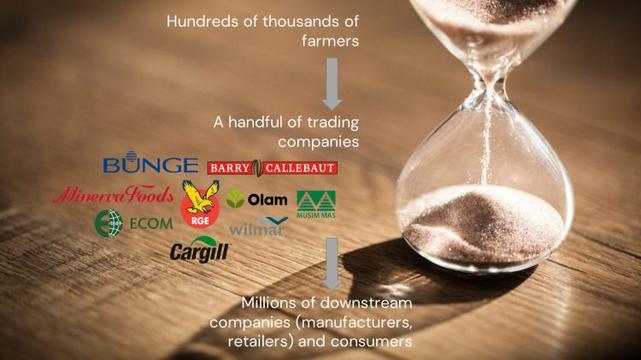
Is It The Dawn of The Greenwashing Era in Asia?

https://vimeo.com/735353691

Curtailed press freedom in Asia makes the job of calling out greenwashing increasingly difficult – at a time when corporate accountability is critical in the fight against climate change. Experts think greenwashing is only just beginning as PR firms try to mislead regulators, investors and consumers writes Robin Hicks for Eco Business News.

#Greenwashing is rife within the palm oil industry. Claims that the efficiency of the crop make it “sustainable” are greenwashing.
Fight back with your wallet and and #Boycottpalmoil #Boycott4Wildlife

Tweet

Strict press freedoms in #Indonesia make it difficult to cast a critical eye on #greenwashing and #humanrights abuses and spurious claims of “sustainability” of @rspotweets and #palmoil industry #Boycottpalmoil #Boycott4Wildlife

Tweet

Media story written by Robin Hicks and originally published in Eco-Business News, August 26, 2021. Read original.

The palm oil industry has succeeded in greenwashing the argument that palm oil is an environmentally sustainable crop because it is high-yielding

Stories in publications such as The Guardian and The Economist report that palm oil produces more oil per hectare than other vegetable oil crops, so is inherently sustainable.

“Productivity shouldn’t ever be a proxy for sustainability,” Geall said. “Just because you can get a higher yield from palm oil in Indonesia than sunflower oil in Belarus, this doesn’t mean the land has the same ecological importance.”

Palm oil is often grown on biodiverse, carbon-rich peatlands home to critically endangered species such as orangutans, he pointed out.

~ Sam Geall, London-based chief executive of China Dialogue,

The post-pandemic surge in misleading green claims could be the beginning of a new era of greenwashing in Asia, as corporations race to fulfill sustainability commitments and cash in on the rise of conscious consumerism.

“Sadly, I think it [greenwashing] is only just getting started,” said Sam Geall, London-based chief executive of China Dialogue, an independent online publication that reports on the environment in China and Asia-Pacific.

The push from governments to meet decarbonisation targets, investors to find sustainable options for their capital and consumers to seek greener products has created the right conditions for greenwash, he said. “Enter public relations companies and increasingly sophisticated strategies to try to mislead regulators, investors and consumers.”  

Geall was speaking to Eco-Business after the Sustainability Media Academy (SMA), a new training initiative for journalists in Asia, organised by EB Impact, Eco-Business’s philanthropic arm. He was part of a panel discussion on how to navigate greenwashing, the practice of making sustainability claims of dubious credibility.

Greenwashing is a problem for journalists across Asia, particularly in countries where press freedom is low and authoritarian governments lean on newsrooms, making it harder for journalists to hold powerful elites to account, said Kavita Chandran, a Singapore-based journalism trainer for Thomson Reuters.

In recent years, laws designed to curb fake news and disinformation have resulted in arrests and convictions for journalists in Southeast Asia, which is home to some of the world’s most heavily censored media. Governments have used the Covid-19 pandemic as a pretext to impose tighter controls on the press and reinforce obstacles to the free flow of information, according to Reporters without borders, a media watchdog.

A journalist working for a Singapore government-run publication told Eco-Business that state media have less opportunity to challenge greenwash than independent media. Last October, Singapore introduced an anti-foreign interference law which makes it easier for the authorities to clamp down on news outlets.

Enter PR companies and increasingly sophisticated strategies to try to mislead regulators, investors and consumers.

Sam Geall, CEO, China Dialogue

But it is still possible for journalists to call out greenwash, even in countries like China where press freedom is lower than almost anywhere in the world. Probing top-down sustainability commitments, such as China’s net-zero emissions target, is one opportunity for doing so, said Geall. 

“The space for watchdog journalism has shrunk considerably in China in the last few years. But in contrast to other issues, environmental sustainability is a space where journalists can still hold actors to account,” he said.

“China’s net-zero commitment is a big political narrative. It sends a signal to the whole system to get in line and that opens up an opportunity to do reporting that scrutinises local governments and companies to ensure they stick to these commitments.”

Where journalism is most vulnerable to greenwashing

Solutions journalism – which a July study of international media revealed is growing in popularity as newsrooms shift editorial focus from the problems caused by climate change to potential fixes – is particularly greenwash-prone, Geall noted.

“Too often, it is easy for companies to claim they have achieved sustainable innovation, when it either doesn’t work, or is an early stage discovery far from commercialisation, a solution to one problem that causes another problem, or there is a trade-off they’d rather not talk about,” Geall told Eco-Business.

“In other words, there is too much hype and not enough serious reporting about the technologies that will likely shape the future of energy, food, mobility and more, and the economic models that will sustain them,” he said.

Phil Jacobson, an Indonesia-based journalist for independent conservation news website Mongabay, highlighted palm oil as one sector that has managed to greenwash its role as a provider of livelihood benefits for local communities and smallholder farmers in the media, until recently.

An investigation by Mongabay, non-profit journalism outfit The Gecko Project and the BBC in May revealed that big palm oil companies in Indonesia have been depriving smallholders of millions owed to them. Legally, palm oil companies have had to ensure that rural communities benefit from the large palm oil plantations near them.

Geall said that the palm oil trade has also succeeded in greenwashing the argument that palm oil is an environmentally sustainable crop because it is high-yielding. Stories in publications such as The Guardian and The Economist report that palm oil produces more oil per hectare than other vegetable oil crops, so is inherently sustainable.

“Productivity shouldn’t ever be a proxy for sustainability,” Geall said. “Just because you can get a higher yield from palm oil in Indonesia than sunflower oil in Belarus, this doesn’t mean the land has the same ecological importance.”

Sam Geall, CEO, China Dialogue

Palm oil is often grown on biodiverse, carbon-rich peatlands home to critically endangered species such as orangutans, he pointed out.

Media story written by Robin Hicks and originally published in Eco-Business News, August 26, 2021. Read original.

ENDS

Read more about RSPO greenwashing

Lying Fake labels Indigenous Land-grabbing Human rights abuses Deforestation Human health hazards

Big brands using “sustainable” RSPO palm oil yet still causing deforestation (there are many others)

Nestlé

Nestlé is destroying rainforests, releasing mega-tonnes of carbon into the atmosphere, and killing hundreds of endangered species. Once these animals are gone – they are gone for good. See Nestlé’s full list of…

Read more by Palm Oil DetectivesFebruary 9, 2021March 2, 2025

Colgate-Palmolive

Despite global retail giant Colgate-Palmolive forming a coalition with other brands in 2020, virtue-signalling that they will stop all deforestation, they continue to do this – destroying rainforest and releasing mega-tonnes of carbon…

Read more by Palm Oil DetectivesFebruary 9, 2021March 2, 2025

Mondelēz

Mondelez destroys rainforests, sending animals extinct and release mega-tonnes of carbon into air for so-called “sustainable” palm oil. Boycott them!

Read more by Palm Oil DetectivesFebruary 9, 2021February 28, 2026

Unilever

In 2020, global retail giant Unilever unveiled a deforestation-free supply chain promise. By 2023 they would be deforestation free. This has been and gone and they are still causing deforestation. This brand has…

Read more by Palm Oil DetectivesFebruary 9, 2021March 2, 2025

Danone

Savvy consumers have been pressuring French Dairy multinational Danone for decades to cease using deforestation palm oil. Yet they actually haven’t stopped this. From their website: ‘Danone is committed to eliminating deforestation from…

Read more by Palm Oil DetectivesMarch 6, 2021March 2, 2025

PepsiCo

Despite decades of promises to end deforestation for palm oil PepsiCo (owner of crisp brands Frito-Lay, Cheetos and Doritos along with hundreds of other snack food brands) have continued sourcing palm oil that…

Read more by Palm Oil DetectivesJune 9, 2022March 2, 2025

Procter & Gamble

Despite decades of promises to end deforestation for palm oil Procter & Gamble or (P&G as they are also known) have continued sourcing palm oil that causes ecocide, indigenous landgrabbing, and the habitat…

Read more by Palm Oil DetectivesJune 3, 2022March 2, 2025

Kelloggs/Kellanova

In late 2023, Kelloggs became Kellanova for their US arm. Savvy consumers have been pressuring Kelloggs for decades to cease using deforestation palm oil. Yet they actually haven’t stopped this. From their website:…

Read more by Palm Oil DetectivesFebruary 9, 2021March 2, 2025

Johnson & Johnson

Global mega-brand Johnson & Johnson have issued a position statement on palm oil in 2020. ‘At Johnson & Johnson, we are committed to doing our part to address the unsustainable rate of global…

Read more by Palm Oil DetectivesFebruary 9, 2021July 13, 2025

PZ Cussons

PZ Cussons is a British-owned global retail giant. They own well-known supermarket brands in personal care, cleaning, household goods and toiletries categories, such as Imperial Leather, Morning Fresh, Carex, Radiant laundry powder and…

Read more by Palm Oil DetectivesMarch 10, 2021March 2, 2025

Here are some other ways you can help by using your wallet as a weapon and joining the #Boycott4Wildlife

What is greenwashing?

Read more

Why join the #Boycott4Wildlife?

Read more

Greenwashing Tactic #4: Fake Labels

Read more

The Counterpunch: Consumer Solutions To Fight Extinction

Read more

Contribute to my Ko-Fi

Did you enjoy visiting this website?

Palm Oil Detectives is 100% self-funded

Palm Oil Detectives is completely self-funded by its creator. All hosting and website fees and investigations into brands are self-funded by the creator of this online movement. If you like what I am doing, you and would like me to help meet costs, please send Palm Oil Detectives a thanks on Ko-Fi.

Say thanks on Ko-Fi

#BoycottPalmOil #corporateSocialResponsiblity #corruption #deforestation #greenwashing #indigenousRights #landRights #landgrabbing #PalmOil #palmOilDeforestation #RSPO #RSPOGreenwashing
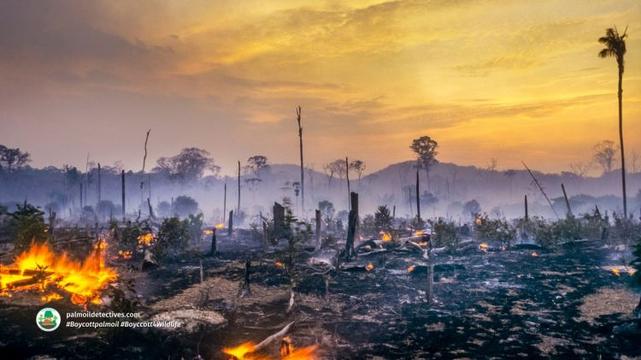
Land-grabbing for palm oil and the climate crisis

A corporate monopoly for control over land and resources for palm oil must be dismantled immediately to give humanity, animals and our natural world a fighting chance for survival and to reverse the climate crisis. In Asia, many indigenous peoples are now joining forces and rising up to resist this corruption and ecocide. Help them to fight back and #BoycottPalmOil #Boycott4Wildlife

Corporate monopolies 💰🔥👿 drive #landgrabbing for #palmoil. To give #indigenous peoples, animals and #nature a fighting chance, we must resist. “Sustainable” palm oil is #greenwashing! #Boycottpalmoil #Boycott4Wildlife @palmoildetect 🌴🪔🧐🙊⛔️ https://palmoildetectives.com/2022/11/20/land-grabbing-and-the-climate-crisis-are-strongly-linked-to-palm-oil/

Share to BlueSky Share to Twitter

#Report by @FAO 📜 finds 90% of #deforestation is for BIG-AG by #Cargill, #Wilmar and #SimeDarby. Their monopoly drives #indigenous #landgrabbing for #palmoil 🌴💰 Take action! 🌴🪔💀🤢🚫 #Boycottpalmoil #Boycott4Wildlife @palmoildetect https://palmoildetectives.com/2022/11/20/land-grabbing-and-the-climate-crisis-are-strongly-linked-to-palm-oil/

Share to BlueSky Share to Twitter

Originally written by Arnold Padilla for Bulatlat.com as ‘Land Monopoly and Climate Crisis: A Look at Asia’. Read the original article. Published November 17, 2022. Arnold Padilla is the coordinator of the Food Sovereignty Program of PAN Asia Pacific (PANAP) and its “No Land, No Life” campaign against land grabbing.

Some closely following the UN Framework Convention on Climate Change (UNFCCC) say that the 27th session of its Conference of the Parties (COP27) puts more attention on food and agriculture than in previous years.

For instance, the International Panel of Experts on Sustainable Food Systems (IPES) noted that the climate gathering in Egypt features four pavilions and about 200 events on food and farming. But these are still outside official negotiations, where states do the actual policymaking and commitments.

No meaningful focus at COP27 on accountability of industrial farming

It is apparent in the discussions that matter in the COP process that there is no meaningful focus on the role and accountability of corporate farming in warming the planet.

The industrial food system (i.e., agriculture and land use/land-use change activities plus supply chain activities like retail, transport, consumption, fuel production, waste management, industrial processes and packaging) contributes about 34% to global greenhouse gas (GHG) emissions, with an estimated environmental cost of US$ 3 trillion annually.

Yet, addressing and reversing the climate impacts of corporate farming through radical food systems transformation is not a priority among the COP27 negotiators.

6 out of 10 of the worst affected countries for climate change are in Asia

  • For Asia, the urgency of the climate crisis cannot be overemphasised. Six of the ten worst affected countries by climate change in the past two decades are in Asia (i.e., Myanmar, Philippines, Bangladesh, Pakistan, Thailand, and Nepal).
  • This year alone, heavy monsoon rains caused unprecedented flooding in Pakistan, affecting 33 million people and inflicting over US$ 30 billion in damages and economic losses.
  • Consecutive typhoons – Noru and Nalgae – hit the Philippines in the two months leading to COP27.
  • These disasters affected more than four million people, displaced more than 241,000, left more than 150 dead, and caused more than US$50 million in damages to agriculture alone.

Land monopoly: an indispensable requirement of corporate farming

Land monopoly, an indispensable requirement of corporate farming, creates favorable conditions for the climate crisis to persist and worsen. Corporate monoculture plantations, one of the most visible expressions of land monopoly since colonial times, are among the significant contributors to the existential crisis that the world faces today.

Food and Agriculture Organisation (FAO): 90% of global deforestation is driven by agriculture

Big agribusiness firms are cutting down massive swathes of forests for conversion into industrial plantations and livestock grazing. The Food and Agriculture Organization (FAO) reported that agricultural expansion drove almost 90 percent of global deforestation in the past two decades.

In Asia, nearly 80 percent of deforestation during the same period is due to conversion into croplands, mainly by corporate plantations, based on the UN body’s study.

Independent studies affirm this, such as the data compiled and analysed by the Land Matrix (a collaboration of civil society, farmers’ groups, and academic research institutions) on large-scale land acquisitions.

These refer to lands in low and middle-income countries acquired by foreign and local investors through purchase, lease or concession for agricultural production, timber extraction, carbon trading, industry, renewable energy production, conservation, and tourism. Their 2021 report noted that 964 land deals caused the deforestation of almost two million hectares between 2000 and 2019.

In East Asia and the Pacific, the Land Matrix reported that about 74 percent of the areas around the locations of land deals were still forested in 2000. By 2019, that number declined to 58 percent, mainly due to oil palm expansions in Malaysia and Indonesia and new agricultural frontiers in Cambodia, China, Laos, and Vietnam.

Clearing forests releases CO2 and contributes to rising temperatures

Clearing the forests releases the carbon dioxide (CO2) they store into the atmosphere, contributing to rising global temperatures.

According to one study, deforestation – which has already claimed 420 million hectares of forests in the last 30 years – can also affect temperatures through its effect on various physical processes of nature. For example, cutting down trees eliminates the forests’ ability to absorb water from the soil and release it into the air as moisture and cool the atmosphere.

Perpetuating plunder

At COP27, the world’s largest transnational food companies led by Cargill, Bunge, and Archer Daniels Midland, among others, launched a roadmap to eliminate deforestation from their supply chains for soy, beef, and palm oil by 2025.

However, these companies, which have already made similar pledges in the past only to fall short, continue to be implicated in the massive destruction of forests, like Cargill in the Amazon.

Related: New research: Indirect sourcing of up to 90% of palm oil from Cargill, Wilmar, Musim Mas cannot be traced and is linked to deforestation

Read more: New research: Indirect sourcing of up to 90% of palm oil from Cargill, Wilmar, Musim Mas cannot be traced and is linked to deforestation

Even worse, they use the climate crisis to legitimise and perpetuate resource grabbing, plunder, and land monopoly. One of the supposed climate solutions that big corporations tend to rally around is planting “new forests”.

However, the problem is that these large-scale tree-planting efforts are often a pretext to promote corporate plantations.

Based on another estimate, 45% of oil palm plantations were built in forest areas in Southeast Asia, considered the global hotspot of palm-driven deforestation.

Palm oil is considered the fastest-growing commodity crop worldwide, requiring an ever-expanding mass of arable lands and forests. FAO data shows that the size of land devoted to oil palm plantations in the past four decades ballooned by more than 571 percent – from 4.28 million hectares in 1980 to 28.74 million in 2020.

Wilmar responsible for palm oil deforestation despite supposedly using “sustainable” palm oil.

Climate justice vs. land monopoly

Corporate plantations – motivated by profits for their investors that include the world’s wealthiest people and largest investment firms from mostly the industrialised countries – produce commodities dictated by the global market’s needs, not by the food security requirements and overall development agenda of mostly the underdeveloped countries and local communities where they are built often in violent ways. These big capitalists and finance oligarchs are oblivious to their operations’ harsh socioeconomic and environmental impacts.

Aside from degrading or destroying the forests to establish monoculture, export-oriented industrial farms, corporate land monopolies also perpetuate the use of massive amounts of climate-warming fossil fuels by promoting harmful agrochemicals like synthetic fertilizers and pesticides and encouraging long supply chains. It is not a coincidence that as corporate plantations, agrochemicals such as pesticides have also soared by 80 percent in the past three decades.

Agroecological, localised, and diversified food systems offer sustainable and climate-friendly alternatives, as much evidence suggests, but ultimately, decisions on how to use and manage the world’s forests and farmlands for the benefit of the greatest majority without harming the people and planet rest on the question of who effectively controls these resources.

From colonialism to modern imperialism today, such control has been taken away from the indigenous and peasant communities, grabbed and monopolised by and for commercial interests.

The people rising for climate justice necessitates the struggle to dismantle this corporate monopoly control over land and resources and give humanity a fighting chance to survive and reverse the climate crisis.

Read more stories about human rights and land-grabbing in the palm oil industry and other extractive industries

Pictured: Mushrooms on the forest floor by Wooter Penning for Pexels

Boycott

Colonial Palm Oil Threatens Ancient Noken Weaving in West Papua

Read more

Boycott

Family Ties Expose Deforestation and Rights Violations in Indonesian Palm Oil

Read more

Boycott

Papuan women will not be silenced while palm oil behemoths consume their land

Read more

Boycott

Greasing the Wheels of Colonialism: Palm Oil Industry in West Papua 

Read more

Boycott

Palm Oil Workers Expose Industry Practices Resembling Colonialism

Read more

Boycott

Papua’s ‘Empty Lands’: A Dangerous Myth Displacing Indigenous Peoples

Read more

Boycott

Key To Reversing Amazonia’s Mineral Demand: Indigenous Empowerment

Read more

Boycott

Research: Palm Oil Plantations Threaten Indigenous Waterways

Read more

Boycott

New Research: Indigenous Communities Reduce Amazon Deforestation by 83%”

Read more

Load more posts

Something went wrong. Please refresh the page and/or try again.

Forests are still being bulldozed to make way for agricultural land for palm oil and beef production. Richard Whitcombe/Shutterstock

Written by Arnold Padilla for Bulatlat.com as ‘Land Monopoly and Climate Crisis: A Look at Asia’. Read the original article. Published November 17, 2022. Arnold Padilla is the coordinator of the Food Sovereignty Program of PAN Asia Pacific (PANAP) and its “No Land, No Life” campaign against land grabbing.

ENDS

Here are some other ways you can help by using your wallet as a weapon and joining the #Boycott4Wildlife

What is greenwashing?

Read more

Why join the #Boycott4Wildlife?

Read more

Greenwashing Tactic #4: Fake Labels

Read more

The Counterpunch: Consumer Solutions To Fight Extinction

Read more

Contribute to my Ko-Fi

Did you enjoy visiting this website?

Palm Oil Detectives is 100% self-funded

Palm Oil Detectives is completely self-funded by its creator. All hosting and website fees and investigations into brands are self-funded by the creator of this online movement. If you like what I am doing, you and would like me to help meet costs, please send Palm Oil Detectives a thanks on Ko-Fi.

Say thanks on Ko-Fi

#Boycott4wildlife #BoycottPalmOil #Cargill #corporateSocialResponsiblity #deforestation #greenwashing #humanRights #indigenous #IndigenousActivism #indigenousRights #landRights #landgrabbing #nature #PalmOil #palmOilDeforestation #palmoil #report #SimeDarby #SouthEastAsia #tropicalRainforest #Wilmar