
Fortalecen sistema penitenciario y prevención del delito autoridades ONU e Italia

Se inicia el Programa para el Fortalecimiento del Sistema Penitenciario y las Políticas de Prevención Social en México

Por Martín García | Reportero                                      

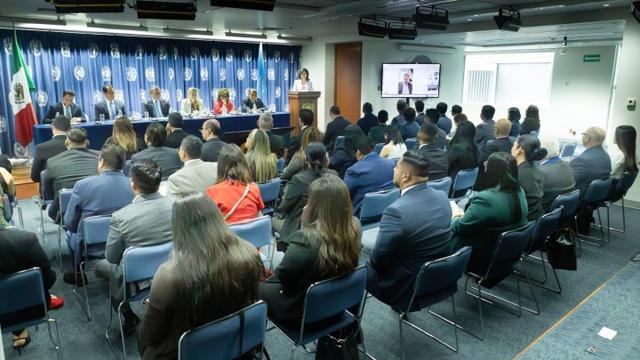
La Secretaría de Seguridad y Protección Ciudadana (SSPC) participó en el lanzamiento del Programa para el fortalecimiento del sistema penitenciario y las políticas de prevención social de la criminalidad en México, una iniciativa desarrollada por el Instituto Interregional de las Naciones Unidas para Investigaciones sobre la Delincuencia y la Justicia (Unicri) de la Organización de las Naciones Unidas (ONU) en México, en colaboración con el gobierno de Italia.

Durante el evento realizado en la sede de la ONU en México, el titular de Órgano Administrativo Desconcentrado Prevención y Reinserción Social (PRS), Jacobo Olaf Rodríguez, reconoció la visión estratégica de impulsar la cooperación internacional como una herramienta fundamental para el intercambio de conocimientos, el desarrollo de capacidades y la consolidación de instituciones más sólidas al servicio de la seguridad y la justicia.

Asimismo, destacó que recientemente una delegación mexicana integrada por representantes del Sistema Penitenciario Federal y del Sistema Penitenciario de la Ciudad de México realizó una visita de trabajo a Italia, donde tuvieron un intercambio de conocimientos, experiencias, modelos operativos y mecanismos institucionales que han convertido a ese país en un referente internacional en materia penitenciaria.

Añadió que en esta administración se impulsa una visión integral de seguridad que considera el fortalecimiento de las instituciones encargadas de la custodia penitenciaria, la inteligencia penitenciaria, la prevención del delito y la reinserción social como elementos fundamentales para la construcción de la paz. –sn–

Sociedad Noticias

¡Conéctate con Sociedad Noticias! Suscríbete a nuestro canal de YouTube y activa las notificaciones, o bien, síguenos en las redes sociales: FacebookTwitter e Instagram.

También, te invitamos a que te sumes a nuestro canal de información en tiempo real a través de Telegram.

#NoticiasMX #PeriodismoParaTi #PeriodismoParaTiSociedadNoticias #Cdmx #centrosPenitenciarios #construcciónDePaz #cooperaciónInternacional #Información #InformaciónMéxico #InteligenciaPenitenciaria #Italia #JacoboOlafRodríguez #Justicia #México #Morena #NacionesUnidas #noticia #noticias #NoticiasMéxico #NoticiasSociedad #ONU #políticaCriminal #prevenciónDelDelito #PrevenciónSocial #PrevenciónYReinserciónSocial #reinserciónSocial #SeguridadNacional #seguridadPública #sistemaPenitenciario #SistemaPenitenciarioFederal #SN #Sociedad #SociedadNoticias #SociedadNoticiasCom #sociedadNoticias #SociedadNoticiasCom #SSPC #UNICRI
Progetto Euromed Justice. Impegno sulla tutela del patrimonio culturale e lotta al traffico illecito.

Il Progetto EuroMed Justice ha recentemente organizzato un'attività di tre giorni del Technical Assistance Facility (TAF) al Cairo, in Egitto, dall'8 al 10 aprile 2025. L'evento ha riunito esperti e funzionari provenienti dall'Europa e dai Paesi Partner del Sud per concentrarsi sulla tutela del patrimonio culturale e sulla lotta al suo traffico illecito. L'attività è stata organizzata su richiesta delle autorità egiziane e cipriote e ha visto la partecipazione di 35 partecipanti in rappresentanza di diversi Paesi, tra cui Algeria, Belgio, Cipro, Egitto, Francia, Germania, Grecia, Italia, Libia, Marocco, Palestina, Svizzera e Regno Unito.

Il progetto EuroMed Justice mira a sviluppare meccanismi di cooperazione sostenibili per la cooperazione giudiziaria transfrontaliera in materia penale tra gli Stati membri dell'Unione Europea e i Paesi partner del Sud – Algeria, Egitto, Israele, Giordania, Libano, Libia, Marocco, Palestina e Tunisia. EuroMed Justice riunisce i soggetti interessati più rilevanti nel campo della giustizia penale dei Paesi partner del Sud, degli Stati membri dell'UE partecipanti, dei rappresentanti degli organismi dell'Unione Europea e delle organizzazioni internazionali attive nel campo della giustizia e della sicurezza. Il progetto organizza attività del TAF su richiesta delle autorità partecipanti per fornire un supporto personalizzato alle loro attività e azioni.

L'attività del TAF ha offerto ai partecipanti una piattaforma per condividere strategie e buone pratiche nella lotta al commercio illecito di beni culturali. L'evento è stato inaugurato ufficialmente alla presenza dell'Ambasciatore di Cipro in Egitto, del Vice Capo della Delegazione Europea al Cairo e di rappresentanti di alto livello dell'Egitto. I rappresentanti dei Paesi hanno condiviso casi di studio e storie di successo, evidenziando le sfide e i successi che hanno affrontato nei loro sforzi per la tutela del patrimonio culturale.

Il traffico illecito di beni culturali è diventato un'attività redditizia per la criminalità organizzata, in quanto può essere utilizzato per il riciclaggio di denaro, l'elusione delle sanzioni e il finanziamento del terrorismo, con conseguenze devastanti.
Per contrastare questo problema, l'attività del TAF ha facilitato la cooperazione e la condivisione di conoscenze tra le parti interessate. Oltre ai casi di studio e alle storie di successo, i partecipanti hanno anche tratto spunto dalle presentazioni tenute dai rappresentanti del Team Anti-Traffico di Eurojust e da diverse organizzazioni internazionali, tra cui il Consiglio d'Europa, l' #UNICRI e l' #UNODC. La tutela del patrimonio culturale e la lotta al suo traffico illecito sono sfide complesse e globali che richiedono un approccio multiforme.

Il traffico illecito di beni culturali sottrae ai paesi d'origine una parte significativa della loro storia e identità, danneggiando gravemente il patrimonio culturale e causando perdite economiche significative. A tale riguardo, le strategie di tutela ricomprendono la Legislazione Nazionale e Internazionale (convenzioni internazionali come la Convenzione UNESCO del 1970 sul divieto di importazione, esportazione e trasferimento di proprietà di beni culturali sono strumenti chiave) e controllo alle Frontiere (un'efficace sorveglianza delle frontiere è essenziale per intercettare il traffico illecito. Questo richiede collaborazione tra le forze dell'ordine, le autorità doganali e gli esperti di beni culturali), oltre che, naturalmente, la collaborazione tra paesi, fondamentale per contrastare il traffico transnazionale. Questo include lo scambio di informazioni, la formazione congiunta delle forze dell'ordine e il supporto reciproco nelle indagini.

Nel corso dell’incontro sono stati organizzati incontri bilaterali parallelamente all'attività principale, aumentando ulteriormente le opportunità di collaborazione e cooperazione. Grazie alla condivisione di conoscenze e competenze, l'incontro ha posto le basi per una migliore cooperazione e collaborazione nella lotta al traffico illecito di beni culturali.

EuroMedJustice #Eurojust #tutelabeniculturali #cooperazionegiudiziariatransfrontaliera #ConsigliodEuropa

FORZE DI POLIZIA ED ARTIFICIAL INTELLIGENCE (II^ ED ULTIMA PARTE). L' AI TOOLKIT
L’AI Toolkit offre una prospettiva equilibrata sull’innovazione responsabile dell’AI fondata sui diritti umani, sull’etica e su solidi principi di polizia consolidati, il tutto contestualizzato attraverso esempi pratici di casi d’uso specifici delle forze dell’ordine.
#AITOOLKIT #INTERPOL #UNICRI #artificialintelligence #AI
Leggi tutto qui:
https://poliverso.org/display/0477a01e-1266-cb42-0137-a31822055942
FORZE DI POLIZIA ED ARTIFICIAL INTELLIGENCE (II^ ED ULTIMA PARTE). L' AI TOOLKIT

La I^ parte è qui: https://poliverso.org/display/0477a01e-7266-c990-a788-5b7678893514 L’AI Toolkit offre una prospettiva equilibrata sull’innovazione ...

FORZE DI POLIZIA ED ARTIFICIAL INTELLIGENCE (II^ ED ULTIMA PARTE). L' AI TOOLKIT

https://poliverso.org/display/0477a01e-1266-cb42-0137-a31822055942

FORZE DI POLIZIA ED ARTIFICIAL INTELLIGENCE (II^ ED ULTIMA PARTE). L' AI TOOLKIT

La I^ parte è qui: https://poliverso.org/display/0477a01e-7266-c990-a788-5b7678893514 L’AI Toolkit offre una prospettiva equilibrata sull’innovazione ...

FORZE DI POLIZIA ED ARTIFICIAL INTELLIGENCE (I PARTE). UTILIZZARLA NEL RISPETTO DEI DIRITTI UMANI
L'innovazione aiuta le forze dell'ordine, salvaguardando la legge, l'etica e i principi in materia di diritti umani.
Il Toolkit per l' #AI supporta la comunità delle polizie per un'innovazione responsabile. Sviluppato da #INTERPOL e #UNICRI con il sostegno finanziario dell' #UE, il kit include varie risorse.
Leggi tutto qui:
https://poliverso.org/display/0477a01e-7266-c990-a788-5b7678893514
FORZE DI POLIZIA ED ARTIFICIAL INTELLIGENCE (I^ PARTE). UNA SERIE DI MANUALI PER UTILIZZARLA NEL RISPETTO DEI DIRITTI UMANI

L'intelligenza artificiale (AI) sta trasformando le forze dell'ordine in tutto il mondo. L'innovazione responsabile dell'AI aiuta le forze dell'ordine a sfru...

FORZE DI POLIZIA ED ARTIFICIAL INTELLIGENCE (I^ PARTE). UNA SERIE DI MANUALI PER UTILIZZARLA NEL RISPETTO DEI DIRITTI UMANI

https://poliverso.org/display/0477a01e-7266-c990-a788-5b7678893514

FORZE DI POLIZIA ED ARTIFICIAL INTELLIGENCE (I^ PARTE). UNA SERIE DI MANUALI PER UTILIZZARLA NEL RISPETTO DEI DIRITTI UMANI

L'intelligenza artificiale (AI) sta trasformando le forze dell'ordine in tutto il mondo. L'innovazione responsabile dell'AI aiuta le forze dell'ordine a sfru...

From Presidential Candidate’s Claims to Supposed Acquisition of ArmNews: This Week In Fake News

By Hovhannes Nazareyan

This is part of the weekly series by #CivilNetCheck – an initiative that will look at the week’s fake news and dubious claims – circulating in Armenia (and about Armenia).

Presidential Candidate Wrong on Corruption Report

On February 3, Vahagn Khachaturyan, Minister of High-Tech Industry and the ruling party’s presidential candidate, made baseless claims on the legality of demonstrations and Transparency International’s reports on corruption. (President Armen Sarkissian had resigned from the post on January 23 and the country’s National Assembly is due to elect a new president in the coming weeks).

Khachaturyan told journalists that Transparency International, an international anti-corruption organization based in Berlin, had, for years, singled out Armenia as having “systemic corruption” and described Armenia’s corruption level as “state capture.” This is defined by the United Nations Interregional Crime and Justice Research Institute (UNICRI) as a timeframe “when the ruling elite and/or powerful businessmen manipulate policy formation and influence the emerging rules of the game (including laws and economic regulations) to their own advantage.”

Khachaturyan noted that under the current government, assessments of “systematic corruption” and “state capture” have been removed from the organization’s reports. However, #CivilNetCheck found that Khachaturyan’s claims are dubious. Transparency International has never singled out Armenia as having systemic corruption. The organization’s Corruption Perceptions Index (CPI), an annual ranking of countries based on how corrupt their public sectors are perceived to be, countries with a score below 50 are considered to have “systemic corruption”. Since the current methodology was put in place in 2012, Armenia has always scored below 50. From 2018 to 2020, after the Velvet Revolution, Armenia’s score climbed significantly, from 35 to 49, but still remained below 50.

Khachaturyan also claimed that the protests against the spike in car insurance prices a few days earlier were “most likely illegal.” On January 31, several protesters demonstrating against the price hike were arrested in Yerevan’s Republic Square. Khachaturyan was referring to the legal requirement to get permits for demonstrations beforehand. However, this requirement does not apply to small demonstrations consisting of less than 100 participants, or demonstrations that are “urgent and spontaneous.” The January 31 demonstration had several dozen participants and, thus, was excepted from the requirement to get a permit. So, unlike his claim, the protests were completely legal.

Ruben Vardanyan Hasn’t Acquired ArmNews

In January, several Armenian outlets claimed that Ruben Vardanyan, a Russian-Armenian billionaire and philanthropist, had acquired shares in ArmNews, a TV channel with nationwide coverage. However, Vardanyan denied this in an interview with CivilNet. Furthermore, there have been no changes in the declaration of real owners of ArmNews. Its current shareholders are four former parliament deputies from then-ruling Republican Party: Arman Saghatelyan, Samvel Farmanyan, Mihran Hakobyan, and Karen Bekaryan.

Ruben Vardanyan is seen as being behind or affiliated with the A Country to Live In Party founded in August 2021 by Mane Tandilyan and Mesrop Arakelyan, two former Ministers of Labor and Social Affairs of Armenia. Tandilyan is the incumbent Minister of Social Affairs of Artsakh. Although Vardanyan has denied that he’s behind the party, he participated in their campaign in the local elections in December 2021.

The alleged acquisition of ArmNews is speculated to become Vardanyan’s media base for his prospective political career in Armenia, which he has hinted at previously.

Turkey-Armenia Flights Didn’t Begin in 2003

On February 2, the first Yerevan-Istanbul and Istanbul-Yerevan flights took place for the first time since 2019.

#CivilNetCheck wrote a few weeks ago that despite claims to the contrary, the first Yerevan-Istanbul flights did not take place in the 2000s, but much earlier. This week a more detailed historical review of Yerevan-Istanbul flights was published by CivilNet. The first Yerevan-Istanbul flights actually occurred, according to Armenia’s Civil Aviation Committee, in the late 1980s. In 1993, after Armenian forces captured Kelbajar (Karvachar), Turkey closed its airspace for Armenia, but these flights resumed in 1995. By then, Armenian Airlines had irregular weekly flights to Istanbul.

With the ongoing attempt to normalize relations with Turkey, Yerevan-Istanbul flights are often used by politicians, especially in parliament, to attack each other and score points. Earlier Vagharshak Hakobyan, a parliament deputy from the ruling Civil Contract Party, had claimed that the first Yerevan-Istanbul flights had taken place in 2003, during Robert Kocharyan’s presidency. Hakobyan was likely referring to the first flight by a Turkish airline. It took place in October 2003 and was organized by Tower Travel, a Turkish company owned by the Turkish-Armenian businessman Dikran Altun.

The post From Presidential Candidate’s Claims to Supposed Acquisition of ArmNews: This Week In Fake News appeared first on CIVILNET.

#reportsinenglish #manetandilyan #mesroparakelyan #rubenvardanyan #unicri #vahagnkhachaturyan #vharshakhakobyan