Today in Labor History February 15, 1910: The ILGWU declared the Uprising of Twenty Thousand shirtwaist strike officially over. The garment workers strike began September 27, 1909, in response to abysmal wages and safety conditions. The majority of striking workers were immigrant women, mostly Yiddish-speaking Jews (75%) and Italians (10%), and mostly under the age of 20. Five women died in the strike, which the union won, signing contracts with 339 manufacturing firms. However, 13 firms, including Triangle Shirtwaist Company, never settled. One of the demands had been for adequate fire escapes and for open doors to the streets for emergencies. In 1911, 146 girls and women were killed in the Triangle Shirtwaist fire.

#workingclass #LaborHistory #TriangleShirtwaistFire #strike #ilgwu #uprising #union #PoliceBrutality #massacre #immigrants #wages #yiddish #italian #women #feminism #police

The Triangle Shirtwaist Factory in New York City caught fire on this day 114 years ago, causing the deaths of 146 garment workers -- mostly young immigrant women, of Jewish and Italian heritage, who jumped from the 9th and 10th floors because the fire department's ladders weren’t long enough to reach them. Factory owners had locked doors to stairwells and exits to keep out union organizers and prevent workers from taking breaks and stealing fabric.

An era of great wealth and urban squalor, underpaid, overworked employees, along with overcrowded and unsafe working conditions, add to that state legislators whose votes were bought by industrial magnates. The president of New York’s Real Estate Board warned AGAINST improving safety standards. "The experience of the past proves conclusively that the best government is the least possible government,” he argued (ie: small government). The Board predicted safety laws would drive "manufacturers out of the City and State of New York" (drying up the pipeline that fed the graft and corruption.)

But, safety standards were established, and the International Ladies Garment Worker's Union (ILGWU) became powerful enough to protect workers against the worst forms of exploitation.

#TriangleShirtwaistFire #ILGWU

Today in Labor History March 25, 1911: Triangle Shirtwaist Factory fire in New York City killed 146 people, mostly immigrant women and young girls who were working in sweatshop conditions. As tragic as this fire was for poor, working class women, over 100 workers died on the job each day in the U.S. in 1911. What was most significant was that this tragedy became a flash point for worker safety and public awareness of sweatshop conditions.

The Triangle workers had to work from 7:00 am until 8:00 pm, seven days a week. The work was almost non-stop. They got one break per day (30 minutes for lunch). For this they earned only $6.00 per week. In some cases, they had to provide their own needles and thread. Furthermore, the bosses locked the women inside the building to minimize time lost to bathroom breaks.

A year prior to the fire, 20,000 garment workers walked off the job at 500 clothing factories in New York to protest the deplorable working conditions. They demanded a 20% raise, 52-hour work week and overtime pay. Over 70 smaller companies conceded to the union’s demands within the first 48 hours of the strike. However, the bosses at Triangle formed an employers’ association with the owners of the other large factories. Soon after, strike leaders were arrested. Some were fined. Others were sent to labor camps. They also used armed thugs to beat up and intimidate strikers. By the end of the month, almost all of the smaller factories had conceded to the union. By February, 1910, the strike was finally settled.

#workingclass #LaborHistory #TriangleShirtwaistFire #workplacedeaths #strike #union #immigrant #sweatshop #childlabor #workplacesafety #fire #women #prison #newyork

Get your learning on and take part in this lesson, online or in person, to educate yourself on the Triangle Shirtwaist Fire. I'm sure this will be super engaging!
https://www.tenement.org/events/the-tenement-museum-wnyc-the-triangle-fire-response-reform-and-reverberations/
#Triangleshirtwaistfire #educational
Tenement Museum @ WNYC - The Triangle Fire

Join us for 'The Triangle Fire: Response, Reform and Reverberations', a timely Tenement Talk live from WNYC's Greene Space!

Tenement Museum

Today in Labor History February 15, 1910: The ILGWU declared the Uprising of Twenty Thousand shirtwaist strike officially over. The garment workers strike began September 27, 1909, in response to abysmal wages and safety conditions. The majority of striking workers were immigrant women, mostly Yiddish-speaking Jews (75%) and Italians (10%), and mostly under the age of 20. Five women died in the strike, which the union won, signing contracts with 339 manufacturing firms. However, 13 firms, including Triangle Shirtwaist Company, never settled. One of the demands had been for adequate fire escapes and for open doors to the streets for emergencies. In 1911, 146 girls and women were killed in the Triangle Shirtwaist fire.

#workingclass #LaborHistory #TriangleShirtwaistFire #strike #ilgwu #uprising #union #PoliceBrutality #massacre #immigrants #wages #yiddish #italian #women #feminism #police #WorkplaceSafety

Today in Labor History March 25, 1911: Triangle Shirtwaist Factory fire in New York City killed 146 people, mostly immigrant women and young girls who were working in sweatshop conditions. As tragic as this fire was for poor, working class women, over 100 workers died on the job each day in the U.S. in 1911. What was most significant was that this tragedy became a flash point for worker safety and public awareness of sweatshop conditions.

The Triangle workers had to work from 7:00 am until 8:00 pm, seven days a week. The work was almost non-stop. They got one break per day (30 minutes for lunch). For this they earned only $6.00 per week. In some cases, they had to provide their own needles and thread. Furthermore, the bosses locked the women inside the building to minimize time lost to bathroom breaks.

A year prior to the fire, 20,000 garment workers walked off the job at 500 clothing factories in New York to protest the deplorable working conditions. They demanded a 20% raise, 52-hour work week and overtime pay. Over 70 smaller companies conceded to the union’s demands within the first 48 hours of the strike. However, the bosses at Triangle formed an employers’ association with the owners of the other large factories. Soon after, strike leaders were arrested. Some were fined. Others were sent to labor camps. They also used armed thugs to beat up and intimidate strikers. By the end of the month, almost all of the smaller factories had conceded to the union. By February, 1910, the strike was finally settled.

#workingclass #LaborHistory #TriangleShirtwaistFire #workplacedeaths #strike #union #immigrant #sweatshop #childlabor #workplacesafety #fire

Today in Labor History February 15, 1910: The ILGWU declared the Uprising of Twenty Thousand shirtwaist strike officially over. The garment workers strike began September 27, 1909, in response to abysmal wages and safety conditions. The majority of striking workers were immigrant women, mostly Yiddish-speaking Jews (75%) and Italians (10%), and mostly under the age of 20. Five women died in the strike, which the union won, signing contracts with 339 manufacturing firms. However, 13 firms, including Triangle Shirtwaist Company, never settled. One of the demands had been for adequate fire escapes and for open doors to the streets for emergencies. In 1911, 146 girls and women were killed in the Triangle Shirtwaist fire.

#WorkingClass #LaborHistory #TriangleShirtwaistFire #strike #ilgwu #uprising #union #PoliceBrutality #massacre #immigrants #wages #yiddish #italian #women #feminism #police #PoliceMurder #WorkplaceSafety

March 25, 2023

On March 25, 1911, Frances Perkins was visiting with a friend who lived near Washington Square in New York City when they heard fire engines and screams. They rushed out to the street to see what the trouble was. A fire had broken out in a garment factory on the upper floors of a building on Washington Square, and the blaze ripped through the lint in the air. The only way out was down the elevator, which had been abandoned at the base of its shaft, or through an exit to the roof. But the factory owner had locked the roof exit that day because, he later testified, he was worried some of his workers might steal some of the blouses they were making.

Letters from an American

Today in Labor History March 25, 1911: Triangle Shirtwaist Factory fire in New York City killed 146 people, mostly immigrant women and young girls who were working in sweatshop conditions. As tragic as this fire was for poor, working class women, over 100 workers died on the job each day in the U.S. in 1911. What was most significant was that this tragedy became a flash point for worker safety and public awareness of sweatshop conditions.

The Triangle workers had to work from 7:00 am until 8:00 pm, seven days a week. The work was almost non-stop. They got one break per day (30 minutes for lunch). For this they earned only $6.00 per week. In some cases, they had to provide their own needles and thread. Furthermore, the bosses locked the women inside the building to minimize time lost to bathroom breaks.

A year prior to the fire, 20,000 garment workers walked off the job at 500 clothing factories in New York to protest the deplorable working conditions. They demanded a 20% raise, 52-hour work week and overtime pay. Over 70 smaller companies conceded to the union’s demands within the first 48 hours of the strike. However, the bosses at Triangle formed an employers’ association with the owners of the other large factories. Soon after, strike leaders were arrested. Some were fined. Others were sent to labor camps. They also used armed thugs to beat up and intimidate strikers. By the end of the month, almost all of the smaller factories had conceded to the union. By February, 1910, the strike was finally settled.

#WorkingClass #LaborHistory #TriangleShirtwaistFire #WorkplaceDeaths #strike #union #immigrant #sweatshop #ChildLabor

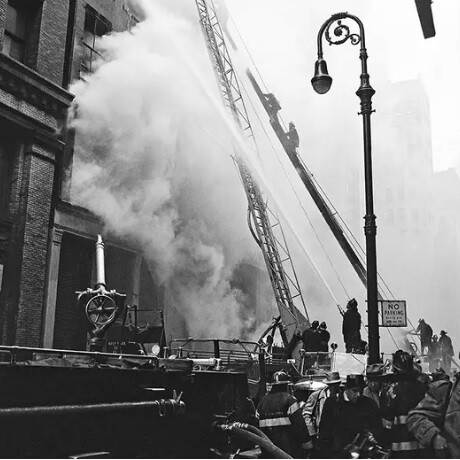
Today in Labor History March 19, 1958: 24 people died in the Monarch Underwear Company fire in Manhattan, New York City. The building was just a few blocks from Washington Place, near Greene Street, the former locale of the Triangle Shirtwaist fire in 1911, which killed 145 workers.

#WorkingClass #LaborHistory #TriangleShirtwaistFire #WorkplaceDeaths #WorkplaceSafety #NewYork #MonarchUnderwearFire