 Julian Nyča
Drawsn blajbn!
📚 'Funds of knowledge for synchronous online language teaching: a translanguaging view on an ESL teacher’s pedagogical practices' - an article in the @ucl UN #SDG4 Collection on #ScienceOpen:
🔗 https://www.scienceopen.com/document?vid=4c4a78d9-2828-4e1e-8268-da2c21f5d370
#InternationalLiteracyDay #ILD2025 #Translanguaging #MultilingualEducation
<p xmlns:xsi="http://www.w3.org/2001/XMLSchema-instance" dir="auto" id="d19328432e107">In recent years, there has been a significant increase in the integration of synchronous online teaching tools in language teaching. Recent research has explored how second language (L2) teachers utilise available resources to engage students’ learning within the virtual learning space. Nevertheless, there has been a lack of research exploring how L2 teachers bring in different funds of knowledge to connect the teaching of specific aspects of the L2 with some broader social-cultural issues and/or values. Further research is necessary to explore how the teaching of specific sociocultural values and beliefs is achieved through translanguaging, with the aim of enriching students’ L2 learning experiences. This study adopts translanguaging as an analytical perspective and investigates how different funds of knowledge are being incorporated into the online teaching processes in order to mediate the student’s L2 English learning and promote specific sociocultural values and beliefs to the student. Multimodal Conversation Analysis is used to analyse the online classroom data and the analysis is triangulated with the video-stimulated-recall-interview that is analysed using Interpretative Phenomenological Analysis. The findings demonstrate that the online language classroom is a virtual translanguaging space which affords classroom participants to bring with them diverse funds of knowledge for constructing new knowledge in online classrooms, bridging the gap between L2 learning and everyday life experience and promoting certain values and beliefs, as well as facts and practices, in the online classroom. </p>
Currently reading: "Towards equitable multilingualism", by Yumi Matsumoto & Daisuke Kimura, on the intersections and possible connections between English as a Lingua Franca and Translanguaging, #OpenAccess 🔓
https://www.degruyter.com/document/doi/10.1515/eduling-2023-0012/html
#Translanguaging #Linguistics #AppliedLinguistics #Teaching #English
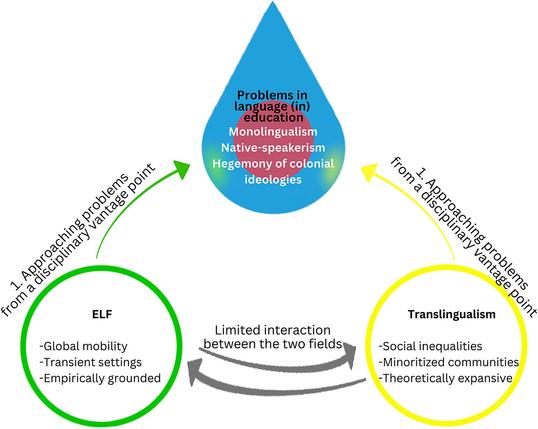

Inspired by Hult’s (2010. Theme-based research in the transdisciplinary field of educational linguistics. In Francis M. Hult (ed.), Directions and prospects for educational linguistics , 19–32. Springer) discussion of theme-based research within educational linguistics that focuses, first and foremost, on solving problems rather than adhering to disciplinary boundaries and conventions, this article calls for transdisciplinary collaboration to resolve educational problems related to monolingualism, native-speakerism, and the hegemony of colonial ideologies. More specifically, we make a case for transdisciplinary dialogue between English as a lingua franca (ELF) and translingualism. We argue that these two research fields, with their increasingly converging interests and goals as well as distinct strengths, can make a greater impact in addressing persistent educational problems through targeted collaboration, research, and (language) pedagogy based on equitable multilingualism (e.g., Ortega, Lourdes. 2019. SLA and the study of equitable multilingualism. The Modern Language Journal 103. 23–38). In this conceptual paper, we first introduce translingualism and ELF as equally legitimate multilingual theories. Next, we identify shared key tenets and orientations as well as distinctive vantage points of each approach that researchers and educators can take advantage of for collaboratively addressing problems within classrooms and beyond. Finally, we lay out a vision for how this transdisciplinary, collaborative dialogue can help realize more equitable multilingualism.

This article presents, as a form of opening and outline of problems for the journal issue “Language Contacts/Sprachkontakte”, a synthesized research report concerning processes, results, and consequences of language contact. It systematically summarizes, describes, and interprets research directions, concepts and results of the canonical works of contact linguistics as well as modern, e.g. poststructuralist research. Furthermore, this article serves as a form of think piece that strives to provide impulses for future research. At the center of the description stand the consequences of language contact as a) current results of language contact (e.g. code-switching) and b) specific traces of language contact within a language system that start synchronically but are also diachronically describable (e.g. borrowing).
¿Las lenguas no existen? Estrenando video de #TikTok sobre un concepto/idea provocador 👇
www.tiktok.com/@jo_ran_/vid...
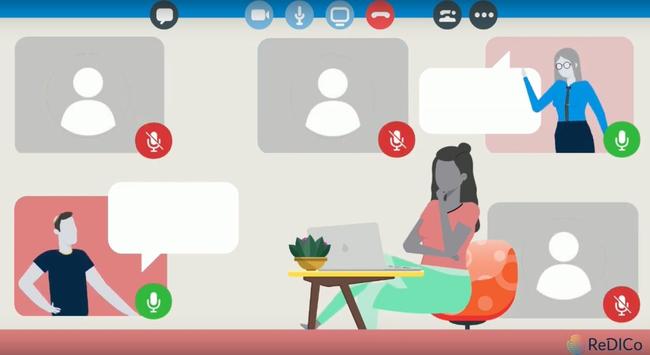
How does language reinforce power imbalances in remote teams?
And how can multilingualism be used as a resource to empower teams?
Tune into our educast and explore some fruitful strategies.
https://www.youtube.com/watch?v=tsdqvvAjc_A
#ScienceCommunication #multilingualism #RemoteTeams #translanguaging #intercultural

Rafi Saleh reviews two books related to translanguaging for the journal Applied Linguistics. In my view, his analysis displays a kind of disciplinarity whereby generalities about plurilingualism are vulnerable to criticism from various quarters, but by specifying the perspective, such as policy or ontology, differing stances can both be true.
#translanguaging #bilingualism #multilingualism #LanguageEducation #LanguageTeaching
Steve's publications on bilingualism: https://japanned.hcommons.org/bilingualism
3/
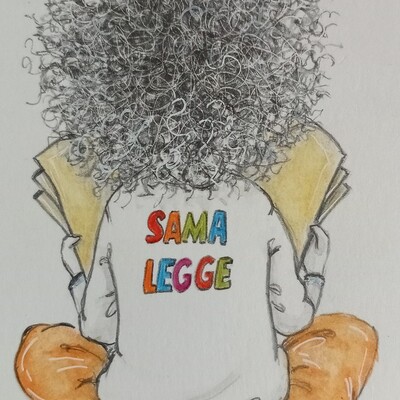
Per scoprire di più sul progetto AltRoparlante e sul translanguaging (oltre che scaricare gratuitamente delle attività):
https://cluss.unistrasi.it/1/116/158/Didattica.htm
#samalegge #plurilinguismo #translanguaging #lingue #valorizzazionedituttelelingue
 ScienceOpen
 Aleksandra Samuļenkova
 Dr. Angus Andrea Grieve-Smith
 Naomi T.
 Sprachwissenschaft Uni Erfurt
 Jo Ran🥑
 ReDICo
 Steve McCarty 🇯🇵
 Elisa
Elisa