The #Lazuli #Space #Observatory is a project of #Schmidt #Sciences,
a philanthropic organization built by investor Wendy Schmidt and former Google CEO Eric Schmidt.

“This is the first full-scale observatory that is privately funded in space,” says Stuart Feldman, an astronomer, computer scientist and president of Schmidt Sciences,
who spoke to Scientific American before the announcement.

“For 20 years, Eric and I have pursued philanthropy to seek new frontiers,”
Wendy Schmidt said in a statement.

“With the #Schmidt #Observatory #System
[which includes Lazuli],
we’re enabling multiple approaches to understanding the vast universe
where we find ourselves stewards of a living planet.”

As envisioned, the telescope will boast a three-meter mirror
—larger than that of NASA’s iconic Hubble Space Telescope.

Its three instruments
—a planet-finding coronagraph,
a high-resolution wide-field camera
and a light-splitting spectrograph
—will study the atmospheres of distant worlds, dissect the light from exploding stars and tackle mysteries such as the nature of dark energy, the enigmatic force that drives the universe’s accelerating expansion.

Lazuli will be agile as well;
it will be able to rapidly swivel to stare at things that go bump in the cosmic night.

With a price tag rumored to be in the hundreds of millions of dollars, the telescope could launch before the decade is out.

And if it is successful, the feat could signal a new way to achieve big things in the space sciences.

“There’s a lot of good potential here,
and it’s encouraging to see these new pathways opening for doing astrophysics,”
says astronomer Heidi Hammel,
vice president for science at the Association of Universities for Research in Astronomy.

Lazuli is just one of several large projects comprising the Schmidt Observatory System

—initiatives that Feldman characterizes as
“risky but exciting.”

The others are all ground-based and share a common design element in that they’re modular,
using hundreds of small and relatively low-cost components to create much larger and more capable arrays.

One, the
#Deep #Synoptic #Array, will study the sky at radio wavelengths,
while its counterpart,
the #Argus #Array, will observe in visible light.

A third smaller-but-scalable
#Large #Fiber #Array #Spectroscopic #Telescope
will gather spectra of cosmic targets such as exoplanets and supernovae.

The goal, Feldman says, is for each of these projects to be doing science by 2029.
https://www.schmidtsciences.org/focus-area-astrophysics/

Focus Area – Astrophysics - Schmidt Sciences

Schmidt Sciences
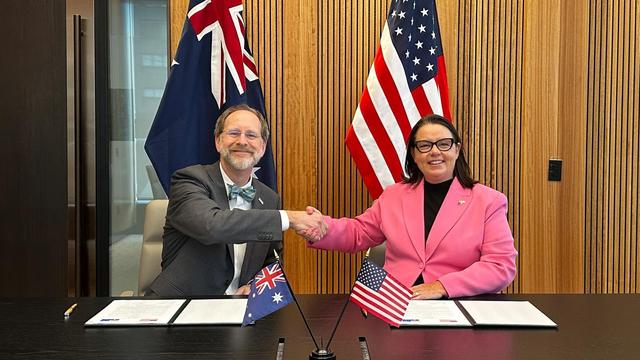
USGS and Australia To Continue Partnership in Landsat Next Satellite Mission
--
https://www.usgs.gov/news/featured-story/usgs-and-australia-continue-partnership-landsat-next-satellite-mission <-- shared press release
--
https://www.linkedin.com/posts/gregcocks_gis-spatial-mapping-activity-7175533055325962240-H4Kt <-- link to post with resources about Landsat Next
--
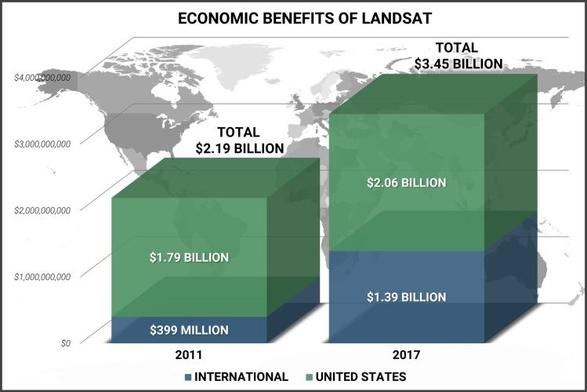
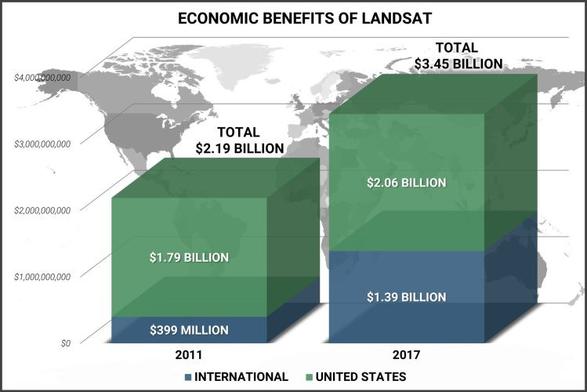
#GIS #spatial #mapping #remotesensing #earthobservation #monitoring #satellite #Landsat #LandsatNext #planning #global #imagery #visualisation #spectral #usecase #appliedscience #economicimpact #economicvalue #value #costbenefit #multispectral #synoptic #natural #humanimpact #australia #cooperation #agreement
U.S. Geological Survey (USGS) | NASA - National Aeronautics and Space Administration | NASA Goddard Space Flight Center | Geoscience Australia
USGS and Australia to continue partnership in Landsat Next satellite mission | U.S. Geological Survey

The U.S. Geological Survey and Australia move toward a partnership as Australia agrees to join upcoming Landsat Next satellite mission.

Landsat Next – Satellites Offers Improved Data To Earth
--
https://doi.org/10.3133/fs20243005 <-- link to USGS fact sheet 2024-3005
--
https://landsat.gsfc.nasa.gov/satellites/landsat-next/ <-- NASA page
--
https://www.usgs.gov/landsat-missions/landsat-next <-- USGS page
--
https://youtu.be/339KeL29tig?si=kr9asLJS5MeHZg5Z <-- NASA Goddard overview video
--
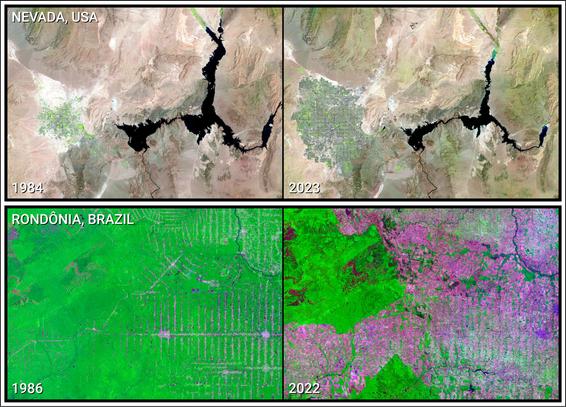
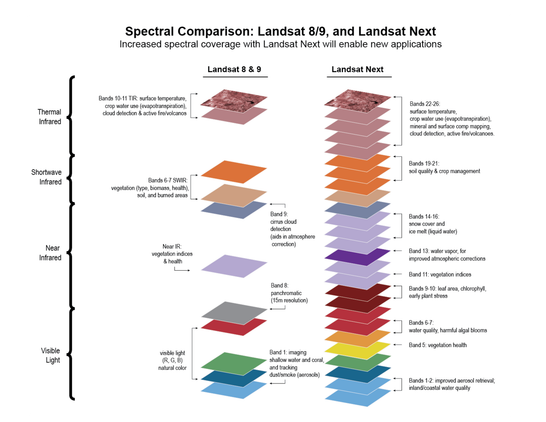
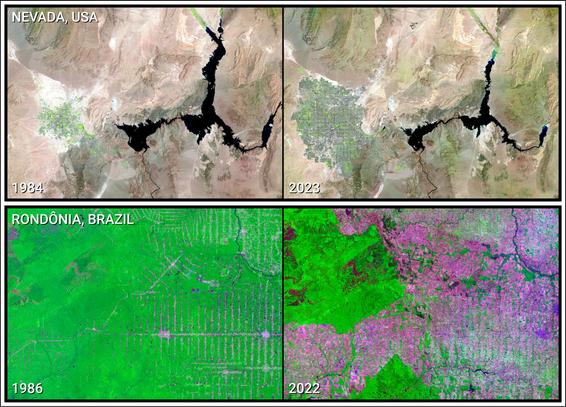
“With a trio of smaller satellites that can each detect 26 wavelengths of light, the Landsat Next mission is expected to look very different from its predecessors that have been observing Earth for 50 years. This new plan for Landsat Next, a joint mission of NASA and the U.S. Geological Survey, is designed to provide more frequent, and finer resolution, data of the changing surface of Earth…”
#GIS #spatial #mapping #remotesensing #earthobservation #monitoring #satellite #Landsat #LandsatNext #planning #global #imagery #visualisation #spectral #usecase #appliedscience #economicimpact #economicvalue #value #costbenefit #multispectral #synoptic #natural #humanimpact
@USGS @nasa @NASAGoddard @USGSEROS
Landsat Next

...

Word Search Puzzle 843

Word List : #shipward #limuli #becarve #rection #smileful #galant #synoptic #outwin #calcific #revisory #sertive #sizar #beek #parodus #remakes #fanners #insorb #angled

Kara Finance
Who REALLY Wrote the Gospels?

YouTube
Still looking for a #weather applications for #android which properly shows #synoptic overview maps of analysis and forecast. preferably #FLOSS. any recommendations? should include at least sfc-pressure, retop, abtop. ideally also a composite of Retop / ThetaAe with pressure and 500 hPa geopotential.

Check out this prominent polar low, with a calm eye and several bands of deep convection, as it moves south across the western North Sea. The forecast (ICON here) is still a bit uncertain, though. The small-scale storm field with hurricane-force winds provides a sign. wave height of about 6 meters and thus poses a danger to shipping.

#Weather
#Forecast
#Meteorology
#Synoptic
#PolarLow
#NorthSea
#WxMastodon

Interesting feature in the ICON model on Thursday night over the North Sea. It looks like the model simulates a tropical-like warm seclusion, a polar low. It is a mesoscale phenomenon, characterized by a warm, nearly cloud-free core and spirals of high-level convection around it.
@kachelmannwetter

#Weather
#Synoptic
#Meteorology
#WeatherModels

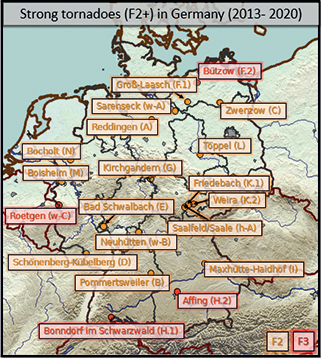
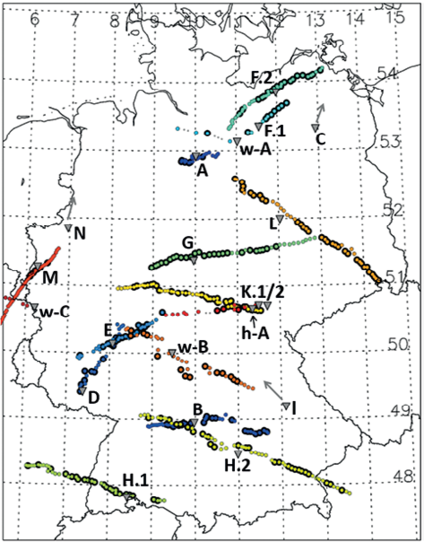
Happy to announce our paper about significant #tornado|es in C Europe. It discusses synoptic + mesoscale conditions as well as the convective environment + presents findings about typical aspects of nowcasting using remote sensing:
https://schweizerbart.de/papers/metz/detail/31/102440/Analysis_of_significant_tornado_events_in_Central_Europe_synoptic_situation_and_convective_development

You can also find online a study about the #tornado outbreak on 20 May 2022 with eigth tornadoes (3x F2, 5xF1) and how it fits the findings of our study: https://docs.google.com/document/d/1glzNtufjgymHJNCbeKTGCb0hEQRJAcsYLzzA0_asZqk/edit?usp=sharing

#tornado #storm #synoptic

Analysis of significant tornado events in Central Europe: synoptic situation and convective development - Meteorologische Zeitschrift Vol. 31 No. 5 — Schweizerbart science publishers

Wow, I am quite happy and surprised that I have already 100 followers in #fediverse less than one month after joining. If you are interested in climatologies, #synoptic, #severeweather and #tornado|s - short #weather - like me, you are invited to follow me! #meteorology