𝑮𝒆𝒓𝒅𝒂 𝑺𝒕𝒆𝒊𝒏𝒉𝒐𝒇𝒇  

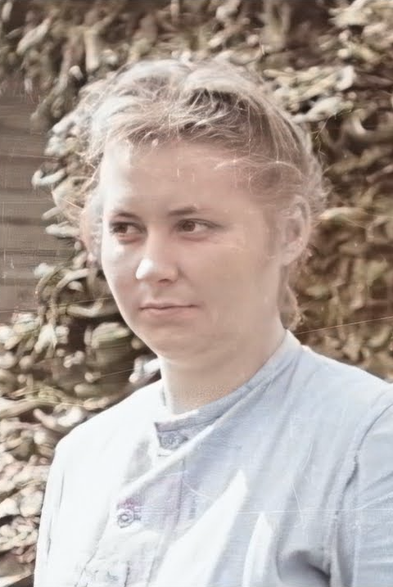
La historia de Gerda Steinhoff incomoda porque rompe una idea muy cómoda: la de pensar que las atrocidades siempre las cometen personas “diferentes” o monstruos fácilmente reconocibles.

Pero muchas veces no fue así.

Gerda nació en 1922 en Danzig, cuando aquella ciudad todavía era la llamada Ciudad Libre de Danzig, un territorio extraño y tensionado entre Alemania y Polonia tras la Primera Guerra Mundial.
Creció en una época de crisis, nacionalismo extremo y resentimiento político constante.
De su infancia no se conocen demasiados detalles íntimos, y precisamente eso vuelve su caso aún más inquietante: no aparece como alguien excepcional.

No provenía de una élite militar ni de una familia poderosa.
No fue una gran ideóloga nazi conocida públicamente.
Antes de la guerra trabajaba en empleos modestos, especialmente en tareas domésticas y cocinas.
Algunas fuentes indican que también trabajó en una fábrica.
Su vida parecía la de miles de jóvenes alemanas de clase trabajadora de aquella época.

No se conocen estudios importantes, carreras universitarias ni una formación destacada.
Tampoco tuvo marido ni hijos conocidos.
De hecho, gran parte de los datos personales de Gerda son difusos porque nunca fue una figura relevante dentro del aparato nazi hasta los últimos años de guerra.

Y precisamente ahí está una de las partes más incómodas de la historia.

La guerra abrió espacios de poder para personas corrientes.

En 1944, con apenas 22 años, Gerda ingresó como guardia auxiliar en el sistema de campos de concentración nazis.
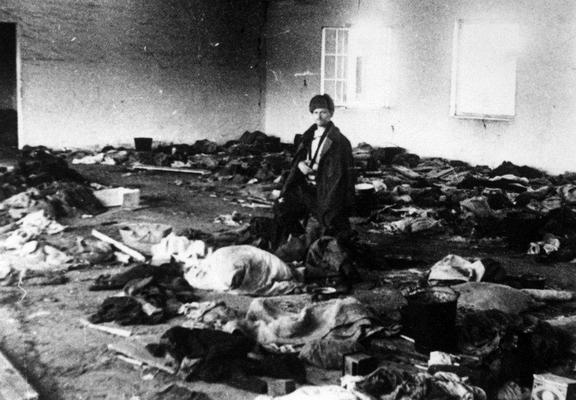
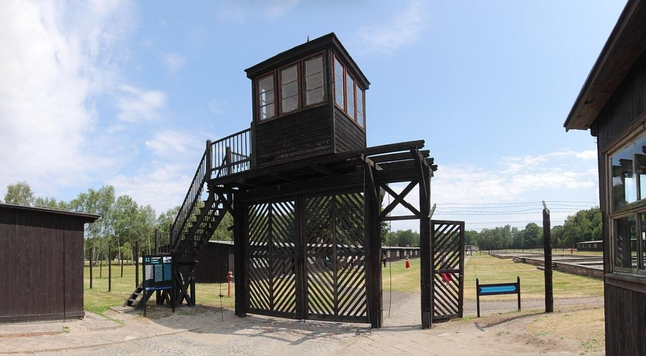
Fue enviada al campo de Stutthof concentration camp, cerca de Danzig.

Aquello cambió completamente su vida.

Los testimonios posteriores la describieron como una guardiana brutal y agresiva.
Sobrevivientes aseguraron que participaba en castigos físicos, golpes y selecciones de prisioneros.
En los campos nazis, una “selección” podía significar decidir quién todavía era útil para trabajar y quién sería enviado a morir.

Y ahí aparece otra cuestión dura de aceptar: muchas guardianas no fueron simples espectadoras pasivas.

El sistema nazi recompensaba la dureza.

Las guardianas más crueles podían ascender, recibir privilegios o ser consideradas eficientes por sus superiores.
En ese ambiente, la violencia terminó normalizándose hasta extremos aterradores.

Gerda Steinhoff compartió entorno con otras guardianas tristemente conocidas como Jenny-Wanda Barkmann, apodada por algunos prisioneros “la Bella Fantasma” debido a su apariencia joven y al contraste brutal con su comportamiento violento.

Después de la derrota nazi llegaron los juicios.

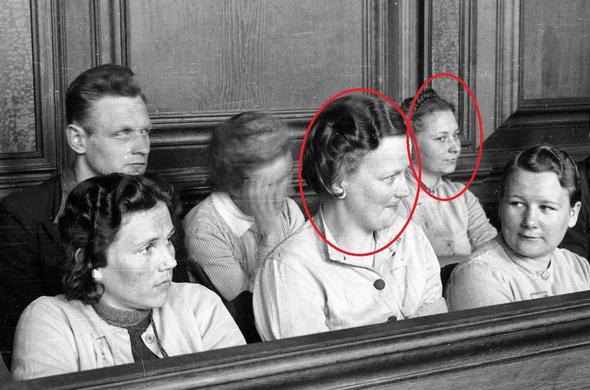
Las autoridades polacas arrestaron a Gerda junto a otros miembros del personal de Stutthof.
En 1946 fue juzgada durante los Procesos de Stutthof, donde antiguos prisioneros dieron testimonios estremecedores sobre abusos, asesinatos, golpes y maltratos sistemáticos dentro del campo.

Tenía apenas 24 años.

Fue declarada culpable y condenada a muerte.

La ejecución tuvo lugar el 4 de julio de 1946 en Biskupia Górka, en una ejecución pública junto a otros condenados vinculados al campo.
Miles de personas acudieron a verla.
Las imágenes del momento siguen resultando impactantes hoy porque muestran hasta qué punto la guerra había dejado heridas abiertas y deseos de justicia inmediata.

Y aun así, lo más inquietante de su historia no es solamente el final.

Es el proceso.

Cómo alguien aparentemente normal puede integrarse en una maquinaria de deshumanización hasta participar activamente en ella.

Años después, la filósofa Hannah Arendt usaría una expresión famosa para intentar explicar algo parecido: “la banalidad del mal”.
La idea de que atrocidades enormes no siempre nacen de monstruos caricaturescos, sino también de personas corrientes que dejan de cuestionar órdenes, dejan de ver humanidad en otros y convierten la violencia en rutina.

Gerda Steinhoff encaja de forma incómoda dentro de esa idea.

No fue una líder nazi importante.
No diseñó el sistema.
No dio los discursos más famosos.

Pero participó en él.

Y eso es precisamente lo que vuelve su historia tan perturbadora.

Porque recuerda que cuando una sociedad convierte el odio en normalidad, incluso personas aparentemente comunes pueden terminar haciendo cosas imperdonables mientras siguen creyendo que simplemente están cumpliendo su trabajo.

▣▣▣▣▣▣▣▣▣▣▣▣▣▣▣▣▣▣

#historia #segundaguerramundial #nazismo #stutthof #gerdasteinhoff #holocausto #historiacontada #curiosidadeshistoricas #hannaharendt #historiasreales #ecosdelpasado
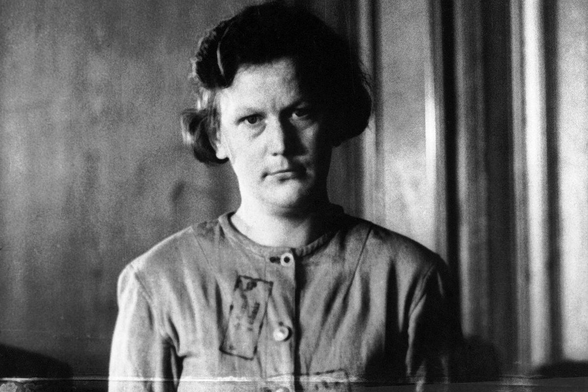
20 Minutes of Agony – Execution of Nazi Psycho Jenny Wanda Barkmann

Justice was swift but brutal for the "Beautiful Specter." Witness the final moments of Jenny Wanda Barkmann, the notorious guard from Stutthof concentration camp, and the public execution that drew thousands in post-war Poland.

#History #WWII #Justice #Stutthof #NaziGermany #TrueCrime

https://www.history-channel.org/20-minutes-of-agony-execution-of-nazi-psycho-jenny-wanda-barkmann/

20 Minutes of Agony – Execution of Nazi Psycho Jenny Wanda Barkmann

20 Minutes of Agony - Execution of Nazi Psycho Jenny Wanda BarkmannNarrator: Marchand Steenkamp. Credit to : World History

The History Channel
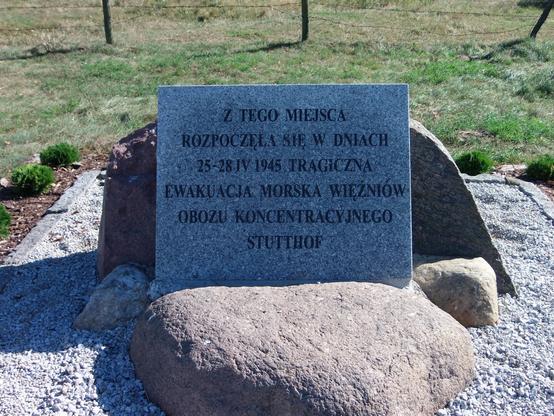
With the #RedArmy closing in, #Nazis tried to evacuate 50,000 from #Stutthof #ConcentrationCamp, but were cut off and marched most back, but on #ThisDayInHistory in 1945, 3000 Jews were forced into the #BalticSea and shot dead. This was repeated in April, with another 4000 shot.
9 May 1945 | The Soviet army liberated the German Nazi concentration camp #Stutthof.
Between 1939-45 some 110,000 people were imprisoned there & around 65,000 were killed there (incl. some 28 thousand Jews). https://en.wikipedia.org/wiki/Stutthof_concentration_camp
Stutthof concentration camp - Wikipedia

KL Stutthof, German nazi concentration camp, Sztutowo, Poland (part 2 of 2)

It was said that the camp was created by neighbors for neighbors. Survivors recalled that they recognized their old German friends among the supervisors, with whom they had good neighborly relations before the war. However, KL Stutthof quickly became a real death factory. During its nearly six years of existence, from September 2, 1939 to May 9, 1945, 110,000 people from 28 countries passed through it. The Germans murdered about 65,000 people there, mostly Jews. Today, the Stutthof Museum is located on this site, which occupies only one sixth of the former camp. The rest is covered by forest.

#stutthof #klstutthof #sztutowo #deathcamp #exterminationcamp #concentrationcamp #germandeathcamp #germanexterminationcamp #nazigermany #worldwar2 #war #germany #niemcy #polska #poland #extermination #jews #germans #nazis #history #historia #nazism #nazizm
KL Stutthof, German nazi concentration camp, Sztutowo, Poland (part 1 of 2)

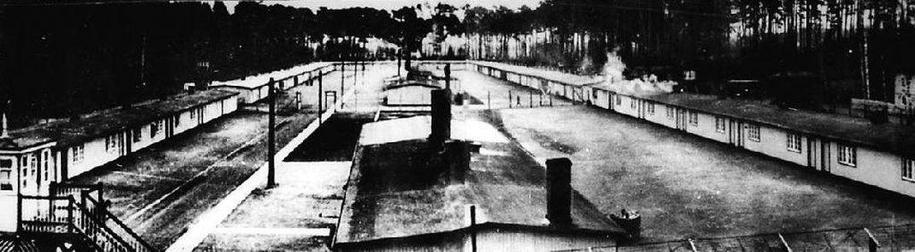
Konzentrationslager Stutthof was established in 1939 on the annexed territories of the Free City of Gdańsk (Freie Stadt Danzig), near the town of Sztutowo. It was the longest-operating concentration camp outside the pre-war borders of Germany. The first transport of prisoners arrived here on September 2, 1939, and numbered about 150 people. In total, about 110,000 prisoners from 28 countries passed through the camp.

Initially, ten wooden barracks were erected on an area of about 4 hectares, where prisoners were placed. This was the so-called Old Camp. From the very beginning, they were overcrowded, poorly insulated, lacking sanitary facilities and basic equipment. In such conditions, various types of parasites and vermin appeared. It quickly turned out that the plans had to be modified - Stutthof was to be larger than the camp in Auschwitz. At the turn of 1940 and 1941, an SS guardhouse and the camp commandant’s office building were built. When Heinrich Himmler arrived there in November, a decision was made for the Concentration Camps Inspectorate in Oranienburg to take over the camp from the local authorities to whom it was formally subordinate. On January 7, 1942, the camp formally became a concentration camp.

[continued in comment]

#stutthof #klstutthof #sztutowo #deathcamp #exterminationcamp #concentrationcamp #germandeathcamp #germanexterminationcamp #nazigermany #worldwar2 #war #germany #niemcy #polska #poland #extermination #jews #germans #nazis #history #historia #nazism #nazizm
#otd1944 heute #vor80Jahren befreiten sowjet. Truppen das #KZ #Riga-#Kaiserwald. Haupt- und Außenlager waren bereits geräumt: Wachleute hatten die rund 12.000 Häftlinge zuvor ermordet oder in Transportzügen und auf #Todesmarsch-Wegen ins KZ #Stutthof getrieben. 📸 Denkmal in Riga
Stanisława #Kamińska, am 14. Jan 1914 in Warschau geboren, wird Ende August 1944 während des #Warschauer #Aufstandes verhaftet. Mit ihrem Vater und ihren jüngeren Schwestern Krystyna und Weronika kommt sie über Pruszków zuerst ins #KZ #Stutthof. Weiter: https://kz-limmer.de/legenden1/
Erste Legendenschilder zu ehemaligen Gefangenen des KZ Conti-Limmer enthüllt - Arbeitskreis »Ein Mahnmal für das Frauen-KZ in Limmer«

Gestern hat der #bgh den Schuldspruch gegen Irmgard F., ehemalige Stenotypistin im #kzstutthof bei Danzig bestätigt. Wer sich nicht nur für die Täter, sondern auch für die Opfer interessiert, dem empfehle ich das Projekt https://die-quellen-sprechen.de/ von BR und IfZ, an dem ich mitwirken durfte. Was sie in #stutthof erleiden mussten erzählen z.B. die #Shoah Überlebenden Abba Naor und Helga Verleger

https://die-quellen-sprechen.de/Abba_Naor.html

https://die-quellen-sprechen.de/Helga_Verleger.html
#ns #nazis #holocaust #nationalsozialismus #IrmgardF

BR Höredition: Die Quellen sprechen - Die Quellen sprechen - Die Verfolgung und Ermordung der europäischen Juden durch das nationalsozialistische Deutschland 1933 - 1945

Eine dokumentarische Höredition zur Verfolgung und Vernichtung der europäischen Juden durch das nationalsozialistische Deutschland 1933 - 1945. Audio-Archiv zur Sendereihe des Bayerischen Rundfunkts mit gesprochen Dokumenten zum Holocaust.