 PugJesus
Waow mistreatment of an underclass has never led to anything bad ever
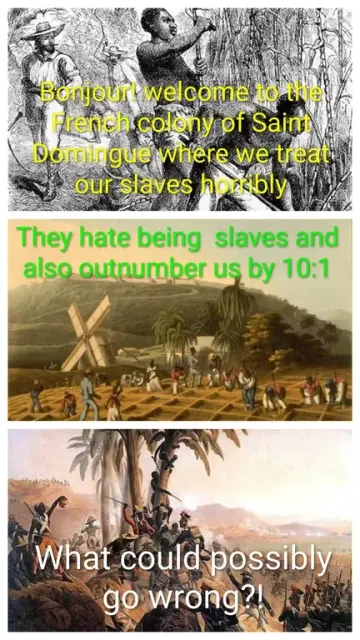
Waow mistreatment of an underclass has never led to anything bad ever

"Oh? You did Jihad against some neighboring heathen raiders? That's cool, I guess. I did it across THE ATLANTIC OCEAN"

Today in Labor History November 15, 1842: 20 enslaved African-Americans, owned by the Cherokee, escaped and tried to reach Mexico, where slavery had been abolished since 1829, in the largest Slave Revolt ever in the Cherokee Nation. Along their way south, they were joined by 15 slaves escaping from the Creek Nation in Indian Territory. Some Native Americans held war captives as slaves, even prior to European colonization of the Americas. This included the Haida, and numerous tribes from the Pacific Northwest. And many more Indigenous people were captured and enslaved by the Europeans during the colonization process. A small number of tribes also held African-Americans as slaves. While many other tribes gave sanctuary to African-Americans who had escaped slavery, incorporating them into their societies, like the Seminole.
#workingclass #LaborHistory #nativeamerican #slavery #Indigenous #colonialism #slaverevolt #rebellion #abolition #africanamerican #BlackMastodon

Today in Labor History July 2, 1822: The authorities hanged Denmark Vesey and 34 others for plotting a slave uprising. An estimated 9,000 were involved in the plot, but only 67 were convicted of any offense. Vesey was a free man living Charleston, South Carolina, who still had enslaved family members. He cofounded the African Methodist Episcopal church (AME) in Charleston, quickly gaining near 2,000 members and the support of white clergy. Charleston at the time had far more black residents than white, including many upper-class free blacks, some of whom had their own slaves. Additionally, many white refugees from the Haitian Revolution moved to Charleston with their black slaves. Consequently, there were many black residents who wanted to replicate the Haitian slave uprising in South Carolina and many whites who were fearful of such a rebellion.
Many of the congregants in Vesey’s church were currently enslaved and he used the church to help organize the revolt. The uprising was supposed to occur on July 14, Bastille Day, since the victors of the French Revolution had abolished slavery in Saint Domingue. The plan was to attack the arsenal, kill as many white slave owners as possible, like they did in the Haitian Revolution, and then commandeer ships to Haiti. Vesey’s success at organizing thousands of free and enslaved blacks was also his downfall. So many people knew about the plot, that word easily leaked to the white slaveowners. In the end, he was betrayed by two slaves who were loyal to their masters. Several white men were also convicted of participating in the plot. None were known abolitionists and all the white allies received lenient sentences.
Many writers have depicted Vesey or his rebellion in their writing. The title character in Harriet Beecher Stowe's novel “Dred: A Tale of the Great Dismal Swamp” (1855) is a composite of Denmark Vesey and Nat Turner. Probably inspired by contemporary criticism of “Uncle Tom,” who she portrayed as a passive martyr, she made Dred a revolutionary escaped slave. Martin Delaney also refers to Vesey in his serialized novel, “Blake; or the Huts of America” (1859–61). Delaney was, himself, a revolutionary free black man. He was an abolitionist, writer and the first and only black man to achieve the rank of major during the Civil War. He was also the first black nationalist, who coined the phrase, “Africa for Africans.” African American writer John Oliver Killens (1916-1987) wrote a biography of Vesey “Great Gittin' Up Morning” (1972). And, more recently, Orson Scott Card portrays Vesey in his “The Tales of Alvin Maker” series (1987-2003).
#workingclass #LaborHistory #denmarkvessey #slavery #racism #slaverevolt #rebellion #Revolution #haiti #Abolition #natturner #HarrietBeecherStowe #books #fiction #novel #writer #civilwar #author #BlackMastadon @bookstadon

Today in Labor History November 15, 1842: 20 enslaved African-Americans, owned by the Cherokee, escaped and tried to reach Mexico, where slavery had been abolished since 1829, in the largest Slave Revolt ever in the Cherokee Nation. Along their way south, they were joined by 15 slaves escaping from the Creek Nation in Indian Territory. Some Native Americans held war captives as slaves, even prior to European colonization of the Americas. This included the Haida, and numerous tribes from the Pacific Northwest. And many more Indigenous people were captured and enslaved by the Europeans during the colonization process. A small number of tribes also held African-Americans as slaves. While many other tribes gave sanctuary to African-Americans who had escaped slavery, incorporating them into their societies, like the Seminole.
#workingclass #LaborHistory #nativeamerican #slavery #Indigenous #colonialism #slaverevolt #rebellion #abolition #africanamerican #BlackMastadon
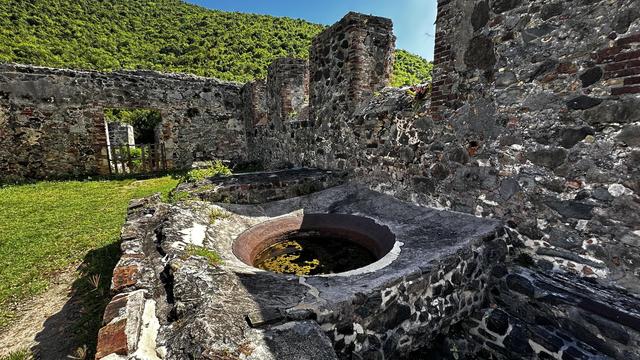
⬆️ Inside the #Annaberg #Plantation sugar factory ruins.
That large round structure is a room-sized boiling pot in which they boiled sugarcane juice to make molasses before they were dried and shipped off to the Danish colonizers’ home country.
It took more than a 100 years for #emancipation in US Virgin Islands after the 1733 #SlaveRevolt
🧵 (2/2)
Haiti became the first independent Caribbean state founded by former slaves
#HaitianRevolution #SlaveRevolt #AtlanticHistory #BlackHistory #FreedomFighters
Today in Labor History July 2, 1822: The authorities hanged Denmark Vesey and 34 others for plotting a slave uprising. An estimated 9,000 were involved in the plot, but only 67 were convicted of any offense. Vesey was a free man living Charleston, South Carolina, who still had enslaved family members. He cofounded the African Methodist Episcopal church (AME) in Charleston, quickly gaining near 2,000 members and the support of white clergy. Charleston at the time had far more black residents than white, including many upper-class free blacks, some of whom had their own slaves. Additionally, many white refugees from the Haitian Revolution moved to Charleston with their black slaves. Consequently, there were many black residents who wanted to replicate the Haitian slave uprising in South Carolina and many whites who were fearful of such a rebellion.
Many of the congregants in Vesey’s church were current slaves and he used the church to help organize the revolt. The uprising was supposed to occur on July 14, Bastille Day, since the victors of the French Revolution had abolished slavery in Saint Domingue. The plan was to attack the arsenal, kill as many white slave owners as possible, like they did in the Haitian Revolution, and then commandeer ships to Haiti. Vesey’s success at organizing thousands of free and enslaved blacks was also his downfall. So many people knew about the plot, that word easily leaked to the white slaveowners. In the end, he was betrayed by two slaves who were loyal to their masters. Several white men were also convicted of participating in the plot. None were known abolitionists and all the white allies received lenient sentences.
Many writers have depicted Vesey or his rebellion in their writing. The title character in Harriet Beecher Stowe's novel “Dred: A Tale of the Great Dismal Swamp” (1855) is a composite of Denmark Vesey and Nat Turner. Probably inspired by contemporary criticism of “Uncle Tom,” who she portrayed as a passive martyr, she made Dred a revolutionary escaped slave. Martin Delaney also refers to Vesey in his serialized novel, “Blake; or the Huts of America” (1859–61). Delaney was, himself, a revolutionary free black man. He was an abolitionist, writer and the first and only black man to achieve the rank of major during the Civil War. He was also the first black nationalist, who coined the phrase, “Africa for Africans.” African American writer John Oliver Killens (1916-1987) wrote a biography of Vesey “Great Gittin' Up Morning” (1972). And, more recently, Orson Scott Card portrays Vesey in his “The Tales of Alvin Maker” series (1987-2003).
#workingclass #LaborHistory #denmarkvessey #slavery #racism #slaverevolt #rebellion #Revolution #haiti #Abolition #natturner #HarrietBeecherStowe #books #fiction #novel #writer #civilwar #author #BlackMastadon @bookstadon

 Liam O'Mara IV, PhD
 MikeDunnAuthor
 Ramesh Gupta
 🐦🔥nemo™🐦⬛ 🇺🇦🍉
 Matt Willemsen