 Reverend Elvis
WORLDWIDE UPRISING! The Restarts on Global Uprising Tour in Asia. Because enough is enough! Rise, resist! #punk #restarts #acab #fuckthepolice #fucktehsystem #asia #thailand #ChiangMai
You heard it! Never sympathise with the internationalists – they’re evil.. #music #restarts #punk #asia

 3i/Atlas
NASA restarts work to support Europe's uncrewed trip to Mars after years of setbacks
https://atlas.whatip.xyz/post.php?slug=nasa-restarts-work-to-support-europes-uncrewed-trip-to-mars-after-years-of-setbacks
<p>NASA has confirmed the pending launch of the European Space Agency's (ESA) Rosalind Franklin rover
#restarts #support #launch #space
https://atlas.whatip.xyz/post.php?slug=nasa-restarts-work-to-support-europes-uncrewed-trip-to-mars-after-years-of-setbacks
<p>NASA has confirmed the pending launch of the European Space Agency's (ESA) Rosalind Franklin rover
#restarts #support #launch #space
 The Japan Times
Tepco has resumed commercial operations of a reactor at its Kashiwazaki-Kariwa nuclear plant, marking the first commercial restart by the company since the 2011 Fukushima nuclear disaster. https://www.japantimes.co.jp/news/2026/04/16/japan/kashiwazaki-kariwa-restart-commercial/?utm_medium=Social&utm_source=mastodon #japan #nuclearenergy #kashiwazakikariwa #terrorism #energy #utilities #restarts #disasterpreparedness #tepco
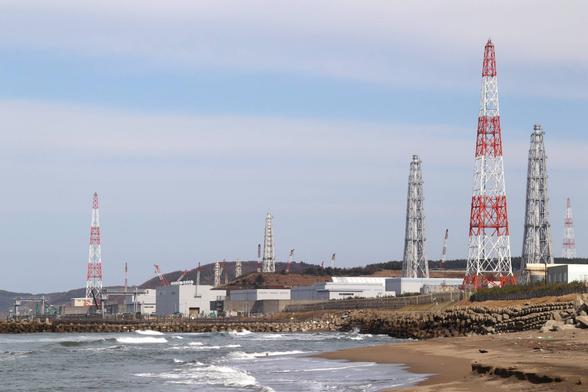
The Nuclear Regulation Authority has approved a plan to ease the timeline given to nuclear power plant operators in the nation for installing anti-terrorism facilities at the plants. https://www.japantimes.co.jp/news/2026/04/02/japan/antiterror-facility-deadline/?utm_medium=Social&utm_source=mastodon #japan #nuclearenergy #terrorism #energy #utilities #restarts
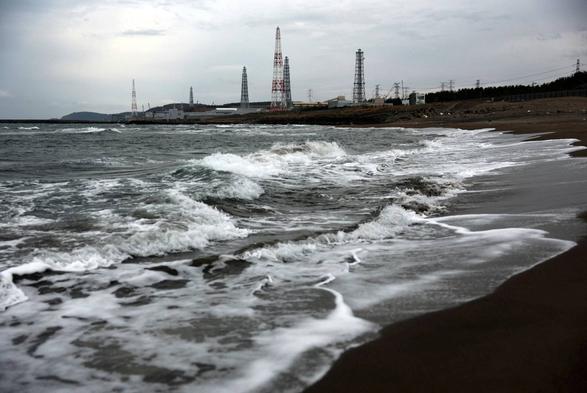
Japan's nuclear comeback slow, steady and seen as necessary, as a stable source of emission-free power is needed if the country is to meet its energy goals https://www.japantimes.co.jp/business/2026/03/06/economy/nuclear-power-comeback/?utm_medium=Social&utm_source=mastodon #business #economy #tepco #kashiwazakikariwa #nuclearenergy #niigata #restarts #311 #fukushima

The No. 6 reactor at the Kashiwazaki-Kariwa nuclear power plant in Niigata Prefecture was brought back online after a scheduled brief halt that was carried out for inspections. https://www.japantimes.co.jp/news/2026/02/25/japan/kashiwazaki-kariwa-reactor-restarted/?utm_medium=Social&utm_source=mastodon #japan #tepco #kashiwazakikariwa #nuclearenergy #niigata #restarts

Tokyo Electric Power Company Holdings said it has fixed a malfunction found in a measuring instrument for the No. 6 reactor at its Kashiwazaki-Kariwa nuclear power plant in Niigata Prefecture. https://www.japantimes.co.jp/news/2026/02/15/japan/tepco-kashiwazaki-kariwa-glitch/?utm_medium=Social&utm_source=mastodon #japan #tepco #nuclearenergy #kashiwazakikariwa #niigata #restarts

 Kent Pitman
Coincidentally, I assume, Abhijit Rao posted on LinkedIn earlier today a very interesting blurb, reporting on his use of this condition handling structure in conjunction with LLMs.
(Works for me in an incognito window, but you may not be able to see past the first comment if you don't have a LinkedIn account.)
https://www.linkedin.com/posts/quasiabhi_commonlisp-lisp-agents-activity-7425847332560293888-fYf9
The blurb references this more detailed account of the work, which I haven't been through in detail yet:
https://quasilabs.in/blog/2026/02/07/conditions-restarts-and-the-agent-that-chooses/
#CommonLisp #Lisp #ConditionHandling #Errors #Restarts #Continuations #ErrorHandling #ConditionHandling #LLM #LLMs #AI #Modularity #QuasiLabs #Reflection #Introspection #MetaProgramming

#commonlisp #lisp #agents #llm #programming #code #quasilabs | Abhijit Rao
In 1988 The Common Lisp Condition System was formally introduced by the X3J13 committee, responsible for the ANSI standard. It was a radical idea: The code that /detects/ an error should not decide how to /recover/ from it. Instead, the signaler establishes named recovery options—restarts—and lets a handler higher up the stack choose which one to invoke. The decision belongs to whoever has the broader context. This was ahead of its time. For 35+ years, the "broader context" was either a human in the debugger or a programmer who knew at compile time which restart to pick. Both worked fine. Then LLMs showed up. An agent monitoring a data pipeline encounters a validation error. Three restarts available. No hardcoded strategy. The agent needs to reason about system goals, weigh tradeoffs, adapt to context it wasn't explicitly programmed for. The architecture was already right. What was missing: semantic context for the handler. Restarts come with names and descriptions. Agents need to know what the system is /trying to achieve/. What failed and why. What each recovery option costs. Why these specific restarts exist in the first place. When you add structured intent metadata—goals, failure modes, design rationale—the agent can map recovery options to system objectives. Same restarts. Profoundly different decision-making surface. I built Telos to capture this. It makes the why behind code queryable at runtime. Combined with conditions and restarts, you get agent-legible error recovery. The condition/restart protocol already separates mechanism from policy. It supports multiple recovery options without the signaler knowing which will be chosen. It allows the handler to be arbitrarily far—in code, in time, in understanding—from the signaler. It's an architecture perfect for agentic systems. And, yes, Common Lisp has an ANSI standard. Blog post with full working CSV validator example: https://lnkd.in/dSbuDK6J #commonlisp #lisp #agents #llm #programming #code #quasilabs
Tokyo Electric Power Company Holdings will restart the No. 6 reactor at its Kashiwazaki-Kariwa nuclear plant in Niigata Prefecture on Monday after having shut it down in January due to an alarm error. https://www.japantimes.co.jp/business/2026/02/06/companies/kashiwazaki-kariwa-restart/?utm_medium=Social&utm_source=mastodon #business #companies #niigata #nuclearenergy #energy #restarts #kashiwazakikariwa #tepco
