Trust Is Not Something You Decide to Give
It is to be earned!
Trust is not something you decide to give. It is something that gets taken from you slowly, over the years, by people who smiled while they were doing it. And once it is gone, really gone, no amount of wanting to trust again makes it come back on demand.
That is the part nobody talks about. The self-help world will tell you to lower your walls. To be vulnerable. To let people in. What it will not tell you is what happens after you do that and it goes wrong again. What it will not tell you is that at some point, the walls are not the problem. The people who keep climbing them are.
I have trusted people I should not have. Most of us have. Not because we were naive, but because the case for trusting them seemed reasonable at the time. They were consistent. They showed up. They said the right things. And then something shifted, and the version of them you thought you knew turned out to be a performance. You were not wrong to trust them. You were working with incomplete information.
That distinction matters more than people realize.
Trust Is Not the Problem
Here is what the conversation around trust usually gets wrong: it treats trust as a character trait rather than a response to evidence. People who struggle to trust after being burned are not damaged or broken. Their nervous system is doing exactly what it is supposed to do. It learned something, and now it is applying that lesson. The problem is not the learning. The lesson sometimes overgeneralizes, and that is where things get complicated.
You trusted someone who lied to you consistently for months. Now you feel a spike of anxiety when your current partner takes too long to reply to a message. That is not irrational. That is pattern recognition running on old data. The anxiety is not about the person in front of you. It is about the last one. And the one before that. It is about every moment where your gut said something was off and you talked yourself out of it, only to find out later that your gut was right.
The damage is not that you trusted. The damage is that you ignored what you already knew.
What Betrayal Actually Does
When someone you trust betrays you, the wound is not just about what they did. It is about what it means for everything that came before. You do not just lose the relationship. You lose your version of it. Every memory gets re-examined. Every conversation replayed. You start looking for the moments you missed, and you find them, and you wonder how you did not see them at the time.
That retroactive rewriting is one of the most disorienting parts of betrayal. The ground does not just shift under your feet in the present. It shifts under your entire history with that person. You were not lied to once. You were lied to the whole time, and you believed it. That is a different kind of injury. It does not just hurt. It makes you question your own judgment in a way that lingers long after the relationship ends.
And that is what makes rebuilding trust so difficult. It is not that you do not want to trust again. It is that you no longer fully trust yourself to read people correctly. That second layer of doubt is quieter than the first, but it does more damage over time.
Social Media Made It Worse
The infrastructure for betrayal has never been more accessible. A private DM takes thirty seconds. An emotional affair can develop over months in a chat thread your partner never sees. The opportunity for small, incremental erosions of trust is constant, and most of it is invisible until it is not. What does not get discussed enough is what social media does to trust beyond the obvious.
It creates a permanent audience for your relationship. Every post, every photo, every check-in is a performance. And when you perform a relationship long enough, it becomes harder to know what is real and what is curated. You stop trusting what you see online because you know how much work goes into making things look a certain way. That skepticism bleeds into real life. The same filter you apply to strangers on Instagram starts applying to the person sleeping next to you. Are they being real with me, or are they performing?
It is a reasonable question. It is also an exhausting one to live inside.
Building It Back Without Handing It Over
Trust, once broken at depth, does not fully restore. That is the honest version of this conversation. What you can build is something functional: a calibrated trust that moves at the pace of evidence rather than hope. You stop giving it away upfront and start letting people earn it incrementally. That sounds cynical. It is actually more sustainable than the alternative.
The alternative is to keep trusting fully, keep getting hurt, keep rebuilding from zero, and wonder why you are exhausted.
Calibrated trust means staying open without being reckless. You pay attention to consistency over time rather than charm in the moment. You notice when someone’s actions and words are aligned, and when they are not. You stop explaining away the things that bother you and start treating your own discomfort as information worth taking seriously.
None of this guarantees you will not get hurt again. Someone committed enough to deceiving you will find a way, regardless of how careful you are. But there is a real difference between being hurt by something genuinely unforeseen and being hurt because you ignored every sign. One is bad luck. The other is a pattern worth breaking.
Trust is still worth building. Even knowing what it costs. The alternative is a life spent at a permanent distance from everyone, and that has its own kind of damage. You just have to build it differently than before. Slower. On better evidence. With less tolerance for ignoring what you already know.
#betrayal #dating #emotionalAffair #overthinking #patternRecognition #rebuildingTrust #selfAwareness #socialMediaInfidelity #Trust #TrustIssues MathiasTCK.bsky.social
 ∫∀⊂∅
∫∀⊂∅
 R2049
R2049
 OptimusPrimeBot
 Ricardo Wang
 Nancy
Nancy
 Zsolt Zsemba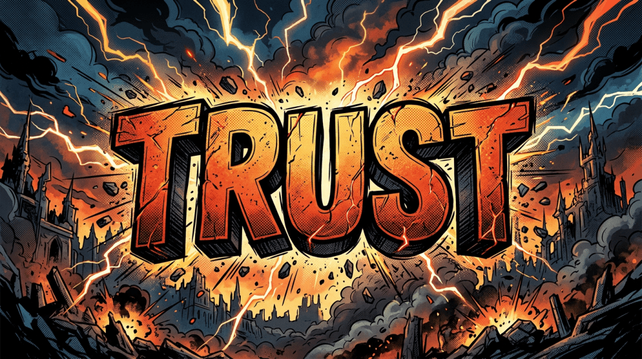
 trading
 Sentence first
 MikeTateMath