When a Friend Chooses Everyone Else’s Version of the Story But Yours

There is a particular kind of disappointment that sticks with you longer than most. It is not always the loudest betrayal. It is not always the most dramatic falling out. Sometimes it is something much simpler. Someone you considered a friend hears an accusation, hears a rumor, hears a misunderstanding, and instead of coming to you and asking what happened, they immediately decide you are guilty. Maybe they hear it from another friend. Maybe they hear it from a group of people. Maybe they […]

https://jaimedavid.blog/2026/05/31/18/11/17/analysis/jaimedavid327/11106/when-a-friend-chooses-everyone-elses-version-of-the-story-but-yours/

Trust Is Not Something You Decide to Give

It is to be earned!

Trust is not something you decide to give. It is something that gets taken from you slowly, over the years, by people who smiled while they were doing it. And once it is gone, really gone, no amount of wanting to trust again makes it come back on demand.

That is the part nobody talks about. The self-help world will tell you to lower your walls. To be vulnerable. To let people in. What it will not tell you is what happens after you do that and it goes wrong again. What it will not tell you is that at some point, the walls are not the problem. The people who keep climbing them are.

I have trusted people I should not have. Most of us have. Not because we were naive, but because the case for trusting them seemed reasonable at the time. They were consistent. They showed up. They said the right things. And then something shifted, and the version of them you thought you knew turned out to be a performance. You were not wrong to trust them. You were working with incomplete information.

That distinction matters more than people realize.

Trust Is Not the Problem

Here is what the conversation around trust usually gets wrong: it treats trust as a character trait rather than a response to evidence. People who struggle to trust after being burned are not damaged or broken. Their nervous system is doing exactly what it is supposed to do. It learned something, and now it is applying that lesson. The problem is not the learning. The lesson sometimes overgeneralizes, and that is where things get complicated.

You trusted someone who lied to you consistently for months. Now you feel a spike of anxiety when your current partner takes too long to reply to a message. That is not irrational. That is pattern recognition running on old data. The anxiety is not about the person in front of you. It is about the last one. And the one before that. It is about every moment where your gut said something was off and you talked yourself out of it, only to find out later that your gut was right.

The damage is not that you trusted. The damage is that you ignored what you already knew.

What Betrayal Actually Does

When someone you trust betrays you, the wound is not just about what they did. It is about what it means for everything that came before. You do not just lose the relationship. You lose your version of it. Every memory gets re-examined. Every conversation replayed. You start looking for the moments you missed, and you find them, and you wonder how you did not see them at the time.

That retroactive rewriting is one of the most disorienting parts of betrayal. The ground does not just shift under your feet in the present. It shifts under your entire history with that person. You were not lied to once. You were lied to the whole time, and you believed it. That is a different kind of injury. It does not just hurt. It makes you question your own judgment in a way that lingers long after the relationship ends.

And that is what makes rebuilding trust so difficult. It is not that you do not want to trust again. It is that you no longer fully trust yourself to read people correctly. That second layer of doubt is quieter than the first, but it does more damage over time.

Social Media Made It Worse

The infrastructure for betrayal has never been more accessible. A private DM takes thirty seconds. An emotional affair can develop over months in a chat thread your partner never sees. The opportunity for small, incremental erosions of trust is constant, and most of it is invisible until it is not. What does not get discussed enough is what social media does to trust beyond the obvious.

It creates a permanent audience for your relationship. Every post, every photo, every check-in is a performance. And when you perform a relationship long enough, it becomes harder to know what is real and what is curated. You stop trusting what you see online because you know how much work goes into making things look a certain way. That skepticism bleeds into real life. The same filter you apply to strangers on Instagram starts applying to the person sleeping next to you. Are they being real with me, or are they performing?

It is a reasonable question. It is also an exhausting one to live inside.

Building It Back Without Handing It Over

Trust, once broken at depth, does not fully restore. That is the honest version of this conversation. What you can build is something functional: a calibrated trust that moves at the pace of evidence rather than hope. You stop giving it away upfront and start letting people earn it incrementally. That sounds cynical. It is actually more sustainable than the alternative.

The alternative is to keep trusting fully, keep getting hurt, keep rebuilding from zero, and wonder why you are exhausted.

Calibrated trust means staying open without being reckless. You pay attention to consistency over time rather than charm in the moment. You notice when someone’s actions and words are aligned, and when they are not. You stop explaining away the things that bother you and start treating your own discomfort as information worth taking seriously.

None of this guarantees you will not get hurt again. Someone committed enough to deceiving you will find a way, regardless of how careful you are. But there is a real difference between being hurt by something genuinely unforeseen and being hurt because you ignored every sign. One is bad luck. The other is a pattern worth breaking.

Trust is still worth building. Even knowing what it costs. The alternative is a life spent at a permanent distance from everyone, and that has its own kind of damage. You just have to build it differently than before. Slower. On better evidence. With less tolerance for ignoring what you already know.

#betrayal #dating #emotionalAffair #overthinking #patternRecognition #rebuildingTrust #selfAwareness #socialMediaInfidelity #Trust #TrustIssues
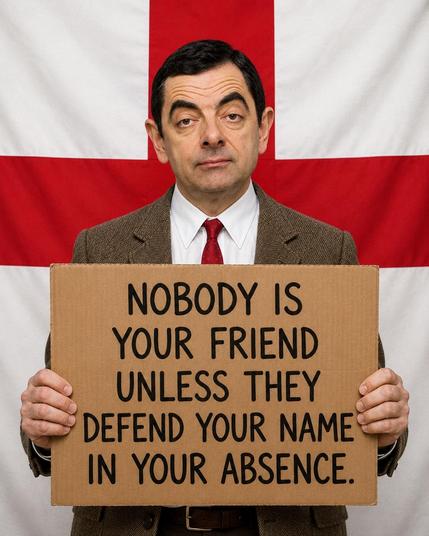
Real loyalty is what people say about you when you’re not in the room. Fake friends talk with you… real ones defend you behind your back. #RealFriends #Loyalty #TrustIssues #Respect #TrueColors
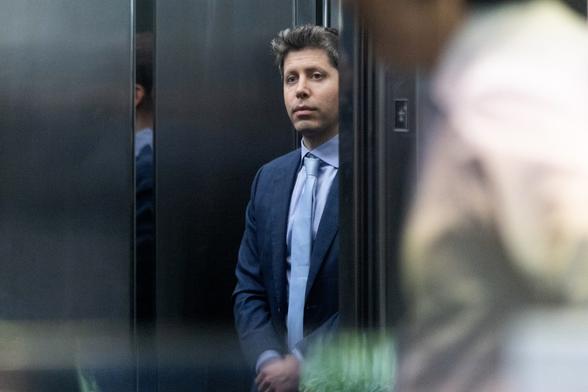
Who trusts Sam Altman? πŸ˜‚ Let's face it, Kim Kardashian's skincare routine has more credibility! πŸ‘» TechCrunch's endless list of buzzwords distracts from the real question: Who cares? πŸ€·β€β™‚οΈ
https://techcrunch.com/2026/05/13/who-trusts-sam-altman/ #trustissues #skincarebuzz #techcritique #samaltman #kimkardashian #HackerNews #ngated
Who trusts Sam Altman? | TechCrunch

"I believe I am an honest and trustworthy business person," Altman testified in federal court.

TechCrunch

Dating? You Will Never Be Done Dealing With This

You meet someone new, you hit it off, and the journey begins. Getting to know each other and finding out what makes each person tick. Retelling some past hurts, opening healed wounds and starting the process. But, how do you go about scaling the walls of trust?

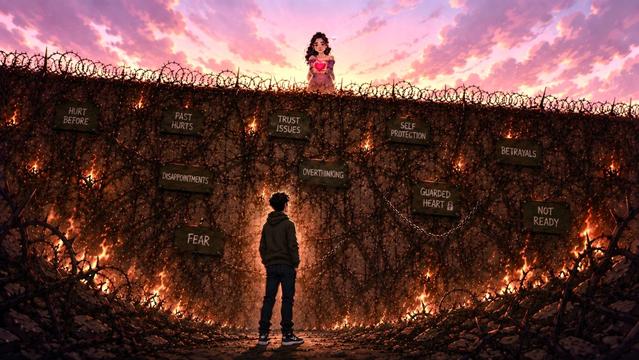
Nobody warned you it was going to be this hard. Your parents did not tell you. Your friends glossed over it. The movies sold you grand gestures and perfectly timed rain. You figured it out the same way everyone does: by getting burned, building walls, and dragging the wreckage of old relationships into every new one you try to start.

Here is the uncomfortable truth: it does not get easier with age. It does not get easier with experience. The game just changes shape.

You are forty-three years old. You have been through a divorce, a few near-misses, and more first dates than you can count. You sit across from someone at dinner, and you are already scanning for red flags before the second glass of wine arrives. That is not wisdom. That is scar tissue.

The Baggage We Never Check

Every teenager/adult who has loved and lost is carrying something. Past hurts do not heal cleanly. They calcify. You tell yourself you are over your ex, but you flinch when a new partner takes a phone call in another room. The name that keeps appearing in their notifications does not go unnoticed. Deep down, some part of you is already bracing for the moment this one falls apart, too.

This is not a character flaw. It is a learned response. The problem is that learned responses are almost impossible to turn off consciously. You cannot logic your way out of a conditioned fear. The brain does not know the difference between a real threat and a pattern it once associated with pain. Protection kicks in whether you want it to or not.

The guarded heart is not cold. Exhaustion built those walls. It has been through enough that openness feels less like vulnerability and more like standing in front of traffic with your eyes closed.

What Social Media Did to Trust

Ten years ago, cheating required effort. Secrecy, logistics, time. Today it requires a few swipes and a private inbox. Instagram DMs, Snapchat, WhatsApp, and a dozen other platforms have turned infidelity into something almost frictionless. This is not a moral panic. The problem is structural.

Social media did not create the impulse to stray. But it turned that impulse into something instantly actionable. Someone is always available. A comment thread, a reaction, a message that starts harmless and migrates somewhere else. And because it all happens on a screen, it is easier to rationalize. Just talking. Just liking a photo. Just nothing.

The gray zones have multiplied. Emotional affairs that never become physical. Online flirtations are defended as friendships. A whole ecosystem of connection that exists just outside the edges of a committed relationship, and everyone decides for themselves where the line is. So we enter relationships with our phones face down and our trust already running on empty. That is the baseline now.

And it is not just cheating. Social media is doing something more corrosive than infidelity. It is a manufacturing comparison. You scroll past someone’s highlights reel and suddenly, your actual life, your actual partner, your actual relationship feels inadequate. The perfectly curated couple on your feed is not showing you their arguments or their silences or the nights they went to bed without speaking. You are comparing your reality to their fiction. And we do this compulsively, every day, and wonder why nothing feels like enough.

Overthinking Is Not a Personality Trait

Somewhere along the line, analysis became a substitute for trust. If you can figure out what is really going on, you can stay ahead of the pain. So you read into the tone of a text. You track response times. You interpret silence as a signal. You run every interaction through a filter of what it might mean rather than what it probably is.

Overthinking is not stupidity. It is a trauma response. When someone has blindsided you before, your nervous system files that away. The next time things feel slightly off, it starts working overtime. The cruelty of it is that the overthinking itself damages the relationship. You pull away to protect yourself. Your partner feels the distance and pulls back too. You interpret that withdrawal as confirmation of whatever fear triggered the spiral, and you are both locked inside a dynamic that neither of you fully understands.

Nobody Gets Out Unscathed

Here is what experience actually teaches you about dating: everyone is walking around with some version of this. The confident person across from you who seems completely at ease has their own version of guarded. Their own version of scan and assess. Their own story behind why they went quiet when a certain topic came up.

The difference between people who manage to build something real and those who do not is not the absence of damage. It is the willingness to be honest about it. Not to weaponize it, not to wear it as a shield, but to put it on the table at some point and say: this is what happened, this is what it left behind, and I am working on it.

That kind of honesty is getting harder to come by. Because we live in an age where everyone is performing their best version of themselves online, the gap between who we present and who we actually are keeps widening. Authenticity is disappearing from dating the same way it is disappearing from social media. We are all out here presenting a highlight reel and wondering why nobody connects with the real thing.

Dating has always been hard. It has always involved risk, disappointment, fear, and the occasional catastrophic loss of faith in human beings. But somewhere in the last decade, the tools we built to connect also became the tools most likely to destroy what we are trying to build. That tension is not going anywhere. Pretending otherwise does not make you optimistic. It just makes you underprepared.

#bali #betrayal #cheating #dating #guardedHeart #Istri #Jodo #modernRelationships #overthinking #pacaran #pastHurts #socialMediaInfidelity #Suami #TrustIssues #ZsoltZsemba

🚨 Ah, the ol' "trust us, we're not using your data for #immigration enforcement" trope. Who needs a dystopian novel when you have Flock cameras and a JavaScript hurdle to keep the masses blissfully ignorant? πŸ“ΈπŸ€¦β€β™‚οΈ
https://www.ohio.news/stories/dayton-authorities-say-that-flock-cameras-data-allegedly-used-for-immigration-enforcement/ #trustissues #dataprivacy #enforcement #surveillance #dystopia #HackerNews #ngated

Behind the Door A J.E. Thriller Short

A psychological short story about Sarah, who discovers a disturbing connection between Daniel and Clara when a stranger appears, forcing her to confront hidden consequences in her own apartment.

https://wearewisethinkers.com/2026/04/30/behind-the-door-a-j-e-thriller-short/

Behind the Door A J.E. Thriller Short

A psychological short story about Sarah, who discovers a disturbing connection between Daniel and Clara when a stranger appears, forcing her to confront hidden consequences in her own apartment.

We Are Wise Thinkers
Fraud by Omission: Not Telling the Whole Truth Is Still a Lie - Zsolt Zsemba

Withholding the truth to protect a short-term outcome is not kindness. It is deception. Here is the psychology behind lies of omission and why.

Zsolt Zsemba
Ah, bless Google πŸ™„β€”that digital colossus of broken promises and data breaches. Turns out your private info is as safe as a paper umbrella in a hurricane, and now ICE has joined the party! πŸŽ‰ Just remember, when you trust Google, you might as well be posting your diary on Reddit. πŸ˜‚ #PrivacyFail
https://www.eff.org/deeplinks/2026/04/google-broke-its-promise-me-now-ice-has-my-data #PrivacyFail #GoogleDataBreach #TrustIssues #ICEConcerns #DigitalPrivacy #HackerNews #ngated
Google Broke Its Promise to Me. Now ICE Has My Data.

In 2025, Google gave Amandla Thomas-Johnson's data to ICE without giving him the chance to challenge the subpoena, breaking a nearly decade-long promise to notify users before handing their data to law enforcement.

Electronic Frontier Foundation