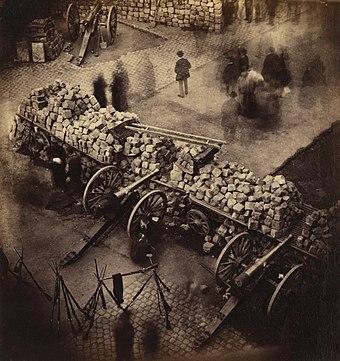
https://www.counterpunch.org/2026/06/01/reflecting-on-socialism-through-the-lens-of-the-paris-commune/
#revolution #socialism #pariscommune
SOCIAL REVOLUTION IS THE DEAREST OF MY DESIRES
"I HAVE BEEN TOLD that I am an accomplice of the
Commune. Certainly, yes, for the Commune wanted, above all else, the Social Revolution, and the Social Revolution is the dearest of my desires.”
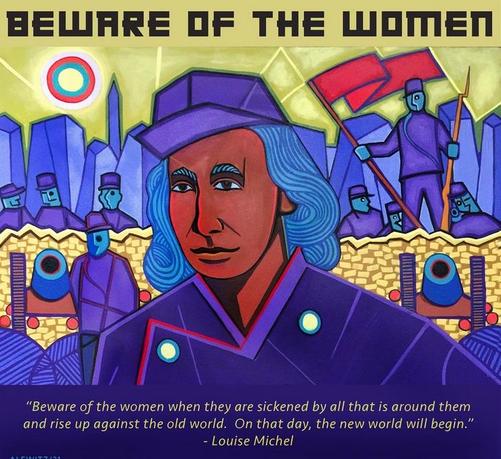
Happy Birthday LOUISE MICHEL
(May 29, 1830 – January 9, 1905)
#louisemichel #alewitz #Art #ParisCommune #anarchism #feminism #teacher #education
Today in Labor History May 29, 1830: Anarchist school teacher Louise Michel was born in Vroncourt, France in 1830. Michel was a leader of the Paris Commune. As a child, she always empathized with the downtrodden. At age 23, she became a school teacher. In her free time, she wrote poetry and took classes in physics, chemistry and law. Here’s one of her early poems:
I have seen criminals and whores
And spoken with them. Now I inquire
If you believe them made as now they are
To drag their rags in blood and mire
Preordained, an evil race?
You to whom all men are prey
Have made them what they are today.
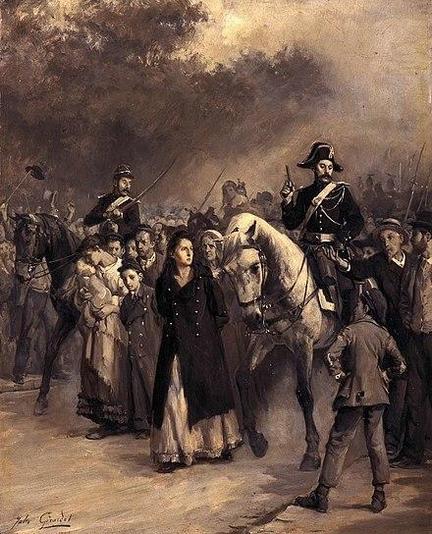
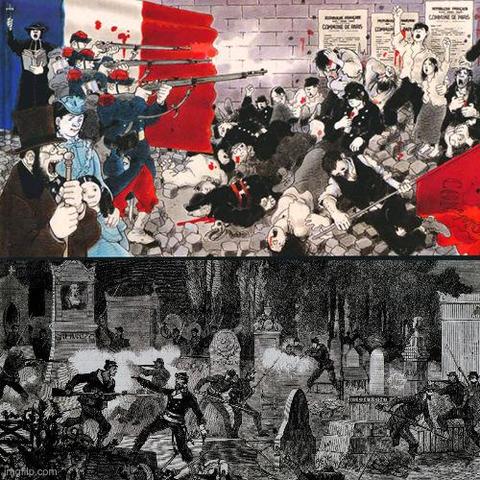
In July, 1870, she was arrested her for the first time. She was helping cache arms to defend Strasberg against the Prussian army. The Prussians released her at the end of September, but arrested her again, two months later, for leading a demonstration. In January, 1871, the Prussians conquered Paris, but allowed the French to elect a new government, which they filled with monarchists. Two months later, the people overthrew that government in the Paris Commune. In her memoirs, she wrote the following about her state of mind during the commune: "In my mind I feel the soft darkness of a spring night. It is May 1871, and I see the red reflection of flames. It is Paris afire. That fire is a dawn." At the end of the Bloody Week, the authorities forced her to turn herself in by threatening to kill her mother. She was lucky to have survived. They executed 30,000 men, women and children.
They tried her in December, 1871 for trying to overthrow the government, arming citizens, forgery, attempted assassinations, and numerous other crimes. When asked if she had anything to say in her defense, she replied: "I do not wish to defend myself, I do not wish to be defended. . . I wished to oppose the invader from Versailles with a barrier of flames. I had no accomplices in this action. I acted on my own initiative. . . since it seems that any heart which beats for freedom has the right only to a lump of lead, I too claim my share. If you let me live, I shall never stop crying for revenge and l shall avenge my brothers. I have finished. If you are not cowards, kill me!"
They sentenced her to deportation for life and sent her to New Caldonia. On the boat ride there, in 1873, she met Natalie Lemel, who taught her about anarchism. After five years, they allowed her to start teaching again. She worked with the children of colonists and the indigenous people of New Caldonia. Her struggle against French colonialism and support for the indigenous people is remembered today in their local museum of anarchism.
In 1880, the French gave amnesty to commune prisoners and allowed her back into the country. Many of those prisoners could not find work and were starving. She helped set up soup kitchens to feed them and devoted herself to writing about strikes and worker protests. On Mach 9, 1883, she led a demonstration through Paris. During the march, starving workers looted bakeries and stole bread. They arrested Michel and sentenced her to six years solitary confinement.
When socialist Paul Lafargue visited her in prison, he seemed distressed by her living conditions. “My dear Lafargue,” she said. “There is no other parlor in this hotel where the bourgeois lodge me gratis. I'm not complaining. . .I‘ve found a happiness in prison that I never knew when I was free; I have time to study and I take advantage of it. When I was free, I had my classes: 150 students or more. It wasn’t enough for me to live on, since two thirds of them didn’t pay me. I had to give lessons in music, grammar, history, a little bit of everything, until ten or eleven o'clock in the evening, and when I went home I went to sleep exhausted, unable to do anything. At the time I would have given years of my life in order to have time to give over to study. . . . While waiting to re-conquer my freedom of action, my freedom to propagandize, I write. I wrote some children’s books. I teach them to think like citizens, like revolutionaries, while at the same time amusing them. In novels I realistically paint the miseries of life, and I try to breathe the love of the revolution into the hearts of men.”
Two years after being released, a would-be assassin shot her behind her ear. During the trial, she defended the would-be assassin, arguing that he had been misled by an evil society. She died on January 9, 1905, due in part to the bullet that remained lodged in her skull.
#workingclass #LaborHistory #louisemichel #anarchism #feminism #pariscommune #socialism #prison #revolution #teacher #children #colonialism #resistance #deportation #indigenous #poetry @bookstadon
The French army retook Paris #OnThisDay in 1871.
In May 1871, a short-lived revolution in social relations was brutally suppressed. What is the legacy of the #ParisCommune?
🔓 This archive article is still free to read
https://www.historytoday.com/miscellanies/paris-communes-bloody-week
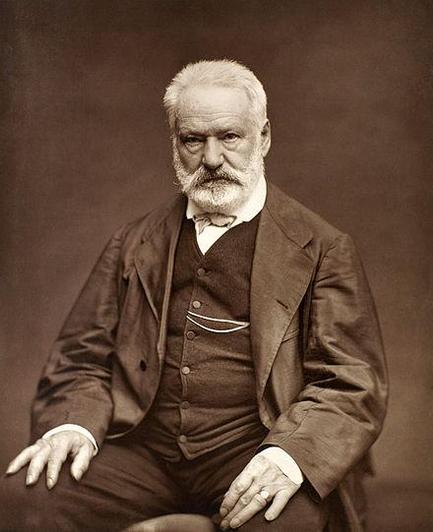
Today in Writing History May 22, 1880: Victor Hugo died. Hugo wrote poetry, novels and drama over the course of sixty years. His most famous works include Les Miserables (1862) and The Hunchback of Notre Dame (1831). Though he was a conservative early in his life, he broke with the conservatives in 1848, calling for the end of misery and poverty. He also supported universal suffrage and free education for all children. Additionally, he was known worldwide for his advocacy to abolish the death penalty and slavery. In 1859, he asked the U.S. to spare John Brown’s life. He also begged Benito Juarez to spare the life of Maximilian I.
When Napoleon III seized power, Hugo publicly called him a traitor. After that, he lived in exile from 1855 to 1870. While in exile, he published his most famous political pamphlets, Napoleon le Petit and Histoire d’un Crime. Both were banned in France. However, in spite of these progressive views, he supported colonialism because of its “civilizing” effects on the colonized peoples. And he wrote that the Paris Commune was as “idiotic as the National Assembly is ferocious. From both sides, folly.” But he did offer his support to Commune participants when they were being brutalized.
#workingclass #LaborHistory #johnbrown #victorhugo #pariscommune #poverty #racism #exile #censorship #freespeech #slavery #abolition #poetry #novels #fiction #writer #author @bookstadon
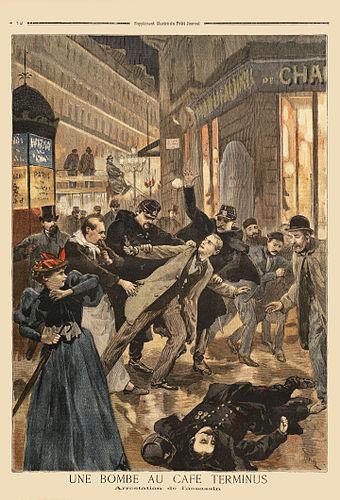
Today in Labor History May 21, 1894: The French authorities executed anarchist Emile Henry by guillotine. His final words were, “Courage, comrades! Long live Anarchy!” Henry grew up in a family of radicals. His father had been a supporter of the Paris Commune. As a result, his family was exiled to Spain, where Henry was born. However, his father contracted mercury poisoning from his factory job there and died when Henry was ten. After this, the family moved back to France. Henry’s older brother, also an anarchist, helped him make connections with other French revolutionaries. In 1892, Henry set a time bomb at the offices of the Carmaux Mining Company, which killed five cops. In February, 1894, he set off a bomb at the Café Terminus, killing one person and wounding twenty. The authorities arrested him for this crime and sentenced him to death by guillotine.
#workingclass #LaborHistory #anarchism #atentat #assassination #execution #deathpenalty #emilehenry #pariscommune #guillotine
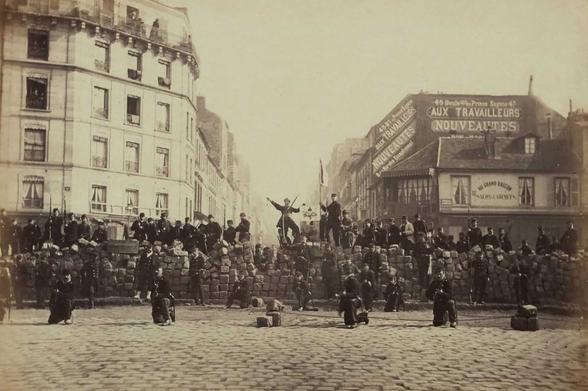
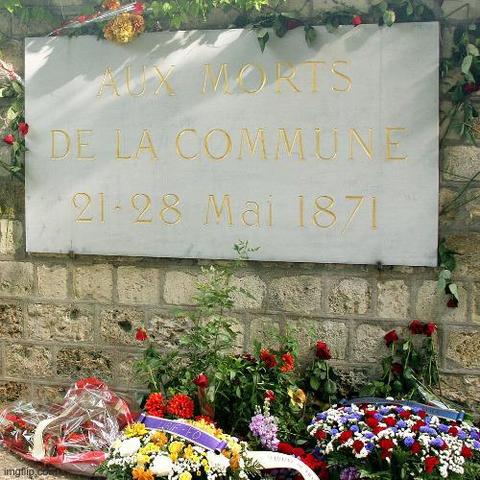
Today in Labor History May 21, 1871: The Bloody Week, a savage orgy of repression and violence, was launched against the Paris Commune. As a result of the French government’s massacres and summary executions, 20,000 to 35,000 civilians died. 38,000 people were arrested. Prior to the repression, workers had taken over the city for 2 months, governing it from a feminist and anarcho-communist perspective, abolishing rent and child labor, and giving workers the right to take over workplaces abandoned by the owners.
During the Commune, workers took over all aspects of economic and political life. They enacted a system that included self-policing, separation of the church and state, abolition of child labor, and employee takeovers of abandoned businesses. Churches and church-run schools were shut down. The Commune lasted from March 18 through May 28, 1871. Karl Marx called it the first example of the dictatorship of the proletariat.
Louise Michel was one of the leaders of the revolution. During the Commune, she was elected head of the Montmartre Women’s Vigilance Committee. She also participated in the armed struggle against the French government. In her memoirs, Michel wrote the following about her state of mind during the commune: “In my mind I feel the soft darkness of a spring night. It is May 1871, and I see the red reflection of flames. It is Paris afire. That fire is a dawn.” She also wrote “oh, I’m a savage all right, I like the smell of gunpowder, grapeshot flying through the air, but above all, I’m devoted to the Revolution.”
Read my complete biography of Louise Michel here: https://michaeldunnauthor.com/2024/04/20/louise-michel/
#workingclass #LaborHistory #bloodyweek #ParisCommune #anarchism #communism #revolution #feminism #louisemichel #marx #massacre #childlabor
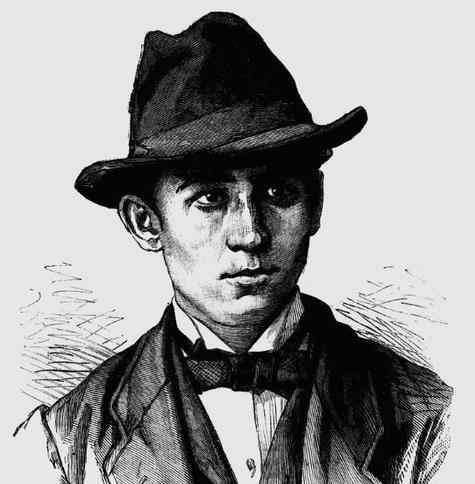
Today in Labor History May 11, 1878: Emil Heinrich Maximilian Hoedel, a 21-year-old anarchist, shot Emperor Guillaume I of Prussia in order to publicize the plight of the workers. The monarch survived. Hoedel was beheaded two months later. As he prepared to die, he shouted, "Vive la commune."
#workingclass #LaborHistory #anarchism #deathpenalty #execution #regicide #assassination #atentat #maxhoedel #pariscommune