Reviews for "Journal of Neuroscience" - Page 1 - SciRev
Tout frais dans #PLoSCompBiol, le travail de notre équipe initié par Corentin Boennec et repris par Alex Massey.
Real-time forecasting of COVID-19-related hospital strain in France using a non-Markovian mechanistic model
https://doi.org/10.1371/journal.pcbi.1012124

Real-time forecasting of COVID-19-related hospital strain in France using a non-Markovian mechanistic model
Author summary The US and European Covid-19 Forecast Hubs focus on metrics such as deaths, new cases, and hospital admissions, but do not offer measurements of hospital strain like critical care bed occupancy, which was essential for the provisioning of healthcare resources during the COVID-19 pandemic. Furthermore, forecasting support was only guaranteed on the national level leaving many countries to look elsewhere for valuable sub-national forecasts. In France statistical modelling approaches were proposed to anticipate hospital stain at the sub-national level but these were limited by a two-week forecast horizon. We present a sub-national French modelling framework and online application for anticipating hospital strain at the four-week horizon that can account for abrupt changes in key epidemiological parameters. It was the only publicly available real-time non-Markovian mechanistic model for the French epidemic when implemented in January 2021 and, to our knowledge, it still was at the time it stopped in early 2022. Further adaptations of this surveillance system can serve as an anticipation tool for hospital strain across sub-national localities to aid in the prevention of short-noticed ward closures and patient transfers.

Ten simple rules for organizations to support research data sharing
Ten simple rules for organizations to support research data sharing

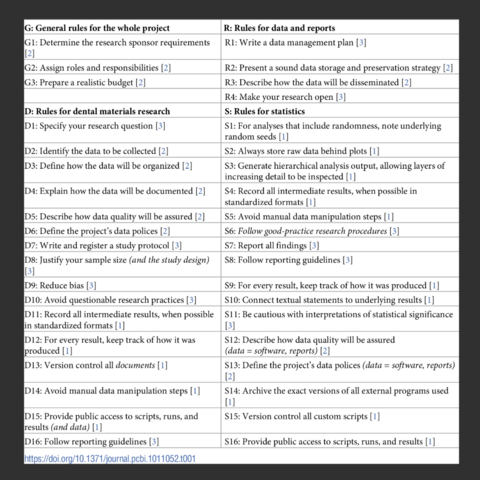
Establishing effective cross-disciplinary collaboration: Combining simple rules for reproducible computational research, a good data management plan, and good research practice
My first paper edited and published in
#PLoSCompBiol: Söylev et al "CONGA: Copy number variation genotyping in ancient genomes and low-coverage sequencing data"
https://journals.plos.org/ploscompbiol/article?id=10.1371/journal.pcbi.1010788#AncientDNA #bioinformatics #CNVs
CONGA: Copy number variation genotyping in ancient genomes and low-coverage sequencing data
Author summary In parallel with developments in genomic technologies over the last decades, ancient genomics opened a new era in understanding the evolutionary history of populations and species. However, the field still needs novel computational methods for accurate and effective use of ancient genome data, which is mostly low-coverage and more challenging to analyse than modern-day genomes. Single nucleotide polymorphisms (SNPs), to date, have yet been the main source of information analysed in ancient genome studies. This is despite copy number variants (CNVs) harboring at least as much information as SNPs, especially with respect to natural selection. Here we developed CONGA, an algorithm for genotyping deletions and duplications in low-coverage genomes. We assessed its accuracy using simulations (with ancient-like data), and also studied its performance among 71 real ancient human genomes from different laboratories. We found that the common practice of authors filtering their ancient genome data before publishing prevents the reliable identification of duplications. Meanwhile, large (>1,000 base-pair) deletions can be detected even at quite low coverage (e.g. 0.5×). Deletions called in ancient genomes reflect population history and also show signs of negative selection.
So I just discovered that a bot I set up ages ago to tweet papers I edited at
#PLOSone still works, and tweeted yesterday the first paper I edited at
#PLoSCompBiol @PLOS
Ten simple rules for funding scientific open source software
Author summary As funders of scientific research, we have a unique knowledge of the challenges that researchers face in finding support for the many parts of their projects. Scientific software is a central part of the research process and is increasingly in need of investments to ensure continued advancement and progress. Here we draw on our experiences as funders to provide guidance and considerations for funders and other community members interested in supporting scientific software. We address specific issues related to software, including contributor community development, governance, sustainability, and diversity and inclusion.
 El Duvelle
 ETE
ETE UKRIO
UKRIO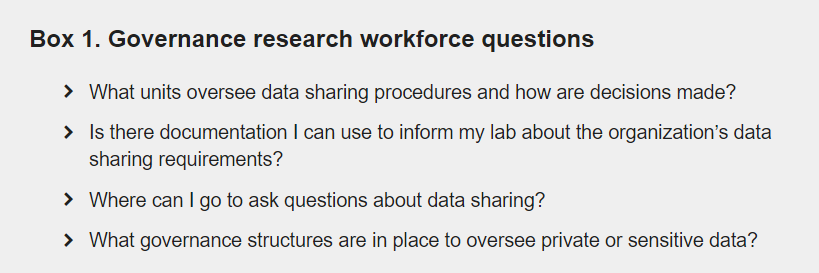
 Francis Ouellette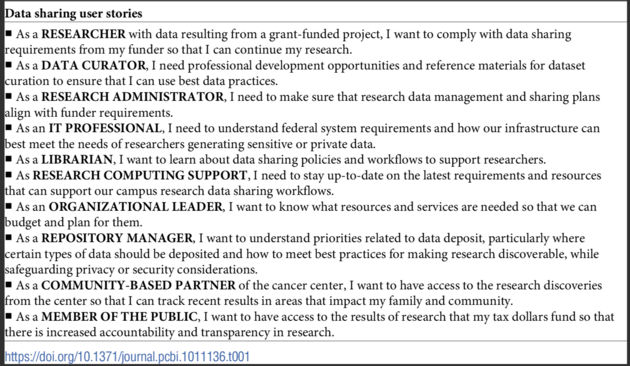
 Marc Robinson-Rechavi
 Alexander Pico
 Albert Cardona
 Miguel Ramos