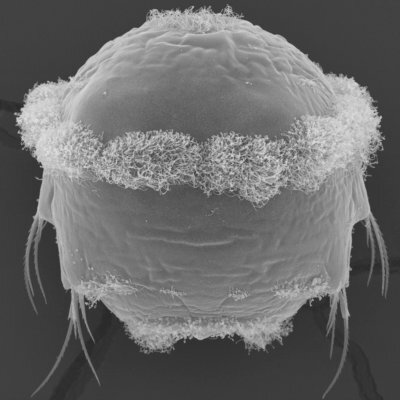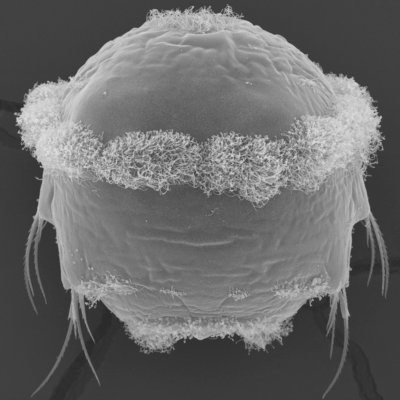
An organism's internal state & behavioral outcomes are shaped by experience. This study reveals a #neuropeptide relay pathway, neuronal & non-neuronal, which orchestrates #SynapticPlasticity & context-dependent shifts in #mating duration in male #Drosophila @PLOSBiology https://plos.io/4n8aUSV
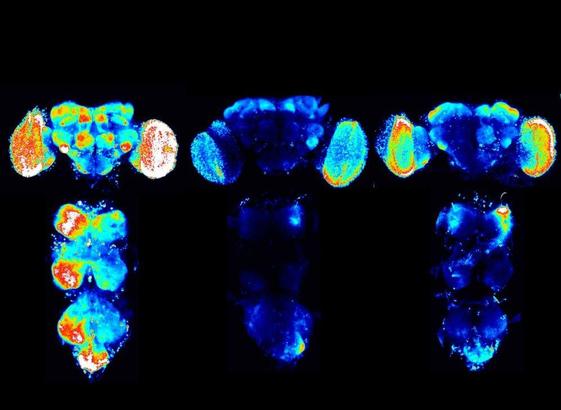
bHLH genes have diverse roles during the development of the nervous system; this functional study of five #Celegans bHLH genes shows that some of them can regulate #neuropeptide secretion & significantly expand lifespan when mutated #plosbiology plos.io/3W7OQMs
We wrote a review with Rafa Yuste on "Non-synaptic encoding of behavior by neuropeptides".
You can read it here:
https://zenodo.org/records/13691702
#neuroscience #neuropeptide #science
Non-synaptic encoding of behavior by neuropeptides

Review article

Zenodo
Some female #ants display #PhenotypicPlasticity related to #reproduction, e.g. gyne <--> queen. This study shows that #neuropeptide neuroparsin A mediates physiological changes in response to insemination across ant species #PLOSBiology https://plos.io/3WZCRS8
An evolutionarily conserved pathway mediated by neuroparsin-A regulates reproductive plasticity in ants

Some female ants display phenotypic plasticity related to reproduction, such as the transition between gyne and queen castes. This study shows that the neuropeptide neuroparsin A mediates substantial physiological changes in response to insemination across ant species, acting via ovarian endocrine pathways.

The version of record of our #Nematostella #GPCR #neuropeptide paper has now been published
https://elifesciences.org/articles/90674#content

For #cnidarian #neuroscience there are lots of new deorphanised receptors described in the paper. We also identified orthologs across cnidarian species, including corals, #Exaiptasia etc. so the resource is not limited to Nematostella.

Large-scale deorphanization of Nematostella vectensis neuropeptide G protein-coupled receptors supports the independent expansion of bilaterian and cnidarian peptidergic systems

The identification of 31 neuropeptide GPCRs in the sea anemone Nematostella vectensis provides a rich resource to study peptidergic signaling in cnidarians and suggests that cnidarian and bilaterian peptidergic systems diversified independent from each other from a few ancestral systems.

eLife
For our #Nematostella neuropeptide-GPCR screen paper https://elifesciences.org/reviewed-preprints/90674v1, we have now published a detailed protocol here:
https://www.bio-protocol.org/exchange/preprintdetail?type=3&id=2493
If you are interested in #GPCR #neuropeptide #pharmacology #cnidaria #neuroscience have a look!
Large-scale deorphanization of Nematostella vectensis neuropeptide GPCRs supports the independent expansion of bilaterian and cnidarian peptidergic systems

Bitter Brain Breakthrough: How a Single Chemical Could Curb Female Binge Drinking
New research has identified a brain chemical that influences how men and women perceive the bitterness of alcohol. This discovery, focusing on the neuropeptide CART, found that its inhibition causes an increase in alcohol consumption in males but a decrease in females, unless the alcohol is sweetened.
https://scitechdaily.com/bitter-brain-breakthrough-how-a-single-chemical-could-curb-female-binge-drinking/ #alcohol #consumption #bitterness #CART #male #female #taste #neuropeptide
Bitter Brain Breakthrough: How a Single Chemical Could Curb Female Binge Drinking

Researchers at The Florey Institute have identified a brain chemical that could account for the varying alcohol consumption patterns between males and females. Researchers at The Florey Institute have identified a brain chemical that could explain the different drinking habits of men and women.

SciTechDaily
In collaboration with Alison Cole and Ulrich Technau we also mapped the peptidergic #connectome of #Nematostella, by linking peptide-expressing to receptor-expressing cells.
In #Cnidaria, tissues are extensively connected via #neuropeptide signalling.
#neuroscience
The 31 new deorphanized #neuropeptide #GPCRs from #Nematostella and the #phylogenetic trees also allowed us to predict the ligand for many receptors across #cnidarians. We hope that cnidarian researchers will functionally characterising these e.g. by #CRISPR, as the Houliston lab has done for the MIH receptor.
https://journals.plos.org/plosbiology/article?id=10.1371/journal.pbio.3000614
#evolution #neuroscience
A G protein–coupled receptor mediates neuropeptide-induced oocyte maturation in the jellyfish Clytia

A study of jellyfish oocytes identifies the receptor for Maturation-Inducing Hormone, the neuropeptide hormone that triggers oocyte maturation and spawning via GαS and cyclic AMP. This receptor defines a superfamily of hormone-receptor systems involved in regulating sexual reproduction across animal species.

Previously, only one #GPCR with a ligand was known in #cnidaria, the receptor for the #Clytia Maturation-Inducing-Hormone. This receptor was found by Gonzalo Quiroga Artigas and Philipp Bauknecht in our lab, in a collaboration with Evelyn Houliston.
https://journals.plos.org/plosbiology/article?id=10.1371/journal.pbio.3000614
#cnidaria #neuropeptide #evolution #neuroscience
A G protein–coupled receptor mediates neuropeptide-induced oocyte maturation in the jellyfish Clytia

A study of jellyfish oocytes identifies the receptor for Maturation-Inducing Hormone, the neuropeptide hormone that triggers oocyte maturation and spawning via GαS and cyclic AMP. This receptor defines a superfamily of hormone-receptor systems involved in regulating sexual reproduction across animal species.