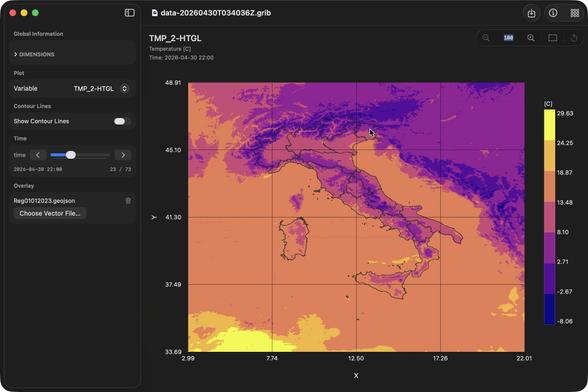
Friday afternoon and late night were a fun experience of updating code to 1) override the code signature of a newly introduced 3rd-party native binary included in a Java library, and 2) extend a JNI class to add a new filechooser method. And I mean "fun" in the most enjoyable nerdy way, because I haven't been there in a while. Just working through both issues seems like work getting done, even if no one else will be able to use the result for (just, I hope) a couple weeks.
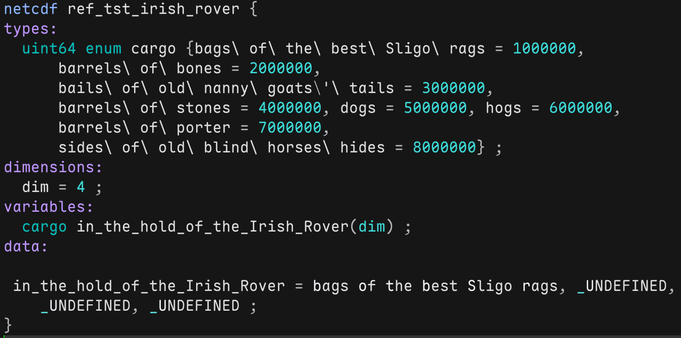
And if anyone noticed the #netcdf / CDL syntax highlighting, I have a couple of things to tick off before I do a proper launch in the very near future, but see here: https://github.com/jatkinson1000/tree-sitter-cdl
๐
Yay! Just discovered via Github that Unidata received its latest funding tranche and their developers are back to work!
I am really looking forward to a time when scientific data analysis is less of a constant fuckaround and fight with technical bullshit. I'd *really* like
- #netCDF natively supporting complex numbers
- #Python #xarray and #pandas to natively support physical units (#pint is great on its own but the integrations leave a LOT to be desired)
- #Jupyter notebooks to suck less (crashes, glitches, widget plots not saved statically, an effing BUILTIN formatter, etc.)
- proper data pipeline systems
...
Slides for the presentation given on 11 December 2024 at the AGU Annual Meeting to the session for the AGU Open Science Recognition Prize. Abstact:The CF (Climate and Forecast) Conventions are a community-developed standard that promotes the sharing and automated processing of Earth systems science data in the netCDF data format (and in Zarr/GeoZarr). The CF conventions define metadata that can be used to describe the coordinate systems, data structure, and geophysical meaning and units of each variable. This enables users of data from different sources to decide which quantities are comparable and facilitates building applications with powerful extraction, analysis, and display capabilities. There is a mature and growing ecosystem of FOSS (Free and Open Source Software) and commercial software tools which work with CF. The CF standard has been essential to the success of high-profile internationally-coordinated modeling activities (e.g, the Coupled Model Intercomparison Project, which hosts more than 30 million files and more than 15 petabytes of data, all compliant with CF). CF is widely used by weather, climate, ocean and Earth observation scientists, and is gaining traction among others, such as the biogeochemistry and atmospheric chemistry communities.
how to tell if #netcdf was compiled with s3 support ? (on linux, just installed from RPM)
even an example netcdf url that should work from a bucket would be helpful