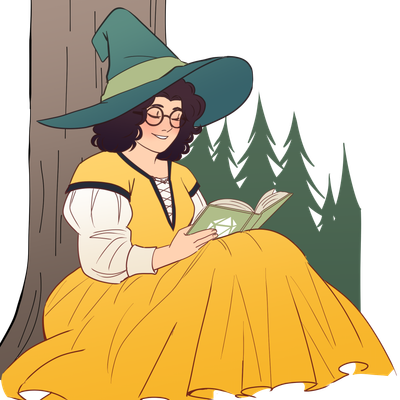
Ever considered the ways the stories we tell shape our lives? I consider that and more in this discussion of *Stewpot* and narrative therapy.
https://www.cozyquestlog.com/rewriting-your-adventure/

#cozy #cozyGames #TTRPGs #narrativeTherapy

Re-Writing Your Adventure: Stewpot & Narrative Therapy

Stewpot is a 2025 TTRPG from Evil Hat where you and your friends play adventurers who have retired to start a tavern. The book is marketed with a cozy, slice-of-life theme, and you could even bring characters from another more traditional campaign that you’d like to retire. Stewpot cleverly
The Cozy Questlog

I’m done writing shallow…
In working on a new story, I realized I was getting into some heavier topics and that the book would need a content warning. For those who might be wondering, the story is set in my Musimagium world and contains unicorns, so it's very much on brand for me. But, it's a bit deeper, a bit more dramatic than what I've been writing.

I real
https://kitauthor.com/im-done-writing-shallow/
#AuthorLife #AuthorLife #branding #marketing #NarrativeTherapy #WritingLife

Locked Up Living Lucy Johnstone (video) Exploring the Power Threat Meaning Framework: An Alternative to the Diagnostic Model: SummaryLucy Johnston discusses the Power Threat Meaning Framework (PTMF), an alternative to the diagnostic model of distress. The PTMF aims to move away from labeling and medicating distress and instead focuses on narrative practice and… https://lockedupliving.podbean.com/e/lucy-johnstone-video-exploring-the-power-threat-meaning-framework-an-alternative-to-the-diagnostic-model/?utm_source=dlvr.it&utm_medium=mastodon @lockedupliving #PowerThreatMeaning #DiagnosticModel #MentalHealth #NarrativeTherapy #SocialJustice
Lucy Johnstone (video) Exploring the Power Threat Meaning Framework: An Alternative to the Diagnostic Model | The Locked up Living Podcast: Surviving and thriving in prisons and other challenging environments

SummaryLucy Johnston discusses the Power Threat Meaning Framework (PTMF), an alternative to the diagnostic model of distress. The PTMF aims to move away from labeling and medicating distress and instead focuses on narrative practice and understanding. It emphasizes the role of power and the links between personal distress and wider social, political, and economic contexts. The PTMF has received both positive and negative reactions, with some seeing it as radical and threatening existing power structures. Lucy discusses the challenges and criticisms she has faced and the importance of continuing the conversation and promoting alternative narratives. KeywordsPower Threat Meaning Framework, diagnostic model, distress, narrative practice, power, social context, alternative narratives   Dr Lucy Johnstone is a consultant clinical psychologist, author of 'Users and abusers of psychiatry' (3rd edition Routledge 2021) and ‘A straight-talking guide to psychiatric diagnosis’ (PCCS Books, 2nd edition 2022); co-editor of 'Formulation in psychology and psychotherapy: making sense of people's problems' (Routledge, 2nd edition 2013); and co-author of ‘A straight talking introduction to the Power Threat Meaning Framework’, 2020, PCCS Books) along with a number of other chapters and articles taking a critical perspective on mental health theory and practice. She is the former Programme Director of the Bristol Clinical Psychology Doctorate in the UK and has worked in Adult Mental Health settings for many years, most recently in a service in South Wales. She is Visiting Professor at London South Bank University, and Honorary Fellow of the BPS, and a Fellow of the Royal Society of Arts.Lucy was lead author, along with Professor Mary Boyle, for the ‘Power Threat Meaning Framework’ (2018), a British Psychological Society publication co-produced with service users, which outlines a conceptual alternative to psychiatric diagnosis and has attracted national and international attention. Lucy is an experienced conference speaker and lecturer, and currently works as an independent trainer. She lives in Bristol, UK. Takeaways The Power Threat Meaning Framework (PTMF) offers an alternative to the diagnostic model of distress, focusing on narrative practice and understanding. The PTMF emphasizes the role of power and the links between personal distress and wider social, political, and economic contexts. The framework has received both positive and negative reactions, challenging existing power structures and identities tied to diagnostic labels. It is important to continue the conversation and promote alternative narratives to address the root causes of distress and support well-being.

My (co-authored with beloved collaborators and friends) paper, ‘Revisiting insider practices: Ethical considerations, practices, and hopes for doing community work and narrative research in and about our own communities’, is up! I’m really proud of this paper, and the ongoing work it describes. https://nsuworks.nova.edu/tqr/vol29/iss12/10/
#academic #NarrativeTherapy #transgender #research #CommunityResearch
Revisiting Insider Practices: Ethical Considerations, Practices, and Hopes for Doing Community Work and Narrative Research in and about Our Own Communities

In this paper, we describe the hopes, considerations, and questions of a narrative practice research collaboration among three closely connected transgender (trans) and/or non-binary collaborators, in a collection of work meant to support trans, non-binary, and gender expansive life and in response to trans death at a time of increasing hostility toward trans communities. We apply a specific focus on inquiring into how to do narrative therapy and community work research in and about our own communities, and what the ethical, relational and methodological practices for this work might be. We do this through reflecting on existing literature related to insider research in the field of narrative therapy and community work and in qualitative research more broadly, reflecting on our own practices of collaboration, and imagining possibilities for ourselves and other researchers working with and within their own communities. We describe our insider-outsider-insider positioning, how we understand this to be shaping our work, and share our ongoing curiosities about how to move through this work together.

NSUWorks

I'm running a Solstice-to-end-of-calendar-year writing group. I've been running this every year for the last five-ish years - it's always really soft and lovely to have some invitations to write and a couple low-pressure zooms at a time that can be really isolating and sad. I send out writing or reflection prompts each day, and we have three optional zooms. (Opening, mid-way, closing.)

https://www.groundfireccw.ca/the-light-returning

#writing #writingcommunity #selfpromo #NarrativeTherapy

The Light Returning: Solstice Writing Cohort — Groundfire Counselling & Community Work

Have you ever wanted to develop your practice alongside your narrative community? This six-month cohort is a monthly focused and supportive space to stretch practice skills, engage in thoughtful discussions, and delve into different aspects of Narrative Practice.

Groundfire Counselling & Community Work
It’s the last day of the #narrativetherapy conference. Even though I’ve been careful with my energy - only going to half the workshops, making sure I’m sleeping as much as I can, staying on top of pain meds - the pace of these three days has been gruelling and I am exhausted, brain fogged and sore. This is not a #disabillity friendly schedule and it’s so clear that access was not a priority in any way. I’m glad I came and I have some ideas to take back, but there’s a huge cost.

I'm facilitating a half-day workshop on externalizing in narrative therapy on Nov 2, and I think it will be a nice time. There's early bird pricing until Oct 12. https://www.groundfireccw.ca/narrative-workshop-externalizing/

#NarrativeTherapy #selfpromo

The Problem is the Problem: Introduction to Externalizing in Narrative Practice — Groundfire Counselling & Community Work

Join us for our first workshop in our Everyday Narrative Practice Series, narrative therapy workshops for community members and practitioners alike.

Groundfire Counselling & Community Work

I was invited to write a response to a new paper about #NarrativeTherapy and #BPD and it’s been published! I’m pretty happy with it.

https://dulwichcentre.com.au/response-to-re-authoring-identity-conclusions-in-borderline-personality-disorder/

Groundfire Counselling and Community Work is officially launching in September, and I'll be facilitating #NarrativeTherapy workshops and groups (my colleagues will be offering the counselling). The first one is a consultation and practice cohort running from September to February. Are you a #narrative #therapist ? Do you want to talk with other narrative practitioners and stretch your practice? That's a thing we'll do! You can find more info here https://www.groundfireccw.ca/npcp-cohort-2024-2025

I'm pretty excited.

Narrative Therapy Practitioner Resources — Groundfire Counselling & Community Work

Peer consultation, workshops, supervision, narrative practice.

Groundfire Counselling & Community Work

Beware the Tenderfoot’s dark side. This is how to avoid getting "possessed" by your submissive shadow.

Watch on YouTube: https://youtu.be/shyd34TbubM #archetypes #jungianpsychology #narrativetherapy #myth #psychology #storytelling #personalgrowth

How to avoid getting "possessed" by your submissive shadow

YouTube