Creatine’s Role in Muscle Gain 📈💪
Creatine is a naturally occurring compound found primarily in muscle cells. It’s made up of three amino acids: arginine, glycine, and methionine.
—
👉 Increases ATP Production
👉 Improves Strength and Power
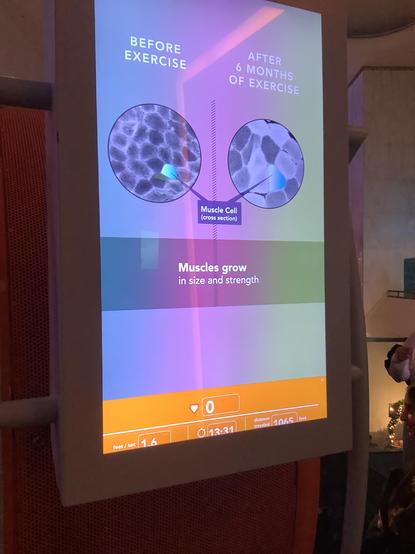
👉 Enhances Muscle Cell Volume
👉 Speeds Up Recovery
—
#creatine #supplements #musclegain #compound #musclecells #atp #strength #power #volume #recovery #weightlifting #strengthtraining #onlinecoach
Study identifies mitochondrial dysfunction as cause of long-COVID fatigue.
"Researchers from Amsterdam UMC and Vrije Universiteit Amsterdam (VU) have discovered that the persistent fatigue in patients with long-COVID has a biological cause, namely mitochondria in muscle cells that produce less energy than in healthy patients. The results of the study were published today in Nature Communications."
#COVID19 #LongCOVID #fatigue #Mitochondria #musclecells @auscovid19
Researchers from Amsterdam UMC and Vrije Universiteit Amsterdam (VU) have discovered that the persistent fatigue in patients with long-COVID has a biological cause, namely mitochondria in muscle cells that produce less energy than in healthy patients.
Referenced link: https://phys.org/news/2023-05-scientists-carnitine-muscle-cells.html
Discuss on https://discu.eu/q/https://phys.org/news/2023-05-scientists-carnitine-muscle-cells.html
Originally posted by Phys.org / @physorg_com: http://nitter.platypush.tech/physorg_com/status/1653074127597498369#m
Scientists map the distribution of carnitine in #musclecells @TMU_PR @cellpressnews https://linkinghub.elsevier.com/retrieve/pii/S240584402302488X https://phys.org/news/2023-05-scientists-carnitine-muscle-cells.html
Researchers from Tokyo Metropolitan University have developed a way of mapping the distribution of carnitine in skeletal muscle cells. Carnitine is a compound that helps transport fatty acids and reduce metabolic byproducts. They discovered that slow-type muscle fibers contained the most, and that activity promptly led to rises in acetylcarnitine, a product of the immediate response of carnitine contained in the cell. Their technique promises new insights into how muscle cells work.