 Spirituality & Religious Studies
Sethianism
The Sethians were 1 of the main currents of Gnosticism during the 2nd & 3rd centuries AD. Along with Valentinianism & Basilidianism.
It was speculated to have originated in the 2nd century AD as a fusion of 2 distinct Hellenistic Judaic philosophies & was influenced by Christianity & Middle Platonism.
The Sethians (In Latin: Sethoitae) are 1st mentioned (alongside the Ophites) in the 2nd century by our boy, Irenaeus (who wasn’t Gnosticism’s friend) & in Pseudo-Tertullian texts. All later accounts appear to be largely lifted from Irenaeus. Hippolytus repeats info from Irenaeus.
According to Epiphanius of Salamis (circa 375), Sethians were found, in his time, only in Egypt & Palestine. But 50 years earlier, they had been found as far as Greater Armenia. Greater Armenia (a.k.a. the Armenian Empire) was an Armenian kingdom (in the ancient Near East) that existed from 331 BC to 428 AD, 758 years.
Philaster’s (4th century AD) Catalogue of Heresies puts the Ophites, Cainites, & Sethians as pre-Christian Jewish sects. However, since Sethians identified Seth with Christ (in the Second Logos of the Great Seth), Philaster’s belief that the Sethians had pre-Christian origins hasn’t found acceptance in later scholarship.
Sethianism claims that gnosis 1st descended upon Seth (3rd son of Adam & Eve), whose knowledge the Sethians regard as their origin.
Norea (who’s either Noah’s wife or Adam & Eve’s daughter) plays a role. As seen in Mandaeism & Manicheanism.
The Sethian cosmogonic myth (or their origin of the universe/cosmos) gives a prologue to Genesis & the rest of the Pentateuch (the first 5 books of the Hebrew/Christian Bible). This presents a radical re-interpretation of the Orthodox Jewish conception of creation & the divine relation to reality. Their cosmogony is most famously in the Apocryphon of John, which describes an Unknown God.
From the “Unknown God” emanate aeons. This is a series of paired female & male beings. The 1st of these is Barbelo, who is a co-actor in the following emanations.
The aeons that result are representative of the various attributes of God, which are indiscernible when they aren’t abstracted from their origin. God & the aeons comprise the sum total of the spiritual universe, known as the Pleroma. Pleroma generally refers to the totality of divine powers.
In some versions of the myth, the aeon Sophia (knowledge) imitates God’s actions, performing an emanation of her own without the prior approval of the other aeons in the Pleroma. This results in a crisis within the Pleroma, leading to the appearance of Yaldabaoth.
This figure is commonly known as the demiurge (the “artisan” or “craftsman”) after the figure in Plato’s Timaeus. Sophia, at first, hides this being. But it escapes, stealing a portion of her divine power from her in the process.
Yaldabaoth uses this stolen power to create a material world imitating the divine Pleroma. To complete this task, he spawns a group of entities known collectively as Archons, the petty rulers & craftsmen of the physical world. Like him, they’re commonly depicted as zoomorphic, having animal heads.
At this stage, the events of the Sethian story start to cohere with the Genesis story everyone knows. The demiurge & his archontic associates fulfil the role of the Creator. In Genesis, the demiurge proclaims himself to be the only god, claiming that there weren’t any other gods better than him.
The demiurge unknowingly emanates a shadow ‘image’ of Adam, while unwittingly transferring the portion of power stolen from Sophia into the 1st physical human body. He then makes Eve from Adam’s rib in an attempt to isolate & regain the power that he’s lost.
By way of this, he tries to SA Eve, who then contains Sophia’s divine power. Several texts picture him as failing when Sophia’s spirit transplants itself into the Tree of Knowledge. The pair eat from the tree of the divine epignosis, guided by Christ appearing as an “eagle” above it to guide them to remember their true “nature above.”
Most surviving Sethian texts are preserved only in Coptic translation of the Greek original. Very little direct evidence of Gnostic teaching was available before the discovery of the Nag Hammadi library.
We’ve posted a few of these texts. Check them out at your leisure:
- Holy Book of the Great Invisible Spirit
- Second Treatise of the Great Seth
- Pistis Sophia
- Gospel of Judas
- Manichaean Psalms of Heracleides
The Gospel of Judas is the most recently discovered Gnostic text. National Geographic (Yes, that National Geographic. You know, NatGeo, y’all!) published an English translation of it. Our founder has a VERY well-worn copy of this book. It’s well-worn because they’ve read it numerous times.
This text portrays Judas Iscariot as the “13th spirit/daemon,” who “exceeded” the evil sacrifices of the “man who clothed me (Jesus).”
Its reference to Barbelo & inclusion of material similar to the Apocryphon of John & other such texts connects the text to Barbeloite &/or Sethian Gnosticism.
Make a one-time donation
Your contribution is appreciated.
DonateMake a monthly donation
Your contribution is appreciated.
Donate monthlyMake a yearly donation
Your contribution is appreciated.
Donate yearly #2ndCenturyAD #331BC #3rdCenturyAD #428AD #4thCenturyAD #Adam #Aeons #ApocryphonOfJohn #Archons #ArmenianEmpire #Barbelo #Barbeloite #Basilidianism #Cainites #CatalogueOfHeresies #Christ #Christianity #Circa375 #Creation #Daemon #Demiurge #Egypt #EpiphaniusOfSalamis #Eve #Genesis #Gnosticism #GospelOfJudas #GreaterArmenia #HellenisticJudaism #HolyBookOfTheGreatInvisibleSpirit #Irenaeus #Jesus #JudasIscariot #Latin #MiddlePlatonism #NagHammadiLibrary #NationalGeographic #NearEast #Noah #Norea #Ophites #Palestine #Pentateuch #Philaster #PistisSophia #Plato #Pleroma #PseudoTertullian #Saklas #SecondLogosOfTheGreatSeth #SecondTreatiseOfTheGreatSeth #Seth #SethianGnosticism #Sethianism #Sethians #Sethoitae #Sophia #Timaeus #TreeOfKnowledge #Valentinianism #Yaldabaoth #Zoomorphic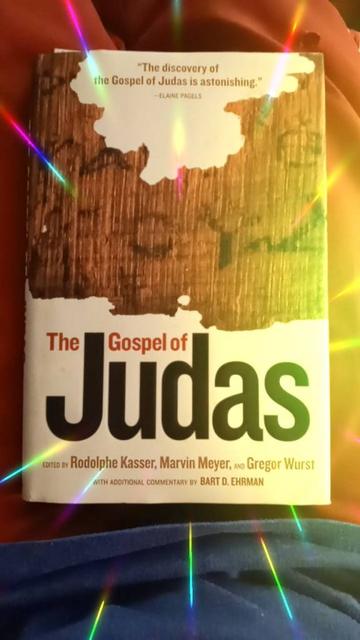
 Steve Dustcircle 🌹
 Today in History