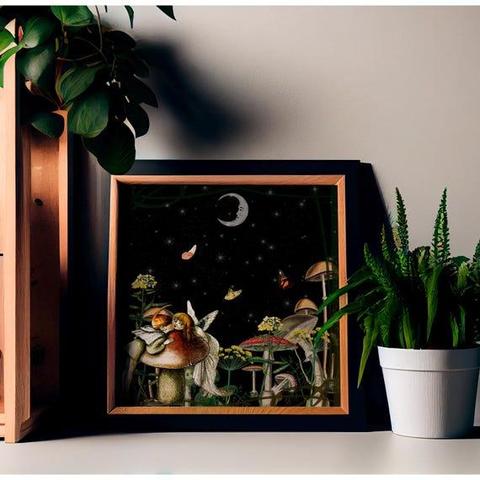
โ€ž๐˜“๐˜ข๐˜ค๐˜ค๐˜ข๐˜ณ๐˜ช๐˜ข ๐˜ฅ๐˜ถ๐˜ญ๐˜ค๐˜ช๐˜ข, ๐˜ค๐˜ฐ๐˜ฎ๐˜ฎ๐˜ฐ๐˜ฏ๐˜ญ๐˜บ ๐˜ฌ๐˜ฏ๐˜ฐ๐˜ธ๐˜ฏ ๐˜ข๐˜ด ๐˜ค๐˜ฐ๐˜ต๐˜ต๐˜ฐ๐˜ฏ ๐˜ค๐˜ข๐˜ฑ; ๐˜ข ๐˜ฃ๐˜ช๐˜ฐ๐˜ญ๐˜ถ๐˜ฎ๐˜ช๐˜ฏ๐˜ฆ๐˜ด๐˜ค๐˜ฆ๐˜ฏ๐˜ต ๐˜ฎ๐˜ถ๐˜ด๐˜ฉ๐˜ณ๐˜ฐ๐˜ฐ๐˜ฎ, ๐˜ฏ๐˜ข๐˜ฎ๐˜ฆ๐˜ฅ ๐˜ฏ๐˜ฐ๐˜ต ๐˜ข๐˜ง๐˜ต๐˜ฆ๐˜ณ ๐˜ต๐˜ฉ๐˜ฆ ๐˜ค๐˜ฐ๐˜ต๐˜ต๐˜ฐ๐˜ฏ ๐˜ฑ๐˜ญ๐˜ข๐˜ฏ๐˜ต, ๐˜ฃ๐˜ถ๐˜ต ๐˜ช๐˜ต๐˜ด ๐˜ด๐˜ฐ๐˜ง๐˜ต ๐˜ฑ๐˜ช๐˜ฏ๐˜ฌ ๐˜ค๐˜ฐ๐˜ญ๐˜ฐ๐˜ถ๐˜ณ ๐˜ณ๐˜ฆ๐˜ด๐˜ฆ๐˜ฎ๐˜ฃ๐˜ญ๐˜ช๐˜ฏ๐˜จ ๐˜ค๐˜ฐ๐˜ต๐˜ต๐˜ฐ๐˜ฏ ๐˜ค๐˜ข๐˜ฏ๐˜ฅ๐˜บ - ๐˜ฑ๐˜ณ๐˜ฆ๐˜ด๐˜ฆ๐˜ฏ๐˜ต ๐˜ฆ๐˜ท๐˜ฆ๐˜ฏ ๐˜ช๐˜ฏ ๐˜ช๐˜ต๐˜ด ๐˜ฎ๐˜บ๐˜ค๐˜ฆ๐˜ญ๐˜ช๐˜ถ๐˜ฎ - ๐˜ข๐˜ด ๐˜ธ๐˜ฆ๐˜ญ๐˜ญ ๐˜ข๐˜ด ๐˜ต๐˜ฉ๐˜ฆ ๐˜ด๐˜ธ๐˜ฆ๐˜ฆ๐˜ต ๐˜ด๐˜ค๐˜ฆ๐˜ฏ๐˜ต ๐˜ฆ๐˜ฎ๐˜ข๐˜ฏ๐˜ข๐˜ต๐˜ช๐˜ฏ๐˜จ ๐˜ง๐˜ณ๐˜ฐ๐˜ฎ ๐˜ช๐˜ต๐˜ด ๐˜ง๐˜ณ๐˜ถ๐˜ช๐˜ต๐˜ช๐˜ฏ๐˜จ ๐˜ฃ๐˜ฐ๐˜ฅ๐˜บ.โ€œ

Prints are 10% off during spring sale~ ๐Ÿ’—

Shop: https://lindenshieldarts.com

#MastoArt #TraditionalArt #FantasyArt #Mushrooms #Mushtodon #ArtPrints #Nature #ShopSmall

Hygrocybe insipida

https://www.mushroomexpert.com/Hygrocybe_insipida.html

Ecology: Precise ecological role uncertain (see Lodge and collaborators, 2013). The illustrated collection was growing gregariously under hardwoods, in summer, in Illinois. Largent (1985) reports this species under coast redwood in fall and winter.

Cap: 5-20 mm; convex, becoming broadly convex; thinly sticky when fresh; bald; bright yellowish orange; darker over the center; the margin becoming thinly lined.

Gills: Beginning to run down the stem, or broadly attached to it; distant; thick; dull yellow.

Stem: 25-30 mm long; 1-2 mm thick; equal, with a slightly tapered base; thinly sticky when fresh; reddish orange, with a whitish base.

Flesh: Thin; yellowish to orangish.

Odor and Taste: Not distinctive.

Spore Print: White.

Microscopic Features: Spores 5-6.5 x 2.5-3.5 ; smooth; more or less ellipsoid, but occasionally constricted at the apicular end; hyaline in KOH; inamyloid. Basidia 4-sterigmate; up to 45 long. Hymenial cystidia absent. Lamellar trama parallel. Pileipellis an ixocutis or ixotrichoderm.

#mushrooms #fungi #mycology #shrooms #mushtodon #sporespondence #floraspondence

Honey Mushrooms (2023)

Maybe a slightly uncomfortable image, but I see these #Mushrooms everywhere in our local #Forests and so I really wanted to try capturing the way they stack in these closely packed bunches. Due to the recent rains this bunch didn't have the usual dirt and leaf debris leaving them relatively pristine. The added moisture from the recent rainfall also gave them a special moistness.

#photography #throwbackthursday #macrophotography #RealPhotosofRealPlaces

Craterellus cornucopioides

https://www.mushroomexpert.com/Craterellus_cornucopioides.html

Ecology: Mycorrhizal with hardwoods and, less frequently, with conifers; growing scattered, gregariously, or (usually) in tightly packed clusters, often in mossy areas; summer and fall; widely distributed in Europe. The illustrated and described collection is from northern Italy.

Fruiting Body: 3-5 cm wide; 5-9 cm high; without a clearly defined cap and stem; tubular at first, becoming deeply vase-shaped; the upper edge rolled under when young and often partly rolled under in maturity; thin-fleshed.

Upper/Inner Surface: Black to dark gray; finely roughened or finely scaly with dark fibers and scales over a paler, grayish or grayish brown base color.

Under/Outer Surface: Smooth or very shallowly wrinkled; dark gray to black, with a whitish bloom.

Flesh: Thin and brittle; blackish.

Odor and Taste: Taste mild; odor not distinctive, or somewhat sweet and fragrant.

Spore Print: White to creamy.

Microscopic Features: Spores 11-14 x 7-9 broadly ellipsoid; smooth; hyaline and uniguttulate in KOH. Basidia to 75 long; 2-sterigmate. Elements of upper surface cylindric; septate; hyaline to brownish; 5-20 wide. Clamp connections absent.

#mushrooms #fungi #mycology #shrooms #mushtodon #sporespondence #floraspondence
Tricholomopsis decora

https://www.mushroomexpert.com/Tricholomopsis_decora.html

Ecology: Saprobic on the wood of conifers, especially (but not exclusively) that of hemlocks; growing alone, scattered or gregariously; summer and fall; widely distributed in North America; also known from Europe and Australasia. The illustrated and described collections are from Colorado, Kentucky, and Ohio.

Cap: 2-5 cm; convex at first, becoming broadly convex, flat, or shallowly depressed with an uplifted margin; moist when young but soon dry; yellow to brownish yellow; covered, at least over the center, with small brownish to grayish scales and fibrils.

Gills: Broadly attached to the stem; close or crowded; yellow to brownish yellow; short-gills frequent.

Stem: 2-5 cm long; 3-6 mm thick; more or less equal; bald; hollow; pale yellow; basal mycelium white.

Flesh: Yellowish; not changing when sliced.

Odor and Taste: Odor not distinctive; taste bitter.

Chemical Reactions: KOH red to pink or orange on cap surface.

Spore Print: White.

Microscopic Features: Spores 4-8 x 4-6 m; broadly ellipsoid to subglobose; smooth; hyaline in KOH; inamyloid. Lamellar trama parallel. Basidia 4-sterigmate. Pleurocystidia not found. Cheilocystidia 50-62.5 x 10⁻¹⁵ m; cylindric to subclavate; smooth; thin-walled; hyaline in KOH. Pileipellis a cutis; elements sometimes agglutinated, 3-10 m wide, smooth, golden in KOH en masse (individually yellowish)—interspersed with bundles of uplifted brown elements (the scales); clamps present.

#mushrooms #fungi #mycology #shrooms #mushtodon #sporespondence #floraspondence

Russula tenuiceps

https://www.mushroomexpert.com/Russula_tenuiceps.html

Ecology: Mycorrhizal with oaks--especially northern red oak--and perhaps with other hardwoods; growing alone, scattered, or gregariously; summer and fall; widely distributed in eastern North America.

Cap: 7-12 cm; convex when young, becoming broadly convex to flat, sometimes with a shallow depression; sticky when fresh or wet; fairly smooth, or with low wrinkles; bright red but sometimes fading in age; the margin lined at maturity; the skin peeling fairly easily, often over halfway to the center.

Gills: Attached to the stem or running slightly down it; close or crowded; white when young but dull yellow with maturity.

Stem: 5-9 cm long; 2-2.5 cm thick; fragile and soon hollowing; flushed red over a white base color; dry; fairly smooth.

Flesh: Fragile; white; unchanging when sliced.

Odor and Taste: Odor not distinctive; taste strongly acrid (sometimes slowly so).

Spore Print: Yellowish to orangish yellow.

Chemical Reactions: KOH on cap surface negative to yellowish or orangish; iron salts on stem surface negative to slowly pinkish.

Microscopic Features: Spores 6-9 x 5-7 ; with warts <NOBR>.5-1 </NOBR> high; connectors scattered, or occasionally forming partially reticulated areas. Pileipellis a cutis of hyaline elements embedded in a gelatinous matrix. Pileocystidia cylindric to subclavate or sometimes subfusoid to subcapitate; to about 100 x 10 ; positive in sulphovanillin and ochraceous-refractive in KOH.

#mushrooms #fungi #mycology #shrooms #mushtodon #sporespondence #floraspondence

Lachnellula subtilissima

https://www.mushroomexpert.com/Lachnellula_subtilissima.html

Ecology: Saprobic on the bark and wood of conifers; growing gregariously to densely gregariously; summer and fall; distributed in western North America in montane regions; also known from Europe and Australasia. The illustrated and described collection is from Colorado.

Fruiting Body: Cup-shaped, becoming flattened with age; 1-3 mm across; without a stem.

Upper Surface: Bright orange when fresh, fading to orangish yellow; bald.

Undersurface: White; hairy.

Flesh: Orangish; fairly brittle.

Odor: Not distinctive.

Microscopic Features: Spores 5.5-8 x 1.5-2 m; subfusiform; sometimes a little curved; smooth; hyaline in KOH; often with a few small oil droplets. Asci 80-95 x 4-6 m; 8-spored; tips amyloid (may require IKI, or soaking in KOH before mounting in Melzer's). Paraphyses 70-90 x 2-3 m; cylindric below subclavate, straight apices; septate; smooth; with globular contents that are golden in KOH and amyloid in Melzer's.

#mushrooms #fungi #mycology #shrooms #mushtodon #sporespondence #floraspondence

Tricholoma brunneoluteum

https://www.mushroomexpert.com/Tricholoma_brunneoluteum.html

Ecology: Mycorrhizal with oaks; growing alone, scattered, or gregariously; originally described from Oklahoma (Ovrebo, Kuo & Hughes 2021); probably widely distributed in North America east of the Rocky Mountains; summer and fall. The illustrated and described collections are from Illinois and Kentucky.

Cap: 3-7 cm; at first convex, expanding to broadly convex; bald, but often becoming sparsely and minutely pitted; orangish brown, fading to orangish tan; tacky when fresh but soon dry; the margin inrolled when young, not becoming lined.

Gills: Narrowly attached to the stem, sometimes by means of a notch; close; short-gills frequent; pale yellow from the first; spotting and discoloring rusty brown with age.

Stem: 3-7 cm long; 1-2 cm thick; more or less equal; pale at the apex, brownish below; sometimes developing reddish brown streaks; hollowing with age; bald or finely pruinose; basal mycelium whitish or pale pastel yellow.

Flesh: White, or in the stem sometimes yellowish; not changing on exposure.

Odor and Taste: Strongly mealy.

Chemical Reactions: KOH on cap surface brownish red.

Spore Print: White.

Microscopic Features: Spores 5-7 x 3.5-5 m; broadly ellipsoid, with a small apiculus; smooth; hyaline in KOH, often with one large oil droplet; inamyloid. Basidia 4-sterigmate. Cystidia not found. Pileipellis a partially gelatinized cutis; elements 3-10 m wide, smooth or finely encrusted, hyaline to reddish brown or orangish brown in KOH. Clamp connections not found.

#mushrooms #fungi #mycology #shrooms #mushtodon #sporespondence #floraspondence

A new first-time find, some slightly aged winter polypore (Lentinus brumalis.) Generally considered too tough to be edible. Trypophobia warning for visible pores under the caps. #nature #fungi #mushroom #mushrooms #mushtodon