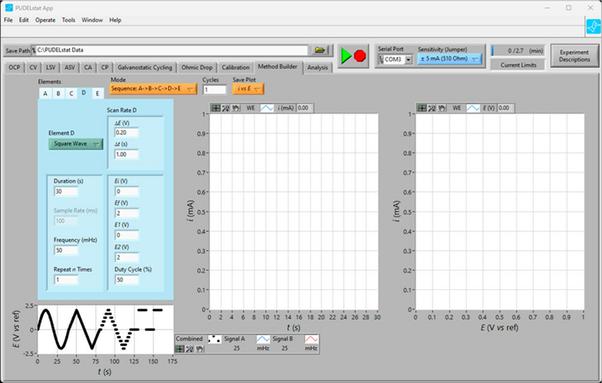
@alcea moooment. Ich habe mehrere Programmiersprachen gelernt, und gerade zum ansteuern von Geräten und zur Darstellung von aufgenommen Daten ist LabView aber sowas von viel einfacher als alles andere. Es eignet sich für ganz viele Dinge nicht so gut (und deshalb kann man zum Beispiel Matlab Code einbinden, statt den mit LabView zu programmieren), aber für die Dinge die es tun soll ist es super (und teuer).

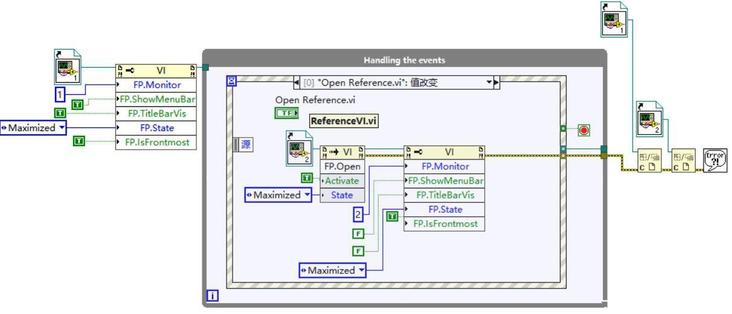
Es ist auch mega einfach zu lernen: Datenströme werden als Draht dargestellt, und jedes Kästchen ist eine Funktion, die mit Inputs (kommen von links) bestimmte Outputs (gehen rechts raus) erzeugt. Rahmen um irgendwas herum sind Strukturen wie Schleifen, cases, ...die die entsprechenden Code Blöcke unter Bedingungen ausführen. Das ist wirklich straightforward, wenn man nicht gerade einen chinesischen Screenshot nimmt.

#LabView

@galileo

#LabView sagt "Hallo"
😺

(Denkt aber es wär eine Programmiersprache 🙈)

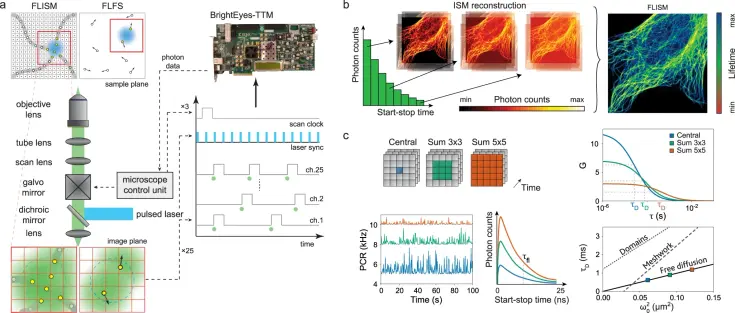
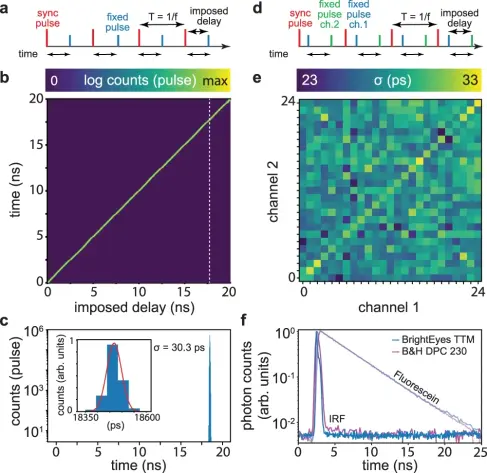
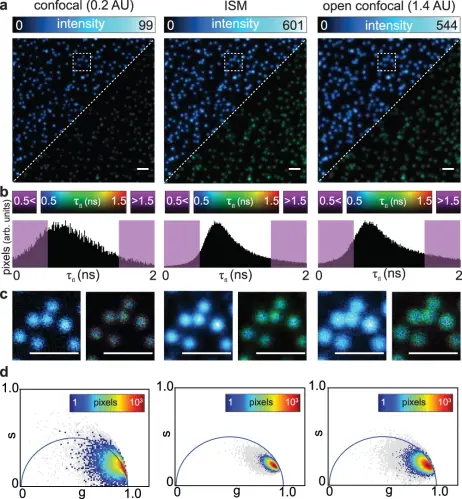
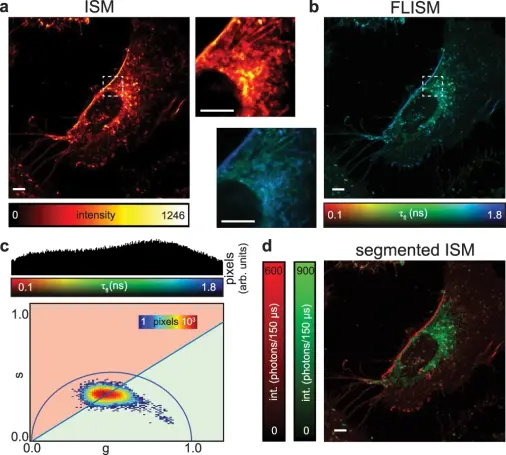
#BrightEyesTTM: #OpenSource #FPGA-based multi-channel time-tagging module (#TTM) for democratising single-photon (SP) #microscopy:

-parallel multiple #SP event tagging precision: 30 ps
-multiple synchronisation event precision: 4 ns
-requires #LabVIEW
-cost ~$3000

Article: https://doi.org/10.1038/s41467-022-35064-0
Web: https://brighteyes-ttm.readthedocs.io/en/latest/
GitHub: https://github.com/VicidominiLab/BrightEyes-TTM
#DIYbio #lab #instruments #LSM #FLISM #FLFS #fluorescence #spectroscopy #imaging #Python

#smfBox: An #OpenSource platform for single-molecule #FRET:

-off the shelves components
-dual #laser: 515 nm, 222 μW & 635 nm, 68 μW
-#LabVIEW & #C control
-#MATLAB & #Python data analysis

Article: https://doi.org/10.1038/s41467-020-19468-4
GitHub: https://craggslab.github.io/smfBox/
#DIYbio #lab #instruments #imaging

An #OpenSource, low-cost multinuclear #NMR #spectrometer operating in the mT field regime:

-high spectral resolution
-arbitrary #RF pulse programming
-requires #LabVIEW
-cost: k$ 20 (mainly PXI waveform generator & digitizer alone)
-cost could be driven down by half using a home-built RF amplifier made with high-power operational amplifiers

#NOpenAccess paper: https://doi.org/10.1016/j.jmr.2021.107076
#DIYbio #DIYchem #chemistry #analytics #ULF #spectroscopy

#cNMR: #OpenSource compact time-domain hydrogen (1H) #NMR system for field deployment:

-based on a 0.5 T permanent magnet
-emphasizes relaxation times rather than chemical shifts, enabling material property analysis without large magnets or complex spectral processing
-requires #LabVIEW

Paper: https://doi.org/10.1016/j.ohx.2025.e00651
GitHub: https://github.com/ARTS-Laboratory/Compact-NMR
#DIYbio #DIYchem #chemistry #lab #instruments

Rainy day in EN52 Chicagoland - time to setup and test a Mini-Circuits ZX47-55 RF detector module to see if working or not. Measured DC Out vs 100 MHz RF level In and DC Out at -20dBm In while sweeping from 0.1 to 6 GHz. Result: It works as a RF detector module but DC output is not easy to use (want dBm, got neg-slope DC mV instead). Might make a LabVIEW program to display/chart dBm with Digilent AD3, or maybe write code for a standalone Arduino w/ display showing dBm… #RF #LabVIEW #Arduino
I need to get ridge of my 36 years old #Toshiba T1600 laptop and a couple of #C++ #Qt #labview #programming books which I probably never read. Anyone interested?

To this day I'm convinced that by far the best way to do concurrent programming with #threads (beyond graphical programming languages like #Labview, where concurrency is natural) is that used by #Tcl

In other words each thread is created with its own sub-interpreter. Each has its own context, not shared. Information is passed by messaging (which the receiver receives in their own event loop). Channels moved (not shared) explicitly.

This massively reduces race conditions and other nasties.