art by David Pelham for J. G. Ballard's "The Wind From Nowhere", 1961

it's like, there's this big heavy tool of destruction and war, terrifying, but it's blowing in the wind, giant forces, overwhelming forces, are operating now. The mighty tank builders and their wars are meaningless here. haha. Really effective and simple imho. I haven't read this yet but I read and really liked "The Drowned World" by the author.

#art #paperbackArt #scifiArt #warMachine #humility #God #wind #kamikaze

But I'm reminded of a thing I wrote once about the plastic we see on the shoreline now, and how long it's been since I found a whole bottle from the sea. Most old bottles or pieces of ground-down glass I've found there and appreciated were the result of deliberate or careless action by someone.

So what, does the sea somehow purify them before you find them? I don't think so. Just anonymises.

Maybe I should learn the same appreciation for the detritus on land too?

#humility #findingBeauty

#341: How Radical Should You Be In Your Belief?

https://youtu.be/mOoLMJQRrQY

How radical should you be in your belief? If you believe in something, shouldn’t you aim to believe in it more? So, let’s discuss.

All of us have our ideas that we prefer over others. All of us may have our political, religious, cultural preferences. There’s nothing wrong with that. That’s what we do. That’s what makes us human.

If we believe deeply that something is correct, that something is good, should we not think also that more of that is better? It’s a seductive idea and it seems logical initially. If you are X, if you believe in X, shouldn’t you believe in it more so? That seems to be the case because otherwise why would you believe in it? Is your belief really that weak that you can’t strengthen it?

So that’s the idea. And if you for some reason don’t want to fully commit, maybe you really never believed it completely. Maybe you’re not really a true believer. That’s the other part of the idea.

However, I would say this ignores certain facts about ideas, because every idea — whether it’s a religion, a philosophy, a cultural preference — typically has safeguards. When you look at all the big religions, they have some sort of clause, some sort of warning against taking it too far. Because that’s what the very idea of divinity is. That’s what the very idea of God is: that which we as human beings cannot completely understand. God is that which we cannot even approach so much that we can be certain of what God is. Because if we could, wouldn’t that mean in some way that we could become God? And that’s the very warning that most religions promote.

Believe, but don’t assume for a moment that you have all the answers.

There’s this joke that camels always look at humans in a specific way. The joke is that God has 100 names. We know 99 of them. But the camel knows all 100. And that’s why the camel looks so superior.

But that is the idea of religion. The idea of religion is a combination — as strange as this may sound — of belief and humility. We are not God. We are not everything in the universe. We are not all-knowing. We are not omnipotent. And we will never get there. So whatever you think of as God — whether you think that’s a religious idea, whether you think that’s nature, whether you think that’s the universe, whether you think that’s just the ultimate good — this idea is clear: do not pretend to be all-knowing yourself. Have some sense of humility.

Now that also goes for philosophy. You may say, I follow philosopher so-and-so. But philosophy is an ongoing conversation about wisdom — the love of wisdom; that’s what philosophia means. Each idea in philosophy lives in interaction with other ideas. Philosophy is more than just footnotes to Plato. Plato can be footnotes to Plato — if you look at the Laws and the Republic, there are two very different ideas there, and more than two.

Philosophers are typically smarter than those who follow a specific philosophy. Because every philosopher knows that in order to put out the strongest version of their idea, they have to leave some of the complications out. But there are always complications. And philosophy X always lives in some form of exchange with philosophy Y or Z or however many there are. Every idea lives in an ecosystem of ideas. It lives in relation with others.

Philosophy X may be good or better in certain respects than philosophy Y. Maybe philosophy Y is good in other aspects. But the truth emerges in the interaction between the two.

So you may believe that the individual is the source of all morality. But how far do you want to take this? Do you believe this to the complete abdication of responsibility for others? Do you believe this to the complete rejection of the state? Similarly, if you believe the state is the authority over everything else, at which point does this have to stop? At which point does the state have to even question itself as to how far it should go?

Everything costs money. Does this mean that everything should be judged by its price tag? Even though price is not a static thing — it depends on a lot of factors. Is the price tag always the value of something, or is it just our momentary expression of our social and cultural priorities? Of course there’s supply and demand which regulate that. But is that still everything? Aren’t there things where we should find some difficulty putting a price on? Aren’t there some things that we can’t really measure very well? So isn’t there a limit to this kind of positivist, materialist way of looking at things?

Equally, if we say the materialistic world doesn’t matter and we need to live in a more spiritual, contemplative state of mind — that may be true to a point, but eventually bills will have to be paid. You do live in some form of reality, and that reality means that resources typically are limited and there needs to be a prioritizing. How do you organize that?

The material and the spiritual belong together. They will always have friction between each other, but they will always complement each other. If you’re too materialistic — if you believe that only that which can be measured, only that which can be owned, only that which can have a price tag matters — you should maybe think about some more spiritual components of life. If you’re too spiritual, maybe you need to be rooted more in the fact that there’s also a materialist component of life.

If X drowns out Y, sides of X may appear that make it wrong, because you need that balance. And there are more than just two — X and Y is easier, but you could say XYZ or whatever.

So in fact the saying may be true that too much of a good thing is indeed not good. It distorts what it is.

This is why you see me frequently call for moderation. You could argue that too much moderation is also wrong — you need some passion and some intensity and some belief. Well, yes. But moderation can also be just a middle ground between these different poles. All these different ideas around us lead us to negotiate our space within them. Moderation does not mean you don’t have convictions. It means that you question at which point your convictions turn into such a radicality, into such an extreme version, that they become wrong — that they are undermined by their own conviction.

Is radicality the truest expression of an idea? No. It may be the most flamboyant, the most interesting. But it can’t survive well. If you turn too radical, too extremist, your idea may be more attractive to people who really think like you. But then look at history. Every time an idea became too radical, it fails. It has failed. No matter what the idea — because in its radicality, in its extremism, it loses its power of conviction towards those who don’t agree with you. And the number of people in the world who agree with you is always going to be punctuated by the number of people who disagree with you.

If you want to build a successful movement, if you want to build a successful approach to politics, to religion, to whatever your cultural or social idea may be, you need to convince others. You need to find ways of integrating aspects of the other into your own.

Which is why this very familiar symbol of yin and yang — masculine, feminine, black, white, dark, light — shows you these two parts, but there’s always something of the other in the bigger part. You know the symbol.

If we don’t find a way to integrate that with which we disagree — as some sense of doubt, as some sense of humility within our convictions — then our convictions will be nothing but arrogance, nothing but self-congratulatory pose, and turn out to be nothing else than solipsism: centering on yourself and that which you think defines you as the only thing that matters.

[This was originally posted to YouTube as a video. This post is a slightly abbreviated transcript, preserving the oral style of the video.]

#2026 #balance #beliefAndHumility #camelJoke #conviction #convictionVsArrogance #criticalThinking #culturalCommentary #divinity #doubt #ecosystemOfIdeas #extremism #God #humility #ideas #ideology #individualVsState #integration #Laws #loveOfWisdom #materialism #moderation #moderationVsExtremism #philosophia #Philosophy #Plato #politicalCommentary #politicalPhilosophy #politicalTheory #positivism #priceAndValue #publicPhilosophy #radicalism #radicality #religionAndReason #Republic #selfCongratulation #solipsism #spirituality #successfulMovements #tooMuchOfAGoodThing #trueBeliever #wisdom #yinAndYang

Wet Feet

There is something almost comical about it at first. I took the dog to the park because I knew I would be away for pastors’ Bible study. The grass was wet. My sneakers got soaked. I went home, changed my socks, and thought I had solved the problem. Then on the hour drive I realized my feet were getting wet again, because of course the shoes themselves were still wet. So now, during Bible study, my feet have been wet. Damp. Cool. Probably getting more shriveled by the hour.

Yet somehow it feels fitting.

Not dramatic. Not grand. Just fitting.

I think of the phrase “getting my feet wet,” as though ministry, faith, and discipleship are things I ease into gradually, carefully, at a manageable depth. But some days it doesn’t feel like that. Some days it feels more like simply having wet feet and carrying on. Not preparation for service, not a metaphor about a faithful beginning, but the thing itself. Wet feet. A small discomfort that stays with me. A quiet bodily reminder that I am not moving through the day untouched.

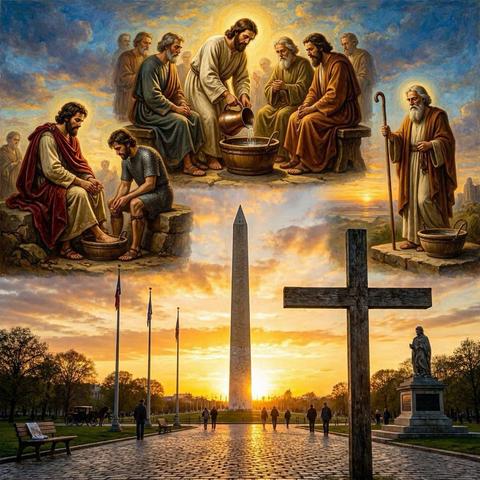
And sitting here, I cannot help but think of Jesus washing feet.

Not the polished image of it. Not the sentimental church painting version. But the actual strangeness of it. Wet feet. Dirty feet. Vulnerable feet. Tired feet. The feet that carried dust, ache, story, and status. The Lord kneeling with basin and towel. The Most High God attending to what is lowest. Not avoiding the human mess, but stooping into it.

Maybe there is something right about reflecting on servant life while sitting in damp shoes.

Because service is rarely abstract. It is seldom dry and comfortable. It does not usually happen in pristine conditions, after everything has been neatly changed and arranged. Often it is inconvenient. Often it lingers. Often I think I have addressed the problem, only to discover the wetness has seeped through again. I change the socks, but the shoes are still soaked. I try to reset myself, but the deeper discomfort remains.

That, too, may be part of ministry.

I carry wetness with me. The sorrows of others. The unfinished conversations. The burdens that seep through. The humble tasks nobody notices. The little irritations that become, strangely, occasions of grace. And maybe part of following Jesus is not always finding a way to stay dry, but learning how to keep loving with wet feet.

Jesus washed feet not because feet are noble, but because they are ordinary. Necessary. Exposed. Human. He met his friends there, at ground level. And then he told them to do likewise.

So perhaps wet feet are not the worst thing.

Perhaps they are a reminder.

A reminder that I am not above the ground.
A reminder that discipleship is tactile.
A reminder that love kneels.
A reminder that service is not clean.
A reminder that holiness may sometimes smell like damp shoes and feel like wrinkled skin.

In some ways, it seems fitting to go through this day with wet feet.
Maybe, in some ways, it seems right to go through life that way too.

Not just getting my feet wet,
but having them wet—
as one who follows the Christ
who washed feet,
and who still seems to meet me there,
down low,
with basin,
with towel,
with love.

#basinAndTowel #ChristianReflection #dampShoes #Discipleship #embodiedFaith #FollowingJesus #FootWashing #holyOrdinary #Humility #JesusWashingFeet #ministryReflection #pastoralLife #pastorsBibleStudy #sacredDiscomfort #ServantLeadership #wetFeet
If my people, who are called by my name, will humble themselves and pray and seek my face and turn from their wicked ways, then will I hear from heaven and will forgive their sin and will heal their land
📖 2Chronicles 7:14
---
Remember, your breakthrough doesn’t come from climbing higher, but from kneeling lower.
Through humility, find victory in Christ.
---
#DailyDewsofHope #DailyDevotion #bibleverse #faith #hope #humility
post.dewsofhope.ca/114e

@Bfordham @TheGreatLlama I didn't realize telling abused women to stop bitching about how awful their partners were & to just leave their relationships was quite cruel, it was judgemental/ignorant, especially when I wasn't providing them with safe places to go. My karma for being that way was experiencing 2 abusive relationships after. I've never judged any person being abused again & ceased tone policing of people suffering from abuses that I was ignorant about, when I was younger & not as life experienced. I try to do better, when I have learned better.

#Humility #PersonalGrowth #Decolonization

Quote of the day, 23 April: Blessed Bettina

J.M.J.T.

27 September 1889

Dear Sister Michelina,

When I left you, I felt deep sorrow in leaving you in that distress, which revealed your great interior unrest. My dear one, if you would often reflect on the many graces the Lord has given you—having chosen you among the number of His intimate brides—I believe that those eyes, now so often filled with tears, would instead be filled with joy for the many blessings He has granted you and continues to grant you. What do you think? Does this seem like an exaggeration?

I hope you understand how much I love you in speaking to you so plainly: I have no other desire than to see you become a saint!

If the Lord is pleased to give you some gift reserved for souls dear to Him, I fear He may be saddened to see it received with such reluctance—or at least with so little gratitude. Come now, take courage, be generous, and you will see all the fog lift away. Let humility guide you in all your actions; be convinced that this holy virtue will open the way to a deep serenity—not only that, but to countless graces for you and for others.

How good Jesus is to us! What sorrow it will be on the last day if we have not responded with full generosity to our duties! Let us then strive to do everything possible to return love for love to Him who desires us to be eternally happy. May the holy Archangel obtain for you all the graces necessary to make you a great saint. With my blessing, this is the prayer of

Your most affectionate Mother,
Sister Teresa Mary of the Cross

Blessed Teresa Mary of the Cross “Bettina”

Letter 4 to Suor Michelina del Cuore di Maria

Suore Carmelitane di Firenze (n.d.) Scritti. Available at: https://www.suorecarmelitanedifirenze.it/scritti/ (Accessed: 21 April 2026).

Featured image: In December 2010, the State of Israel featured this photo of Stella Maris Monastery in their Flickr photo album, calling the image, “A Bit of Haifa.”  Blessed Teresa Maria’s religious congregation, the Carmelite Sisters of Saint Teresa of Florence, manage the pilgrims’ hostel in this location. Wikimedia Commons has several historic images in the Stella Maris Monastery collection.

#Bettina #BlessedTeresaMariaOfTheCross #generosity #humility #sanctification

"If you are the expert in the room, you are in the wrong room!" - Futurist Jim Carroll

--
Futurist Jim Carroll is writing a series, The Art of the Infinite Pivot, based on 36 lessons from his 36 years as a solo entrepreneur, working as a nomadic worker in the global freelance economy. The series is unfolding here, and at pivot.jimcarroll.com.
--

I had a variation of this idea in my 26 Principles for 2026 series: “If you are the fastest person in the room, you are in the wrong room.”

So too it is with expertise!

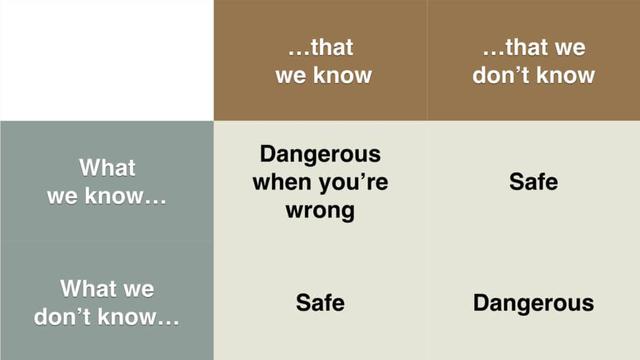
In the early stages of a career, we strive to be the "expert." We want to be the ones with the answers, the ones people look to for guidance. But in my 36-year voyage, I’ve discovered that the most dangerous place to be is to have a mindset of overconfidence, a belief that you have all the answers, and that you know enough. To maintain the Infinite Pivot - to be able to change at the speed of change - you must have the humility to constantly seek out people who make you feel like a beginner.

That's why you should always try to surround yourself with the smartest people you can find.

When you surround yourself with the smartest minds - the coders who know more than you about Linux, the scientists who understand the genome deeper than you ever will, the young disruptors who see "toys" you haven't even noticed - you are forced to expand your own mind. You are encouraged to explore more, discover bigger ideas, and chase things you don't know about that you should know about!

Throughout my 36 years, some of my most profound breakthroughs and opportunities didn't come from my own isolated "big thinking." They came from conversations with people who fundamentally challenged my assumptions, changed my beliefs, or pointed me in different directions. I remember being the "dumbest" person in a room full of NASA engineers at one point, and an audience literally full of nuclear scientists at another. Both situations taught me some things I ight not have otherwise learned about change, the future, trends, and disruptive opportunity, because I saw those things through a new and fresh set of eyes. That was an invaluable experience - I've had many, many more.

Think of it this way - if you are the smartest person in your inner circle, you are putting yourself in a situation where your progress might stall. But if you expand your circle, you have a bigger opportunity for new knowledge, and in that way, your intelligence is a reflection of your proximity.

So seek out the minds that intimidate you.

Ask the questions that reveal your ignorance.

Surround yourself with brilliance, and let it pull you toward the next opportunity in your pivot!
--

One of the most important things that Futurist Jim Carroll knows is that he knows there is a lot he doesn't know!

**#Expert** **#Humility** **#Learning**

Original post: https://jimcarroll.com/2026/04/decoding-tomorrow-the-infinite-pivot-series-19-if-you-are-the-expert-in-the-room-you-are-in-the-wrong-room/

Humble yourselves, therefore, under God’s mighty hand, that He may lift you up in due time
📖1Peter 5:6
---
Trust God’s perfect timing, your blessing is on the way.
Seek the Lord's presence, and trust in His guidance.
---
#DailyDewsofHope #DailyDevotion #bibleverse #faith #hope #humility
post.dewsofhope.ca/111e
ஏற்றகாலத்திலே தேவன் உங்களை உயர்த்தும்படிக்கு, அவருடைய பலத்த கைக்குள் அடங்கியிருங்கள்
📖1பேதுரு 5:6
-
தேவனுடைய சரியான நேரத்தை நம்புங்கள். உங்கள் ஆசீர்வாதத்தை சீக்கிரம் பெற்றுக்கொள்வீர்கள்.
கர்த்தரின் பிரசன்னத்தைத் நாடி அவருடைய வழிகாட்டுதலை நம்பி காத்திருங்கள்.
---
#அனுதினநம்பிக்கையின்பனித்துளி #இன்றையவேதவசனம் #DailyDewsofHope #DailyDevotion #bibleverse #faith #hope #humility
post.dewsofhope.ca/111t