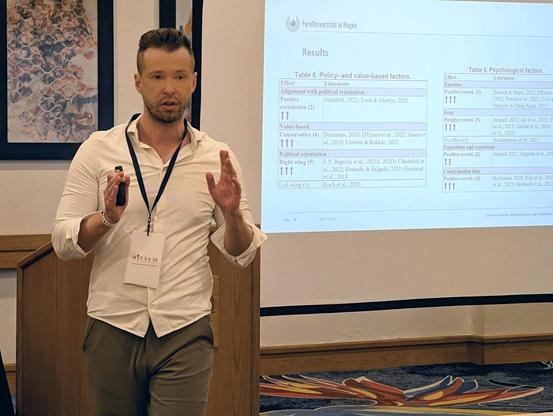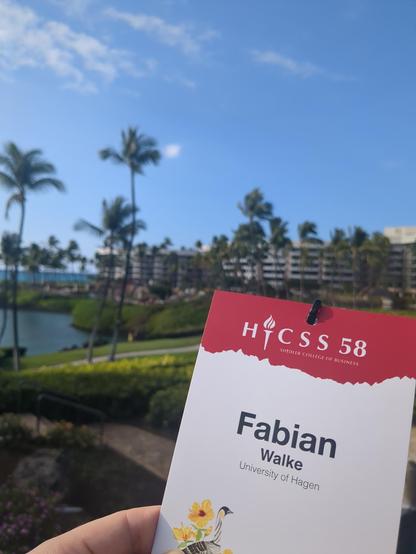
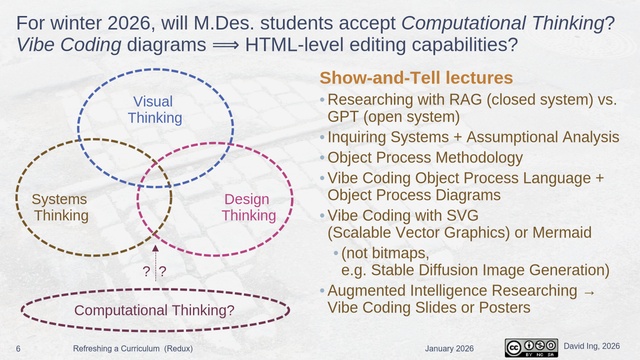
Web video of short presentation and panel on โ€œCurriculum Design and Development" with a focus on "Bridging the AI Gap" at #HICSS-59. #SystemsThinking #DesignThinking #VisualThinking #ComputationalThinking
https://coevolving.com/blogs/index.php/archive/refreshing-a-curriculum-redux-hicss-59/
Double the fun - that's why we have the second #Hawaii Paper Alert! ๐Ÿ‘จโ€๐Ÿ”ฌ๐ŸŒด ๐Ÿ–

In "๐—ฆ๐—ต๐—ฎ๐—ฟ๐—ถ๐—ป๐—ด ๐—Ÿ๐—ถ๐—ฒ๐˜€: ๐—” ๐—ฆ๐—ผ๐—ฐ๐—ถ๐—ผ-๐—ง๐—ฒ๐—ฐ๐—ต๐—ป๐—ถ๐—ฐ๐—ฎ๐—น ๐—ฅ๐—ฒ๐˜ƒ๐—ถ๐—ฒ๐˜„ ๐—ผ๐—ป ๐—™๐—ฎ๐—น๐˜€๐—ฒ ๐—œ๐—ป๐—ณ๐—ผ๐—ฟ๐—บ๐—ฎ๐˜๐—ถ๐—ผ๐—ป ๐——๐—ถ๐˜€๐˜€๐—ฒ๐—บ๐—ถ๐—ป๐—ฎ๐˜๐—ถ๐—ผ๐—ป," we explored the complexity behind the spread of false information, particularly in the context of social media and information systems.

You can find the full paper here:
https://hdl.handle.net/10125/109630

#fakenews #falseinformation #misinformation #disinformation #propaganda #informationsystems #socialmedia #wirtschaftsinformatik #hicss #hicss2025

Sharing Lies: A Socio-Technical Review on False Information Dissemination

This paper provides a comprehensive review of false information dissemination, focusing on factors influencing its spread in the context of social media and information systems. The study synthesizes recent literature to identify and categorize 30 influence factors into eight main categories: demographic, personality-related, psychological, policy- and values-based, informational, media consumption-related, motivational, and preventive factors. Key findings indicate that low education, high extraversion, and conservative values significantly increase false information dissemination. Additionally, social media usage, emotional responses, and information overload play critical roles in promoting its dissemination. Preventive strategies, such as labeling content and training in false information recognition, are also examined. This review aims to improve understanding of the dynamics of false information dissemination and proposes strategies to mitigate its impact.

#Hawaii Paper Alert ! ๐Ÿ‘จโ€๐Ÿ”ฌ๐ŸŒด ๐Ÿ–

Three years in a row at #HICSS, and this year I presented the paper titled 'Leveraging Generative AI and #ChatGPT in SMEs: A Grounded Model' at Waikoloa Village, Hawaii, USA.

The results of this study indicate a productivity increase in multiple #enterprise departments by using #GenerativeAI, especially in #marketing. Improvements in learning processes were noted in #software #development, while #management saw shorter communication pathways.

https://hdl.handle.net/10125/109506

Leveraging Generative AI and ChatGPT in SMEs: A Grounded Model

ChatGPT and other generative artificial intelligence have garnered substantial media attention for their ability to generate text and code, presenting great potential for both personal and professional use. Less research has been conducted in the field of generative AI usage in small and medium enterprises, especially across different enterprise departments. This study examines with a grounded theory approach the characteristics of generative AI usage within management, marketing, and development departments of a small and medium enterprise. Ten employees from this enterprise were interviewed. Three causal and intervening conditions, as well as strategies were identified, to leverage the use of generative AI. The results indicate a productivity increase in all departments, especially in marketing. Improvements in learning processes were noted in development, while management saw shorter communication pathways. Across all departments, significant cost and time savings were observed, along with risks, limitations, and future potential.

Ok, here we are w/ Tobias Peyerl of #openai on safe & responsible AI at #hicss. Key concerns: Privacy, disinformation and mental health. Peyerl says developers are informed by science fiction dystopias (!), and already talking about ethical implications before full adoption. Points to "safety from pre-training to monitoring the use of AI." But of course, the implications are already here! Strange to show slides of revenge porn and Sewell Setzer and then say, we're ahead of the curve on ethics.
I could write a paper about the pop culture touchstones that are embedded in this #HICSS keynote presentation from Tobias Peyerl of #openai . Back to the Future, Office Space, Modern Times. Still waiting to get beyond the technosolutionism into something about sociotechnical and/or legal-regulatory issues.
Tobias Peyerl from OpenAi is giving a keynote at #HICSS and I have some thoughts. Snarky comment: it's always a good idea to use the correct abbreviation for a conference, esp when you are the keynote! It's HICSS not HICCS, dude. Moving on: OpenAI thinks we'll have AGI in the next 5 years. The spectrum of AI he offers in increasing order of complexity: Chatbots, reasoning models, problem solvers, innovators, and finally a system that can run the full scope of human operations. #genAI

Fabian Walke and Thaddรคa Nรผrnberger are "Sharing Lies" ๐Ÿ˜ฒ No, this isn't clickbaitโ€”it's the title of our latest research paper, which we'll be presenting at the #HICSS2025 conference ๐Ÿ‘จโ€๐Ÿซ.

In "๐—ฆ๐—ต๐—ฎ๐—ฟ๐—ถ๐—ป๐—ด ๐—Ÿ๐—ถ๐—ฒ๐˜€: ๐—” ๐—ฆ๐—ผ๐—ฐ๐—ถ๐—ผ-๐—ง๐—ฒ๐—ฐ๐—ต๐—ป๐—ถ๐—ฐ๐—ฎ๐—น ๐—ฅ๐—ฒ๐˜ƒ๐—ถ๐—ฒ๐˜„ ๐—ผ๐—ป ๐—™๐—ฎ๐—น๐˜€๐—ฒ ๐—œ๐—ป๐—ณ๐—ผ๐—ฟ๐—บ๐—ฎ๐˜๐—ถ๐—ผ๐—ป ๐——๐—ถ๐˜€๐˜€๐—ฒ๐—บ๐—ถ๐—ป๐—ฎ๐˜๐—ถ๐—ผ๐—ป," we explored the complexity behind the spread of false information, particularly in the context of social media and information systems.

#HICSS #Misinformation #Disinformation #Deepfake #FakeNews

Open data sounds great, but often requires extensive processing. Collaborative data engineering could lower individual participants' effort while increasing data quality, but how are open data users collaborating right now? What challenges do they face?

In a recent paper at #HICSS, we searched articles describing workflows, processes, practices, and participants during data engineering by open data users to find out. You can the whole paper here: https://www.heltweg.org/posts/challenges-to-open-collaborative-data-engineering/.

Challenges to Open Collaborative Data Engineering

Our paper โ€œChallenges to Open Collaborative Data Engineeringโ€ got accepted to the Hawaii International Conference on System Sciences 2023 (HICSS 56). Sadly, we could not present in person due to a flight cancellation but we provided a short video presentation. Abstract Open data is data that can be used, modified, and passed on, for free, similar to open-source software. Unlike open-source, however, there is little collaboration in open data engineering. We perform a systematic literature review of collaboration systems in open data, specifically for data engineering by users, taking place after data has been made available as open data.

Philip Heltweg