 Lee Crowther
 Ma Quest
DIY Green Roof: A Beginner’s Guide to Creating Your Own Living Roof
https://greenroofguide.com/diy-green-roof/
#SolarPunkSunday #GardenDesign #GreenRoof #GreenRoofs #Gardening #Gardens
DIY Green Roof: A Beginner’s Guide to Creating Your Own Living Roof
https://greenroofguide.com/diy-green-roof/
#SolarPunkSunday #GardenDesign #GreenRoof #GreenRoofs #Gardening #Gardens
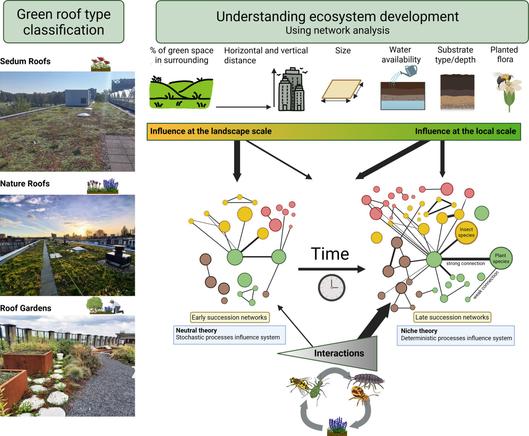
World Green Roof Day .
#greenroof #roofing #flatroof #roofrepair #skylights #roofer #repairs #facia #soffet #cedar #robbsroofing #enviroshake #copper #owenscorning #shingles #handyman #brantfordroofing #owenscorningshingles #owenscorningduration #brantford #architecture #alpinesnowguards #custom #customroof #southernontario #lookslikecedar #cambridge #roofrepairs #mountpleasant #greenroofs Today is World Green Roof Day . With the increasing population, land is becoming…
https://itsmostamazingindia.wordpress.com/2025/06/06/world-green-roof-day/
How are #NaturalDisaster-resistant design elements integrated into #Solarpunk buildings?
Publication date: 2023-09-02
"In Solarpunk buildings, natural disaster-resistant design elements are integrated through a combination of passive and active design strategies. Here are a few ways in which these elements can be incorporated:
1. Site selection and orientation: Solarpunk buildings are typically situated in areas that are less susceptible to natural disasters like #floods, #earthquakes, or #tsunamis. Careful evaluation of the site's history and potential risks helps in choosing locations that are more resilient. Additionally, the building orientation can be optimized to maximize #NaturalLight and minimize exposure to prevailing #winds or #storms.
2. Structural reinforcements: Solarpunk buildings embrace resilient construction techniques to withstand natural disasters. This may include reinforced foundations, earthquake-resistant designs, hurricane-resistant materials, and robust structural systems that can withstand high winds, seismic activity, or even #ExtremeWeather events.
3. #GreenRoofs and #RainwaterHarvesting: Green roofs, which incorporate vegetation on the rooftop, offer several benefits when it comes to natural disaster resilience. They can help mitigate stormwater runoff, reducing the strain on existing drainage systems during heavy rainfalls or floods. Additionally, rainwater harvesting systems can be implemented to collect and store rainwater for future use, serving as an alternative water source during emergencies.
4. Passive climate control: Solarpunk design emphasizes #PassiveCooling and heating strategies to reduce energy consumption and reliance on mechanical systems. Natural ventilation through well-placed windows, louvers, or #RoofVents can help regulate indoor temperatures. By not relying heavily on air conditioning units, Solarpunk buildings can maintain habitability even during power outages caused by natural disasters.
5. #RenewableEnergy systems: Solarpunk buildings integrate renewable energy systems like solar panels or wind turbines to generate electricity on-site. This reduces dependence on centralized energy grids, making the building more self-sufficient and resilient in the face of power disruptions caused by natural disasters. Battery storage systems can also be incorporated to store excess energy and provide backup power during emergencies.
6. Water management and flood-resistance: Solarpunk buildings employ strategies such as permeable paving, #RainGardens, and water retention ponds to manage stormwater. These features help minimize the risk of flooding and prevent damage caused by heavy rains or #ExtremeWeather events.
"By combining these design elements, Solarpunk buildings aim to create sustainable and resilient structures that can better withstand the challenges posed by natural disasters."
#SolarPunkSunday #Architecture #ClimateChange #ArchitecturalDesign
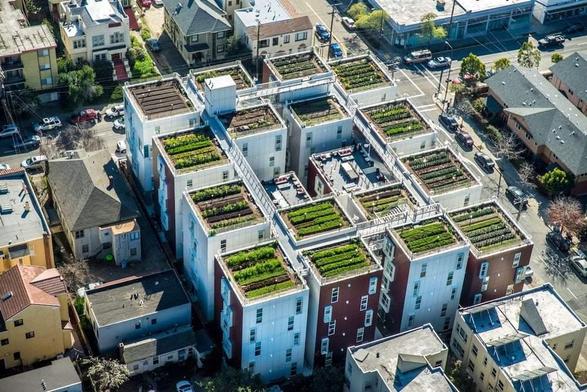
In a world increasingly shaped by urbanization, urban agriculture has emerged as an innovative solution to environmental and food security challenges. Among its many forms, rooftop farming stands out as a practical and sustainable option—especially in densely populated cities like New York, where space is limited. #Greenroofs #Smartfarming #Urbanagriculture
https://archup.net/rooftop-farming-in-nyc-engineering-challenges-and-opportunities/
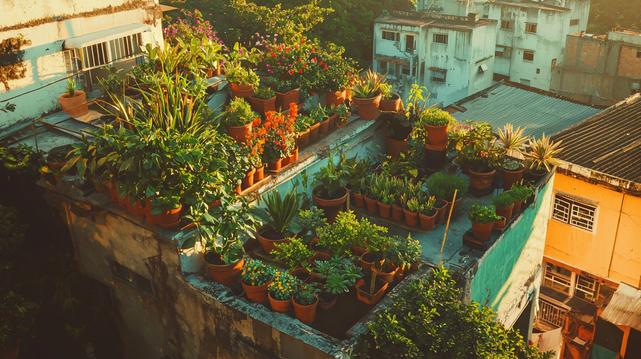
The two lists below provide data on green roofs around the globe that is available from online resources. The first identifies the cities with the most buildings that have green roofs, while the second lists those cities with the most green roof square footage. As there is not a consistent time line for reporting data, the calendar year for the information is provided in parentheses.
Source: architizer.comPlease note that in some cases, city data was only available for the number of green roofs, in other cases data was only available on the square footage of green roofs. In addition, many of the data sources do not clearly distinguish between the core city and the greater metropolitan area. Therefore, some of the number may reflect more than just the core city itself.
As always, additions, corrections, or suggestions are most welcome. Peace!
_______
Number of Buildings With Green Roofs
Berlin, Germany = 20,446 (2020)
Tokyo, Japan = 5,700 (2015)
Basel, Switzerland = 3,200 (2019)
Copenhagen, Denmark = 1,277 (2020)
Melbourne, Australia = 1,081 (2013)
Toronto, Ontario = 1,000 (2024)
New York City, New York = 736 (2022)
Greater London, England = 700 (2014)
Chicago, Illinois = 509 (2024)
Sao Paulo, Brazil = 500 (2024)
Vancouver, British Columbia = 312 (2022)
Turin, Italy = 300 (2020)
Sheffield, England = 120 (2014)
Barcelona, Spain = 115 (2014)
Rio de Janeiro, Brazil = 100 (2024)
Edinburgh, Scotland = 83 (2021)
Sydney, Australia = 80 (2023)
Milwaukee, Wisconsin = 68 (2021)
Seattle, Washington = 62 (2010)
Hong Kong, China = 60 (2017)
Denver, Colorado = 50 (2018)
San Francisco, California = 45 (2013)
________
Green roofs in downtown Chicago – Source: maps.google.comThe square footages are based on the most recent calendar year data for the city are available (in parens). If data for the city is known , but the date is not, it is listed as (?date). Finally, if the sauce footage was determined by adding known square footages together from multiple online resources (calculated) is listed next to the total. In the “calculated” cases, not all buildings with green roofs may have been found.
Kö-Bogen II mixed-use development in Dusseldorf, Germany with green roof and green facade – Source: newatlas.comSquare Footage of Green Roofs
Berlin, Germany = 70,611,252 square feet (2020)
Chengdu, China = 35,520,904 square feet (2017)
Shanghai, China = 34,444,513 square feet (2017)
Munich, Germany = 33,885,253 square feet (2020)
Dusseldorf, Germany = 22,213,482 square feet (2020)
Tokyo, Japan = 19,375,039 square feet (2015)
Beijing, China = 21,527,821 square feet (2017)
Hamburg, Germany = 18,083,370 square feet (2020)
Singapore = 16,684,061 square feet (2023)
Shenzhen, China and Chongqing, China = 16,145,866 square feet (2017 and 2017)
Stuttgart, Germany = 13,024,332 square feet (2020)
Basel, Switzerland; Nanjing, China; Xi’an, China; and Hangzhou, China = 10,763,910 square feet (2019, 2017, 2017, and 2017)
Toronto, Ontario = 10,700,000 square feet (2024)
Milan, Italy = 10,440,993 square feet (2016)
Paris, France = 8,180,572 square feet (date?)
Linz, Austria = 5,957,824 square feet (date?)
Chicago, Illinois = 5,564,412 square feet (2024)
Washington, DC = 5,000,000 square feet (2024)
Rotterdam, Netherlands = 4,900,000 square feet (2021)
Greater London, England = 3,427,229 square feet (2021)
Turin, Italy = 2,770,415 square feet (2020)
Seattle, Washington = 2,669,267 square feet (2020)
Copenhagen, Denmark = 2,152,782 square feet (2020)
Istanbul, Turkey = 1,463,892 square feet (calculated)
Sydney, Australia = 1,054,863 square feet (2014)
Ottawa, Ontario = 1,021,517 square feet (calculated)
The Hague, Netherlands = 828,821 square feet (date?)
Kuwait City, Kuwait = 807,293 square feet (2021)
Newark, New Jersey = 600,000 square feet (2018)
Hong Kong, China = 538,196 square feet (2014)
Amsterdam, Netherlands = 500,000 square feet (date?)
Melbourne, Australia = 403,345 square feet (2021)
Philadelphia, Pennsylvania = 400,000 square feet (2019)
Vancouver, British Columbia = 368,997 square feet (calculated)
Zurich, Switzerland = 360,056 square feet (calculated)
Bogota, Colombia = 344,445 square feet (2018)
Stockholm, Sweden = 285,136 square feet (2023)
Mexico City, Mexico = 380,779 square feet (2022)
Groningen, Netherlands = 215,278 square feet (2019)
Salt Lake City, Utah = 200,000 square feet
Champaign, Illinois = 195,560 square feet (calculated)
Helsinki, Finland = 194,931 square feet (calculated)
Columbus, Ohio = 194,000 square feet (calculated)
Milwaukee, Wisconsin = 178,200 square feet (calculated)
Atlanta, Georgia = 119,068 square feet (calculated)
Malmo, Sweden = 118,403 square feet (2023)
Madison, Wisconsin = 115,000 square feet (calculated)
Boston, Massachusetts = 100,000 square feet (2023)
SOURCES:
https://panethos.wordpress.com/2024/11/07/green-roof-champion-cities-around-the-globe/
#architecture #cities #climateChange #ecosystems #environment #fun #geography #greenFacades #greenRoofs #history #landUse #landscaping #planning #sustainability #travel


In my column this week I advocate for a carrot-and-then-stick method of incentivizing green roofs in urban areas.
Tax benefits today, penalties tomorrow.
You have to ask yourself, are we doing this or not?
"So far, tax initiatives haven’t translated into big progress. According to the NYC DoF, only 14 properties have received abatements under the city’s green roof initiative since the policy was adopted in 2011.”
 NIOO-KNAW
 Meditation With Praveen
 Maeggreen


 DoomsdaysCW
 ArchUp
 the dr. menlo show
 Panethos
 Andrew Leahey