 mymedschool
Bacterial endotoxins from Gram-negative bacteria cause fever, inflammation, and septic shock via lipid A activation. #BacterialEndotoxin #LPS #GramNegative #Sepsis #SepticShock #LipidA #Microbiology #Immunology #Pathophysiology #USMLE #MedicalEducation

Learn key differences between bacterial exotoxins and endotoxins and their clinical effects. #Exotoxins #Endotoxins #BacterialToxins #Microbiology #Pathogenesis #GramNegative #GramPositive #LPS #ToxinMechanism #USMLE #MedicalEducation #ClinicalMicrobiology #SepticShock #BacterialVirulence

Bacterial Exotoxins Explained: Botulinum, Tetanus, Cholera, Diphtheria, and Shiga Toxins | USMLE Microbiology
Learn how major bacterial exotoxins cause disease — from Clostridium botulinum to Shigella dysenteriae. Understand their targets, mechanisms, and clinical effects for high-yield USMLE microbiology preparation.
 ScienceOpen
'Epidemiology and Clinical Outcome of Common Multi-drug Resistant Gram-negative Bacterial Infections in a Network of Hospitals in India (IMPRES): A Multicenter Intensive Care Unit-based Prospective Clinical Study' - a #JaypeeJournals UN #SDG03 article on #ScienceOpen:
🔓🔗 https://www.scienceopen.com/document?vid=1b1e9687-11f2-4596-bd02-9c2fca136124
#AntimicrobialResistance #CriticalCare #DrugResistantInfections #GramNegative

Epidemiology and Clinical Outcome of Common Multi-drug Resistant Gram-negative Bacterial Infections in a Network of Hospitals in India (IMPRES): A Multicenter Intensive Care Unit-based Prospective Clinical Study
<div xmlns:xsi="http://www.w3.org/2001/XMLSchema-instance" class="section"> <a class="named-anchor" id="d902396e561"> <!-- named anchor --> </a> <h5 class="section-title" id="d902396e562">Background and aims</h5> <p dir="auto" id="d902396e564">India witnessed the exponential rise of antibiotic resistance due to the high burden of communicable disease. The Indian Council of Medical Research reported <i>Pseudomonas aeruginosa, Escherichia coli, Acinetobacter baumannii</i>, and <i>Klebsiella pneumoniae</i> (PEAK organisms) as the most common gram-negative isolates, constituting 65.5% of total isolates. The present study aimed to observe the demographics and clinical outcomes of patients infected with these four common gram-negative bacteria in ICUs across India. </p> </div><div xmlns:xsi="http://www.w3.org/2001/XMLSchema-instance" class="section"> <a class="named-anchor" id="d902396e572"> <!-- named anchor --> </a> <h5 class="section-title" id="d902396e573">Patients and methods</h5> <p dir="auto" id="d902396e575">This prospective multicentric observational study was conducted in ICUs of 19 hospitals across India. The data collected for each patient included: demography, diagnosis, disease severity score, site of infection, PEAK organism, risk factors for multidrug resistance, antibiotic sensitivity, resistance pattern, total ventilator days, and 28-day mortality. Subgroup analysis of 28-day mortality was done for community-acquired vs hospital-acquired infection, appropriate empirical antibiotic, Carbapenem- and Colistin-resistant infections. </p> </div><div xmlns:xsi="http://www.w3.org/2001/XMLSchema-instance" class="section"> <a class="named-anchor" id="d902396e577"> <!-- named anchor --> </a> <h5 class="section-title" id="d902396e578">Results</h5> <p dir="auto" id="d902396e580">A total of 936 patients were included in the analysis. Resistance to Cephalosporin, Fluroquinolones, Piperacillin Tazobactam, Carbapenem, Aminoglycosides, and Colistin was observed in 84, 68, 55, 47, 37, and 4.2% of patients, respectively. The 28-day crude mortality rate was 23.5%, which was higher in the subgroup with isolates resistant to empiric antibiotics compared to those with sensitive isolates (29.6 vs 21.4%, <i>p</i> > 0.05). Moreover, 32 and 27% mortality rates were observed in patients who were infected with Carbapenem-resistant and Colistin-resistant PEAK organisms, respectively. </p> </div><div xmlns:xsi="http://www.w3.org/2001/XMLSchema-instance" class="section"> <a class="named-anchor" id="d902396e585"> <!-- named anchor --> </a> <h5 class="section-title" id="d902396e586">Conclusion</h5> <p dir="auto" id="d902396e588">The present study observed a high prevalence of antibiotic resistance in Indian ICUs, contributing to a crude mortality rate of 23.5%. Patients with Carbapenem and Colistin resistance may exhibit higher 28-day crude mortality. </p> </div><div xmlns:xsi="http://www.w3.org/2001/XMLSchema-instance" class="section"> <a class="named-anchor" id="d902396e590"> <!-- named anchor --> </a> <h5 class="section-title" id="d902396e591">How to cite this article</h5> <p dir="auto" id="d902396e593">Das SK, Joshi Z, Govil D, Shah MS, Jakaraddi GN, Sinha S, <i>et al</i>. Epidemiology and Clinical Outcome of Common Multi-drug Resistant Gram-negative Bacterial Infections in a Network of Hospitals in India (IMPRES): A Multicenter Intensive Care Unit-based Prospective Clinical Study. Indian J Crit Care Med 2025;29(6):504–509. </p> <p dir="auto" id="d902396e598">CTRI identifier: CTRI/2023/01/049121.</p> </div>
 micrordt
Understanding the Mechanism of Gram Staining: A Key Tool in Microbiology
#Bacteria, #BacteriaIdentification, #GramNegative, #GramNegativeBacteria, #GramPositive, #GramVariable, #GramsStaining, #ImportanceOfGramStaining, #MechanismOfGramStaining #Bacteriology Introduction Gram staining, developed by Danish bacteriologist Hans Christian Gram in 1884, remains one of the most fundamental techniques in…. Medical Microbiology & Recombinant DNA Technology (RDT) Labs | Read…

Understanding the Mechanism of Gram Staining: A Key Tool in Microbiology
#Bacteria, #BacteriaIdentification, #GramNegative, #GramNegativeBacteria, #GramPositive, #GramVariable, #GramsStaining, #ImportanceOfGramStaining, #MechanismOfGramStaining #Bacteriology Introductio…
Antibiotics Those Inhibit Cell Wall Synthesis
#Ampicillin, #Bacitracin, #Bacteria, #Cephalosporins, #Cycloserine, #GramNegative, #GramPositive, #Penicillins, #Vancomycin #Microbiology Among the antibiotics whose antimicrobial action is by inhibition of biosynthesis of peptidoglycan cell-wall structure are the penicillins, cephalosporins, cycloserine,…. Medical Microbiology & Recombinant DNA Technology (RDT) Labs | Read More -
https://micrordt.wordpress.com/2024/05/03/antibiotics-those-inhibit-cell-wall-synthesis/

Spirochetes
#Bacteria, #GramNegative, #GramNegativeBacteria, #Spirochetes #Bacteriology The spirochetes are heterogenous group of gram – ve bacteria that have a distinctive cell structure. Spirochetes have a cylindrical…. Medical Microbiology & Recombinant DNA Technology (RDT) Labs | Read More -

Anaerobic Gram Negative Bacilli
#Bacteria, #Bailli, #GramNegative, #GramsStaining #Bacteriology, #Microbiology Medically important anaerobic gram negative bacilli belong to the family Bacteroidaceae and are classified into the genera Bacteroides, Fusobacterium and Leptotrichia. Isolated from clinical specimens, Bacteroides are…. Medical Microbiology & Recombinant DNA Technology (RDT) Labs | Read More -
https://micrordt.wordpress.com/2024/04/25/anaerobic-gram-negative-bacilli/

 Benjamin Carr, Ph.D. 👨🏻💻🧬
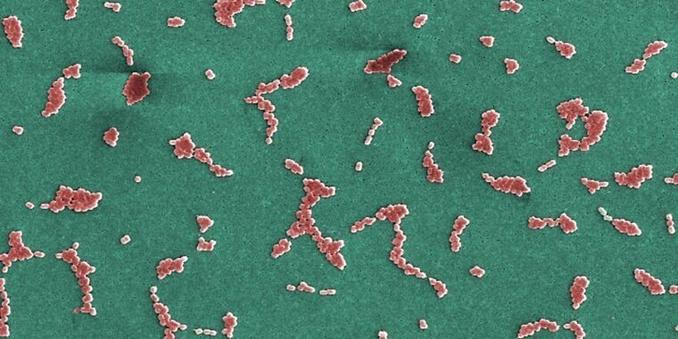
Experimental #antibiotic kills deadly #superbug, opens whole new class of #drugs
Relatively large molecule clogs a transport system, leading to lethal toxicity. In this case, the new #drug—dubbed #zosurabalpin—fights off the #GramNegative #bacterium carbapenem-resistant Acinetobacter baumannii, aka CRAB. Though it may sound obscure, it's an opportunistic, invasive #bacteria that often strikes hospitalized and critically ill patients, causing deadly #infections worldwide. https://arstechnica.com/science/2024/01/experimental-antibiotic-reveals-entirely-new-way-to-kill-drug-resistant-bacteria/
Relatively large molecule clogs a transport system, leading to lethal toxicity. In this case, the new #drug—dubbed #zosurabalpin—fights off the #GramNegative #bacterium carbapenem-resistant Acinetobacter baumannii, aka CRAB. Though it may sound obscure, it's an opportunistic, invasive #bacteria that often strikes hospitalized and critically ill patients, causing deadly #infections worldwide. https://arstechnica.com/science/2024/01/experimental-antibiotic-reveals-entirely-new-way-to-kill-drug-resistant-bacteria/

 Matt Willemsen
Experimental antibiotic kills deadly superbug, opens whole new class of drugs
https://arstechnica.com/science/2024/01/experimental-antibiotic-reveals-entirely-new-way-to-kill-drug-resistant-bacteria/ #experimental #antibiotic #superbug #drugs #GramNegative #bacteria #zosurabalpin #CRAB
https://arstechnica.com/science/2024/01/experimental-antibiotic-reveals-entirely-new-way-to-kill-drug-resistant-bacteria/ #experimental #antibiotic #superbug #drugs #GramNegative #bacteria #zosurabalpin #CRAB
 Alan Kotok
Start-Up Developing Precision Antibiotics for Resistant Bacteria
A company formed earlier this year is developing precision treatments for bacteria resistant to conventional antibiotics, and raising £4.3 million ($US 5.4 million) in seed funds.
https://sciencebusiness.technewslit.com/?p=45402
#News #Press #Science #Business #Biotechnology #Chemistry #Microbiology #GramNegative #Bacteria #AntiMicrobialResistance #Finance #SeedFunds
