Meeting LISA

LISA: the Lightweight In Situ Analysis box is one of a kind; built by our friends at PICE in the Niels Bohr Institute. Later this year we’re taking LISA to Antarctica for the first time ever, to analyse shallow snow and firn cores directly in the field.

This is part of our contribution to the EPIC iQ2300 – a project led by Prof. Arjen Stroeven in Stockholm and organised by the Swedish Polar Research Secretariat.

iQ2300 is a huge project, and we are just a small part of it: the aim is to understand Dronning Maud Land’s evolution from the Holocene and out to 2300. Expect to hear a lot more about this effort in coming months…

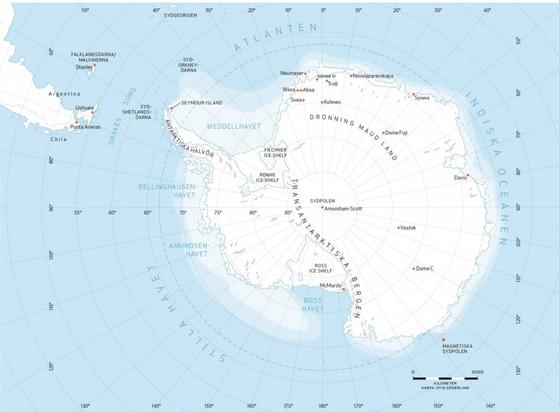
Map of Antarctica, I lifted from polar.se : LISA will be visiting the Swedish Wasa station in DML – the top bit on this map – with us

Now back to our humble friend.

We hope LISA will help us understand how much snow falls in Dronning Maud Land, how much it varies from year to year and what is the influence of sea ice and far field atmospheric processes on the rate of snowfall. Snowfall is exceptionally difficult to measure and one of our biggest uncertainties in working out Antarctic mass budget and the response of Antarctica to a changing climate (spoiler alert: we might have a paper coming out about this shortly)…

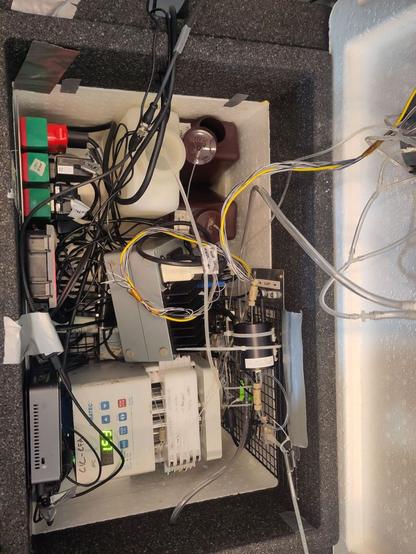
Meet LISA: a view inside the Magic Box..

Although LISA has been used in Greenland before, this is quite an experimental deployment, which means potentially really a lot of valuable scientific results. We would ultimately liek to build an Antarctic specific box, but that will have to wait to see if the results of this deployment are as good as we hope. (And some funding – if you are a billionaire with a spare couple of hundred thousand Euros, we’re always interested in talking).

The box itself is conceptually simple but in practice a little complex with a multiplicity of tubes, connectors and spare parts. This means it’s easy to fix if it breaks down, but also we need to understand how it works first.

Some parts of LISA are quite fiddly…

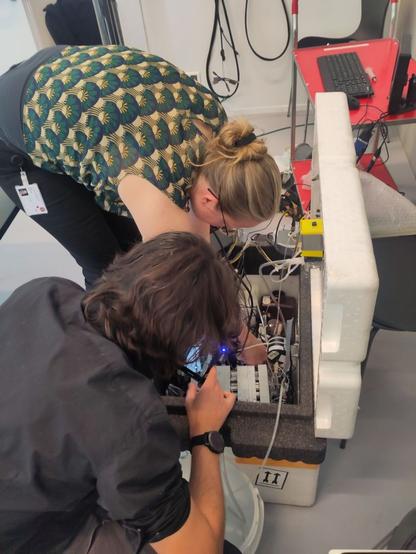
Today, the awesome and exceptionally generous Associate Professor Helle Kjær took myself, Stockholm Uni Prof Ninis Rosqvist and our PhD colleague from the Novo Nordisk funded PRECISE project, Clément Cherblanc through the use of the box.

Helle showing Clément the workings inside LISA

There’s a lot to remember and a lot to check but we’re reasonably hopeful we’ll get good results. The aim is to understand both the interannual variability on decadal timescales and the spatial gradients in snowfall accumulation. It’s a huge task, so it’s probably fortunate that we have 6 weeks or so (depending on the weather always!) to try and get it deployed at anumber of different sites which will hopefully allow us to do this.

It’s a big change to my normal fieldwork activities, but also a logical extension of them. And highly complementary to the climate and SMB modelling we are developing.

Nonetheless, ithere’s a lot of new stuff and I have in the past weeks learnt a great deal about transporting very small amounts of mildly hazardous chemicals on airlines, how to deal with customs and pack fragile instruments in large boxes.

Much more to come on this project, so stay tuned…

Clement getting stuck into using the software that measures different properties in the cores.

#PolarSekretariatet #AntarcticFieldwork #IceClimate #PolarClimate #Snow #SMB #AtmosphericVariability #iceCores #FirnCores #SnowCores

#Antarctica #AntarcticFieldwork #AtmosphericVariability #climateChange #firn #FirnCores #IceClimate #iceCores #iQ2300 #PolarClimate #PolarSekretariatet #smb #snow #SnowCores

Meeting LISA

LISA: the Lightweight In Situ Analysis box is one of a kind, built by our friends at PICE in the Niels Bohr Institute. Later this year we're taking LISA to #Antarctica for the first time ever, to analyse shallow #snow and #firn cores directly in the field. We hope LISA will help us understand how much snow falls in Dronning Maud Land, how much it varies from year to year and what is the influence of sea ice and far field atmospheric processes on the rate…

http://sternaparadisaea.net/2025/09/30/meeting-lisa/

Meeting LISA

Today we were introduced to the extraordinary LISA: our sophisticated companion on the IQ2300 expedition to Antarctica later this year…

Sterna Paradisaea
Meeting LISA LISA: the Lightweight In Situ Analysis box is one of a kind, built by our friends at PICE in the Niels Bohr Institute. Later this year we're taking LISA to #Antarctica for the first time ever, to analyse shallow #snow and #firn cores directly in the field. We hope LISA will help us…

Meeting LISA
Meeting LISA

Today we were introduced to the extraordinary LISA: our sophisticated companion on the IQ2300 expedition to Antarctica later this year…

Sterna Paradisaea
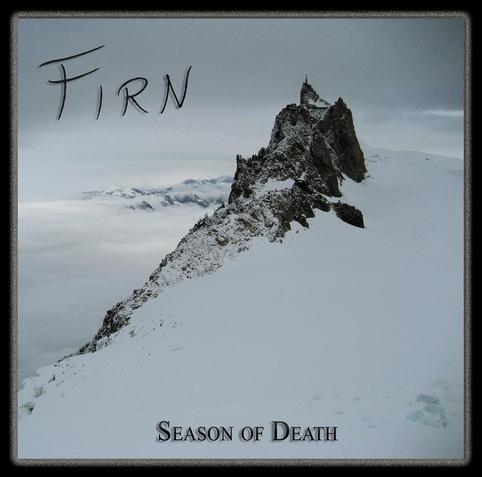
FIRN (Hongria) presenta nou àlbum: "Season of Death" #Firn #AtmosphericBlackMetal #Agost2025 #Hongria #NouÀlbum #Metall #Metal #MúsicaMetal #MetalMusic

Le prix des médiathèques de Sète a été attribué à Olivier Bordaçarre !

Un chouette prix après le Grand prix de littérature policière 2024 !

https://buff.ly/s2QMaM9

#polar #FIRN #vendredilecture

From my Front Door R8I4

Nature’s Cycle: Life from Death

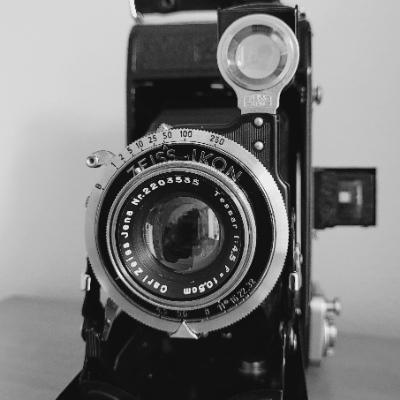
1/25, f/8, tripod, shutter release cable
Film (R9): Ilford XP2 Super 400, ISO400,
Camera: Zeiss Ikon Ikonta 521/2, Zeiss Tessar 4.5 / 10.5cm
Film developed by TheDarkRoom, San Clemente, CA
Super Scan

#photography #photo #beliefeinfilm #blackandwhitephotography #blackandwhite #firn #intothewoods #moody #zeissikonikonta #filmisnotdead #ilfordxp2super400

https://flic.kr/p/2qoxZ62

From my Front Door R8I4

Flickr

Waiting for the handyman.
Reading a paper on analyzing firn in Antarctica. Firn is the snow layer before it gets compacted to actual ice. The firn layer contains gas like methane or CO2, too, but the air bubbles aren't strictly sorted on input date 😁 The bubbles can be older or younger than their immediate surrounding. (True for real ice layers, too.)

All very interesting.
https://tc.copernicus.org/articles/13/3383/2019/tc-13-3383-2019.html
"Multi-tracer study of gas trapping in an East Antarctic ice core" by Kevin #Fourteau et al 2019.

The absolute shocking byproduct of their incredibly thorough work is a 2700 year data series for CH4 in MONTHLY resolution!! https://doi.pangaea.de/10.1594/PANGAEA.909627?format=html#download

From -930 to 1774 AD.
Their gas dating method is so exact that they pinpoint several different days for every month, too.

I am stunned that monthly resolution is possible. And this was merely a byproduct of figuring out the best way to analyze firn.

#paleoclimate #methane #CH4 #firn #icecore #ice #snow #Antarctica

Multi-tracer study of gas trapping in an East Antarctic ice core

Abstract. We study a firn and ice core drilled at the new “Lock-In” site in East Antarctica, located 136 km away from Concordia station towards Dumont d'Urville. High-resolution chemical and physical measurements were performed on the core, with a particular focus on the trapping zone of the firn where air bubbles are formed. We measured the air content in the ice, closed and open porous volumes in the firn, firn density, firn liquid conductivity, major ion concentrations, and methane concentrations in the ice. The closed and open porosity volumes of firn samples were obtained using the two independent methods of pycnometry and tomography, which yield similar results. The measured increase in the closed porosity with density is used to estimate the air content trapped in the ice with the aid of a simple gas-trapping model. Results show a discrepancy, with the model trapping too much air. Experimental errors have been considered but do not explain the discrepancy between the model and the observations. The model and data can be reconciled with the introduction of a reduced compression of the closed porosity compared to the open porosity. Yet, it is not clear if this limited compression of closed pores is the actual mechanism responsible for the low amount of air in the ice. High-resolution density measurements reveal the presence of strong layering, manifesting itself as centimeter-scale variations. Despite this heterogeneous stratification, all layers, including the ones that are especially dense or less dense compared to their surroundings, display similar pore morphology and closed porosity as a function of density. This implies that all layers close in a similar way, even though some close in advance or later compared to the bulk firn. Investigation of the chemistry data suggests that in the trapping zone, the observed stratification is partly related to the presence of chemical impurities.

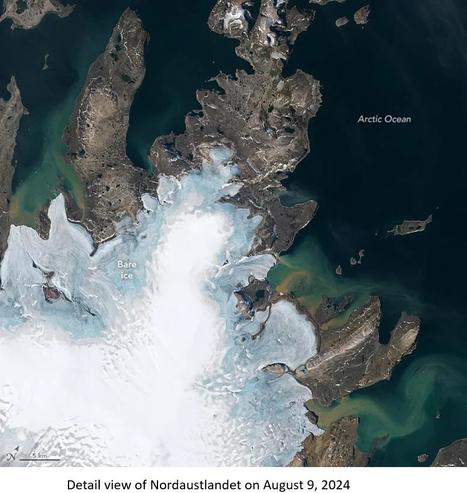
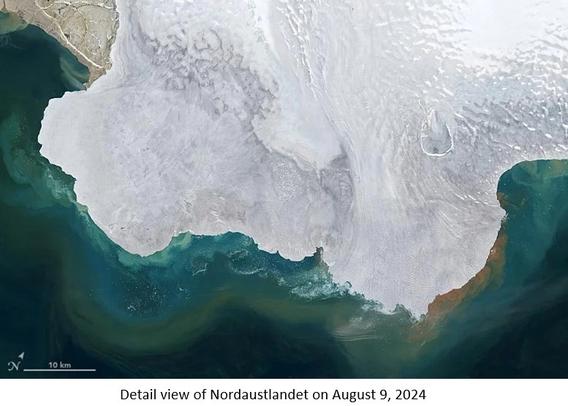
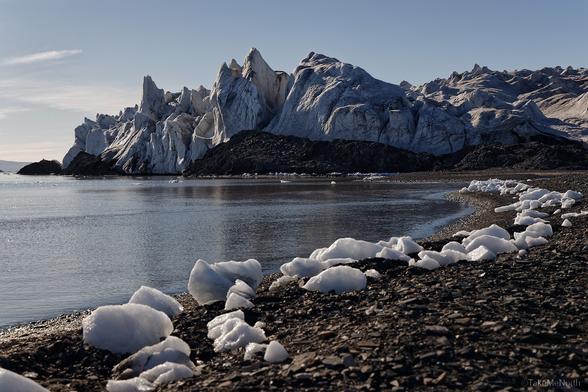
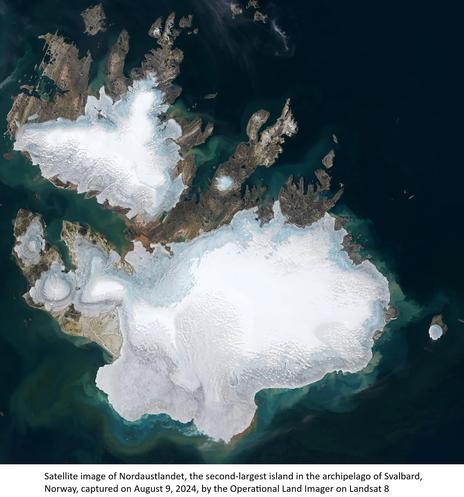
Svalbard Crisis: Glaciers Melt at Unprecedented Rates As Temperatures Soar

High summer temperatures caused record melting of the Norwegian archipelago’s glaciers. Summer 2024 saw Svalbard's ice caps melt at record levels, driven by high air temperatures and further exacerbated by a persistent heat dome over Scandinavia. This led to historical temperature highs and signi

SciTechDaily

⚠️ Understanding firn is crucial for predicting the future of our glaciers. As the climate crisis intensifies, the delicate balance of firn formation is being disrupted, threatening the stability of glaciers worldwide.

💙 Let's protect our glaciers and the essential role they play in our climate system.

#Glacierwatch #ClimateCrisis #Firn #GlacierDynamics

📸 Photo by Doronenko / Wikimedia Commons