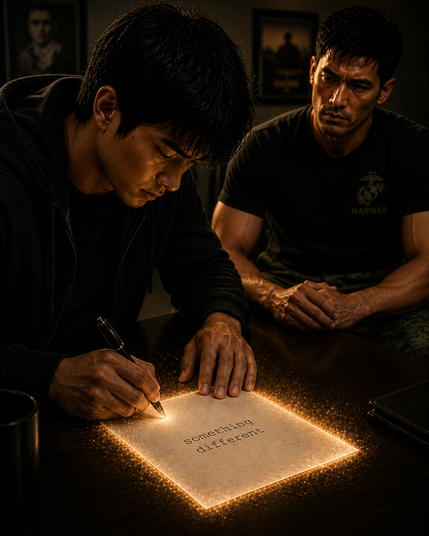
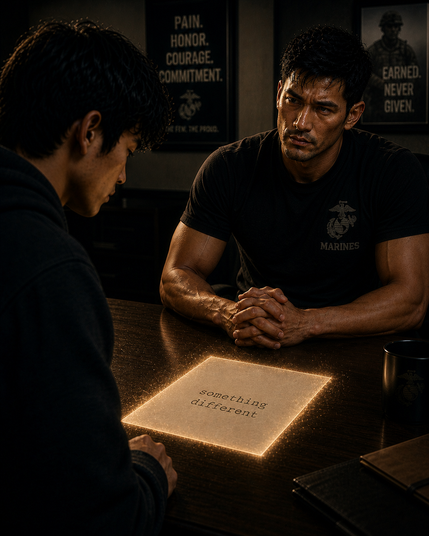
He didn’t understand it.

It didn’t make sense.

There were no guarantees.

He signed it anyway.

👉 That’s where everything begins.

#UnboundRealm #FantasyBooks #SciFiFantasy #IndieAuthor #Storytelling #Readers #BookSeries #DarkFantasy #EpicFantasy #WritingCommunity

https://kentwayne.com/2026/05/18/he-signed-it-anyway/

Embracing the Unknown: Jon's Moment of Decision

Jon's journey leads to an unexpected choice driven by intuition. Explore the moment that changes everything with just two words.

Kent Wayne

BRECK: Dead Delivery — Chapter 13: The First Time

Daily writing prompt If you could erase one movie from your memory and watch it again for the first time, which one would it be? View all responses

BRECK: Dead Delivery — Chapter Thirteen

The First Time

This is Chapter 13 of BRECK: Dead Delivery, a serialized noble dark fantasy story written by Chadwick Rye, set in the world of Lumenvale. BRECK follows Breck, a veteran courier and former Crystal Wars special operations soldier, as he moves through a medieval world one delivery at a time — and can’t always walk away from what he finds. New chapters post daily at noon Eastern on chadwickrye.wordpress.com.

The Story So Far

Breck is a veteran courier — 6’5″, 285 pounds, former Crystal Wars special operations — who arrived in Crestfall on a routine delivery and found a town quietly strangled by a corrupt magistrate named Voss. Over twelve days he has built a case from the inside out: the hidden ledger kept by a dead miller’s widow, the chalk map drawn by a twelve-year-old boy named Pell who has been watching this town come apart from a cooperage step, the gap in the magistrate’s patrol created by a young enforcer named Jorin who moved his post eight feet west every night for four months on the silent hope it would matter. Last night, Breck dismantled Pelk — Voss’s collection enforcer — in four seconds in an alley behind the granary. This morning, Drav sat two stools down at the inn bar and asked which side of the war Breck had been on. Breck told him. Tonight, the side door is unlatched. Tonight, the gap opens between the eighth bell and the ninth. Tonight, everything Breck has been building comes due.

← Chapter Twelve — The Learning Curve | Chapter Fourteen — Coming Tomorrow →

Chapter Thirteen: The First Time

This chapter explores what it feels like to see something for the first time — and what it costs when you can’t go back.

Chapter 13 Summary: Breck executes the plan that twelve days of groundwork made possible — slipping through the unlatched side door of the civic building between the eighth and ninth bells, retrieving the original documents stolen from miller Aldric Moss fourteen months ago, and exiting the way he came. In the corridor of the inn, he finds Drav waiting. They say almost nothing. Drav steps aside. Breck goes upstairs with the documents and the evidence he has been carrying, and counts the ninth bell.

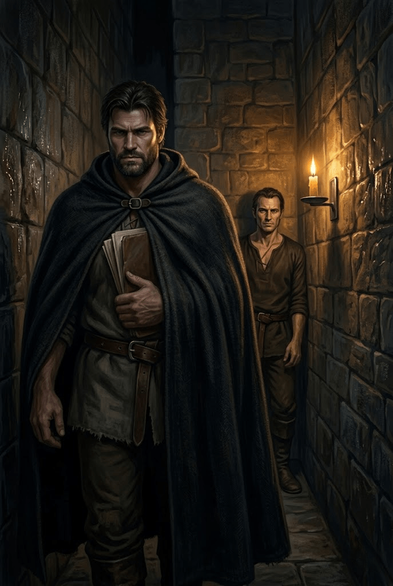
He went in through the side door at half past the eighth bell.

Maret had left it unlatched exactly as he’d asked — the hinges oiled at some point in the recent past, because they made no sound, which was either coincidence or the innkeeper’s particular brand of thorough preparation, and Breck suspected coincidence had very little to do with how Maret ran her building. He eased the door open the width of his shoulders — considerable — and stepped into the narrow service corridor that ran between the inn’s rear wall and the magistrate’s stable yard next door.

The corridor smelled of horse and wet straw and the particular cold that collected in spaces between buildings, the cold that had nowhere to go and simply accumulated. A single tallow stub burned in a tin holder on a wall bracket, throwing just enough light to move by and not enough to be seen from either end of the corridor. He stood still for thirty seconds, listening to the night.

Crestfall at the eighth bell had its own specific silence — not the silence of an empty place but the silence of a populated place that had learned to hold its breath on schedule. The market square would be clear. The few remaining vendors who hadn’t packed before the third bell would have packed before the sixth. The streets would hold nothing but the magistrate’s men on their routes and the particular quality of dark that accumulated in a town that had learned not to put lights in windows after sundown if it could be helped.

He moved down the corridor toward the stable yard.

Jorin’s gap ran from the eighth bell to the ninth on the west face of the magistrate’s building — a forty-foot section of wall where the coverage went thin because Jorin had been moving his patrol point eight feet west over the course of four months, one measured increment at a time, building the gap so gradually that no one with oversight responsibility had noticed the pattern. Breck had stood across from that wall in daylight and in rain and had counted the windows and the distances between them and had built the picture of what lay inside from the outside in, the way he’d always built pictures during the war.

Three rooms on the ground floor facing the stable yard. The leftmost would be the clerk’s office — he’d confirmed this from the shadow pattern through the shutters during business hours, the particular stillness of a room occupied by someone who sat at a desk. The middle room was storage — the shadow pattern showed no movement and the smell coming through the gap in the shutters on his third observation pass had been the dry, papery smell of documents and sealed boxes. The rightmost would be Voss’s private office — the room with the heaviest shutters, the room that showed light longest into the evening, the room from which a thin thread of pipe smoke drifted at the end of the working day, suggesting a man who sat with his accounts after the clerks had gone.

It was the middle room he wanted.

Not because of what was there now. Because of what had been put there fourteen months ago — documents taken from a miller’s office in the night along with his correspondence and a deed to river land his father had left him, taken and filed away in the place where taken things went in a town run by a man like Voss. Aldric Moss had been careful enough to make a copy. Breck had that copy against his ribs in the oilskin packet. But the originals would have more weight with whatever authority came after this — and Breck intended there to be an authority that came after this.

The storage room window had a single iron latch that he’d felt through the gap in the shutters on his second observation pass, running his fingers along it in the dark with the particular careful attention of a blind man reading. Standard construction. Nothing complicated. The kind of latch that had been adequate for fourteen years and had never been asked to be more than adequate.

He asked it to be more than adequate now.

It held for approximately three seconds.

The room was exactly what the shadow pattern and the smell had suggested — shelves along three walls, floor to ceiling, carrying the accumulated administrative weight of Voss’s three years in office. Ledger books. Correspondence boxes, each labeled in the neat hand of the clerk who’d processed them. Rolled documents in wooden tubes, sealed and dated. The particular archaeology of a corrupt administration, layered like sediment, oldest at the bottom and working toward the present.

He didn’t light a candle. He worked by the thin thread of the tallow stub’s light through the open window, and by the older light of his own spatial memory, which was a map he’d built of this room from the outside and was now confirming from the inside. They matched. They generally did, if you paid the right kind of attention.

He found what he was looking for in the third box on the second shelf from the bottom, where documents from fourteen months prior had been filed in the methodical, chronological order of a clerk who had no particular feelings about what he was archiving and was simply doing the work. A miller’s license. A deed to river land. A bound collection of correspondence in a hand he recognized from the oilskin packet against his ribs — the same neat, architectural handwriting, the same careful precision of a man who had understood exactly what he was building.

Aldric Moss had been thorough in everything.

Breck placed the documents inside his cloak, against his chest, alongside the copy that had been kept warm beside a hearthstone for fourteen months by a woman who had learned to hope in very small, very careful amounts. Then he stood still for a moment in the dark room, among the filed evidence of three years of quiet theft, and let the weight of it settle.

The first time he’d broken into an enemy position — a Karithian supply cache, second year of the Crystal Wars, a river crossing that had taken three attempts to cross — he had felt afterward something he hadn’t expected and hadn’t been able to name until much later. Not triumph. Not relief. Something more like the specific grief of a man who has seen, for the first time, clearly, the shape of what he is capable of — and understands that having seen it, he can never quite see himself the previous way again.

He felt something adjacent to that now.

Not grief exactly. But the awareness of a threshold crossed. The documents in Aldric Moss’s hand, filed in a box labeled with the date of a night when three men had come and taken them along with the miller himself — those documents existed now in a different place than they had existed this morning. The case had been built. The copy was the argument. The originals were the proof.

Whatever came next, this had happened. That was the nature of certain kinds of action. They existed in the past tense from the moment they were completed, permanent and unalterable, the way a thing seen for the first time could not be unseen.

He crossed back to the window. Eased it open. Stepped out into the corridor and pulled it closed behind him, feeling the latch seat itself back in its frame with a small, final sound.

He heard Drav before he saw him.

Not because Drav made a sound — he didn’t. Because the quality of the silence at the far end of the corridor changed in the specific way that silence changed when it was occupied by someone who had learned, the same way Breck had learned, not to announce themselves.

Breck stopped.

The corridor held them both, twenty feet apart, in the thin light of the tallow stub. Drav stood at the corridor’s entrance to the stable yard, in the plain dark clothing he always wore, his hands at his sides. The scar caught the faint light. His expression was the expression he’d had at the bar that morning — old and complicated and stripped of everything that wasn’t strictly necessary.

He looked at the shape of Breck’s cloak. At the place where it sat differently than it had on any previous day — the bulk of documents against his chest, invisible but present.

He didn’t say anything.

Breck didn’t say anything.

The tallow stub burned its patient fraction lower. Somewhere in the stable yard a horse shifted its weight and blew through its nose in the mild, unconcerned way of animals uninvested in human complications.

Then Drav stepped aside.

Not a wide step. Just enough. The corridor was adequate for a large man to pass if both parties were willing to be in it simultaneously without incident. Drav’s positioning made it clear that he was willing.

Breck walked past him.

At the corridor’s end, at the door that opened back into the inn’s rear passage, he stopped without turning around.

“The north road,” Drav said quietly, from behind him. His voice was the same as it had been at the bar. Low. Stripped. “Tomorrow morning. Before the bells.”

“I know,” Breck said.

“He’ll know by the second bell. When the clerk opens the room.”

“I know that too.”

A pause that contained several things that neither of them was going to say.

“Drav,” Breck said.

“Don’t.”

He didn’t. He opened the door and stepped back into the warmth of the inn, and the door closed behind him, and in the corridor Drav stood alone in the thin tallow light for a moment before the silence resettled over everything.

Breck went upstairs. Set the documents on the table beside the oilskin packet and looked at them together in the candlelight — the copy and the originals, the evidence kept in hope and the evidence filed in certainty, reunited after fourteen months in the dark.

He sat on the edge of the bed and looked at them for a long time.

Then he moved the bracelet from his wrist to the satchel strap, the nighttime version of the habit, and lay down on the narrow bed and stared at the ceiling and thought about a man seeing something clearly for the first time, and the specific irreversibility of that.

Outside, the ninth bell rang across Crestfall’s quiet rooftops.

Right on schedule.

BRECK: Dead Delivery is a serialized noble dark fantasy story written by Chadwick Rye, published free on chadwickrye.wordpress.com. Set in the world of Lumenvale, it follows Breck — a veteran courier and former Crystal Wars special operations soldier — as he moves through a medieval world one delivery at a time, and can’t always walk past what he finds. New chapters post daily at noon Eastern. Chapter 13: The First Time — Breck retrieves stolen documents from the magistrate’s archive and crosses paths with Drav in the corridor.

← Chapter Twelve — The Learning Curve | Chapter Fourteen — Coming Tomorrow →

#adventure #books #BRECKDeadDelivery #ChadwickRye #dailyprompt #dailyprompt2765 #DarkFantasy #EpicFantasy #fantasy #FantasyFiction #fantasyThriller #fiction #FreeFantasyFiction #freeFantasyFictionOnline #FreeStory #lowFantasy #Lumenvale #nobleDarkFantasy #serializedFantasy #shortStory #thriller #writing

#PennedPossibilities 1017 — Reveal a source of misery for your MC.

Moon thinks it's a personal failure that she was unable to persuade her fellow House members to flee with her.

She felt responsible for them for so long that leaving them behind can still torture her.

So she does her best to focus on the present and deal with survival there.

Moon Rises, Winds & Pillars 8

#WritingCommunity
#EpicFantasy

BRECK: Dead Delivery Chapter Twelve

Daily writing prompt How do you stay motivated when learning something new? View all responses

BRECK: Dead Delivery

Chapter Twelve — The Learning Curve

Daily prompt: How do you stay motivated when learning something new? — This chapter explores that question through Breck and Pell: what it means to learn something because you can’t stop, versus being told to.

About this series: BRECK: Dead Delivery is a serialized fantasy story set in the world of Lumenvale — a slow-burn noir about Breck, a former soldier turned reluctant courier navigating the corrupt town of Crestfall. Each chapter is a self-contained scene advancing an overarching mystery. This is Chapter Twelve. Read from the beginning →

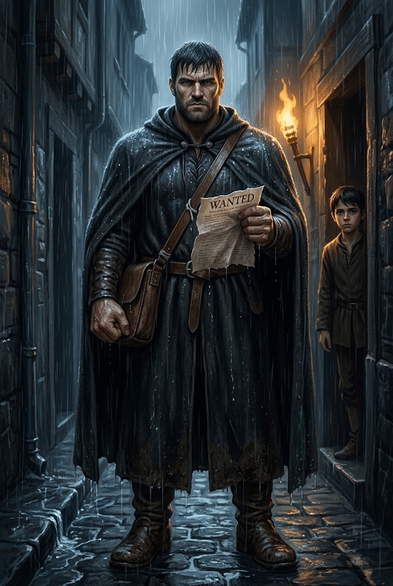
Pell found him first.

The boy materialized from the narrow gap between the cooperage and the adjoining leather-worker’s shed the way he materialized from everywhere — without announcement, without the preliminary scuff of boots on stone that preceded most people’s arrivals, as though he had learned to move through Crestfall’s geography the way water moved through cracks: finding the path of least resistance, arriving exactly where pressure required him to be.

He fell into step beside Breck without preamble, his stride adjusted to Breck’s considerably longer one in the unconscious, practiced way of someone who had spent considerable time walking beside adults whose legs covered more ground than his own.

“You talked to Jorin,” Pell said.

It was not a question. The boy’s intelligence-gathering apparatus in this town had long since rendered questions largely redundant.

“I did.”

“He looked different at the third bell. When he took his post.” Pell’s eyes moved across the street ahead of them in his habitual scanning pattern — doorways, windows, the roofline, the place where the alley behind the grain merchant opened onto the main road. “Less like a man carrying something heavy. More like a man who knows what the heavy thing is finally for.”

Breck glanced at him sidelong. The boy was twelve years old and read people with the accuracy of someone who had learned young that accurate reading was a survival skill rather than a social grace. It was the kind of intelligence that didn’t come from instruction — it came from sustained, motivated observation, from years of watching a town compress itself under the weight of something wrong and cataloguing every effect of that compression with the patient thoroughness of a natural scientist.

“How did you learn to do that?” Breck said.

Pell considered the question with the seriousness it deserved, which was the way he considered most things.

“I didn’t know I was learning it,” he said finally. “I just kept watching because I couldn’t stop being interested. And then one morning I realized I could read the whole square from the cooperage step — who was afraid, who was performing, who was carrying something they hadn’t told anyone about.” He paused, his boots finding the dry center of a puddled stretch of cobblestone with the automatic precision of long familiarity. “My father says I should find something useful to do instead of sitting and watching all day.”

“Your father is wrong,” Breck said.

Pell looked at him with an expression that contained several emotions in rapid succession — surprise, then a flicker of something warmer, then the careful return to his habitual equanimity, the guard coming back up with the practiced ease of long habit.

“He taught me cooperage,” Pell said. “I wasn’t good at it.”

“Were you interested in it?”

A silence that was answer enough.

“The things you’re good at,” Breck said, “are usually the things you couldn’t stop doing when no one was watching. Not the things someone handed you and said — here, learn this, it’s useful.” He adjusted the satchel strap across his chest, feeling the familiar weight of it settle. “The motivation isn’t something you manufacture. It’s something you follow.”

They turned off the main road onto the narrower street that ran behind the market stalls, the one that gave a clear sightline to the magistrate’s office rear entrance without requiring proximity to it. Breck had walked this route three times in the past two days, at different hours, in different weather, building the three-dimensional picture that existed now in his memory with the clean detail of a well-drawn map.

He had learned to do this in the war.

Not from a manual or a commanding officer’s instruction — from necessity, and from the recognition that the alternative to thorough prior knowledge was improvisation under pressure, and that improvisation under pressure had a consistent and unacceptable cost. He had been afraid, in those first months of courier work, that he would make a mistake that could not be corrected. That fear had been the most effective teacher he’d ever had. It had made him pay attention with a quality of attention he hadn’t known he possessed until it was required of him.

The fear had faded over time, replaced by something quieter and more durable: the simple deep satisfaction of a thing done well. Of a route memorized completely, a plan built without gaps, the particular pleasure of arriving at the moment of action and finding that the preparation had been sufficient. That satisfaction was its own motivation. It compounded — each completed thing making the next one more desirable, the skill curve becoming its own reward once you were far enough along it to feel the difference between knowing something partially and knowing it completely.

“Tonight,” Pell said. Not a question, not a statement — something between the two, calibrated for confirmation.

“Tonight.”

The boy nodded once, with the gravity of someone absorbing a scheduled event rather than an uncertainty.

“What do you need me to do?”

“Nothing,” Breck said.

Pell looked at him. The look contained a precise and articulate objection delivered without words.

“I need you somewhere safe,” Breck said, with the slightly different inflection he used for things that were not negotiable. “What happens tonight is not something a twelve-year-old participates in. You’ve already done your part. The map was your part. It was essential and it’s done.”

The boy was quiet for three full strides — enough distance for Breck to understand that the quiet was not acceptance but processing, the argument being constructed rather than abandoned.

“He took the cooperage,” Pell said finally. His voice had changed register — lower, stripped of the careful equanimity, the actual thing showing through the way actual things showed through in people when they finally got to the real sentence. “Not just the income. My father sits in the back room now and stares at the tools and doesn’t pick them up. My mother pretends she doesn’t see it.” He looked straight ahead at the wet cobblestones. “Aldric Moss asked questions and disappeared. My father stopped asking questions and disappeared anyway. Just — differently.”

The street was empty around them. Rain had begun again in its fine, persistent way, darkening the stone and collecting in the low places and running in thin clear rivers along the gutter toward the Calwick somewhere below and behind the rear yards.

Breck stopped walking.

Pell stopped too, a half-step later, and looked up at him with the rain beginning to collect in his dark hair and the real thing still showing in his face, the careful equanimity down.

“I know,” Breck said.

Two words. No elaboration. Not because elaboration wasn’t available, but because Pell was twelve years old and intelligent enough to understand that two words from a man who didn’t waste them carried more weight than a paragraph from someone who did.

The boy held his gaze for a moment, checking the words for the thing that sometimes hid behind them — for the patronizing or the performative or the comfortable lie dressed as acknowledgment. He found none of those things, which was the only reason he accepted the words at all.

He nodded. A single motion. The real thing went back behind the equanimity, but differently than before — not suppressed, just carried more deliberately, the way you carried something once you understood it had a name.

“Go home after dark,” Breck said. “Keep your mother inside. Don’t come to the square regardless of what you hear.”

“And tomorrow?”

Breck looked at him — at the serious face and the rain-darkened hair and the intelligence behind the eyes that had been paying attention to this town since before it had given him any reason to stop.

“Tomorrow,” he said, “is a different lesson.”

He turned and walked back toward the inn, and the rain continued its patient work on the stones around him, and somewhere across the square the magistrate’s office sat with its fresh mortar and its town seal and the particular silence of something that did not yet know what was coming for it.

Behind him, Pell stood for a moment longer.

Then he turned and went home.

Chapter Eleven  |  All Chapters

Enjoyed this story? Writing Lumenvale is how I pay my bills. If these stories are worth something to you, a $1 Ko-fi keeps the forge burning — and tells me this world is worth continuing. 👉 Buy Chadwick a coffee

This is Chapter Twelve of BRECK: Dead Delivery, a serialized fantasy story by Chad Rye, set in the world of Lumenvale. New chapters posted regularly at chadwickrye.wordpress.com.

#adventure #books #Breck #Crestfall #dailyprompt #dailyprompt2764 #DarkFantasy #DeadDelivery #EpicFantasy #fantasy #FantasyFiction #fiction #FreeFantasyFiction #freeFantasyFictionOnline #FreeStory #lowFantasy #Lumenvale #MaleProtaginst #shortStory #StrongMaleLead #writing

#WordWeavers 5/17: "How would your MC react to being handed a kitten?"

Moon would be wary.

She never had a pet, that wasn't something even remotely possible. So being handed a tiny animal would be reason enough to be doubtful.

Mostly, she'd worry about dropping it, but I believe she'd also love the soft fur and the sweet baby face.

In fact, I'm not sure if she and cats would get along. Both have a pretty clear ego.

Moon Rises, Winds & Pillars 8

#WritingCommunity
#EpicFantasy

THE LIGHT WITHIN: The Long Hunt
by JD Buzzard

Writing has taught me something over the years, finishing matters more than perfection. Stories only live if you’re willing to finally let them go into the world.

Find it on Amazon in paperback and digital.

https://a.co/d/01OE9qfB

#Fantasy #EpicFantasy #WritingCommunity #IndieAuthor #BookLaunch #AmazonBooks #SciFantasy #Worldbuilding #Writing #Books #Reading

The Light Within: The Long Hunt: Buzzard, JD: 9798263224967: Amazon.com: Books

The Light Within: The Long Hunt [Buzzard, JD] on Amazon.com. *FREE* shipping on qualifying offers. The Light Within: The Long Hunt

This story blends ancient humanity, cosmic influence, survival, family legacy, and the dangerous pursuit of power across generations. It’s the beginning of a much larger saga that I’ve spent years building.

Find it on Amazon in paperback and digital.

https://a.co/d/01OE9qfB

#Fantasy #EpicFantasy #WritingCommunity #IndieAuthor #BookLaunch #AmazonBooks #SciFantasy #Worldbuilding #Writing #Books #Reading

The Light Within: The Long Hunt: Buzzard, JD: 9798263224967: Amazon.com: Books

The Light Within: The Long Hunt [Buzzard, JD] on Amazon.com. *FREE* shipping on qualifying offers. The Light Within: The Long Hunt

After a long journey of outlining, writing, revising, rebuilding scenes, and far too many late nights, over the last twenty five years, I’m excited to officially announce that my largest and most ambitious novel is now available on Amazon.

THE LIGHT WITHIN: The Long Hunt
by JD Buzzard

Find it on Amazon in paperback and digital.

https://a.co/d/01OE9qfB

#Fantasy #EpicFantasy #WritingCommunity #IndieAuthor #BookLaunch #AmazonBooks #SciFantasy #Worldbuilding #Writing #Books #Reading

The Light Within: The Long Hunt: Buzzard, JD: 9798263224967: Amazon.com: Books

The Light Within: The Long Hunt [Buzzard, JD] on Amazon.com. *FREE* shipping on qualifying offers. The Light Within: The Long Hunt

It looked like any other contract.

Same structure.
Same language.
Same promise.

But something about it…

Wasn’t the same.

👉 That’s where the real choice begins.

#UnboundRealm #FantasyBooks #SciFiFantasy #IndieAuthor #Storytelling #Readers #BookSeries #DarkFantasy #WritingCommunity #EpicFantasy

https://kentwayne.com/2026/05/16/it-wasnt-the-offer-it-was-the-contract/

Choosing Wisely: Understanding Life's Unexpected Decisions

Explore the moment Jon faces a choice that challenges his expectations and leads to unexpected outcomes. Delve into the significance of decisions.

Kent Wayne

BRECK: Dead Delivery Chapter Eleven

Daily writing prompt What’s a book that completely surprised you? View all responses

BRECK: Dead Delivery

Chapter Eleven — What You Don’t See Coming

Prompt: What’s a book that completely surprised you? Tags: dailyprompt | Breck | Crestfall | Dead Delivery | Lumenvale

The book was called The Weight of Small Things, and Breck had found it wedged between two loose stones in a courier waystation outside Aldenmere three years ago, left by some previous traveler in the wordless tradition of waystations everywhere — the understanding that what you no longer needed might be exactly what the next person required.

He hadn’t expected anything from it. The cover was water-damaged, the spine cracked and reglued badly, the title so deliberately humble it seemed almost designed to discourage reading. He’d picked it up because the rain had pinned him to the waystation for six hours and he’d exhausted his other options.

It had surprised him completely.

Not because it was grand — it wasn’t. It was a small book about a small life: a river-ferry operator in some unnamed valley town who crossed the same water every day for forty years, taking people from one bank to the other, watching the seasons turn and the faces change and the small human dramas of ordinary existence play out on both sides of a thirty-foot stretch of moving water. No wars. No magic. No destiny arriving to transform the ferryman into something larger than himself. Just a man and a rope and a current and forty years of paying attention.

What had surprised Breck was how much it contained.

He thought about that book now, moving through Crestfall’s midday streets with his satchel across his chest and Pell’s map alive in his memory, because the ferryman had understood something that most people spent their lives circling without quite reaching: that the texture of a thing was in its dailiness, not its exceptions. That the thirty-foot crossing was not preparation for some larger crossing that would eventually come and justify the smaller one. The thirty-foot crossing was the thing itself. Done with attention, it was enough.

Done with attention, almost anything was enough.

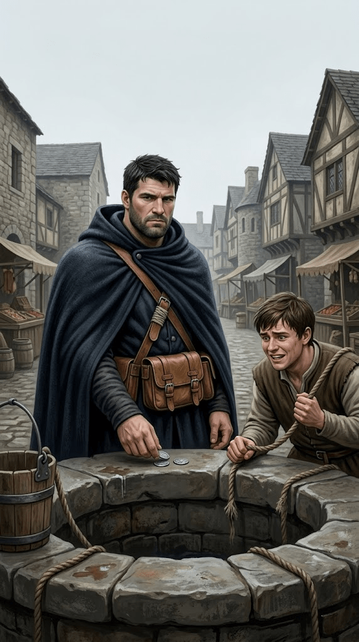
He found Jorin at the well.

The young man was drawing water in the particular way of someone performing a task they didn’t need to perform — the movements too deliberate, the focus too careful, the whole posture radiating the studied purposefulness of a person who needed to be somewhere with a reason. He was perhaps twenty-two, dark-haired, with a broad open face that had been designed by nature for uncomplicated emotions and had since been required to host considerably more complicated ones than it had been built for.

He heard Breck coming — the size of him announcing itself in advance the way it always did, the particular displacement of air and attention that preceded him into any space — and his hands tightened on the well rope before he made the deliberate choice to release them.

Breck stopped a few paces away. Close enough to speak quietly. Far enough to leave the young man room to breathe.

“Jorin,” he said.

The young man looked at him with eyes that had been doing difficult calculations for some time and hadn’t yet arrived at a sum they could live with.

“I know who you are,” Jorin said. His voice was carefully level. “I know what happened in the alley last night.”

“Word travels.”

“In Crestfall it does.” He looked back at the well, at the rope in his hands, at the cold water moving in the stone depths below. “Pelk is telling people he fell.”

“I know.”

“Nobody believes him.”

“I know that too.”

The midday light was flat and pale, the sun somewhere behind the overcast making its presence felt without committing to visibility. Around the square the ordinary business of Crestfall continued its careful, head-down rhythm — the eleven stalls, the vendors who moved quickly and spoke quietly and packed early, the architecture of a town that had learned to need very little from any given day.

“You were on the west side of the magistrate’s building,” Breck said. “The second watch. The gap in the coverage runs from the eighth bell to the ninth.”

Jorin said nothing. His jaw was tight.

“You’ve been moving the patrol point,” Breck continued, his voice carrying no judgment, no accusation — simply the flat, accurate quality of a man reading a map he hadn’t drawn. “Not far. Not enough to be noticed. Just enough that the gap is there consistently.”

The silence that followed had a specific texture — the texture of a person standing at the edge of something they had been approaching for a long time and were only now close enough to feel the drop.

“I didn’t know what it would be for,” Jorin said finally. The words came out compressed, as though they’d been held under pressure and he’d only opened a small valve. “When I started. I just — I couldn’t be the reason someone got hurt. So I moved the point. Just in case.” He looked at Breck with the eyes of a man confessing something he’d never expected to say aloud. “I’ve been doing it for four months.”

Four months of small daily choices. Four months of moving a patrol point eight feet west and hoping it mattered to someone, someday, without knowing who or how or whether anything would ever come of it.

The ferryman, Breck thought, crossing the same water every day.

“The miller,” Breck said. “Aldric Moss.”

Jorin’s face changed. Something cracked open in it — not dramatically, the way things cracked open in stories, but the way they cracked open in real life, quietly and with considerable effort, the way a stone cracked when the frost got into it and worked its patient seasonal arithmetic.

“I didn’t know they were going to — ” He stopped. Started again. “I was told it was a property dispute. That he’d be questioned and released.” His hands had found the well rope again and were gripping it the way a man gripped the thing nearest to him when the ground shifted. “By the time I understood what had actually happened, I was already — I’d already — “

“You were already in,” Breck said.

“Yes.”

A sparrow landed on the well’s stone rim between them, regarded the situation with the frank indifference of a creature with no stake in it, and departed.

Breck looked at the young man — at the broad open face carrying its freight of accumulated wrong turns, at the hands that had been moving a patrol point eight feet west for four months on the slim, unspoken hope that it might someday matter. He thought about a book found in a waystation that had no reason to be extraordinary and had been extraordinary anyway. He thought about small things and the weight they carried without announcing it.

“What I’m going to do tonight,” he said, “requires that gap to be there.”

Jorin looked at him. His breathing was shallow, his eyes moving across Breck’s face with the rapid, desperate attention of a man trying to read the full terms of a document he hadn’t expected to be offered.

“And afterward?” he said.

“Afterward you’ll need to not be in Crestfall for a while.” Breck paused, considering the honest version of what came next. “Maybe a long while. You have family south of here?”

“My mother. In Brackfen. Two days’ walk.”

“Go to Brackfen.” He reached into the satchel’s secondary pouch — not the oilskin packet, something else, the money pouch, which was lighter than he preferred but held enough. He set two silver coins on the well’s stone rim beside the sparrow’s abandoned spot. “Tonight, after the eighth bell. Don’t take the main road.”

Jorin looked at the coins. Looked at Breck. Something moved through his expression — the complex, reluctant movement of a young man accepting that the story he was in had reached a point where small choices were no longer available and only large ones remained.

He picked up the coins.

“The gap will be there,” he said.

Breck nodded once. Picked up his satchel. Adjusted the strap across his chest in the habitual, unconscious way, his thumb brushing the bracelet as it passed — not checking it exactly, just acknowledging it, the way a man acknowledged the weight of a thing he’d decided to carry without putting it down.

He walked back across the square toward the inn.

Behind him, Jorin stood at the well with his rope and his water and his two silver coins and the specific quality of relief that came not from a burden being lifted but from finally understanding what the burden had always been preparing you for.

The water in the well moved in its cold stone dark, indifferent and continuous, going nowhere and arriving everywhere, the way water always did.

Enjoyed this story? Writing Lumenvale is how I pay my bills. If these stories are worth something to you, a $1 Ko-fi keeps the forge burning — and tells me this world is worth continuing. 👉 Buy Chadwick a coffee

#adventure #books #Breck #Crestfall #dailyprompt #dailyprompt2763 #DarkFantasy #DeadDelivery #EpicFantasy #fantasy #FantasyFiction #fiction #Free #FreeFantasyFiction #freeFantasyFictionOnline #FreeStory #Lumenvale #shortStory #thriller #writing