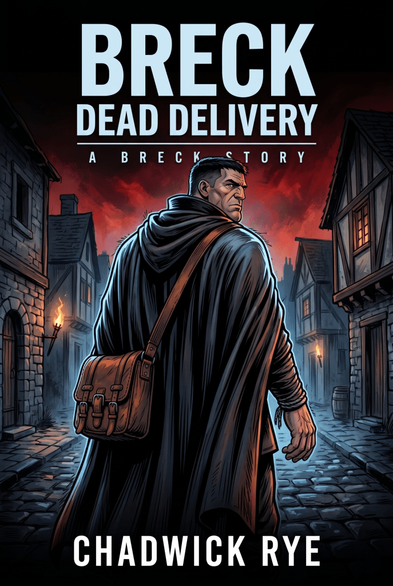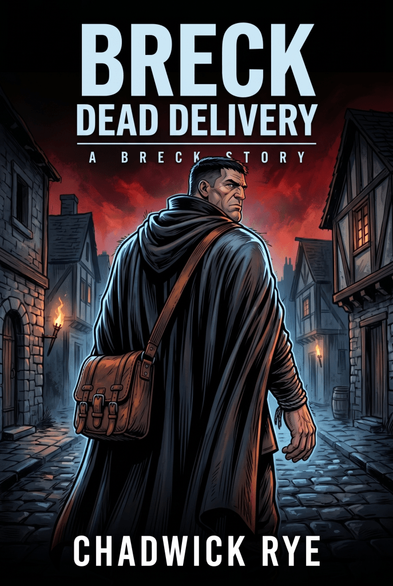
BRECK: Dead Delivery: Chapter Four
Daily writing prompt If you had to describe your ideal life, what would it look like?
View all responses BRECK: Dead Delivery
Chapter Four — What a Good Life Looks Like
Prompt: If you had to describe your ideal life, what would it look like? Tags: dailyprompt | Breck | Crestfall | Dead Delivery | Lumenvale
He was up before the inn.
That was how Breck preferred it — the hour before a building woke, when the timbers were still and the fire had burned to orange coal and the only sound was the river moving somewhere behind the rear yards, steady and indifferent to everything that happened on its banks. He dressed in the gray dark, moved the bracelet from his wrist back to the satchel strap, and went downstairs to the empty common room.
The innkeeper was already there.
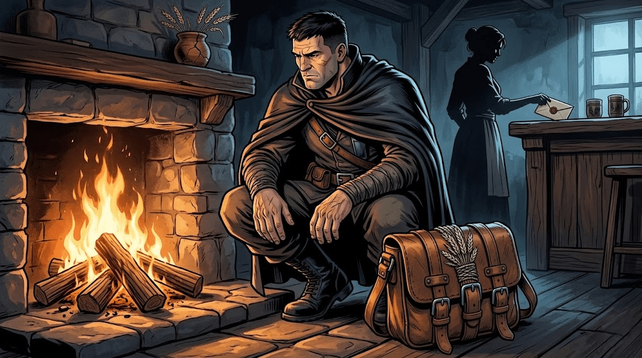
She was rebuilding the hearth fire alone, kneeling with the same focused economy she brought to everything, feeding kindling into the coal-bed with practiced hands. She looked up when his boot hit the bottom stair — not startled, just acknowledging — and went back to her work.
“Early,” she said.
“Habit.”
She nodded as though that explained everything, which for her it probably did. She had the look of a woman who had stopped requiring explanations from people a long time ago and found life simpler for it. Breck respected that. He pulled a stool to the far end of the hearth and sat, and they shared the silence companionably while the fire took hold.
She brought him bread and hard cheese without being asked. He ate slowly, watching the flames establish themselves, and after a while she refilled his cup and sat across from him with her own, and the morning came in gray and quiet through the front window.
“Been here long?” he asked eventually.
“Born here.” She wrapped both hands around her cup. “My mother ran this place before me. Her mother before that.” A pause. “Three generations of women keeping travelers fed and dry. There are worse things to be.”
“Is it what you would have chosen?”
She considered this with the seriousness it deserved. “I used to think about that when I was young. What I’d have chosen if I could have chosen anything.” The fire popped, and she watched the spark die on the hearthstone. “I’d have wanted something quieter, maybe. Smaller. A house with a good kitchen garden and enough custom to keep me busy but not so much it wore me down.” She smiled, brief and private. “Then my mother got sick and I took over the inn and twenty years went past and now I can’t imagine anything else.”
“That’s an answer,” Breck said.
“What about you.” She said it without expectation, the way people asked questions they didn’t necessarily need answered.
Breck turned his cup in his hands. The fire had established itself fully now, filling the hearth with steady warmth and the smell of clean wood smoke, and outside the window the sky was beginning to separate itself from the darkness by degrees.
He thought about it honestly, the way he rarely did — usually he kept that particular door shut, not out of anguish but out of pragmatism. An ideal life was a pleasant thing to want and a useless thing to carry on the road.
“A house,” he said finally. “Nothing large. Stone, if I could manage it, so it stayed warm in winter. South-facing, for the light.” He paused. “A kitchen with a proper hearth. A table big enough to work at. A room for guests, if anyone came.” Another pause, longer. “A dog, probably. Something big and useless and glad to see me when I came in.”
The innkeeper smiled properly this time. “That’s a quiet life for a man your size.”
“Quiet suits me.”
“Where?”
“Somewhere the roads aren’t too close. Close enough to walk to a market, far enough that you can’t hear the cart traffic in the morning.” He set the cup down. “Somewhere I hadn’t been before. So there was nothing I already knew about it.”
She studied him across the fire. The quality of her attention had changed — not sharper exactly, but deeper, the way a person listened when they recognized something they’d heard before in a different voice.
“And the work?” she asked. “In this quiet house. What would you do?”
Breck was quiet for a moment. Through the window, the first real light was touching the rooftops of Crestfall, turning the wet slate from black to the color of old pewter. Somewhere in the building above them, the first guests were beginning to stir — the creak of a floorboard, the sound of water poured from a pitcher.
“Something that stayed finished,” he said. “Whatever I made in the morning, I’d want it to still be made in the evening.” He turned the cup once more. “Courier work — you deliver and it’s delivered and tomorrow there’s another delivery. There’s no accumulation. Nothing you can stand back from and see.” He paused. “I’d want to make something that lasted.”
“Like what?”
“I don’t know yet.” He said it plainly, without apology. “I know what I’m good at. I don’t know what I’d be good at if I stopped doing that.”
The innkeeper nodded slowly, as though this was among the more honest things she’d heard in some time. She rose to stir the fire, and the coals shifted and breathed orange, and the warmth in the room increased by a degree.
“The man who was here last night,” Breck said. “Corner table. Left side door.”
Her stirring slowed. Didn’t stop.
“Drav,” she said. The name came out flat, stripped of everything that wasn’t pure fact. “He’s been in Crestfall six months. Came with two others in the first week of autumn.”
“He work for the magistrate.”
“He works for whoever pays him.” She set the poker down carefully. “The magistrate pays him.”
“What does he do.”
“Whatever needs doing.” She turned back to face him. The warmth in her expression hadn’t gone exactly, but something had moved behind it — the way a fire looks when a cloud passes over the sun. “He’s not like the others. The others are loud. They drink and they push and you know exactly what you’re dealing with.” She paused. “Drav just — appears. When there’s a problem that needs to stop being a problem.”
“Like the miller.”
The fire crackled between them. Outside, the first cart of the morning was rolling down the main road, its iron-rimmed wheels loud on the wet cobblestone, and then it passed and the quiet came back.
“Like the miller,” she said.
Breck stood. He was a full head taller than her, maybe more, and in the low-ceilinged common room he filled the space above the hearthlight in a way that should have felt threatening and somehow didn’t — the stillness of him absorbing his own scale, the way large water absorbs weather.
“My document,” he said. “The clerk said morning.”
“The magistrate’s office opens at the second bell.” She looked at him steadily. “You could be on the north road before the third.”
“I could.”
She held his gaze for a moment. Then she turned back to the fire, and her hands resumed their work, and the subject was closed in the way that subjects closed between people who understood each other without requiring confirmation.
Breck put on his cloak, settled the satchel across his chest, and moved the bracelet once, the way he always did — checking it without knowing he was checking it, the old reflex, the one that lived below thought. It was pale in the firelight. Small against the worn leather of the strap.
He walked to the door and opened it onto the cold morning air, and Crestfall lay before him under its pewter sky, quiet and watchful and waiting to see what he would do.
He stood in the doorway for a moment, the fire at his back and the empty square ahead.
A quiet life. A stone house. South-facing. A dog.
Something that stayed finished.
He stepped out into the cold and pulled the door shut behind him.
Not toward the north road.
BRECK: Dead Delivery
Chapter Four — What a Good Life Looks Like
Prompt: If you had to describe your ideal life, what would it look like? Tags: dailyprompt | Breck | Crestfall | Dead Delivery | Lumenvale
He was up before the inn.
That was how Breck preferred it — the hour before a building woke, when the timbers were still and the fire had burned to orange coal and the only sound was the river moving somewhere behind the rear yards, steady and indifferent to everything that happened on its banks. He dressed in the gray dark, moved the bracelet from his wrist back to the satchel strap, and went downstairs to the empty common room.
The innkeeper was already there.
She was rebuilding the hearth fire alone, kneeling with the same focused economy she brought to everything, feeding kindling into the coal-bed with practiced hands. She looked up when his boot hit the bottom stair — not startled, just acknowledging — and went back to her work.
“Early,” she said.
“Habit.”
She nodded as though that explained everything, which for her it probably did. She had the look of a woman who had stopped requiring explanations from people a long time ago and found life simpler for it. Breck respected that. He pulled a stool to the far end of the hearth and sat, and they shared the silence companionably while the fire took hold.
She brought him bread and hard cheese without being asked. He ate slowly, watching the flames establish themselves, and after a while she refilled his cup and sat across from him with her own, and the morning came in gray and quiet through the front window.
“Been here long?” he asked eventually.
“Born here.” She wrapped both hands around her cup. “My mother ran this place before me. Her mother before that.” A pause. “Three generations of women keeping travelers fed and dry. There are worse things to be.”
“Is it what you would have chosen?”
She considered this with the seriousness it deserved. “I used to think about that when I was young. What I’d have chosen if I could have chosen anything.” The fire popped, and she watched the spark die on the hearthstone. “I’d have wanted something quieter, maybe. Smaller. A house with a good kitchen garden and enough custom to keep me busy but not so much it wore me down.” She smiled, brief and private. “Then my mother got sick and I took over the inn and twenty years went past and now I can’t imagine anything else.”
“That’s an answer,” Breck said.
“What about you.” She said it without expectation, the way people asked questions they didn’t necessarily need answered.
Breck turned his cup in his hands. The fire had established itself fully now, filling the hearth with steady warmth and the smell of clean wood smoke, and outside the window the sky was beginning to separate itself from the darkness by degrees.
He thought about it honestly, the way he rarely did — usually he kept that particular door shut, not out of anguish but out of pragmatism. An ideal life was a pleasant thing to want and a useless thing to carry on the road.
“A house,” he said finally. “Nothing large. Stone, if I could manage it, so it stayed warm in winter. South-facing, for the light.” He paused. “A kitchen with a proper hearth. A table big enough to work at. A room for guests, if anyone came.” Another pause, longer. “A dog, probably. Something big and useless and glad to see me when I came in.”
The innkeeper smiled properly this time. “That’s a quiet life for a man your size.”
“Quiet suits me.”
“Where?”
“Somewhere the roads aren’t too close. Close enough to walk to a market, far enough that you can’t hear the cart traffic in the morning.” He set the cup down. “Somewhere I hadn’t been before. So there was nothing I already knew about it.”
She studied him across the fire. The quality of her attention had changed — not sharper exactly, but deeper, the way a person listened when they recognized something they’d heard before in a different voice.
“And the work?” she asked. “In this quiet house. What would you do?”
Breck was quiet for a moment. Through the window, the first real light was touching the rooftops of Crestfall, turning the wet slate from black to the color of old pewter. Somewhere in the building above them, the first guests were beginning to stir — the creak of a floorboard, the sound of water poured from a pitcher.
“Something that stayed finished,” he said. “Whatever I made in the morning, I’d want it to still be made in the evening.” He turned the cup once more. “Courier work — you deliver and it’s delivered and tomorrow there’s another delivery. There’s no accumulation. Nothing you can stand back from and see.” He paused. “I’d want to make something that lasted.”
“Like what?”
“I don’t know yet.” He said it plainly, without apology. “I know what I’m good at. I don’t know what I’d be good at if I stopped doing that.”
The innkeeper nodded slowly, as though this was among the more honest things she’d heard in some time. She rose to stir the fire, and the coals shifted and breathed orange, and the warmth in the room increased by a degree.
“The man who was here last night,” Breck said. “Corner table. Left side door.”
Her stirring slowed. Didn’t stop.
“Drav,” she said. The name came out flat, stripped of everything that wasn’t pure fact. “He’s been in Crestfall six months. Came with two others in the first week of autumn.”
“He work for the magistrate.”
“He works for whoever pays him.” She set the poker down carefully. “The magistrate pays him.”
“What does he do.”
“Whatever needs doing.” She turned back to face him. The warmth in her expression hadn’t gone exactly, but something had moved behind it — the way a fire looks when a cloud passes over the sun. “He’s not like the others. The others are loud. They drink and they push and you know exactly what you’re dealing with.” She paused. “Drav just — appears. When there’s a problem that needs to stop being a problem.”
“Like the miller.”
The fire crackled between them. Outside, the first cart of the morning was rolling down the main road, its iron-rimmed wheels loud on the wet cobblestone, and then it passed and the quiet came back.
“Like the miller,” she said.
Breck stood. He was a full head taller than her, maybe more, and in the low-ceilinged common room he filled the space above the hearthlight in a way that should have felt threatening and somehow didn’t — the stillness of him absorbing his own scale, the way large water absorbs weather.
“My document,” he said. “The clerk said morning.”
“The magistrate’s office opens at the second bell.” She looked at him steadily. “You could be on the north road before the third.”
“I could.”
She held his gaze for a moment. Then she turned back to the fire, and her hands resumed their work, and the subject was closed in the way that subjects closed between people who understood each other without requiring confirmation.
Breck put on his cloak, settled the satchel across his chest, and moved the bracelet once, the way he always did — checking it without knowing he was checking it, the old reflex, the one that lived below thought. It was pale in the firelight. Small against the worn leather of the strap.
He walked to the door and opened it onto the cold morning air, and Crestfall lay before him under its pewter sky, quiet and watchful and waiting to see what he would do.
He stood in the doorway for a moment, the fire at his back and the empty square ahead.
A quiet life. A stone house. South-facing. A dog.
Something that stayed finished.
He stepped out into the cold and pulled the door shut behind him.
Not toward the north road.
BRECK: Dead Delivery
Chapter Four — What a Good Life Looks Like
Prompt: If you had to describe your ideal life, what would it look like? Tags: dailyprompt | Breck | Crestfall | Dead Delivery | Lumenvale
He was up before the inn.
That was how Breck preferred it — the hour before a building woke, when the timbers were still and the fire had burned to orange coal and the only sound was the river moving somewhere behind the rear yards, steady and indifferent to everything that happened on its banks. He dressed in the gray dark, moved the bracelet from his wrist back to the satchel strap, and went downstairs to the empty common room.
The innkeeper was already there.
She was rebuilding the hearth fire alone, kneeling with the same focused economy she brought to everything, feeding kindling into the coal-bed with practiced hands. She looked up when his boot hit the bottom stair — not startled, just acknowledging — and went back to her work.
“Early,” she said.
“Habit.”
She nodded as though that explained everything, which for her it probably did. She had the look of a woman who had stopped requiring explanations from people a long time ago and found life simpler for it. Breck respected that. He pulled a stool to the far end of the hearth and sat, and they shared the silence companionably while the fire took hold.
She brought him bread and hard cheese without being asked. He ate slowly, watching the flames establish themselves, and after a while she refilled his cup and sat across from him with her own, and the morning came in gray and quiet through the front window.
“Been here long?” he asked eventually.
“Born here.” She wrapped both hands around her cup. “My mother ran this place before me. Her mother before that.” A pause. “Three generations of women keeping travelers fed and dry. There are worse things to be.”
“Is it what you would have chosen?”
She considered this with the seriousness it deserved. “I used to think about that when I was young. What I’d have chosen if I could have chosen anything.” The fire popped, and she watched the spark die on the hearthstone. “I’d have wanted something quieter, maybe. Smaller. A house with a good kitchen garden and enough custom to keep me busy but not so much it wore me down.” She smiled, brief and private. “Then my mother got sick and I took over the inn and twenty years went past and now I can’t imagine anything else.”
“That’s an answer,” Breck said.
“What about you.” She said it without expectation, the way people asked questions they didn’t necessarily need answered.
Breck turned his cup in his hands. The fire had established itself fully now, filling the hearth with steady warmth and the smell of clean wood smoke, and outside the window the sky was beginning to separate itself from the darkness by degrees.
He thought about it honestly, the way he rarely did — usually he kept that particular door shut, not out of anguish but out of pragmatism. An ideal life was a pleasant thing to want and a useless thing to carry on the road.
“A house,” he said finally. “Nothing large. Stone, if I could manage it, so it stayed warm in winter. South-facing, for the light.” He paused. “A kitchen with a proper hearth. A table big enough to work at. A room for guests, if anyone came.” Another pause, longer. “A dog, probably. Something big and useless and glad to see me when I came in.”
The innkeeper smiled properly this time. “That’s a quiet life for a man your size.”
“Quiet suits me.”
“Where?”
“Somewhere the roads aren’t too close. Close enough to walk to a market, far enough that you can’t hear the cart traffic in the morning.” He set the cup down. “Somewhere I hadn’t been before. So there was nothing I already knew about it.”
She studied him across the fire. The quality of her attention had changed — not sharper exactly, but deeper, the way a person listened when they recognized something they’d heard before in a different voice.
“And the work?” she asked. “In this quiet house. What would you do?”
Breck was quiet for a moment. Through the window, the first real light was touching the rooftops of Crestfall, turning the wet slate from black to the color of old pewter. Somewhere in the building above them, the first guests were beginning to stir — the creak of a floorboard, the sound of water poured from a pitcher.
“Something that stayed finished,” he said. “Whatever I made in the morning, I’d want it to still be made in the evening.” He turned the cup once more. “Courier work — you deliver and it’s delivered and tomorrow there’s another delivery. There’s no accumulation. Nothing you can stand back from and see.” He paused. “I’d want to make something that lasted.”
“Like what?”
“I don’t know yet.” He said it plainly, without apology. “I know what I’m good at. I don’t know what I’d be good at if I stopped doing that.”
The innkeeper nodded slowly, as though this was among the more honest things she’d heard in some time. She rose to stir the fire, and the coals shifted and breathed orange, and the warmth in the room increased by a degree.
“The man who was here last night,” Breck said. “Corner table. Left side door.”
Her stirring slowed. Didn’t stop.
“Drav,” she said. The name came out flat, stripped of everything that wasn’t pure fact. “He’s been in Crestfall six months. Came with two others in the first week of autumn.”
“He work for the magistrate.”
“He works for whoever pays him.” She set the poker down carefully. “The magistrate pays him.”
“What does he do.”
“Whatever needs doing.” She turned back to face him. The warmth in her expression hadn’t gone exactly, but something had moved behind it — the way a fire looks when a cloud passes over the sun. “He’s not like the others. The others are loud. They drink and they push and you know exactly what you’re dealing with.” She paused. “Drav just — appears. When there’s a problem that needs to stop being a problem.”
“Like the miller.”
The fire crackled between them. Outside, the first cart of the morning was rolling down the main road, its iron-rimmed wheels loud on the wet cobblestone, and then it passed and the quiet came back.
“Like the miller,” she said.
Breck stood. He was a full head taller than her, maybe more, and in the low-ceilinged common room he filled the space above the hearthlight in a way that should have felt threatening and somehow didn’t — the stillness of him absorbing his own scale, the way large water absorbs weather.
“My document,” he said. “The clerk said morning.”
“The magistrate’s office opens at the second bell.” She looked at him steadily. “You could be on the north road before the third.”
“I could.”
She held his gaze for a moment. Then she turned back to the fire, and her hands resumed their work, and the subject was closed in the way that subjects closed between people who understood each other without requiring confirmation.
Breck put on his cloak, settled the satchel across his chest, and moved the bracelet once, the way he always did — checking it without knowing he was checking it, the old reflex, the one that lived below thought. It was pale in the firelight. Small against the worn leather of the strap.
He walked to the door and opened it onto the cold morning air, and Crestfall lay before him under its pewter sky, quiet and watchful and waiting to see what he would do.
He stood in the doorway for a moment, the fire at his back and the empty square ahead.
A quiet life. A stone house. South-facing. A dog.
Something that stayed finished.
He stepped out into the cold and pulled the door shut behind him.
Not toward the north road.
☕ Enjoyed this story? Writing Lumenvale is how I pay my bills. If these stories are worth something to you, a $1 Ko-fi keeps the forge burning — and tells me this world is worth continuing. 👉 Buy Chadwick a coffee
#books #Breck #Crestfall #dailyprompt #dailyprompt2756 #DarkFantasy #DeadDelivery #fantasy #FantasyFiction #fiction #Free #FreeFantasyFiction #freeFantasyFictionOnline #FreeStory #Lumenvale #NobleDark #shortStory #StrongMaleLead #writing