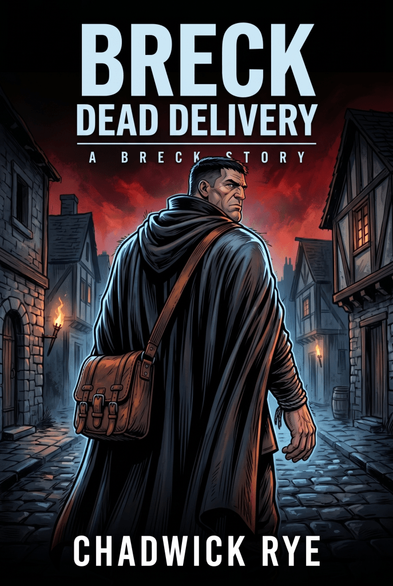
BRECK: Dead Delivery: Chapter Four

Daily writing prompt If you had to describe your ideal life, what would it look like? View all responses

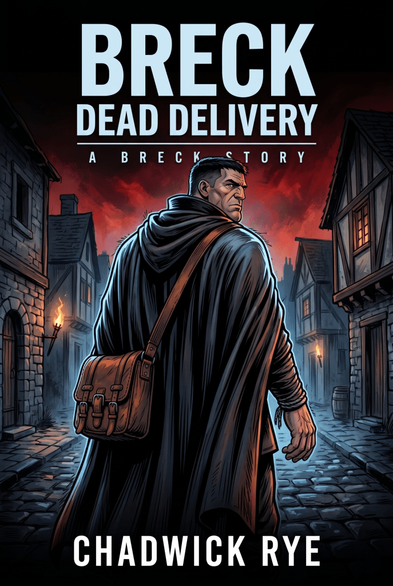
BRECK: Dead Delivery

Chapter Four — What a Good Life Looks Like

Prompt: If you had to describe your ideal life, what would it look like? Tags: dailyprompt | Breck | Crestfall | Dead Delivery | Lumenvale

He was up before the inn.

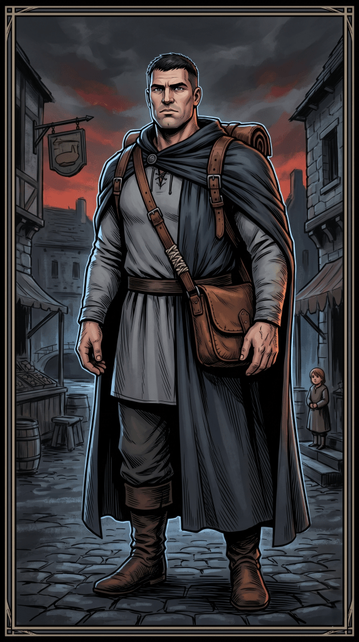
That was how Breck preferred it — the hour before a building woke, when the timbers were still and the fire had burned to orange coal and the only sound was the river moving somewhere behind the rear yards, steady and indifferent to everything that happened on its banks. He dressed in the gray dark, moved the bracelet from his wrist back to the satchel strap, and went downstairs to the empty common room.

The innkeeper was already there.

She was rebuilding the hearth fire alone, kneeling with the same focused economy she brought to everything, feeding kindling into the coal-bed with practiced hands. She looked up when his boot hit the bottom stair — not startled, just acknowledging — and went back to her work.

“Early,” she said.

“Habit.”

She nodded as though that explained everything, which for her it probably did. She had the look of a woman who had stopped requiring explanations from people a long time ago and found life simpler for it. Breck respected that. He pulled a stool to the far end of the hearth and sat, and they shared the silence companionably while the fire took hold.

She brought him bread and hard cheese without being asked. He ate slowly, watching the flames establish themselves, and after a while she refilled his cup and sat across from him with her own, and the morning came in gray and quiet through the front window.

“Been here long?” he asked eventually.

“Born here.” She wrapped both hands around her cup. “My mother ran this place before me. Her mother before that.” A pause. “Three generations of women keeping travelers fed and dry. There are worse things to be.”

“Is it what you would have chosen?”

She considered this with the seriousness it deserved. “I used to think about that when I was young. What I’d have chosen if I could have chosen anything.” The fire popped, and she watched the spark die on the hearthstone. “I’d have wanted something quieter, maybe. Smaller. A house with a good kitchen garden and enough custom to keep me busy but not so much it wore me down.” She smiled, brief and private. “Then my mother got sick and I took over the inn and twenty years went past and now I can’t imagine anything else.”

“That’s an answer,” Breck said.

“What about you.” She said it without expectation, the way people asked questions they didn’t necessarily need answered.

Breck turned his cup in his hands. The fire had established itself fully now, filling the hearth with steady warmth and the smell of clean wood smoke, and outside the window the sky was beginning to separate itself from the darkness by degrees.

He thought about it honestly, the way he rarely did — usually he kept that particular door shut, not out of anguish but out of pragmatism. An ideal life was a pleasant thing to want and a useless thing to carry on the road.

“A house,” he said finally. “Nothing large. Stone, if I could manage it, so it stayed warm in winter. South-facing, for the light.” He paused. “A kitchen with a proper hearth. A table big enough to work at. A room for guests, if anyone came.” Another pause, longer. “A dog, probably. Something big and useless and glad to see me when I came in.”

The innkeeper smiled properly this time. “That’s a quiet life for a man your size.”

“Quiet suits me.”

“Where?”

“Somewhere the roads aren’t too close. Close enough to walk to a market, far enough that you can’t hear the cart traffic in the morning.” He set the cup down. “Somewhere I hadn’t been before. So there was nothing I already knew about it.”

She studied him across the fire. The quality of her attention had changed — not sharper exactly, but deeper, the way a person listened when they recognized something they’d heard before in a different voice.

“And the work?” she asked. “In this quiet house. What would you do?”

Breck was quiet for a moment. Through the window, the first real light was touching the rooftops of Crestfall, turning the wet slate from black to the color of old pewter. Somewhere in the building above them, the first guests were beginning to stir — the creak of a floorboard, the sound of water poured from a pitcher.

“Something that stayed finished,” he said. “Whatever I made in the morning, I’d want it to still be made in the evening.” He turned the cup once more. “Courier work — you deliver and it’s delivered and tomorrow there’s another delivery. There’s no accumulation. Nothing you can stand back from and see.” He paused. “I’d want to make something that lasted.”

“Like what?”

“I don’t know yet.” He said it plainly, without apology. “I know what I’m good at. I don’t know what I’d be good at if I stopped doing that.”

The innkeeper nodded slowly, as though this was among the more honest things she’d heard in some time. She rose to stir the fire, and the coals shifted and breathed orange, and the warmth in the room increased by a degree.

“The man who was here last night,” Breck said. “Corner table. Left side door.”

Her stirring slowed. Didn’t stop.

“Drav,” she said. The name came out flat, stripped of everything that wasn’t pure fact. “He’s been in Crestfall six months. Came with two others in the first week of autumn.”

“He work for the magistrate.”

“He works for whoever pays him.” She set the poker down carefully. “The magistrate pays him.”

“What does he do.”

“Whatever needs doing.” She turned back to face him. The warmth in her expression hadn’t gone exactly, but something had moved behind it — the way a fire looks when a cloud passes over the sun. “He’s not like the others. The others are loud. They drink and they push and you know exactly what you’re dealing with.” She paused. “Drav just — appears. When there’s a problem that needs to stop being a problem.”

“Like the miller.”

The fire crackled between them. Outside, the first cart of the morning was rolling down the main road, its iron-rimmed wheels loud on the wet cobblestone, and then it passed and the quiet came back.

“Like the miller,” she said.

Breck stood. He was a full head taller than her, maybe more, and in the low-ceilinged common room he filled the space above the hearthlight in a way that should have felt threatening and somehow didn’t — the stillness of him absorbing his own scale, the way large water absorbs weather.

“My document,” he said. “The clerk said morning.”

“The magistrate’s office opens at the second bell.” She looked at him steadily. “You could be on the north road before the third.”

“I could.”

She held his gaze for a moment. Then she turned back to the fire, and her hands resumed their work, and the subject was closed in the way that subjects closed between people who understood each other without requiring confirmation.

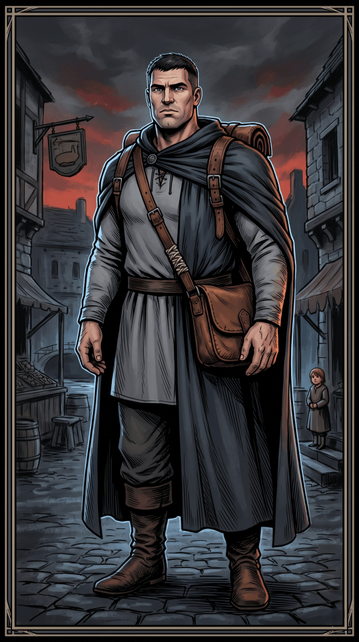
Breck put on his cloak, settled the satchel across his chest, and moved the bracelet once, the way he always did — checking it without knowing he was checking it, the old reflex, the one that lived below thought. It was pale in the firelight. Small against the worn leather of the strap.

He walked to the door and opened it onto the cold morning air, and Crestfall lay before him under its pewter sky, quiet and watchful and waiting to see what he would do.

He stood in the doorway for a moment, the fire at his back and the empty square ahead.

A quiet life. A stone house. South-facing. A dog.

Something that stayed finished.

He stepped out into the cold and pulled the door shut behind him.

Not toward the north road.

BRECK: Dead Delivery

Chapter Four — What a Good Life Looks Like

Prompt: If you had to describe your ideal life, what would it look like? Tags: dailyprompt | Breck | Crestfall | Dead Delivery | Lumenvale

He was up before the inn.

That was how Breck preferred it — the hour before a building woke, when the timbers were still and the fire had burned to orange coal and the only sound was the river moving somewhere behind the rear yards, steady and indifferent to everything that happened on its banks. He dressed in the gray dark, moved the bracelet from his wrist back to the satchel strap, and went downstairs to the empty common room.

The innkeeper was already there.

She was rebuilding the hearth fire alone, kneeling with the same focused economy she brought to everything, feeding kindling into the coal-bed with practiced hands. She looked up when his boot hit the bottom stair — not startled, just acknowledging — and went back to her work.

“Early,” she said.

“Habit.”

She nodded as though that explained everything, which for her it probably did. She had the look of a woman who had stopped requiring explanations from people a long time ago and found life simpler for it. Breck respected that. He pulled a stool to the far end of the hearth and sat, and they shared the silence companionably while the fire took hold.

She brought him bread and hard cheese without being asked. He ate slowly, watching the flames establish themselves, and after a while she refilled his cup and sat across from him with her own, and the morning came in gray and quiet through the front window.

“Been here long?” he asked eventually.

“Born here.” She wrapped both hands around her cup. “My mother ran this place before me. Her mother before that.” A pause. “Three generations of women keeping travelers fed and dry. There are worse things to be.”

“Is it what you would have chosen?”

She considered this with the seriousness it deserved. “I used to think about that when I was young. What I’d have chosen if I could have chosen anything.” The fire popped, and she watched the spark die on the hearthstone. “I’d have wanted something quieter, maybe. Smaller. A house with a good kitchen garden and enough custom to keep me busy but not so much it wore me down.” She smiled, brief and private. “Then my mother got sick and I took over the inn and twenty years went past and now I can’t imagine anything else.”

“That’s an answer,” Breck said.

“What about you.” She said it without expectation, the way people asked questions they didn’t necessarily need answered.

Breck turned his cup in his hands. The fire had established itself fully now, filling the hearth with steady warmth and the smell of clean wood smoke, and outside the window the sky was beginning to separate itself from the darkness by degrees.

He thought about it honestly, the way he rarely did — usually he kept that particular door shut, not out of anguish but out of pragmatism. An ideal life was a pleasant thing to want and a useless thing to carry on the road.

“A house,” he said finally. “Nothing large. Stone, if I could manage it, so it stayed warm in winter. South-facing, for the light.” He paused. “A kitchen with a proper hearth. A table big enough to work at. A room for guests, if anyone came.” Another pause, longer. “A dog, probably. Something big and useless and glad to see me when I came in.”

The innkeeper smiled properly this time. “That’s a quiet life for a man your size.”

“Quiet suits me.”

“Where?”

“Somewhere the roads aren’t too close. Close enough to walk to a market, far enough that you can’t hear the cart traffic in the morning.” He set the cup down. “Somewhere I hadn’t been before. So there was nothing I already knew about it.”

She studied him across the fire. The quality of her attention had changed — not sharper exactly, but deeper, the way a person listened when they recognized something they’d heard before in a different voice.

“And the work?” she asked. “In this quiet house. What would you do?”

Breck was quiet for a moment. Through the window, the first real light was touching the rooftops of Crestfall, turning the wet slate from black to the color of old pewter. Somewhere in the building above them, the first guests were beginning to stir — the creak of a floorboard, the sound of water poured from a pitcher.

“Something that stayed finished,” he said. “Whatever I made in the morning, I’d want it to still be made in the evening.” He turned the cup once more. “Courier work — you deliver and it’s delivered and tomorrow there’s another delivery. There’s no accumulation. Nothing you can stand back from and see.” He paused. “I’d want to make something that lasted.”

“Like what?”

“I don’t know yet.” He said it plainly, without apology. “I know what I’m good at. I don’t know what I’d be good at if I stopped doing that.”

The innkeeper nodded slowly, as though this was among the more honest things she’d heard in some time. She rose to stir the fire, and the coals shifted and breathed orange, and the warmth in the room increased by a degree.

“The man who was here last night,” Breck said. “Corner table. Left side door.”

Her stirring slowed. Didn’t stop.

“Drav,” she said. The name came out flat, stripped of everything that wasn’t pure fact. “He’s been in Crestfall six months. Came with two others in the first week of autumn.”

“He work for the magistrate.”

“He works for whoever pays him.” She set the poker down carefully. “The magistrate pays him.”

“What does he do.”

“Whatever needs doing.” She turned back to face him. The warmth in her expression hadn’t gone exactly, but something had moved behind it — the way a fire looks when a cloud passes over the sun. “He’s not like the others. The others are loud. They drink and they push and you know exactly what you’re dealing with.” She paused. “Drav just — appears. When there’s a problem that needs to stop being a problem.”

“Like the miller.”

The fire crackled between them. Outside, the first cart of the morning was rolling down the main road, its iron-rimmed wheels loud on the wet cobblestone, and then it passed and the quiet came back.

“Like the miller,” she said.

Breck stood. He was a full head taller than her, maybe more, and in the low-ceilinged common room he filled the space above the hearthlight in a way that should have felt threatening and somehow didn’t — the stillness of him absorbing his own scale, the way large water absorbs weather.

“My document,” he said. “The clerk said morning.”

“The magistrate’s office opens at the second bell.” She looked at him steadily. “You could be on the north road before the third.”

“I could.”

She held his gaze for a moment. Then she turned back to the fire, and her hands resumed their work, and the subject was closed in the way that subjects closed between people who understood each other without requiring confirmation.

Breck put on his cloak, settled the satchel across his chest, and moved the bracelet once, the way he always did — checking it without knowing he was checking it, the old reflex, the one that lived below thought. It was pale in the firelight. Small against the worn leather of the strap.

He walked to the door and opened it onto the cold morning air, and Crestfall lay before him under its pewter sky, quiet and watchful and waiting to see what he would do.

He stood in the doorway for a moment, the fire at his back and the empty square ahead.

A quiet life. A stone house. South-facing. A dog.

Something that stayed finished.

He stepped out into the cold and pulled the door shut behind him.

Not toward the north road.

BRECK: Dead Delivery

Chapter Four — What a Good Life Looks Like

Prompt: If you had to describe your ideal life, what would it look like? Tags: dailyprompt | Breck | Crestfall | Dead Delivery | Lumenvale

He was up before the inn.

That was how Breck preferred it — the hour before a building woke, when the timbers were still and the fire had burned to orange coal and the only sound was the river moving somewhere behind the rear yards, steady and indifferent to everything that happened on its banks. He dressed in the gray dark, moved the bracelet from his wrist back to the satchel strap, and went downstairs to the empty common room.

The innkeeper was already there.

She was rebuilding the hearth fire alone, kneeling with the same focused economy she brought to everything, feeding kindling into the coal-bed with practiced hands. She looked up when his boot hit the bottom stair — not startled, just acknowledging — and went back to her work.

“Early,” she said.

“Habit.”

She nodded as though that explained everything, which for her it probably did. She had the look of a woman who had stopped requiring explanations from people a long time ago and found life simpler for it. Breck respected that. He pulled a stool to the far end of the hearth and sat, and they shared the silence companionably while the fire took hold.

She brought him bread and hard cheese without being asked. He ate slowly, watching the flames establish themselves, and after a while she refilled his cup and sat across from him with her own, and the morning came in gray and quiet through the front window.

“Been here long?” he asked eventually.

“Born here.” She wrapped both hands around her cup. “My mother ran this place before me. Her mother before that.” A pause. “Three generations of women keeping travelers fed and dry. There are worse things to be.”

“Is it what you would have chosen?”

She considered this with the seriousness it deserved. “I used to think about that when I was young. What I’d have chosen if I could have chosen anything.” The fire popped, and she watched the spark die on the hearthstone. “I’d have wanted something quieter, maybe. Smaller. A house with a good kitchen garden and enough custom to keep me busy but not so much it wore me down.” She smiled, brief and private. “Then my mother got sick and I took over the inn and twenty years went past and now I can’t imagine anything else.”

“That’s an answer,” Breck said.

“What about you.” She said it without expectation, the way people asked questions they didn’t necessarily need answered.

Breck turned his cup in his hands. The fire had established itself fully now, filling the hearth with steady warmth and the smell of clean wood smoke, and outside the window the sky was beginning to separate itself from the darkness by degrees.

He thought about it honestly, the way he rarely did — usually he kept that particular door shut, not out of anguish but out of pragmatism. An ideal life was a pleasant thing to want and a useless thing to carry on the road.

“A house,” he said finally. “Nothing large. Stone, if I could manage it, so it stayed warm in winter. South-facing, for the light.” He paused. “A kitchen with a proper hearth. A table big enough to work at. A room for guests, if anyone came.” Another pause, longer. “A dog, probably. Something big and useless and glad to see me when I came in.”

The innkeeper smiled properly this time. “That’s a quiet life for a man your size.”

“Quiet suits me.”

“Where?”

“Somewhere the roads aren’t too close. Close enough to walk to a market, far enough that you can’t hear the cart traffic in the morning.” He set the cup down. “Somewhere I hadn’t been before. So there was nothing I already knew about it.”

She studied him across the fire. The quality of her attention had changed — not sharper exactly, but deeper, the way a person listened when they recognized something they’d heard before in a different voice.

“And the work?” she asked. “In this quiet house. What would you do?”

Breck was quiet for a moment. Through the window, the first real light was touching the rooftops of Crestfall, turning the wet slate from black to the color of old pewter. Somewhere in the building above them, the first guests were beginning to stir — the creak of a floorboard, the sound of water poured from a pitcher.

“Something that stayed finished,” he said. “Whatever I made in the morning, I’d want it to still be made in the evening.” He turned the cup once more. “Courier work — you deliver and it’s delivered and tomorrow there’s another delivery. There’s no accumulation. Nothing you can stand back from and see.” He paused. “I’d want to make something that lasted.”

“Like what?”

“I don’t know yet.” He said it plainly, without apology. “I know what I’m good at. I don’t know what I’d be good at if I stopped doing that.”

The innkeeper nodded slowly, as though this was among the more honest things she’d heard in some time. She rose to stir the fire, and the coals shifted and breathed orange, and the warmth in the room increased by a degree.

“The man who was here last night,” Breck said. “Corner table. Left side door.”

Her stirring slowed. Didn’t stop.

“Drav,” she said. The name came out flat, stripped of everything that wasn’t pure fact. “He’s been in Crestfall six months. Came with two others in the first week of autumn.”

“He work for the magistrate.”

“He works for whoever pays him.” She set the poker down carefully. “The magistrate pays him.”

“What does he do.”

“Whatever needs doing.” She turned back to face him. The warmth in her expression hadn’t gone exactly, but something had moved behind it — the way a fire looks when a cloud passes over the sun. “He’s not like the others. The others are loud. They drink and they push and you know exactly what you’re dealing with.” She paused. “Drav just — appears. When there’s a problem that needs to stop being a problem.”

“Like the miller.”

The fire crackled between them. Outside, the first cart of the morning was rolling down the main road, its iron-rimmed wheels loud on the wet cobblestone, and then it passed and the quiet came back.

“Like the miller,” she said.

Breck stood. He was a full head taller than her, maybe more, and in the low-ceilinged common room he filled the space above the hearthlight in a way that should have felt threatening and somehow didn’t — the stillness of him absorbing his own scale, the way large water absorbs weather.

“My document,” he said. “The clerk said morning.”

“The magistrate’s office opens at the second bell.” She looked at him steadily. “You could be on the north road before the third.”

“I could.”

She held his gaze for a moment. Then she turned back to the fire, and her hands resumed their work, and the subject was closed in the way that subjects closed between people who understood each other without requiring confirmation.

Breck put on his cloak, settled the satchel across his chest, and moved the bracelet once, the way he always did — checking it without knowing he was checking it, the old reflex, the one that lived below thought. It was pale in the firelight. Small against the worn leather of the strap.

He walked to the door and opened it onto the cold morning air, and Crestfall lay before him under its pewter sky, quiet and watchful and waiting to see what he would do.

He stood in the doorway for a moment, the fire at his back and the empty square ahead.

A quiet life. A stone house. South-facing. A dog.

Something that stayed finished.

He stepped out into the cold and pulled the door shut behind him.

Not toward the north road.

Enjoyed this story? Writing Lumenvale is how I pay my bills. If these stories are worth something to you, a $1 Ko-fi keeps the forge burning — and tells me this world is worth continuing. 👉 Buy Chadwick a coffee

#books #Breck #Crestfall #dailyprompt #dailyprompt2756 #DarkFantasy #DeadDelivery #fantasy #FantasyFiction #fiction #Free #FreeFantasyFiction #freeFantasyFictionOnline #FreeStory #Lumenvale #NobleDark #shortStory #StrongMaleLead #writing

BRECK: Dead Delivery: Chapter Three

Daily writing prompt What is the best concert you have been to? View all responses

BRECK: Dead Delivery

Chapter Three — The Best Night of the Year

Prompt: What is the best concert you have been to? Tags: dailyprompt | Breck | Crestfall | Dead Delivery | Lumenvale

The inn was louder than he expected.

Breck stood in the doorway of The River’s Rest for a moment, reading the room before stepping into it — old habit, the kind that had kept him breathing through four years of war and a decade of roads that didn’t always want him on them. What he saw didn’t match the hollow, head-down town he’d been walking through all afternoon.

The common room was full.

Not the midday dozen. Every table taken, stools dragged in from the walls, people standing two deep near the bar with their cups held against their chests. The fire had been built up until it threw real heat and real light, and the smell of the place had changed entirely — warm bread and spilled ale and the particular close warmth of bodies that had come in out of the cold and decided to stay.

At the far end of the room, in the space where the hearth wall met the corner, a woman was playing.

She had a lap-harp, small and battered, the kind that had been repaired so many times its original wood was more memory than material. She played it with her eyes closed and her head slightly bowed, and the sound she was pulling from it was unlike anything Breck had heard from an instrument that size — something that lived in the chest rather than the ears, low and resonant and unhurried. Beside her, the hedge-mage from the afternoon sat with his elbows on his knees, watching her the way a man watches something he knows he doesn’t deserve to be near.

Breck found a space at the end of the bar. The innkeeper, a broad-shouldered woman in her fifties with the look of someone who had weathered considerable difficulty without being broken by it, set an ale in front of him without being asked.

“Every week?” he said, nodding toward the musician.

“Once a month.” The innkeeper’s voice was low, private, not for the room. “Maren comes through on the river circuit. Stays two nights, plays two nights, moves on.” She paused, wiping the bar in slow circles. “It’s the best thing that happens here anymore.”

Breck drank. Listened.

Maren played for two hours without a break.

She moved through songs Breck didn’t know the names of — valley ballads, older than any living singer, the kind passed down not through written collections but through memory and repetition and the particular faithfulness of people who understood that some things only survive if someone chooses to carry them. She played a river-song that made an old man near the fire put his face in his hands and stay that way for a while, and nobody looked at him for doing it. She played a marching air that had clearly been a soldier’s song once, stripped of its words and made into something quieter and more honest, and Breck recognized the bones of it even if the flesh had changed.

He set his cup down for that one and just listened.

It was the kind of music that didn’t ask anything from you. It didn’t demand feeling. It simply created a space where feeling could happen if it wanted to, and if it didn’t, that was acceptable too. Breck appreciated that. He’d sat through enough performances in rough campaign halls where traveling entertainers had worked very hard to manufacture emotion in men who had used up most of theirs, and the effort had always been worse than the silence.

This was different. This was someone who understood that the job wasn’t to move people. The job was to play honestly and let the room decide what to do with it.

He was most of the way through his second ale when he noticed the man in the corner.

He was sitting alone at a small table near the side door — not the main entrance, the side door, the one that opened onto the alley between the inn and the grain merchant next door. Late forties, lean in the way that suggested wire rather than waste, with a long jaw and a quality of stillness that Breck recognized the way you recognized a particular weather system: by what it did to the air around it.

The man wasn’t watching Maren. He was watching the room.

More precisely, he was cataloguing it — running his gaze across the crowd in the same unhurried, methodical way Breck had used at the door, reading exits, reading faces, filing everything away. He hadn’t looked at Breck yet. Or if he had, he’d done it in the gaps between Breck’s own observations, which meant he was either very good or very lucky.

Breck suspected very good.

The man had a cup in front of him that hadn’t moved in twenty minutes. His hands were still on the table. The scar ran from his jaw to his collarbone on the left side — old work, Aldenguard blade by the angle, the kind of cut that had been meant to finish someone and hadn’t managed it. He wore no insignia, no colors, nothing that marked him as anyone official. But the way he occupied the chair — weight distributed, feet placed, nothing locked in, everything available — was the posture of someone who had spent a long time in places where you needed to be able to move from sitting to standing without a breath between them.

He was the most dangerous person in the room. Breck was fairly confident the man had reached the same conclusion about him at roughly the same moment.

Their eyes met once — a single clean exchange, brief and total, the kind of assessment that took a fraction of a second between men who knew what they were looking for. The man’s expression didn’t change. Neither did Breck’s.

Then Maren shifted into a new song, something softer and older than anything she’d played yet, and the room leaned toward her as one body, and both men looked away.

Breck ate his meal and finished his ale and ordered water. Maren played until the fire burned low and the children at the front tables were asleep against their parents’ arms. When she finally set the harp down the room gave her the applause of people who had been holding it for two hours — not the loud, immediate kind, but something fuller and more considered, the sound of a crowd that had been somewhere and was only now returning to themselves.

He left coin on the bar that included something extra for Maren, folded under the cup where the innkeeper would find it. He didn’t look at the corner table as he moved toward the stairs.

He didn’t need to. The man hadn’t moved. He was still watching the room.

He would still be watching when Breck came back down in the morning. And the morning after that, if it came to it.

Breck climbed the stairs to his room, set the satchel on the chair by the door, and moved the bracelet from the strap to his wrist — too small to fit properly, so he looped it twice and let it rest loose. He did this every night. He didn’t think about why.

He lay down on the narrow bed and stared at the ceiling and thought about a miller who had asked the wrong questions and was now simply gone.

Outside, the third bell rang across the empty square.

Right on schedule.

Enjoyed this story? Writing Lumenvale is how I pay my bills. If these stories are worth something to you, a $1 Ko-fi keeps the forge burning — and tells me this world is worth continuing. 👉 Buy Chadwick a coffee

#books #Breck #Crestfall #dailyprompt #dailyprompt2755 #DarkFantasy #DeadDelivery #fantasy #FantasyFiction #fiction #Lumenvale #shortStory #writing

BRECK: Dead Delivery Chapter Two

Daily writing prompt Which is the best thing to do in your city? View all responses

BRECK: Dead Delivery

Chapter Two — The Best Thing To Do

Prompt: Which is the best thing to do in your city? Tags: dailyprompt | Breck | Crestfall | Dead Delivery | Lumenvale

The boy was still on the cooperage step when Breck crossed the square.

He’d been there an hour ago when Breck had gone into the inn, and he was there now, in the same position — elbows on knees, chin forward, watching the road with the kind of patience that didn’t belong on a twelve-year-old’s face. It was an old patience. The kind you didn’t grow naturally. The kind that got pressed into you from outside until it took the shape of whoever had done the pressing.

Breck stopped in front of him.

The boy looked up without flinching. That was notable too. Most children flinched when something Breck’s size stopped moving near them. This one just adjusted his gaze and waited, the way a much older person would, someone who had learned that flinching didn’t change outcomes.

“Cooperage closed?” Breck asked.

“Half days now.” The boy’s voice was even. “Since spring.”

“Your father’s?”

“Was.”

Breck let that sit for a moment. The word was doing a lot of work in a short sentence. He didn’t push it.

“I’m looking for the best thing to do in Crestfall,” he said. “Arrived this morning. Stuck until tomorrow. Someone in the inn pointed me toward the river walk.”

The boy looked at him for a long moment. Measuring something.

“The river walk’s fine,” he said. “If you like mud.”

“What would you suggest instead.”

The boy’s eyes moved — not to Breck’s face, but to the magistrate’s office at the far end of the square. A quick flick, reflexive, the kind of look a person threw at something they were trying not to look at. He caught himself doing it and looked back down at his boots.

“Best thing to do in Crestfall,” he said quietly, “is finish your business and leave before market close.”

“Why market close.”

The boy said nothing. He’d said everything he intended to say. The rest of it lived in the space between the words and Breck could either read it or not, and either way the boy wasn’t going to be the one who said it out loud in the open square in the middle of the afternoon.

Breck nodded once. Moved on.

The river walk was indeed mud, but it ran behind the main street’s rear yards and gave him a clean line of sight to the backs of buildings he couldn’t assess from the front. He walked it slowly, hands loose at his sides, the satchel strap easy across his chest. The bracelet caught a pale slip of light through the cloud cover and he didn’t look at it.

What he was building was a picture. He’d been building pictures his whole working life — during the war it had been enemy positions, supply lines, the shape of a camp’s routine at dawn versus dusk. Now it was smaller work but the same instinct. You looked at a place long enough and it told you what it was hiding.

Crestfall was hiding fear.

Not the sharp kind, not the kind that came from immediate danger. This was the settled, long-term variety — the kind that had been present so long it had become indistinguishable from normal life. The shuttered cooperage. The half-empty market. The inn with the broken signboard that no one had fixed, not because they couldn’t afford to but because it had stopped mattering. These weren’t the marks of poverty. The stone buildings were sound. The granary was full. The roads were maintained. Someone was being paid to maintain them, which meant money was moving through Crestfall — just not down to the people who lived here.

He came around the back of the market and found the woman he’d watched packing her stall early. She was loading bolts of undyed wool into a handcart, working fast, not looking up.

“You pack early,” he said.

She startled anyway. Not at the words — at the size of him appearing at the edge of her vision. She pressed a hand flat against her sternum and exhaled.

“Market closes at the third bell,” she said. Her voice was careful. Measured.

“Sign on the square post says fifth bell.”

Her hands kept moving, lifting and stacking. “Sign’s old.”

“Who changed the hours.”

She stopped. Looked at him properly for the first time — taking in the courier satchel, the road-worn cloak, the stillness of him. Trying to determine what category of problem he represented. He let her look. He had nothing to hide and he wasn’t in a hurry and sometimes patience was the most disarming thing a large man could demonstrate.

“You’re a courier,” she said finally.

“Delivering for a valley landowner. Reply document tomorrow morning. I’ve got time.”

“Then spend it at the inn.” She went back to loading. “The ale’s decent and the fire’s warm and there’s nothing out here worth your attention.”

“Eleven stalls,” Breck said. “Market square that size should run thirty. Cooperage running half days since spring. Inn signboard broken since — ” he looked at the weathering on the post she’d just passed — “at least last winter.” He paused. “That’s a lot of things not getting fixed in a town with sound buildings and a full granary.”

She stopped again. This time she didn’t start again.

The wool lay half-loaded in the cart. The river moved behind the rear yards, gray and quiet. Somewhere across the square a door closed, the sound carrying in the flat afternoon air.

“What do you want,” she said. It wasn’t quite hostile. It was the voice of someone who had been asked to hope before and had learned what hoping cost.

“I told you. Best thing to do in Crestfall.”

She turned to face him fully. She was perhaps forty, with a broad capable face and hands that matched his in their working roughness, if not in their scale. Her eyes were steady, the way the boy’s had been — that same quality of stillness, like something that moved easily once had made a decision to stop moving.

“Best thing,” she said, “is what everyone does. Pay your tariff, keep your receipts, don’t ask why the rate went up again, and don’t be in the square after the third bell when the magistrate’s men do their evening collection.”

“How long has the rate been climbing.”

“Three years.”

“And before the magistrate’s men do the evening collection — what happens to people who aren’t where they’re supposed to be.”

She looked at him for a long moment. Then she picked up the last bolt of wool, set it in the cart, and pulled the canvas cover across it.

“There was a miller,” she said, not looking at him. “Good man. Family. He asked questions like yours at a town meeting fourteen months ago.” She smoothed the canvas flat, tucking the edges. “He doesn’t mill anymore.”

“Where is he.”

“Gone.” She took the cart handles. “Just gone. The way things go here.” She met his eyes one more time, and what was in hers wasn’t quite a plea and wasn’t quite a warning. It was something in between — the look of a person dropping a stone into dark water, not expecting it to change anything, doing it anyway because the stone had to go somewhere.

Then she walked her cart around the back of the building and was gone.

Breck stood at the edge of the empty market for a moment. The square was clearing out around him — the last few stallholders packing, moving quickly, heads down. The third bell was still an hour away by his reckoning, which meant the fear of it ran well ahead of the thing itself.

That was efficient, he thought. You didn’t need to be everywhere at once if you’d made people afraid of everywhere at once.

He turned and looked at the magistrate’s office. Fresh mortar. Town seal above the door. A building that had been maintained while everything around it quietly fell apart.

He adjusted the satchel strap across his chest. His delivery was done. His reply document would be ready in the morning. He had a room at the inn and a fire and decent ale waiting for him and a road north that would take him out of all of this by noon tomorrow.

The bracelet was pale against the worn leather of the strap. Pale and small and saying nothing.

He picked up his feet and walked toward the inn. He needed to eat. He needed to think. And he needed to find out who the miller was and where gone actually meant.

In that order.

Enjoyed this story? Writing Lumenvale is how I pay my bills. If these stories are worth something to you, a $1 Ko-fi keeps the forge burning — and tells me this world is worth continuing. 👉 Buy Chadwick a coffee

#books #Breck #Crestfall #dailyprompt #dailyprompt2754 #DarkFantasy #DeadDelivery #fantasy #FantasyFiction #fiction #Lumenvale #NobleDark #shortStory #writing

BRECK: Dead Delivery: Chapter One

Daily writing prompt What super power do you wish you had and why? View all responses

BRECK: Dead Delivery

Chapter One — The Only Power Worth Having

Prompt: What superpower do you wish you had, and why? Tags: dailyprompt | Breck | Crestfall | Dead Delivery | Lumenvale

The road into Crestfall ran downhill for the last half-mile, and Breck always thought that told you something about a town before you ever set foot in it. Places built on rises watched the horizon. Places built in hollows watched each other.

He came in from the north at midday, when the light was flat and colorless and the rain had stopped but hadn’t committed to staying stopped. The courier satchel rode his left hip, its strap diagonal across his chest. Before he’d crested the last ridge he’d moved the faded cord bracelet from his pack to the strap — he’d been doing that for years without deciding to, the way a man will reach for a habit without naming it — and now it rested against the worn leather, pale as old straw, too small to be anything anyone would look twice at.

He looked twice at everything else.

Crestfall was a river town, one of a dozen that had grown up along the Calwick’s eastern fork during the years when the trade routes were safe and merchants moved freely and magistrates were mostly honest. It had the bones of a prosperous place — good stone buildings along the main road, a proper granary, a covered market square that could shelter fifty stalls in the rain. The bones were fine. It was the flesh that bothered him.

The market square had eleven stalls where there should have been thirty. The inn’s signboard hung on one chain, the other rusted through, the board itself turned sideways and no one had straightened it. A boy of maybe twelve sat on the step of a cooperage with his elbows on his knees and watched Breck come down the road with the particular still-faced attention of a child who had learned that strangers were worth tracking before you relaxed around them.

Breck noted it. Kept walking.

He had a sealed document for the magistrate’s office — tax records from a landowner in the northern valley, routine work, the kind of job that paid badly and moved fast. He’d been told to deliver, collect a reply document, and be back on the north road before dark. Clean work. No complications.

The inn was called The River’s Rest. He went in because he needed water for his flask and because you learned more in three minutes inside a tavern than in an hour on the road outside one.

The common room held perhaps a dozen people at midday, which was thin for a market town on a Thursday. A fire burned low in the far hearth. The smell was wood smoke and old tallow candles and something underneath that — a flatness, like air that had been breathed too many times without a window opened.

A traveling entertainer had set himself up near the fire, the kind of hedge-mage who moved from town to town doing parlor work — small conjurings, coin tricks dressed in cantrip light, the sort of man who had enough real gift to be impressive and not enough to be dangerous. He was making a small flame dance between his fingers, blue at the base and orange at the tip, and the handful of children near him were watching with their mouths open.

Breck got water from the bar. Leaned against the wall. Watched.

“Here’s the question,” the hedge-mage said, letting the flame spiral upward into a brief column before snuffing it against his palm. He spread his hands wide, showman’s instincts covering the wince. “If you could have one power — any power, the kind the old stories talk about — what would it be? Anyone.”

A boy near the front said flight, immediately, with the certainty of a child who had thought about this often. A woman in the back called out healing. A merchant near the window, not looking up from his ale, said the power to know when a man was lying to him, and got a tired laugh from the table beside him.

The mage went around the room. Strength. Fire. Sight through walls. The answers came quick and easy, the kind of question people had been sitting on their whole lives without anyone asking.

He turned, eventually, to Breck.

Breck was quiet for a moment. The mage held the silence, professional enough to know when waiting served him better than prompting.

“I’d want to always be on time,” Breck said.

The mage blinked. It wasn’t the answer the room expected. A few people glanced over — at the size of him, at the courier satchel, at the flatness in his voice that made it hard to tell if he was joking.

“On time,” the mage repeated.

“For things that matter.” He took a pull from his flask. “Strength fades. Fire goes out. Half the powers in the old stories come with a price nobody mentions until it’s too late.” He set the flask down on the bar. “But if you could always arrive before something went wrong — before instead of after — that would be worth something.”

The mage held his gaze for a moment, then moved on to someone else. The room shifted back to its murmuring. The children turned back to the flame tricks.

Breck pushed off the wall and paid for his water.

The magistrate’s office was on the north end of the square, a solid stone building with the town seal carved above the door and fresh mortar between two courses of stone near the corner — recent work, more money spent here than anywhere else in Crestfall. He noted that too.

A clerk took his delivery without looking at him, which was normal, and told him the reply document wouldn’t be ready until tomorrow morning, which was not in the contract. Breck said nothing. He took the temporary billet the clerk offered — a room at the inn, town’s expense, standard courier accommodation — and walked back out into the flat gray afternoon.

He stood in the square for a moment. The boy from the cooperage step was still watching him from across the market. The eleven stalls had not become thirty. A woman at the nearest one was packing her goods away with the focused efficiency of someone who had learned to be gone before a certain hour.

It wasn’t his business. He had a room for the night and a document to collect in the morning and a road north waiting for him. Clean work. No complications.

He looked at the bracelet on his satchel strap. Pale. Small. Saying nothing.

He adjusted the strap across his chest, picked a direction, and started walking. Not toward the inn.

Toward whatever it was that had made this town so quiet.

Enjoyed this story? Writing Lumenvale is how I pay my bills. If these stories are worth something to you, a $1 Ko-fi keeps the forge burning — and tells me this world is worth continuing. 👉 Buy Chadwick a coffee

#books #Breck #Crestfall #dailyprompt #DeadDelivery #fantasy #fiction #lowFantasy #Lumenvale #serialFiction #shortStory #writing

2:30am. Time to rise and shine... and do some editing! And who better to summon in the new day than Sponge as a rooster?

Sponge fan art by pebbles-grape on bsky.
#GryphIns #GryphInsFanArt #Sponge #Crestfall #Sandgrouse #sandcat #gryphon #griffin #gryfon #griffon