“The best way to predict the future is to invent it”*…
Dario Amodei, the CEO of AI purveyor Anthropic, has recently published a long (nearly 20,000 word) essay on the risks of artificial intelligence that he fears: Will AI become autonomous (and if so, to what ends)? Will AI be used for destructive pursposes (e.g., war or terrorism)? Will AI allow one or a small number of “actors” (corporations or states) to seize power? Will AI cause economic disruption (mass unemployment, radically-concentrated wealth, disruption in capital flows)? Will AI indirect effects (on our societies and individual lives) be destabilizing? (Perhaps tellingly, he doesn’t explore the prospect of an economic crash on the back of an AI bubble, should one burst– but that might be considered an “indirect effect,” as AI development would likely continue, but in fewer hands [consolidation] and on the heels of destabilizing financial turbulence.)
The essay is worth reading. At the same time, as Matt Levine suggests, we might wonder why pieces like this come not from AI nay-sayers, but from those rushing to build it…
… in fact there seems to be a surprisingly strong positive correlation between noisily worrying about AI and being good at building AI. Probably the three most famous AI worriers in the world are Sam Altman, Dario Amodei, and Elon Musk, who are also the chief executive officers of three of the biggest AI labs; they take time out from their busy schedules of warning about the risks of AI to raise money to build AI faster. And they seem to hire a lot of their best researchers from, you know, worrying-about-AI forums on the internet. You could have different models here too. “Worrying about AI demonstrates the curiosity and epistemic humility and care that make a good AI researcher,” maybe. Or “performatively worrying about AI is actually a perverse form of optimism about the power and imminence of AI, and we want those sorts of optimists.” I don’t know. It’s just a strange little empirical fact about modern workplace culture that I find delightful, though I suppose I’ll regret saying this when the robots enslave us.
Anyway if you run an AI lab and are trying to recruit the best researchers, you might promise them obvious perks like “the smartest colleagues” and “the most access to chips” and “$50 million,” but if you are creative you might promise the less obvious perks like “the most opportunities to raise red flags.” They love that…
– source
In any case, precaution and prudence in the pursuit of AI advances seems wise. But perhaps even more, Tim O’Reilly and Mike Loukides suggest, we’d profit from some disciplined foresight:
The market is betting that AI is an unprecedented technology breakthrough, valuing Sam Altman and Jensen Huang like demigods already astride the world. The slow progress of enterprise AI adoption from pilot to production, however, still suggests at least the possibility of a less earthshaking future. Which is right?
At O’Reilly, we don’t believe in predicting the future. But we do believe you can see signs of the future in the present. Every day, news items land, and if you read them with a kind of soft focus, they slowly add up. Trends are vectors with both a magnitude and a direction, and by watching a series of data points light up those vectors, you can see possible futures taking shape…
For AI in 2026 and beyond, we see two fundamentally different scenarios that have been competing for attention. Nearly every debate about AI, whether about jobs, about investment, about regulation, or about the shape of the economy to come, is really an argument about which of these scenarios is correct…
[Tim and Mike explore an “AGI is an economic singularity” scenario (see also here, here, and Amodei’s essay, linked above), then an “AI is a normal technology” future (see also here); they enumerate signs and indicators to track; then consider 10 “what if” questions in order to explore the implications of the scenarios, honing in one “robust” implications for each– answers that are smart whichever way the future breaks. They conclude…]
The future isn’t something that happens to us; it’s something we create. The most robust strategy of all is to stop asking “What will happen?” and start asking “What future do we want to build?”
As Alan Kay once said, “The best way to predict the future is to invent it.” Don’t wait for the AI future to happen to you. Do what you can to shape it. Build the future you want to live in…
Read in full– the essay is filled with deep insight. Taking the long view: “What If? AI in 2026 and Beyond,” from @timoreilly.bsky.social and @mikeloukides.hachyderm.io.ap.brid.gy.
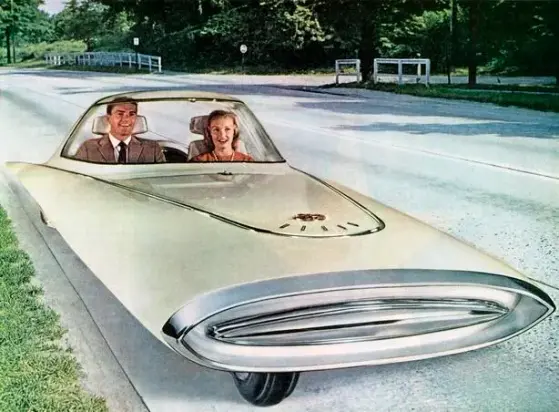
[Image above: source]
* Alan Kay
###
As we pave our own paths, we might send world-changing birthday greetings to a man who personified Alan’s injunction, Doug Engelbart; he was born on this date in 1925. An engineer and inventor who was a computing and internet pioneer, Doug is best remembered for his seminal work on human-computer interface issues, and for “the Mother of All Demos” in 1968, at which he demonstrated for the first time the computer mouse, hypertext, networked computers, and the earliest versions of graphical user interfaces… that’s to say, computing as we know it, and all that computing enables.
https://youtu.be/B6rKUf9DWRI?si=nL09hD5GQD670AQO
#AI #AIRisk #artificalIntelligence #computerMouse #culture #DarioAmodei #DougEngelbart #graphicalUserInterfaces #history #hypertext #MikeLoukides #mouse #networkedComputers #scenarioPlanning #scenarios #Singularity #Technology #TimOReilly Brian Sletten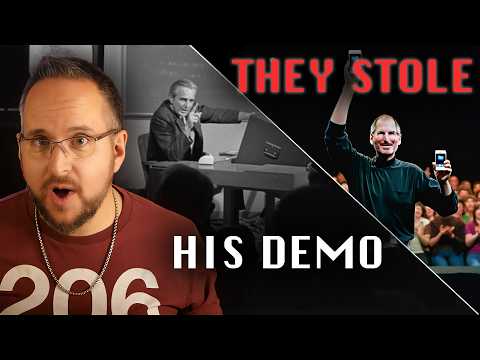
 (Roughly) Daily

 N-gated Hacker News
 Hacker News
 Sara Joy

 Pete
Pete Jon Udell
 Blake Patterson
