Protect yourself now:
✅ App-based 2FA — not SMS
✅ Private recovery email, not your public one
✅ Check active sessions: Settings → Security → Login Activity
✅ Save backup codes offline

Accounts WITH 2FA were not affected. Everyone else was a valid target.

#Instagram #MetaAI #CyberSecurity #AIRisk #InfoSec #AccountSecurity

🚨 Meta's AI support chatbot was weaponized to hijack Instagram accounts — with nothing but a username and a chat message.

Obama's White House account hit. $500K+ in rare handles stolen. 100+ accounts compromised. Exploit was live for days.

Here's the full breakdown 🧵 #CyberSecurity #Instagram #MetaAI #InfoSec #AIRisk #AccountSecurity

Bad code written fast is still bad code. AI just makes it faster.
Meanwhile attackers are running full intrusion campaigns solo, with $20/month and a clear objective.
The enterprise? Still in the governance committee meeting.
New article on AI, code quality, and attack surface proliferation:
https://cariagiovannib.wordpress.com/2026/06/01/the-accelerator-problem/

#InfoSec #CyberSecurity #AppSec #AIRisk #SecureByDesign #VibeCoding

THE ACCELERATOR PROBLEM

Why AI is Making Bad Code Faster and Cybercriminals More Dangerous — and why the enterprise is still losing to a $20/month subscription The starting point nobody wants to hear You’ve met both…

Caria Giovanni - Security Blog

#AIEngineering #aiagent #aimistake #airisk

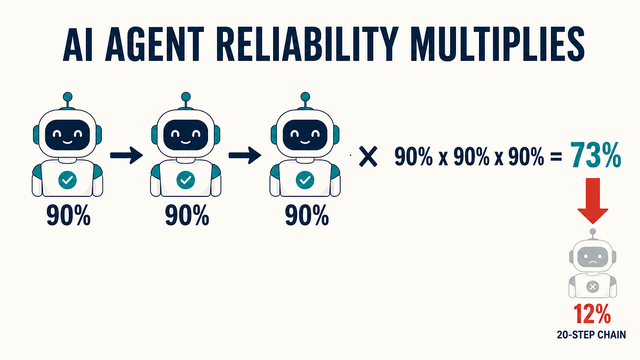
The problem is that multi-agent setups do not just multiply failure — they invent new kinds of it.

The problems is that parallel agents make conflicting decisions because no sub-agent can see what the others are doing. The result is fragile systems from poor context sharing.

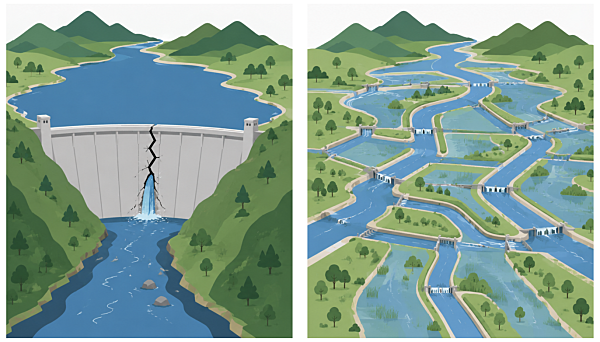
The solution is tight context isolation and ruthless restraint about when a second agent is allowed to exist at all.

https://pub.towardsai.net/stop-stacking-ai-agents-youre-building-something-worse-than-a-coin-flip-f7d6fee848d6

Stop Stacking AI Agents — You're Building Something Worse Than a Coin Flip

In late April, an AI coding agent deleted a company’s entire production database — and every backup — in nine seconds.

Medium

"In a recent essay, Derek Thompson engages with AI as Normal Technology (AINT). He agrees with our thesis about AI’s slow labor market impacts, relying on the fact that GDP growth has so far been average, unemployment is below five percent, and even jobs that seemed vulnerable to automation show rising employment and wages. He concludes that so far, the macroeconomic picture is consistent with what we would expect from a “normal” general-purpose technology.

But when it comes to AI risks, he is far more bearish. He points to examples of cyber- and bio-risks and expresses pessimism about AI quickly becoming dangerous across many new domains. (...) Thompson writes: "I can understand a plan to treat AI as a ‘normal’ technology and let Nvidia export powerful chips to China. And I can understand a plan to treat AI as an ‘abnormal’ technology that compels the government to create extraordinary regulations that prevent private companies from selling their products and services on the grounds that they’re too dangerous" [emphasis ours]. He goes on to conclude that AI is, in fact, abnormal, implying support for extraordinary government intervention. Our essay is a response to that conclusion.

In this essay, we lay out the downsides of extraordinary government intervention in response to new technology. We discuss proposals for improving resilience that do not require such intervention. We also discuss why governments have so far been reluctant to invest in resilience. In short, resilience requires us to get better at the *normal* process of policymaking. But sclerosis in the federal government and the ease of justifying interventions on AI companies rather than society at large make extraordinary intervention seem appealing, despite its limitations."

https://knightcolumbia.org/blog/do-ai-risks-require-extraordinary-government-intervention

#AI #AISafety #AINT #NormalTechnology #AIRisk #AIRegulation

Do AI Risks Require Extraordinary Government Intervention?

Knight First Amendment Institute
Uno studio analizza la capacità dei modelli di IA di assistere nella progettazione di armi biologiche. Il punto critico non è tanto "può farlo?" quanto: quali sono i guardrail tecnici reali, e chi li valida? Le dichiarazioni dei vendor non bastano — servono audit indipendenti e metodologie riproducibili. #infosec #AIrisk #biosecurity
https://www.lescienze.it/tecnologia-e-intelligenza-artificiale/2026/05/21/news/ia_progettazione_virus_tossine_armi_biologiche-21965458/?rss
L'IA è in grado di progettare virus, tossine e altre armi biologiche. Quanto dovremmo preoccuparci?

Gli scienziati stanno discutendo se limitare o meno l'uso dei software di intelligenza artificiale applicati alla biologia per scongiurare eventuali minacce

Le Scienze
“AI Can’t Fix What Human Won’t Govern: The Dirty Data Crisis No One Talks About”

A governance advisors deep-dive into why wrong names, transposed dates, and duplicate SSNs are a decade-long unsolved problem — and the…

Medium
AI Coding Agent Horror Stories: Security Risks Explained | Docker

Explore real AI coding agent security failures, from database wipes to secrets leakage, and learn how Docker Sandboxes reduce the blast radius.

Docker
Why Google's Remy leaks have enterprise architects rethinking the AI stack

Google's reported Remy agent could reshape enterprise AI infrastructure, with experts warning of new workflow, runtime, and security challenges ahead.

The New Stack
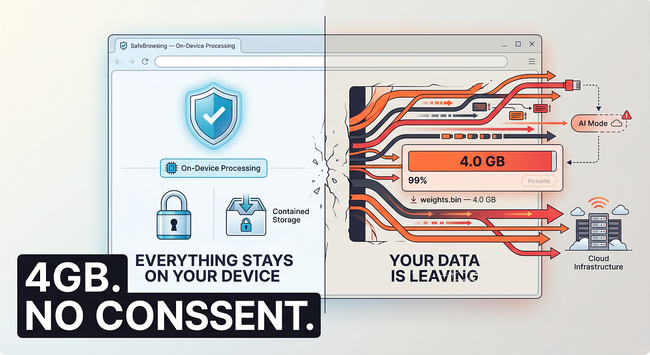
Google Just Installed a 4GB AI on Your Computer. The Privacy Excuse Is a Lie.

If you use Google Chrome on a device with a dedicated GPU, Google installed a 4GB AI model without asking. Here is what it does, what it…

Medium