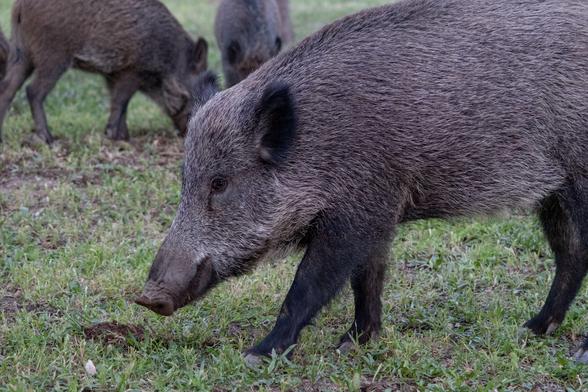
Using high-density SNP genotyping to determine the origin of wild boar dispersers outside the geographic range margins in Norway
📊DATA on Dryad: bit.ly/4dVe6Px
📑ARTICLE in "Wildlife Biology": bit.ly/43i2Zdk
#morphology #wildlifebiology #opendata #openscience #openresearch #wildlife
#evolution #genotype
#dispersal
Holoplanktonic
#gastropods (
#pteropods and
#heteropods) are major components of modern Indo–West Pacific (IWP)
#plankton yet their
#fossil record in this region remains sparse. Expanding the spatial and temporal coverage of fossil data is essential for reconstructing
#dispersal pathways of pelagic fauna within the IWP and understanding the origins of present-day
#diversity https://doi.org/10.7717/peerj.21046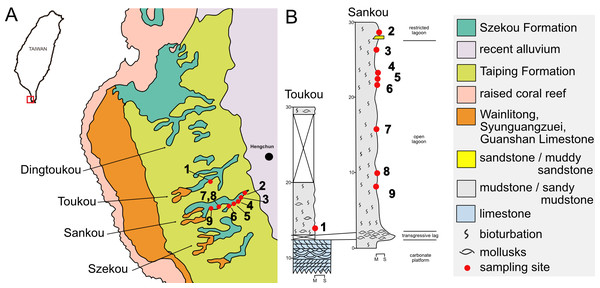
Late Pleistocene pelagic gastropods of southern Taiwan: paleobiodiversity, first fossil records, and regional affinity
Holoplanktonic gastropods (pteropods and heteropods) are major components of modern Indo–West Pacific (IWP) plankton, yet their fossil record in this region remains sparse. Expanding the spatial and temporal coverage of fossil data is essential for reconstructing dispersal pathways of pelagic fauna within the IWP and understanding the origins of present-day diversity. Here, we describe a newly discovered Late Pleistocene assemblage of pelagic gastropods from southern Taiwan. The assemblage comprises 14 pteropod and eight heteropod taxa, most representing the first fossil records of holoplanktonic gastropods from Taiwan. We also evaluate variation in paleobiodiversity between depositional environments of the Szekou Formation. Species richness and density do not differ significantly between restricted and open lagoon settings, contrasting with patterns reported for benthic bivalves. To place these findings in a broader context, the newly reported assemblages were analyzed together with other Pleistocene assemblages across the IWP region. Only weak geographic and temporal separation was detected, suggesting a relatively cosmopolitan community composition in subtropical waters during the Pleistocene, likely reflecting low temperature variability despite glacial–interglacial cycles. Indicator species analysis further suggests a later arrival at higher latitudes for the pteropods Telodiacria quadridentata and Heliconoides inflata, which show associations with late Pleistocene sites, whereas Styliola subula displays a distribution resembling its modern range, being most closely associated with assemblages from Taiwan and southern Japan.
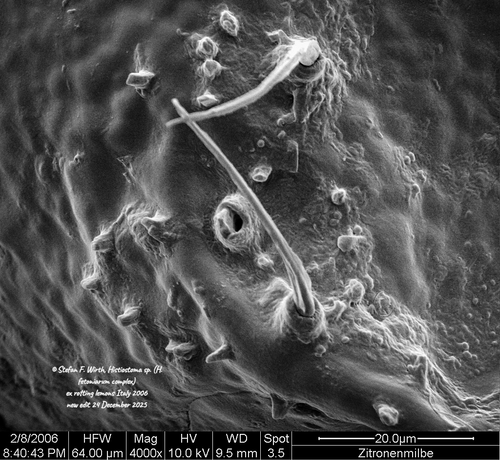
#Mites of the #Histiostomatidae live in #darkness in their #ephemeral #microhabitats. The distinctive deutonymphs are the #dispersal stage, being transported by insects. #Adults, however, live freely and #communicate via complex #olfactorysignals. An important #glandularcomplex is located on the dorsal body side. I participated in a study about the #geranial-rich glandular #secretions (2012).
© #StefanFWirth 24 Dec. 2025
Ref
https://doi.org/10.1080/01647954.2012.662247
#SEM #pics
©S.F. Wirth, Histiostoma sp.
Nadiah Pardede Kristensen
RE: https://mastodon.social/@sflorg/115729303412817454
This is an interesting article (linked below) about #biodiversity and #populationdynamics of #microscopic #seafloorfauna elements, and their presumed modes of #dispersal and ability to adapt to far away #ecologically different conditions. It focuses on the nematode genus #Halalaimus.
I want to point out that even terrestrial nematodes are masters of interesting #dispersalstrategies, evolved based on their small sizes and limited distance #mobility.
This text by #StefanFWirth, Berlin, 2025
Through the
#DNA analysis of old
#air samples collected by the Swedish Armed Forces, researchers at
@[email protected] in Sweden can show that
#spore #dispersal of northern mosses has shifted over the past 35 years. It now starts several weeks earlier.
#moss #bryophyte #climate #openaccessOld air samples hint at effect...Old air samples hint at effects of climate change
Lund University. When the Swedish military began collecting air samples in the 1960s to register radioactive fallout from nuclear weapons testing, it is highly unlikely that anyone was thinking about moss. However, the glass fibre filters on which the samples were saved also captured something completely unintended – namely DNA from pollen, spores and other biological particles. This discovery was made by researcher Per Stenberg of Umeå University.
 Dryad
Dryad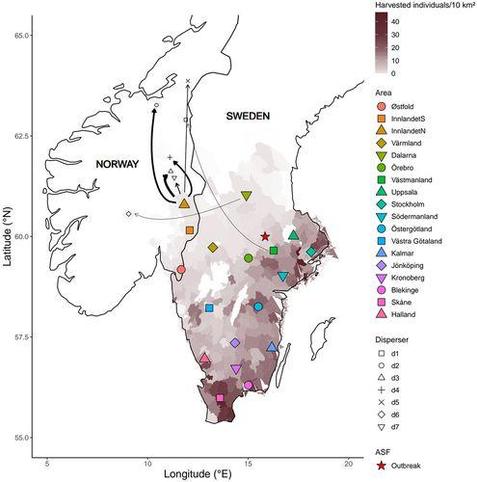
 humanum
 Kenneth De Baets
 Giuseppe Michieli
 NIOO-KNAW
 Stefan F. Wirth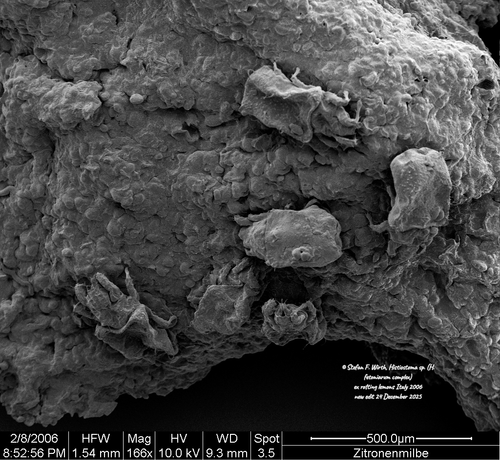
 Nadiah Kristensen
 Seppo
Seppo CCTB
CCTB