The #DiversityProject of the #Bywgraffiadur may be over, but its articles live on!

Here's my personal top-ten list of articles we managed to publish over a frighteningly short period of time.

Authors and colleagues in tootland: we couldn't have done it without you!

https://bydbach.hcommons.org/enwogion-o-fri-the-history-of-wales-just-got-more-vibrant/

#Wales #histodons #BlackHistoryIsWelshHistory #BlackHistory #LGBTQI #Deaf #DeafHistory #LGBTQIHistory

"The Austrian Deaf community has been well organised and unified by a common language since the 19th century. But since only 10% of Deaf people have Deaf parents, therefore the transfer of language, the preservation of culture and identity and the handing down of the common history are especially fragile. Hence, documenting the experiences of older people and making them accessible for Deaf children and youth is all the more important. National Socialist rule brought forth changes for everyone. The Deaf community was in particular danger (less information, no alarms) and directly threatened by Nazi legislation (e.g. forced sterilisations). Courses of action taken then and ways to deal with memories today vary greatly, just like in the hearing society."

Film 'Shoah' from the project 'Deaf Austrians in National Socialism'.

#HolocaustGedenktag #HolocaustRemembrance #ÖGS #ÖsterreichischeGebärdenSprache #Deaf #DeafHistory #Histodons

https://gehoerlos-im-ns.univie.ac.at//index.php?language=en&page=movie&movie=shoa
Gehörlose ÖsterreicherInnen im Nationalsozialismus · Start

A Dozen New Stories from the Schools for the Deaf

We have a bumper crop of new stories for you today, as we try to get up to date before our next Forgotten Woman Friday takes place this week.You can now read about Catharine Oliver and Anna Peach from the Exeter School for the Deaf. From the school at Margate, we bring you Jane Maria Barrott, a story that was written by her descendant; sisters Hilda Mary and Alma Sophie Pooley and Rose Punnett, who was born in Australia. You can also find out about their classmates, Eliza Crouch, Lydia Dorothy D

Few Forgotten Women
Seven Girls from Schools for the Deaf have their Stories Told

We are gradually processing all the lovely stories that our volunteers have been sending in following our last Forgotten Women Friday. You can now read about Winifred Mary Bell, Edith Elizabeth Peacock, Elizabeth Jane Emmeline Smith and sisters Sarah Jane, Elizabeth Annie and Emily Maud Birch, all of whom attended the Margate School and Sarah Henley from the Exeter School. All their stories can be found here. Don't forget to look at all the wonderful background information about the schools that

Few Forgotten Women
We have seven new stories of pupils from Schools for the deaf for you https://wix.to/wrzMx4l
#FamilyHistory #Genealogy #DisabilityHistory #WomensHistory #DeafHistory #SocialHistory
More Stories from the Schools for the Deaf

The stories from our latest Forgotten Women Friday are pouring in. Today we have six from the Margate School and one from Exeter and there are more in the pipeline. We like to introduce you to Alice Maria Bourn, Mary Priscilla Douglas, Lillie Robinson Hodgson and her sister Hilda, Mary Ann Lewis, Winifred Redgrave, Minnie Slingo and Sarah Mildred Vernall. We hope you will enjoy reading about their lives. All these stories can be found here. There is also plenty of background information about th

Few Forgotten Women

📢 NEW ARTICLE 📢
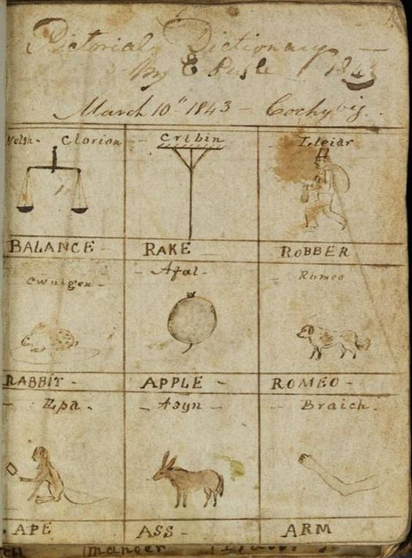
ELIZABETH ('Eliza') PUGHE (1826 - 1847), deaf illustrator
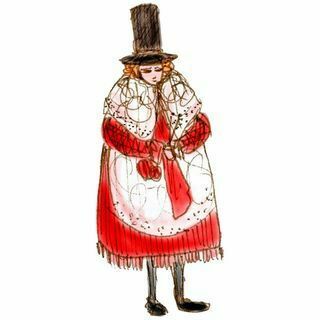
'Eliza's pictorial dictionary (now in the National Library of Wales) contains hundreds of minute hand-drawn illustrations accompanied by English and Welsh nouns or verbs to describe each image. It is highly likely that the illustrations are by Eliza herself, and they reveal that she was a talented child artist with a good eye for detail. Her dictionary presents clear evidence of her family's attempts to home-educate Eliza as it was written and illustrated fifty to sixty years before the Elementary Education (Blind and Deaf Children) Act of 1893 that made schooling for deaf children between the ages of five- and eleven-years compulsory.' -- Gareth Richard Foulkes
https://biography.wales/article/s15-PUGH-ELI-1826

Image: Llyfrgell Genedlaethol Cymru / National Library of Wales
#DiversityProject #DeafHistory #WomensHistory #Bywgraffiadur #Wales #History

PUGHE, ELIZABETH ('Eliza') (1826 - 1847), deaf illustrator | Dictionary of Welsh Biography

(Re-) #Introduction to the #Mastodon world!

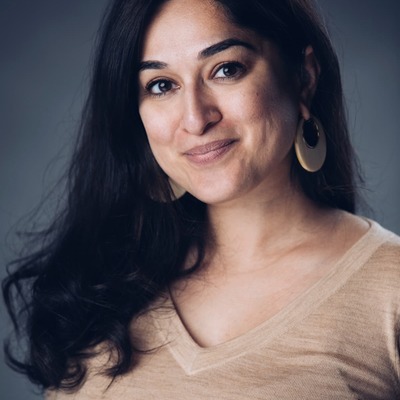
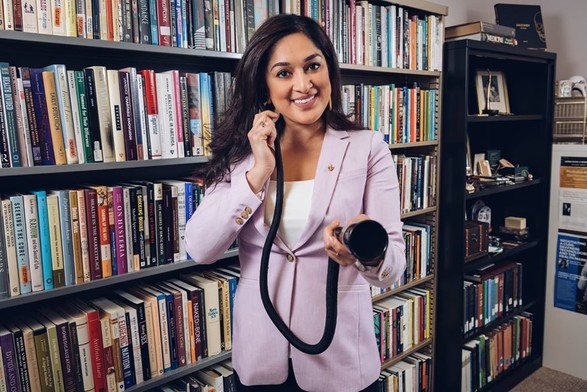
I'm Jai, a #historian of #medicine, #science, #technology and #disability. That is, I'm a #histodon !

I'm based at the #UniversityOfDelaware and primarily work on #DeafHistory, #DisabilityHistory #DisabilityTechnology #Design and #histSTM. You'll likely see my #ServiceDog Lizzie and my one-eyed, deaf dog Ben here too!

More about me on my website: jaivirdi.com

The Unintended Consequences of OTC Hearing Aids

Over-the-counter hearing aids will be available by October. They’ll benefit many but could lead to stigmatization, inadequate testing, and even hearing loss.

WIRED

#LibrarianAtWork

A thread of new/recent/forthcoming #book releases focusing on #Disability related titles

New paperback edition:

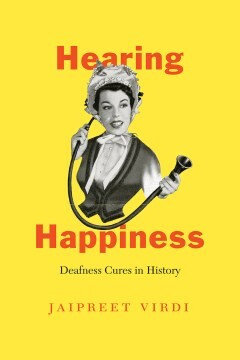
Hearing Happiness: Deafness Cures in History by Jaipreet Virdi (@jaivirdi)

https://press.uchicago.edu/ucp/books/book/chicago/H/bo48885494.html

#BookStodon #librarian #libraries #NewReleases #Deaf #DeafHistory #DisabilityHistory #DisabilityVisibility #memoir #DisabilityStudies

Hearing Happiness

Weaving together lyrical history and personal memoir, Virdi powerfully examines society’s—and her own—perception of life as a deaf person in America. At the age of four, Jaipreet Virdi’s world went silent. A severe case of meningitis left her alive but deaf, suddenly treated differently by everyone. Her deafness downplayed by society and doctors, she struggled to “pass” as hearing for most of her life. Countless cures, treatments, and technologies led to dead ends. Never quite deaf enough for the Deaf community or quite hearing enough for the “normal” majority, Virdi was stuck in aural limbo for years. It wasn’t until her thirties, exasperated by problems with new digital hearing aids, that she began to actively assert her deafness and reexamine society’s—and her own—perception of life as a deaf person in America.   Through lyrical history and personal memoir, Hearing Happiness raises pivotal questions about deafness in American society and the endless quest for a cure. Taking us from the 1860s up to the present, Virdi combs archives and museums in order to understand the long history of curious cures: ear trumpets, violet ray apparatuses, vibrating massagers, electrotherapy machines, airplane diving, bloodletting, skull hammering, and many more. Hundreds of procedures and products have promised grand miracles but always failed to deliver a universal cure—a harmful legacy that is still present in contemporary biomedicine. Weaving Virdi’s own experiences together with her exploration into the fascinating history of deafness cures, Hearing Happiness is a powerful story that America needs to hear.

University of Chicago Press