🌈 The Super Vision of Mantis Shrimp 🦐✨

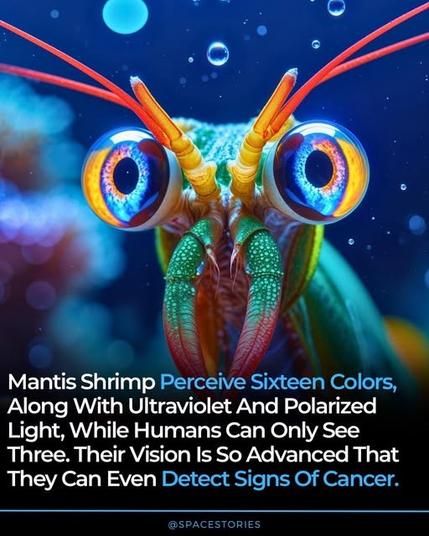
Humans see the world in just three main colors — red, green, and blue. But the mantis shrimp? It sees up to sixteen different color channels! That means its world is bursting with shades and details we can’t even imagine.

🔬 Beyond colors, mantis shrimp can also see ultraviolet light and detect polarized light — giving them a kind of built-in super-vision. This isn’t just cool biology; it has real-world impact. Scientists studying mantis shrimp vision found that they can detect things invisible to us — even subtle signs of cancer in medical images.

This extraordinary eyesight could inspire new diagnostic tools to catch diseases earlier and more accurately.

In short: the mantis shrimp isn’t just one of the ocean’s most remarkable hunters — it’s a tiny creature that could help transform medicine. 🌊💡

Marine life & biology
#MantisShrimp #OceanLife #MarineBiology #NatureFacts #UnderwaterWorld

Vision & science
#SuperVision #ColorVision #UltravioletVision #PolarizedLight #AnimalSuperpowers

Innovation & impact
#BioInspiredTech #MedicalInnovation #ScienceDiscovery #FutureOfDiagnostics #CuttingEdgeScience

🐙✨ Octopuses are multitasking marvels! Scientists discover they favor front arms for tasks like reaching, while rear arms help with locomotion. A flexible feat inspiring robotics!

@goodnews

#GoodNews #OctopusIntelligence #MarineLife #BioInspiredTech #NatureWonders
https://www.theguardian.com/environment/2025/sep/11/octopuses-prefer-to-use-different-arms-for-different-tasks-scientists-find

Octopuses prefer to use different arms for different tasks, scientists find

Creatures favour front arms for most tasks, study suggests, despite fact all eight arms are capable of all actions

The Guardian

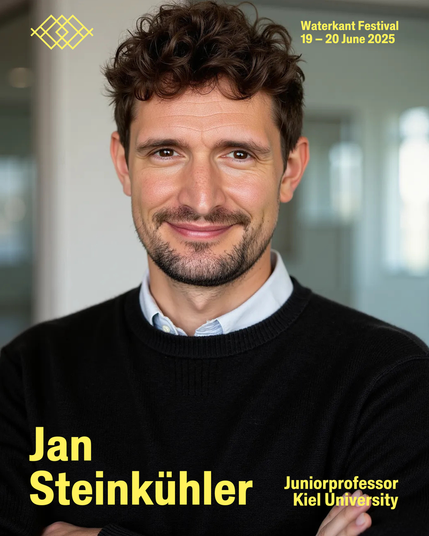
// JAN STEINKÜHLER

Jan Steinkühler, Junior Professor at Kiel University, explores bio-inspired computing that thinks like nature: efficient, adaptive, and alive. 🧬⚡

Using synthetic cells as a toolkit, he’s reimagining how we compute—beyond silicon, beyond convention.
At Waterkant 2025, he’ll dive into living tech and the future of resilient systems. 🌱

Tickets: https://www.waterkant.sh/?ref=mastodon

#waterkant25 #bioinspiredtech #syntheticbiology #resilientdesign

Waterkant Futures Thinking Lab | Innovation & Events in Kiel

Waterkant verbindet Start-ups, Unternehmen & Kreative in Schleswig-Holstein. Entdecke Festival, Ausstellung & Events zu Zukunftsthemen – jetzt entdecken!

Waterkant

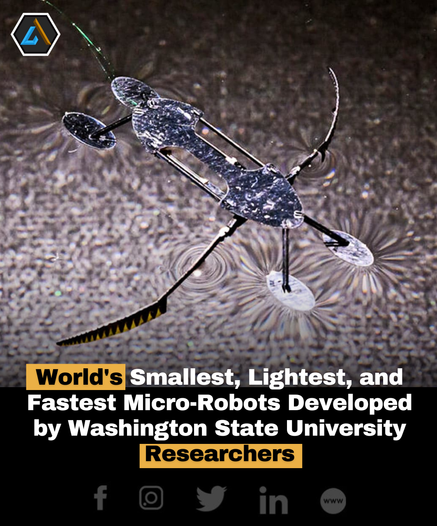
Washington State University researchers have created the world's smallest, lightest, and fastest micro-robots, resembling a mini-bug and a water strider. Weighing eight and 55 milligrams, these micro-robots move at approximately six millimeters per second.

They feature tiny, less than a milligram actuators made of shape memory alloy (SMA) for movement without traditional motors. SMA technology allows efficient and energy-saving operation, requiring minimal electricity or heat.

The robots demonstrate remarkable agility and efficiency, with potential applications in artificial pollination, search and rescue, environmental monitoring, and robotic-assisted surgery. Future enhancements may include studying natural insect movements for optimization.

#MicroRobots #Robotics #TechInnovation #WSUResearch #ShapeMemoryAlloy #Miniaturization #ArtificialPollination #SurgicalRobotics #EnvironmentalMonitoring #BioinspiredTech