 Andrew Jeffery
Walked past a dad wearing a shirt with "Cupid Stunt" printed on it right as his kid dropped a box-worth of Christmas crackers all over the floor #colonnades
 Pascal Volk
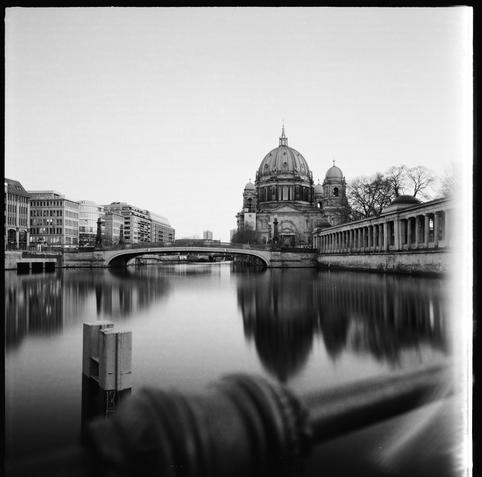
On a winter evening by the Spree
#Berlin #Spree #River #Reflexions #Colonnades #Cathedral #FriedrichsBridge #UrbanGaze #LongExposure #BlackAndWhite #photography #art #FilmIsNotDead #FujiAcros
📷: #PentaconSixTL ISO: 100
⭕: #MCFlektogon450 @ƒ/13
⏱️: 1800 sec
📆: 2023-01-03
🔗: https://flic.kr/p/2rL5Hfx
 Denis Olivier | Photography
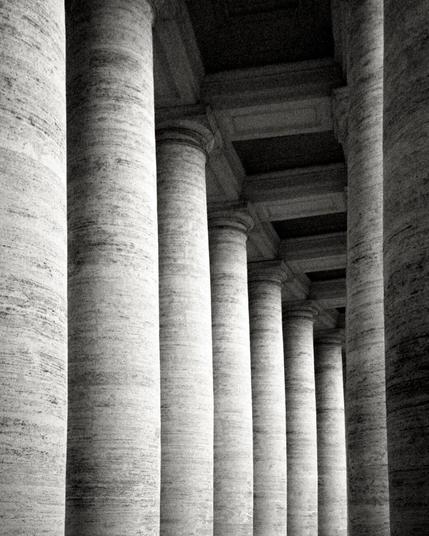
NEW! Saint Peter's Colonnades, Vatican, Rome, Italy. February 2024. Ref-12049
https://www.denisolivier.com/photography/saint-peter-s-colonnades-vatican-rome-italy/en/12049
#alignment #hc110 #column #italy #colonnades #basilica #doric #catholic #architecture #kodakhc110 #monument #city #church #columns #kodaktmax
https://www.denisolivier.com/photography/saint-peter-s-colonnades-vatican-rome-italy/en/12049
#alignment #hc110 #column #italy #colonnades #basilica #doric #catholic #architecture #kodakhc110 #monument #city #church #columns #kodaktmax
 Strum
StrumBologna, city of colonnades. Miles and miles of 'em.
#photography #Bologna #EmiliaRomagna #colonnades
#photography #Bologna #EmiliaRomagna #colonnades

 Splines
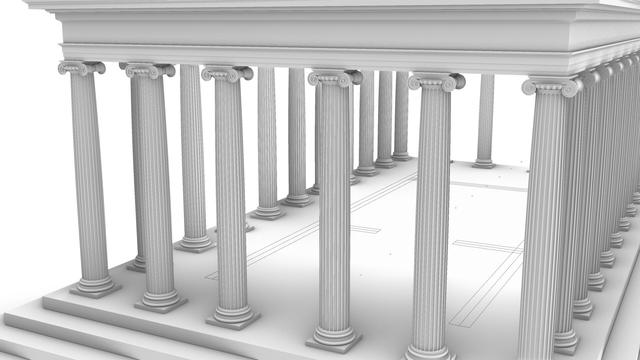
Side View of a #Peripteral (#Sexastyle) #Colonnade with #IonicColumns arranged in #Eustyle #intercolumniation.
In my previous post at https://pixelfed.social/p/Splines/803076419096100108, I mentioned that the consensus sweet spot for inter-column spacing was 2.25 diameters (4.5µ) between column shafts at the bottom (6.5µ axis-to-axis), except for the two middle columns where the spacing was 3 column diameters (8µ from axis-to-axis).
This variable intercolumniation is only for #colonnades in the front and back. The spacing between columns on the sides is uniform as shown in the image here.
Something worth noting in this image is the number of columns on each side. In a peripteral (sexastyle) building, there are 6 columns in the front (and back) with 5 intercolumniations between them. On the sides, it is an error to double the number of columns on the sides. Instead, the number of intercolumniations is doubled — in this case from 5 to 10, giving us 11 columns. So, the number of columns is always even in the front, and always odd on the sides (one less than twice the number of columns in the front).
On the topic of even and odd, also note that the number of steps leading up to the base of the colonnade is always odd. #Vitruvious suggested keeping the rise between 9" - 12" and the run twice that, or between 18" - 24". Note that these measurements are in physical units — a marked departure from the abstract µ = 144 units we have been using all along.
The rules for intercolumniation presented so far are known as #simpleIntercolumniation. When the Romans introduced #arches and combined them with #halfColumns to produce #arcades, the rules were adapted for the new design. Because the arches distributed the load from the beams above, it allowed for wider intercolumniation. With the addition of #pedestals, the gap was made even wider still, and the look of the complete edifice is just majestic!
With half-columns and arches, we will see some new architectural elements.
In my previous post at https://pixelfed.social/p/Splines/803076419096100108, I mentioned that the consensus sweet spot for inter-column spacing was 2.25 diameters (4.5µ) between column shafts at the bottom (6.5µ axis-to-axis), except for the two middle columns where the spacing was 3 column diameters (8µ from axis-to-axis).
This variable intercolumniation is only for #colonnades in the front and back. The spacing between columns on the sides is uniform as shown in the image here.
Something worth noting in this image is the number of columns on each side. In a peripteral (sexastyle) building, there are 6 columns in the front (and back) with 5 intercolumniations between them. On the sides, it is an error to double the number of columns on the sides. Instead, the number of intercolumniations is doubled — in this case from 5 to 10, giving us 11 columns. So, the number of columns is always even in the front, and always odd on the sides (one less than twice the number of columns in the front).
On the topic of even and odd, also note that the number of steps leading up to the base of the colonnade is always odd. #Vitruvious suggested keeping the rise between 9" - 12" and the run twice that, or between 18" - 24". Note that these measurements are in physical units — a marked departure from the abstract µ = 144 units we have been using all along.
The rules for intercolumniation presented so far are known as #simpleIntercolumniation. When the Romans introduced #arches and combined them with #halfColumns to produce #arcades, the rules were adapted for the new design. Because the arches distributed the load from the beams above, it allowed for wider intercolumniation. With the addition of #pedestals, the gap was made even wider still, and the look of the complete edifice is just majestic!
With half-columns and arches, we will see some new architectural elements.

Splines (@[email protected])
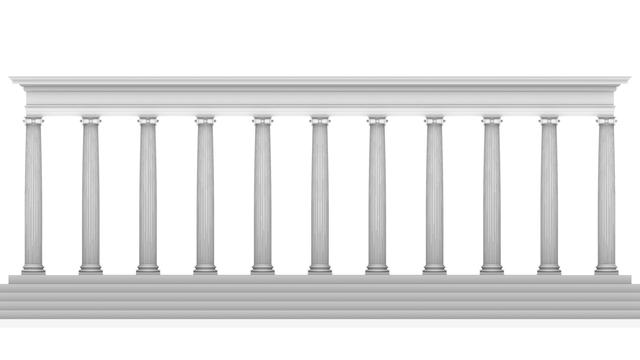
Front View of a #Peripteral (#Sexastyle) #Colonnade with #IonicColumns arranged in #Eustyle #intercollumniation. Ever since prehistoric architects at #Stonehenge designed rock columns and labored to lift the heavy rocks atop them, humanity has been fascinated with columns and entablatures, whether they were known by that name or not, and the designs have continued to evolve. #Vitruvius described five classes of temples, designated as follows: "#pycnostyle, with the columns close together; #systyle, with the intercolumniations a little wider; #diastyle, more open still; #araeostyle, farther apart than they ought to be; #eustyle, with the intervals apportioned just right." So, what does it mean to have "intervals apportioned just right?" Aside from the subjective aesthetic criteria mentioned in https://pixelfed.social/p/Splines/802974815166948953, such as avoiding columns that "look thin and mean" and shafts that "look swollen and ungraceful," there were practical considerations, such as the gap being too wide to support heavy stone entablatures. There was also the practical matter with intercolumniation that was noo narrow. "When the [temple] matrons mount the steps for public prayer…, they cannot pass through [narrow] intercolumniations with their arms about one another, but must form single file; then again, the effect of the folding doors is thrust out of sight by the crowding of the columns, and likewise the statues are thrown into shadow; the narrow space interferes also with walks round the temple." So, intercolumniations of 2 column diameters (4µ) or less, as in #pycnostyle and #systyle, were considered too narrow. Likewise 3 column diameters (6µ) or more, as in #diastyle and #araeostyle, were too wide. The consensus sweet spot was 2.25 diameters (4.5µ) between column shafts at the bottom (6.5µ axis-to-axis), except for the two middle columns where the spacing was 3 column diameters (8µ from axis-to-axis). The image shows this variable intercolumniation.
Classical #Intercolumniation is a complex topic with myriad rules that were developed after lots of experimentation by Greek as well as Roman architects.
The primary purpose of #colonnades or multiple columns was both practical (to support heavy weight) and aesthetic ("imposing effect of high relief" as #Vitruvious wrote in https://www.gutenberg.org/files/20239/20239-h/20239-h.htm#Page_78).
The architects paid keen attention to the thickness of columns as well as the spacing between them. They experimented with "columns close together, … with intercolumniations a little wider, … more open still, … and farther apart than they ought to be," until they settled on column spacing "with the intervals apportioned just right."
With variable spacing came the need for adjusting thickness of shafts which had to be "enlarged in proportion to the increase of the distance between the columns," without which, "the column will look thin and mean, because the width of the intercolumniations is such that the air seems to eat away and diminish the thickness of such shafts." They also wanted to avoid proportions that would make the "shaft look swollen and ungraceful, because the intercolumniations are so close to each other and so narrow." So, it wasn't just the design of an individual column that was parameterized with the single parameter µ, first mentioned in https://pixelfed.social/p/Splines/790357912719769731 and further described in https://pixelfed.social/p/Splines/790417950261292263. Intercolumniation was also codified in terms of column width (effectively parameterized by µ).
Beyond the appearance, there were practical considerations. While walls (which came before columns) were made of bricks, the dominant material for columns and entablatures were stone. As such, regardless of the width of individual columns, the gap could not be increased beyond certain limits, for the spans above the column could break.
Materials such as timber for beams allowed more experimentation.
The primary purpose of #colonnades or multiple columns was both practical (to support heavy weight) and aesthetic ("imposing effect of high relief" as #Vitruvious wrote in https://www.gutenberg.org/files/20239/20239-h/20239-h.htm#Page_78).
The architects paid keen attention to the thickness of columns as well as the spacing between them. They experimented with "columns close together, … with intercolumniations a little wider, … more open still, … and farther apart than they ought to be," until they settled on column spacing "with the intervals apportioned just right."
With variable spacing came the need for adjusting thickness of shafts which had to be "enlarged in proportion to the increase of the distance between the columns," without which, "the column will look thin and mean, because the width of the intercolumniations is such that the air seems to eat away and diminish the thickness of such shafts." They also wanted to avoid proportions that would make the "shaft look swollen and ungraceful, because the intercolumniations are so close to each other and so narrow." So, it wasn't just the design of an individual column that was parameterized with the single parameter µ, first mentioned in https://pixelfed.social/p/Splines/790357912719769731 and further described in https://pixelfed.social/p/Splines/790417950261292263. Intercolumniation was also codified in terms of column width (effectively parameterized by µ).
Beyond the appearance, there were practical considerations. While walls (which came before columns) were made of bricks, the dominant material for columns and entablatures were stone. As such, regardless of the width of individual columns, the gap could not be increased beyond certain limits, for the spans above the column could break.
Materials such as timber for beams allowed more experimentation.
 Matthias
Light and Shadow: The Nocturnal Atmosphere of Museum Island
#MuseumIsland #Berlin #Architecture #Colonnades #NightScene #Symmetry #Neoclassicism #LightArt #TravelPhotography #Germany
#MuseumIsland #Berlin #Architecture #Colonnades #NightScene #Symmetry #Neoclassicism #LightArt #TravelPhotography #Germany

 NY Public Library Appreciation
Hall of Fame, N. Y. City
"Sol-Art Prints Trade Mark no. 44 The Rotograph Co., New York City (Germany)"--printed on verso. New York, N.Y. (printed in Germany)
http://digitalcollections.nypl.org/items/e949f140-c55e-012f-358e-58d385a7bc34
#HallofFame #NYCity #TheRotographCo #NewYorkCity #NewYork #Germany #NYCity #Colonnades
"Sol-Art Prints Trade Mark no. 44 The Rotograph Co., New York City (Germany)"--printed on verso. New York, N.Y. (printed in Germany)
http://digitalcollections.nypl.org/items/e949f140-c55e-012f-358e-58d385a7bc34
#HallofFame #NYCity #TheRotographCo #NewYorkCity #NewYork #Germany #NYCity #Colonnades

 Uwe Werner
Die Säulengänge der Friedenskirche in Potsdam strahlen eine besondere Ruhe aus. Ihre schlichten, harmonischen Linien fangen das Licht auf eine Weise ein, die den Raum fast zeitlos erscheinen lässt. Hier trifft architektonische Eleganz auf spirituelle Besinnung, eine perfekte Symbiose von Form und Funktion.
The colonnades of the Church of Peace in Potsdam exude a special calm. Their simple, harmonious lines capture the light in a way that makes the space feel almost timeless. Here, architectural elegance meets spiritual reflection, creating a perfect symbiosis of form and function.
#ChurchOfPeace #Potsdam #Architecture #Colonnades #HistoricChurch #PeacefulPlace #Spirituality #CulturalHeritage #TimelessBeauty #SacredSpace #ArchitecturalElegance #GermanHistory #HiddenGems #Serenity #TravelDestinations #ChurchArchitecture #HistoricLandmark #ArtAndArchitecture #PeacefulVibes #ReflectionSpace
The colonnades of the Church of Peace in Potsdam exude a special calm. Their simple, harmonious lines capture the light in a way that makes the space feel almost timeless. Here, architectural elegance meets spiritual reflection, creating a perfect symbiosis of form and function.
#ChurchOfPeace #Potsdam #Architecture #Colonnades #HistoricChurch #PeacefulPlace #Spirituality #CulturalHeritage #TimelessBeauty #SacredSpace #ArchitecturalElegance #GermanHistory #HiddenGems #Serenity #TravelDestinations #ChurchArchitecture #HistoricLandmark #ArtAndArchitecture #PeacefulVibes #ReflectionSpace

Hall of Fame, N. Y. City
"Sol-Art Prints Trade Mark no. 44 The Rotograph Co., New York City (Germany)"--printed on verso. New York, N.Y. (printed in Germany)
http://digitalcollections.nypl.org/items/e949f140-c55e-012f-358e-58d385a7bc34
#Halloffame #Nycity #Therotographco #Newyorkcity #Newyork #Germany #Jycrawford #Colonnades
"Sol-Art Prints Trade Mark no. 44 The Rotograph Co., New York City (Germany)"--printed on verso. New York, N.Y. (printed in Germany)
http://digitalcollections.nypl.org/items/e949f140-c55e-012f-358e-58d385a7bc34
#Halloffame #Nycity #Therotographco #Newyorkcity #Newyork #Germany #Jycrawford #Colonnades