@RichardJMurphy

We call it #climateculture
#klimakultur
statt petrokult

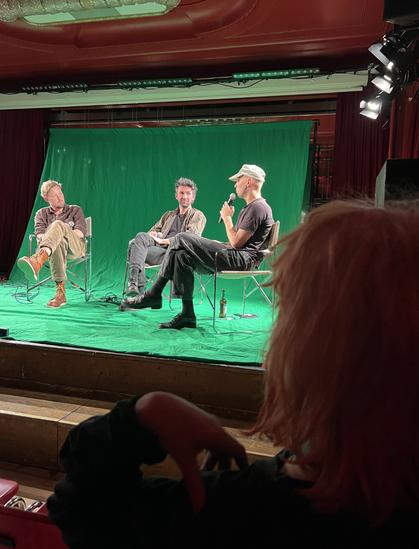
#climateCulture 2023 in Berlin, ganz aktuell aber leider schon vorbei eine Klimakulturaktion der Literaturszene im Roten Salon der Berliner Volksbühne. Dort findet die Reihe Die literarische Latenight statt, Leitmotiv ist Zeigen statt Reden, Show Don't Tell. Klingt verlockend, das könnte etwas gegen das derzeit pestartige Storytelling im Kontext Klimakrise sein.

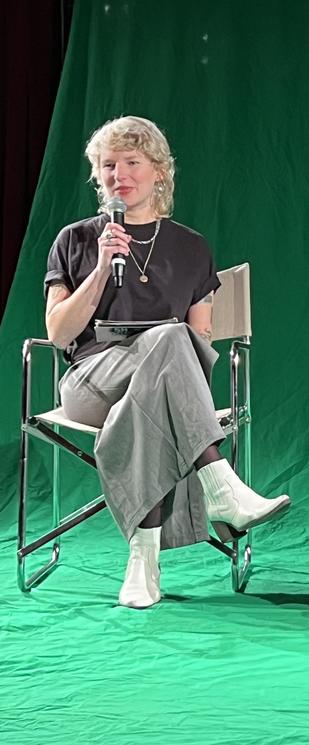
Die Literaturaktivistin Chris Möller und Malte Abraham laden verschiedene Gäste ein und stellen sie in literarisch-performative Dispositonen, die in der Art so im Literaturbetrieb nicht üblich sind. Ok, klingt abstrakt, wahrscheinlich steht im Antragsstext für die Förderung innovatives Format, und das ist es ja auch.

Gestern ging es um das Klima. EIngeladen war ein Regiedrehbuchautor, dessen Namen ich nicht kenne, der aber den fast nur jungen Leuten im Publkum ein Begriff war. Was schon einiges über mich aussagt, ich habe keine Ahnung von Serien, nur von Literatur. Und von #Klimakrise und Kultur. Das heißt, den zweiten Gast kenne ich gut, #RaphaelThelen von #LastGeneration, Buchautor und ehemaliger Journalist.

Es ging darum, dass der Drehbuchregisseur mit dem potentiellen Protagonisten einer Serie darüber spricht, wie sich die Entwicklung einer solchen Klimaserie darstellen könnte. Die Regie plauderte also aus dem Nähkästchen der Serienlogik, der #Klimaaktivist etwas aus seinem Leben und die Moderation brachte beides immer wieder in den Kontext einer literarisch-narratologischen Expertise. Vielleicht, hin und wieder, war ganz schlau gemacht und hat mir gut gefallen, auch das aufmerksame dialogsche Prinzip zwischen Chris und Malte.

Irgendwie im Geist seiner Sache hat sich Raphael Thelen recht geschickt einer Vereinnahmung durch die Serienlogik entziehen können. Spannend für mich waren Einblicke in die Existenzweisen seiner Generation, es wurde etwa deutlich, dass im Gegensatz zu meiner Generation, die sich gegen ihre Eltern auflehnen musste, die heutige Protestgeneration zumindest in seinem Kreis eher mit den damals aufbegehrenden Eltern geht.

Wogegen heute auflehnen? Das Thema ist groß. Das kam nicht so klar heraus, aber ein paar nette Details. So berichtete Raphael an einer Stelle, dass die Aktionen der #LetzteGeneration oder #LG gegen die Superreichen - Farbe gegen Privatjets und Yachten, zwar nicht in den Medien erscheinen (auf Social Media aber schon), aber diese Supereichen doch schon gewaltig aufregen. (Das ist schön, so wird die #Klimangst auch ein bisschen nach oben umverteilt) So dass sie also Maßnahmen ergreifen und Einfluss nehmen, auf die Medien (die Privaten).

Klimapolitik war nicht der Anlass des Abends. Gemäß einer die Eigenlogik der künstlerischen Repräsentationen suchenden Literaturveranstaltung kam der Gegner als Figur ins Spiel, für den Serienautor ist das der Antagonist. Der darf nicht zu schablonenhaft sein, braucht Entwicklungspotential, damit es über die Serienstrecke trägt, und am Ende fand man eine Figur der Ggenwart, einen rechtspopulistischen Medienmenschen, der gerade einen eigenen Kanal aufbaut den auch alle kannten, ich aber nicht, weil ich kein TV konsumiere.

Der Name ist nicht so wichtig, die Rolle schon, man kam auf die Idee, dass Protagonist und Antagonist gemeinsam auf der Journalistenschule waren und sich jetzt feindlich gegenüber stehen. Aber: Der einflussreiche Antagonist Medienbesitzer mit Millionenpublikum hat 1 Angebot an Protagonist Klimaaktivist, und nun drehte sich das Gespräch durchaus spannend darum, wie groß die Möhre der Verführung sein müsste, um so jemand wie Raphael Thelen zu kaufen

Naturgemäß ist er nicht käuflich, ein Mann mit Prinzipien, ein Arbeiterkind, das über Klasse spricht, während der Serienautor Arbeiterhaushalt sagt, weil in einem "Haushalt" eher die dramatischen Figuren des bürgerlichen Serienspiels lokalisiert sind als in einer Klasse? Deren Sexappeal derzeit schwächelt und die heute fast so etwas Abstraktes ist wie das Klima für uns alle

Gut, serienlogisch kommt immerhin die Frage der Veranschaulichung in den Blick einer klimakulturellen Bewegung, wie wir sie beobachten. Ob der Klimaaktivist, der Gefängnis riskiert und vom Containern lebt, wirklich in einer Serie zu seiner Geltung kommt, ist fraglich. Aber wie mir klar ist, ist Serie eine Genrationefrage - und ich bin halt eher ein Leser.

Und übrigens auch Klimakurator. Nach der durchaus spannenden Veranstaltung, die im Januar online zu sehen sein wird, traf ich im Roten Salon noch auf Sabine Zielke. Die Dramaturgin ist verantwortlich für das Program im Roten Salon, und das Climate Cultures network berlin hat sie ja auch schon einmal eingeladen. Es war unser erstes eigenständig organisiertes Climate Cultures Festival 2021, hier im Roten Salon und mit Filmprogramm im Babylon.
Wir planen weitere, und vielleicht doch mal wieder hier.

Chris Möller und Malte Abraham könnten dort gerne auch auftreten, damit die Generationenmischung stimmt.

Hier einLInk zum Festival 2021:
https://www.planet-festival.de/

Planet schreibt zurück! Festival 2021

Planet schreibt zurück! Klima im Kulturkontakt ein 3tägiges Berliner Festival an der Schnittstelle von Klima, Krise und Kultur

As we approach the end of yet another year when politicians pay lip service to but otherwise do little about climate change, sharing a link to my article "Living (and composing) in the Anthropocene" published on the ClimateCultures website.

https://climatecultures.net/challenges-of-creative-engagement/music-for-the-earth/

#climateculture
#classicalmusic
#environment
#anthropocene
#musicfortheearth

Living (and Composing) in the Anthropocene - ClimateCultures - creative conversations for the Anthropocene

Stanley Grill shares his Music of the Earth and how feelings about climate change turn into music evoking connection with the natural world

ClimateCultures - creative conversations for the Anthropocene

• Life and death in the soil microbiome: how ecological processes influence biogeochemistry (2022) https://www.nature.com/articles/s41579-022-00695-z

#Soil #Climate #ClimateCulture

3/n

Life and death in the soil microbiome: how ecological processes influence biogeochemistry - Nature Reviews Microbiology

Soil microorganisms shape global element cycles in life and death. In this Review, Sokol and colleagues explore how the biogeochemical cycling of organic matter depends on both living and dead soil microorganisms, their functional traits, and their interactions with the soil matrix and other organisms. They also discuss incorporating microbial life and death into trait-based models that predict soil biogeochemical dynamics.

Nature

Climate and culture have always been a continuum shaping civilization. The #ccnetworkberlin goes here d'accord with the British cultural geographer #MikeHulme - Where climate there culture. Today we naturally think with him #ClimateCulture or #ClimateCultures in the mode of crisis and we see this formula - Where #ClimateChange there #CulturalChange.
Culture change in the mode of climate crisis also transforms conceptualizations in the mode of a global scale - #Anthropocene #Capitalocene in the wake of #NaomiKlein for instance or #Chtulucene in the intellectual footprints of #DonnaHarraway and some more. With the #ClimateCulturesFestival, CCnetwork berlin tries to develop multiple perspectives on the globality of climate change in the long run. It emerges bottom up and at its best complementary to the scientific apparatus, it emerges in the mode of direct concern and from local perspectives. In this sense, we are grateful for a new discovery from the Caribbean - #plantagenocene.
In 2022 we invited Caribbean filmmakers, authors and activists #EstherFigueroa and #ImaniTafari-Ama to enlighten us on how #plantagenocene is understood in the historical context of the #BlackAtlantic. I'll try it in my own formulation, summarized in terms of content, though de facto it will take decades more of research to understand and politically come to terms with the story:
- The deportation of African people by the millions and their enslavement by whites for the purpose of capitalist profit maximization over 4 centuries represents an inescapable origin story of today's crisis. The collective trauma of Black Atlantic cultures is inextricably inscribed in this origin of globalized capitalism.
We are clear that this is an emancipatory act of Black historiography. But equally, that it challenges a revision of white historiography. I found on this instance of #mastodon just recently a reference to an article in the #Guardian describing how Richard Drax, a senior British MP and also super-rich heir to one of Barbados' biggest exploiting families, is currently being dragged into a reparations case.
https://www.theguardian.com/world/2022/nov/26/barbados-tory-mp-pay-reparations-family-slave-richard-drax-caribbean-sugar-plantation

We understand our climate-cultural engagement to be fundamentally open to the long-term strategies of the global reparations movement, even in the context of #ClimateJustice and #JustTransition
https://caricomreparations.org/the-global-reparations-movement/ and are grateful for the deepening of our climate-cultural crisis perspectives from this historically weighty site. Dr. Esther Figueroa and Dr. Imani Tafari-Ama also come back to speak on our festival website for this reason.
We allow here a certain sustainability of important concepts and terminologies of our #ClimateCulturesTheorieDesign in the core statements of the climatic subjects, as we can perceive them for the first time in an open but purposefully developed framework. More videos on the overall climate culture context of #GlobalSouth will follow.

As part 2 of the review of the Caribbean focus, #ImaniTafari-Ama, following on #EstherFigueroa, talks about the sustainable culture of Rastafari under the aspect of #livity. This form and idea of Caribbean sustainability denotes a conscious counter-conceptualization of collective identity beyond the victim story, a way out of trauma. In this context, Dr. Tafari-Ama also traced a tragic global relationship between primal accumulation and enslavement, increased productivity and the trash of our times. Livity leads directly to the theme of #plastic in the film she conceived for the festival. And we found this theme, without having looked for it directly, in many other contributions to the festival.

https://www.climate-cultures-festival.de/blog.html

My German text ranslated with www.DeepL.com/Translator (free version)

Barbados plans to make Tory MP pay reparations for family’s slave past

Richard Drax reported to have visited Caribbean island for meeting on next steps, including plans for former sugar plantation

The Guardian