📣 Tomorrow plan to join us to learn how to gather citation metrics and explore altmetrics in Digital Science platforms (e.g. Dimensions, Symplectic Elements, Altmetric)

📊 We’ll cover searching for publications, people, and research organizations so that you can find key metrics (citation counts, FCR, news + policy mentions) and export data for visualization.

🔎 Learn more + register: https://iu.libcal.com/event/16052054

#researchmetrics #citationmetrics #altmetrics #IUIndy #libraries

Exploring citation metrics and altmetrics in Dimensions + Altmetric

Join us to learn how to gather altmetrics and citation metrics from the Digital Science tools - Altmetric, Dimensions, and Symplectic Elements. We will introduce you to the...

LibCal

1. New research tackles a critical problem: How do we evaluate researchers when papers have 1000+ authors? The Gemini paper has 1,361 authors & 4,600 citations. Traditional metrics like h-index completely fail here. #AcademicTwitter #CitationMetrics

2/8

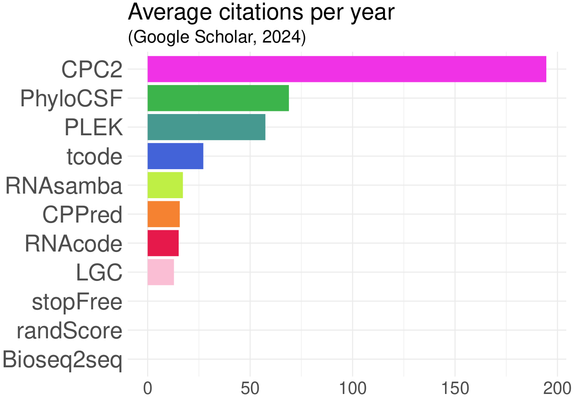
Finally, popularity turns out to be a terrible way to select a software tool. We have once again found that popular tools can be both inaccurate and slow on realistic, independent datasets. #citationmetrics 10/n
Olivia MacIsaac & I wrote an essay about our team's work supporting faculty in the P&T process for the Commonplace Futures 3.2: https://commonplace.knowledgefutures.org/32-recognition-and-rewards #P&T #incentives #citationmetrics #altmetrics #researchimpact #scholarship
Series 3.2: Recognition and Rewards

Commonplace

Here's an #introduction of @frederikhahn as part of my agenda that #nice should be a characteristic demanded of academics.

In the past few years Freddy has been gently cracking his head on how to remove bottlenecks in a #quantumNetwork. He focused on relevant #quantum states and tweaked their parts like he tweaks parts in his bike to make it run seamlessly
https://arxiv.org/abs/1805.04559
(Local complementations interest me for #quantumCompiling: the unitary encoding the repetition code can be turned into a gate between any two qubits because one can distill Bell pairs out of #GHZ states.)

Rick came from Berlin to the #quantumInformation #workshop in #benasque by train. His tap water canister was half empty: he realized that meh whatev he can travel half Europe and not eat if the food is not what he wants provided he has water to last him even more than 24 hs.

Frederik is a scientist who leads by example, is sustainably concerned about the #climateCrisis but look at him shining. His #intermittentFasting skills allowed him to be chilled after a strainous long distance travel but I learn from him that being nice and chilled is a muscle we can all train.

His integrity at work reminds me that it's not impossible to keep our humanity first and also excell at research. I wish we had an equivalent of #citationMetrics for acts of kindness in academia.

These photos were taken on a Friday, on Monday that week he defended his thesis. In style, which is his style. For his #phd hat I'd add a phone charger, his daily cycling suffices to top up the battery. I don't know how to symbolize my thanks for having made my local science world wholesome, one #introvert thought at a time, but: thank you for caring, Dr Hahn!
Quantum network routing and local complementation

Quantum communication between distant parties is based on suitable instances of shared entanglement. For efficiency reasons, in an anticipated quantum network beyond point-to-point communication, it is preferable that many parties can communicate simultaneously over the underlying infrastructure; however, bottlenecks in the network may cause delays. Sharing of multi-partite entangled states between parties offers a solution, allowing for parallel quantum communication. Specifically for the two-pair problem, the butterfly network provides the first instance of such an advantage in a bottleneck scenario. The underlying method differs from standard repeater network approaches in that it uses a graph state instead of maximally entangled pairs to achieve long-distance simultaneous communication. We will demonstrate how graph theoretic tools, and specifically local complementation, help decrease the number of required measurements compared to usual methods applied in repeater schemes. We will examine other examples of network architectures, where deploying local complementation techniques provides an advantage. We will finally consider the problem of extracting graph states for quantum communication via local Clifford operations and Pauli measurements, and discuss that while the general problem is known to be NP-complete, interestingly, for specific classes of structured resources, polynomial time algorithms can be identified.

arXiv.org

As a law prof whose tenure file the faculty will vote on this fall (and who is already somewhat suspect because I'm #LegalWriting faculty), maybe it's not my best look that my most cited article (by FAR) is on the ethics of using gender as a variable in natural-language processing research and practice—with nary a mention of the law? Please cross your fingers for me... https://aclanthology.org/W17-1601/

#LawProfs #EthicsInNLP #NLP #GenderStudies #CitationMetrics

Gender as a Variable in Natural-Language Processing: Ethical Considerations

Brian Larson. Proceedings of the First ACL Workshop on Ethics in Natural Language Processing. 2017.

ACL Anthology

You all remember Campbell’s law: when a metric becomes a target, people do stupid shit.

Citation metrics are the tail wagging the academic dog. Today I got a spam email for a new service that, as best as I can tell, will for a price spam your colleagues for you in hopes that they will cite your papers.

#CampbellsLaw #GoodhartsLaw #CitationMetrics #ScienceSpam