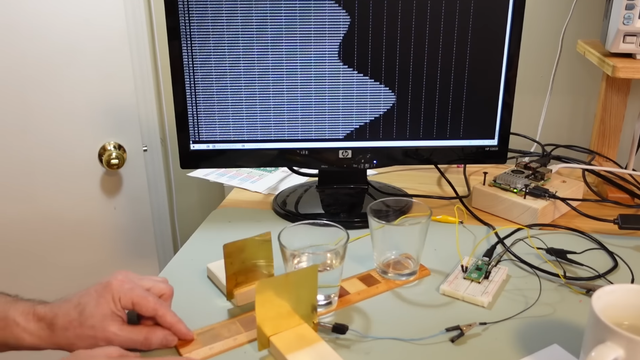
#ESP32 #touch sensors aren't just for touching. Turns out they make a passable load sensor too! I doubt they'll work to weigh things specifically, but you would be amazed by what you can do when you know, definitively, that there is weight somewhere. And your #esp32 has about a dozen pins that can do it. (Even in #esphome, kinda.. https://techhub.social/@dis/110057503427579633 )
I'm starting with the classic bed presence load sensor, divided into my side and theirs, but including extra pads for the spots the pets sleep. (With any luck, it can share a chip with the local #BigEar #BLE node, but it might be too much for one chip.) Next up is the liquid level sensor for the #hydro tower, and maybe see if I can use a load sensor one on the #esp32cam by the pet dishes to detect empty bowls instead of just staring at them.
Sources: https://community.home-assistant.io/t/bed-occupancy-sensor-using-parts-you-have/189490
https://www.hackster.io/mircemk/arduino-liquid-level-meter-with-simple-homemade-sensor-191413
#esphome #homeassistant #presence #capacitive #gooddayforwizarding @homeassistant

If your #github project uses #stalebot you are being actively hostile to your community and should stop it. I'm looking at you, #esphome, and the 4 (at least!) identical bugs indicating problems with esp_touch that were all closed by stalebot. Some of them were reproduced and started discussion and debugging before being closed. Auto-closing is for #support requests, not #bug reports. Bugs don't magically disappear just because you ignore them.
Learn To Play Guitar, Digitally
Learning to play a musical instrument takes a major time commitment. If you happened to be stuck inside your home at any point in the last two years, though, you may have had the opportunity that [Dmitriy] had to pick up a guitar and learn to play. Rather than stick with a traditional guitar, though, [Dmitriy] opted to build his own digital guitar which is packed with all kinds of features you won't find in any Fender or Gibson.
The physical body of this unique instrument is entirely designed by [Dmitriy] out of 3D printed parts, and uses capacitive touch sensors for each of the notes on what would have been the guitar's fretboard. The strings are also replaced with a set of six switches that can be strummed like a regular guitar, and are used to register when to play a note. After a few prototypes, everything was wired onto a custom PCB. The software side of this project is impressive as well; it involved creating custom firmware to register all of the button presses and transmit the information to a MIDI controller so that the guitar can communicate digitally with anything that supports MIDI.
To finish off the project, [Dmitriy] also added a wireless device as well as some other bonus features like an accelerometer, which can be used to augment the sound of the guitar in any way he can think of to program them. It's one of the most innovative guitars we've seen since the prototype Noli smart guitar was unveiled last year, and this one is also on its way from prototype to market right now.
#musicalhacks #3dprinter #capacitive #guitar #led #midi #music #switch #synthesizer #touch #wireless
Pi Pico capacitive proximity sensor test
https://diode.zone/videos/watch/49eda1bf-a2ed-4a27-ade9-36fe23e87cbc

Guitar Pickguard Adds MIDI Capabilities
For a standard that has been in use since the 1980s, MIDI is still one of the most dominant forces on the musical scene even today. It's fast, flexible, and offers a standard recognized industry-wide over many different types of electronic instruments. Even things which aren't instruments can be turned into musical devices like the infamous banana keyboard via the magic of MIDI, and it also allows augmentation of standard instruments with other capabilities like this guitar with a MIDI interface built into the pick guard.
[Ezra] is the creator of this unique musical instrument which adds quite a few capabilities to his guitar. The setup is fairly straightforward: twelve wires run to the pick guard which are set up as capacitive sensors and correspond with a note on the chromatic scale. Instead of using touchpads, using wires allows him to bend away the "notes" that he doesn't need for any particular piece of music. The wires are tied back to an Adafruit Feather 32u4 microcontroller behind the neck of the guitar which also has a few selectors for changing the way that the device creates tones. He can set the interface to emit single notes or continuously play notes, change the style, can change their octave, and plenty of other features as well.
One of the goals of this project was to increase a guitar player's versatility when doing live performances, and we would have to agree that this gives a musician a much wider range of abilities without otherwise needing a lot of complex or expensive equipment on stage. We've seen a few other MIDI-based builds focused on live performances lately, too, like this one which allows a band to stay in sync with each other.
#musicalhacks #32u4 #adafruitfeather #capacitive #guitar #live #microcontroller #midi #music #performance #pickguard #touch #wires