The Egyptian Book of the Dead: It’s Not What You Think It Is
One of my favorite things about the Egyptian Book of the Dead is the way it’s sometimes portrayed in fiction and modern media — like it’s a single, canonical book of black magic, filled with spells to wake the dead. If you play your cards right, you could become a powerful necromancer… but one wrong move and you’ll unleash a deadly curse!
From The Mummy, 1999
Take the above scene from the 1999 classic film, The Mummy, for example. There’s a heavy book with gilded, turnable pages. It’s locked, but if you hang around enough adventurers, you might just come across the mysterious key!
“It’s just a book. No harm ever came from reading a book.”
Well, that was the line spoken in the movie right before the characters opened The Book of the Dead and, consequently, resurrected a very angry Imhotep. How ironic.
Was it a terribly classic film or just classically terrible? You be the judge. Nonetheless, although I think you probably already know this: that’s not what the Book of the Dead is. In fact, it’s nothing like that at all.
Selene and I were at the Met Museum in New York a few days ago and I happened to walk by a funerary papyrus in the Egyptian wing. It reminded me of what the Book of the Dead really is. And hence, this article.
Funerary Texts
The Book of the Dead is a collection of funerary texts. The intention was to give the deceased person a set of spells, prayers, and hymns to use as they crossed over into the afterlife. Egypt was around for a long time, however, so this practice went through several different forms.
Old Kingdom (2675 – 2130 BCE): This time period is sometimes called the “Age of the Pyramids.” Funerary texts were carved directly into the walls of tombs. As such, these particular versions are known as the “Pyramid Texts.” Due to the ridiculous expense and effort it takes to carve giant scenes into stone, this was only done for royalty.
Pyramid Texts from Pyramid of Teti I in Saqqara. Public Domain. Courtesy of Wikipedia.
Middle Kingdom (1980 – 1630 BCE): This time period is considered a golden age for Egypt and was filled with expansion and trade. Funerary texts were written on the inside of rectangular coffins. Now we call them “Coffin Texts.” Since they’re slightly easier to produce when compared to the previous period, their use was expanded to also include higher-ranking government officials.
Dismantled Coffin of Khety ca. 1919–1800 B.C. with “Coffin Texts.” Public Domain, Courtesy of Wikipedia.
New Kingdom (1539 – 1075 BCE): This was probably Egypt’s most prosperous and powerful era, highlighted by imperial expansion and grand temples. At some point, they changed the shape of coffins. Instead of being rectangular, they were curved to follow the contours of a human body, which left less room to write things inside. To compensate, they started putting funerary texts on pieces of papyrus, which was easy to roll up and place inside next to the deceased. They could be used by anyone, even commoners, who could afford to buy one.
The Singer of Amun Nany’s Funerary Papyrus, ca. 1050 B.C.E. Public Domain, Courtesy of Met Museum.
Note: There are multiple schools of thought for exactly when each era started in Egypt. I’m pulling dates from the Institute of Egyptian Art and Archaeology at the University of Memphis.
With each era, additional material and new illustrations were added to the standard litany of texts, but did you notice how there wasn’t a single period that said “funerary texts were written in a book”? That’s because they weren’t ever books.
Want to hear about future posts? Subscribe to get notifications delivered straight to your inbox.
✓ Subscribed
In fact, the entire term “Book of the Dead” is a bit of a misnomer. A more accurate translation of the title would have been “Spells of Coming Forth by Day,” but I guess people thought “Book of the Dead” sounded cooler, so it stuck.
During the New Kingdom, funerary texts were written on papyri in massive quantities — we know that thousands were produced. Many of the cheaper ones most likely followed a similar format and structure… but they were almost all unique!
If you had lots of money, however, you’d probably have a “special” one commissioned just for you that was slightly more personalized.
The Papyrus of Ani
When most people say “The Book of the Dead,” they’re referring the funerary texts from the New Kingdom. Actually, they’re referring to one specific version of those funerary texts, The Papyrus of Ani, which was created for a Theban scribe named Ani upon his death sometime around 1250 BCE. Of all the surviving copies of the Book of the Dead, this one is probably the best preserved and the most richly illustrated — it contains over 60 spells and vibrant colors in the depictions.
At some point in history, this papyrus was excavated from Ani’s tomb in Thebes. In 1888, E.A. Wallis Budge “discovered” it in Luxor. And by “discovered,” I mean he “purchased it” from “antiquities dealers” for the British Museum.
Here’s the thing: it wasn’t exactly a legal transaction. It was more like a black market heist.
Budge inspected several artifacts, including The Papyrus of Ani, to make the purchase, but before he could pick everything up, Egyptian authorities discovered that illegal activities were taking place. They sent several police officers to make arrests and sealed up the homes of the antiquities dealers, locking all of the merchandise inside. They also posted guards at the doors to prevent anyone from entering.
You know what they say right? When one door closes… another one opens…
Quite naturally, Budge had several local farmers tunnel under the house’s walls to retrieve all of his purchases. Meanwhile, he distracted the police with a nice meal.
You can read all about it in his autobiography, By Nile and Tigris, if you’re curious.
Today, The Papyrus of Ani is located in the British Museum in London. Kind of seems to me like it should have been returned to Egypt… but who am I to judge?
Weighing of the Heart. A famous scene from The Papyrus of Ani. Public Domain. Courtesy of Wikipedia.
You can view the full papyrus here. Just follow the link, zoom in, and scroll.
The Egyptian Afterlife
In Ancient Egypt, the afterlife was really just a continuation of earthly existence. After you died, you got back up and went on a long journey that would take you west. West was associated with the afterlife because of the setting sun — so much so, in fact, that Egyptologist Bob Brier suggests that they basically called their dead “Westerners.” Egyptians lived on the east bank of the Nile River, so they figured the afterlife (the so-called “Field of Reeds”) was somewhere past the west bank.
It wasn’t really death like we might view death today. It was more of… waking up into a new world.
But like any adventurer, you’d need supplies. And that’s why they buried you with so much stuff! The Book of the Dead was just one of those supplies… hymns to praise deity, secret names of gods, passwords to allow entry through gates, and spells to command unruly spirits that might oppose you. If you were successful and passed all of the tests, you could live in an eternal land among the gods. If you failed, your soul would be destroyed. No pressure.
Just think about it. You wake up in a coffin. Everything seems strange and different. You’re confused for a moment, but then… oh, it’s just that you died. It’s time to start heading off into the sunset. Luckily, there’s a trusty little papyrus scroll tucked next to you with all the information you need to get started.
It would really suck to die without one of those, wouldn’t it?
The Hymn to Osiris
The Papyrus of Ani is a fairly long document but here’s an excerpt that contains a hymn to be sung in praise to Osiris.
A Hymn of Praise to Osiris Un-Nefer,
the great god who dwelleth in Abtu,
the king of eternity, the lord of everlastingness,
who traverseth millions of years in his existence.
Thou art the eldest son of the womb of Nut.
Thou wast begotten by Keb, the Erpat.
Thou art the lord of the Urrt Crown.
Thou art he whose White Crown is lofty.
Thou art the King of gods and men.
Thou hast gained possession of the sceptre of rule, and the whip,
and the rank and dignity of thy divine fathers.
Thy heart is expanded with joy,
O thou who art in the kingdom of the dead.
Thy son Horus is firmly placed on thy throne.
Thou hast ascended thy throne as the Lord of Tetu,
and as the Heq who dwelleth in Abydos.
Thou makest the Two Lands to flourish through Truth-speaking,
in the presence of him who is the Lord to the Uttermost Limit.
Thou drawest on that which hath not yet come into being
in thy name of ” Ta-her-sta-nef.”
Thou governest the Two Lands by Maat in thy name of “Seker.”
Thy power is wide-spread, thou art he of whom the fear is great
in thy name of “Usar”
Thy existence endureth for an infinite number of double henti periods
in thy name of”Un-Nefer.”
Homage to thee, King of Kings, and Lord of Lords,and Prince of Princes.
Thou hast ruled the Two Lands from the womb of the goddess Nut.
Thou hast governed the Lands of Akert.
Thy members are of silvergold, thy head is of lapis-lazuli,
and the crown of thy head is of turquoise.
Thou art An of millions of years.
Thy body is all pervading,
O Beautiful Face in Ta-tchesert.
Grant thou to me glory in heaven, and power upon earth,
and truth-speaking in the Divine Underworld,
and the power to sail down the river to Tetu in the form of a living Ba-soul,
and the power to sail up the river to Abydos in the form of a Benu bird,
and the power to pass in through and to pass out from,
without obstruction, the doors of the lords of the Tuat.
Let there be given unto me bread-cakes in the House of Refreshing,
and sepulchral offerings of cakes and ale,
and propitiatory offerings in Anu,
and a permanent homestead in Sekhet-Aaru,
with wheat and barley therein—to the Double of the Osiris, the scribe Ani.
Phew — it’s a good thing Ani didn’t have to memorize that. Lucky for him, it was all written down in his funerary papyrus, along with similar praises to several other deities.
He’s not asking for too much from Osiris, right? Basically just safe passage, some food, and a place to live in the afterlife.
If you’d like to read the full translation that Budge made of the entire Papyrus of Ani, you can do so here.
Conclusions
The Egyptian Book of the Dead, in all of its various forms, is an interesting thing to study. It obviously says a lot about how the Ancient Egyptians viewed life and death.
It was never a book, though. And there were thousands of different versions.
If you were prepping yourself for the afterlife, what would you need to bring with you? Maybe it isn’t a Hymn to Osiris or spells to command unruly spirits, but… is there something you’d need?
Don’t miss out. Here’s what’s coming up…
More Info #ancientEgypt #bookOfTheDead #comingForthByDay #egypt #egyptian #funeraryTexts #history #mythology #papyrusOfAni #spells
 U3dn
U3dn
 Sherifa Zuhur
 Essex Egyptology Group

 Antinous the Gay God
 Aerik Arkadian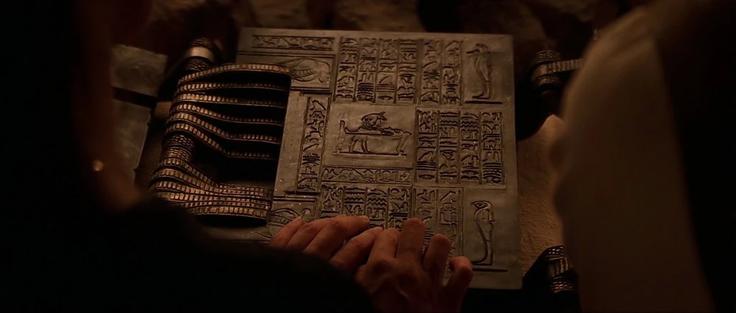
 charring auh
 Charring Auh


 Spirituality & Religious Studies