A new study in #JIPB reveals how bollworms suppress #plant defenses.
Wang et al. report #cotton bollworm effector HYPB1 targets dirigent protein GhDIR15, suppressing lignin #biosynthesis and weakening cell wall-mediated defense.
https://doi.org/10.1111/jipb.70270
@WileyLifeSci
#PlantSci #botany

🚨Special issue alert!

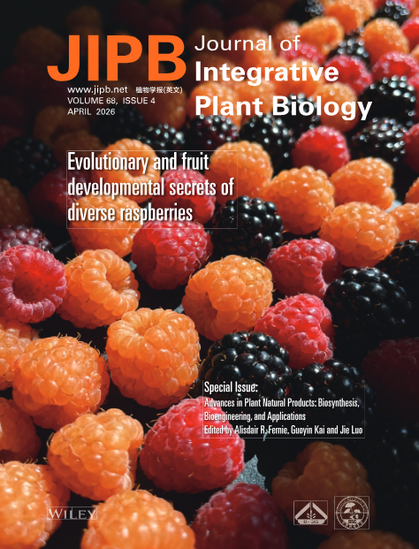
Our latest focus issue, "Advances in Plant Natural Products: Biosynthesis, Bioengineering, and Applications," is out now!

Find it here: https://onlinelibrary.wiley.com/toc/17447909/2026/68/4

@WileyLifeSci
#PlantScience #JIPB #biosynthesis #bioengineering #botany

https://medicalxpress.com/news/2026-04-millions-birth-uncover-autism-surge.html

(if past is prologue US litigiousness will not take long to board this train, this time perhaps deservedly)

Prenatal exposure to medications that inhibit #sterol #biosynthesis, including certain #antidepressants, #antipsychotics, #betablockers, and #statins, is associated with a significantly increased risk of #autism spectrum disorder in offspring, with risk rising in a dose-dependent manner…pregnancies with such exposure increased from 4.3% in 2014 to 16.8% in 2023.

Millions of US birth records uncover an autism risk surge tied to common drugs taken during pregnancy

A landmark study led by researchers at the University of Nebraska Medical Center (UNMC) and published in Molecular Psychiatry has identified a significant association between prenatal prescription of commonly utilized medications and the risk of autism spectrum disorder (ASD) in children.

Medical Xpress
🥝No one comes for our kiwis!
Song et al. report the AcLFYL1-AcCSE module enhances #kiwifruit resistance to Pseudomonas syringae pv. actinidiae by regulating #cell density and lignin #biosynthesis.
🥝Take that, canker disease!
https://doi.org/10.1111/jipb.70232
@WileyLifeSci
#PlantSci #JIPB #botany
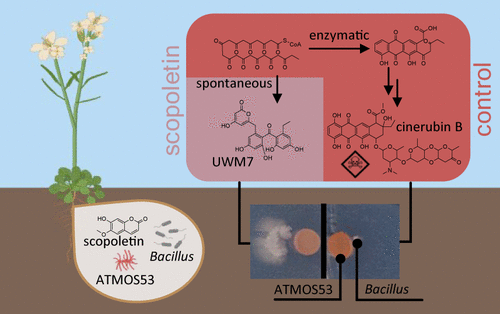
🛡️Xu et al. reveal a striking #evolutionary divergence in the regulatory mechanisms of salicylic acid #biosynthesis between N. benthamiana and #Arabidopsis.
⬇️Get a free sneak peek at this new work right here!
⚔️https://doi.org/10.1111/jipb.70214
@WileyLifeSci
#PlantScience #CropSci #JIPB
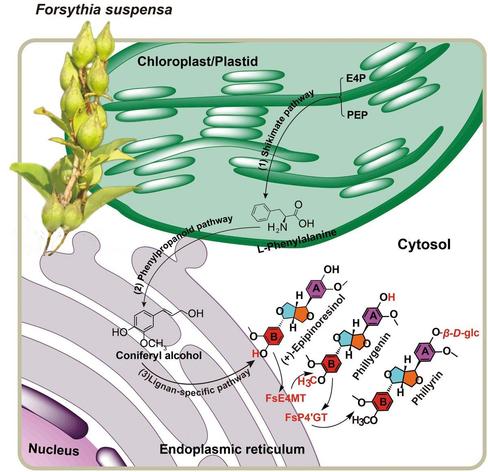
🧪Phillyrin is a unique #antiviral lignan with potent anti-#flu activity only found in Forsythia suspensa.
Wang et al. reveal key steps in its #biosynthesis, bringing us one step closer to a valuable #drug.
🔗https://doi.org/10.1111/jipb.70216
@WileyLifeSci
#PlantSci #JIPB #plant #medicine #botany

Now in Chem Sci! 🎉
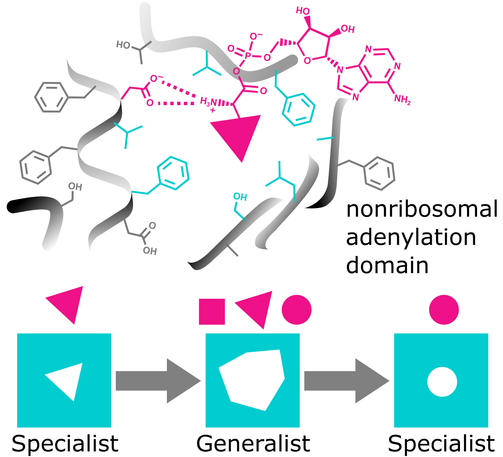
We investigated how #enzymes in the #nonribosomal #biosynthesis of life-saving #peptide #antibiotics can be engineered.
Assuming that #promiscuity serves as a springboard for #evolution, we measured the specificity profiles of hundreds of mutants. The results revealed remarkable shifts in substrate specificity in multiple directions, highlighting the evolutionary potential of these enzymes and leading the way for engineering antibiotic biosynthesis.

https://doi.org/10.1039/D6SC00250A

Ceramide synthases are crucial to sphingolipid #biosynthesis and multiple aspects of #plant #development and #pathogen #immunity.
In a fascinating new study, Zhang et al. explore regulation of CerS activity in #Arabidopsis.
🔗https://doi.org/10.1111/jipb.70081
@WileyLifeSci
#PlantSci #botany
Nanoparticles of Different Nature in Plant Biotechnology: Effectiveness, Safety, and Prospects of Application - Cytology and Genetics

Abstract Data on the biological activity of nanoparticles of various natures—metallic (Ag, Cu, Zn, Ti), silicon (Si), and carbon nanomaterials—on plants are summarized. Their influence on the growth, development, and resistance of plants to biotic and abiotic stresses at the molecular, cellular, and organismal levels is considered. Special attention is paid to nanoparticles obtained by “green” synthesis, which are characterized by high bioactivity, biocompatibility, stability, and environmental safety. The physiological and biochemical effects of the action of nanoparticles are analyzed, in particular their influence on seed germination, photosynthetic activity, antioxidant system, expression of stress-induced genes, etc. It has been demonstrated that biosynthesized nanoparticles cause a positive effect without toxicity in most cases, while chemically synthesized analogues can cause significant negative changes in plants. The advantages of biosynthesized nanoparticles are emphasized: their high level of environmental safety, fungicidal, antibacterial, and antiviral activity. The need for further research to optimize dosage, methods of application, and assessment of long-term effects of nanomaterials, taking into account the balance between efficiency and environmental safety, is emphasized. The obtained results demonstrate the prospects for the use of nanomaterials in cell biology, physiology, and biotechnology of plants.
SpringerLink