#BeeNesting Houses

Construction, placement, and maintenance

"Placing wooden bee nesting houses in your yard, garden, and around woodland edges is an effective means of increasing populations of cavity-nesting bees, especially mason and leafcutting bees. Several designs are available for purchase, so just follow the placement and maintenance recommendations offered in this fact sheet.

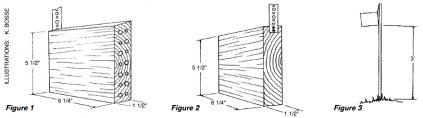
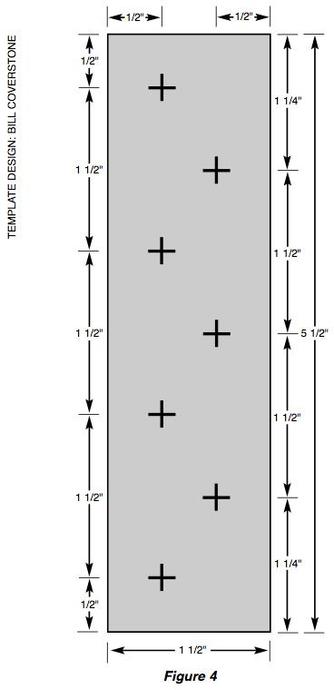
If you have woodworking skills, make your own nesting houses. The design described in this fact sheet is an adaptation of the conservation bee nesting houses used in research, modified for the tools that homeowners would have on hand.

Materials needed

- An 8-foot 2×6 makes 15 (6 1/4-inch) houses, which is more than enough houses for a quarter-acre lot. Bee houses can be made from soft or hard woods. Spruce 2x6s work well. Do not use pressure-treated wood.
- Metal 3/4-inch perforated strapping (also called plumber’s strapping or plumber’s tape).
- 1-inch or 1 1/4-inch screws for attaching the perforated strapping to the back of the bee houses.
- 3/4-inch screws if houses are attached to wood stakes, or 1 to 1 1/4-inch screws if houses are to be attached to the side of a shed or barn or to fence posts.
- 5-foot wood stakes. Two relatively inexpensive stakes can be made from a 10-foot piece of ceiling strapping.

Tools needed

- Power drill
- Drill bits with 9/64-inch, 5/16-inch, and 7/16-inch diameters
- Screw bit or screwdriver
- Circular saw or hand saw
- A sledge hammer if bee houses will be mounted on wooden stakes"

Learn more:
https://extension.umaine.edu/publications/7153e/#conservation

#SolarPunkSunday #DIY #DIYBeeHouses #BeeHouses #Pollinators #Bees #BeeConservation

The Bee That Everyone Wants to Save

My neighbour has 50 hives, the road has 30 more. That's 4 million honeybees, and not one of them is the bee that actually needs saving.

The Naturalist’s Rabbit Hole
Vi raccontiamo come si salva l'Ape Nera Sicula con la viticoltura sostenibile

È partito il progetto ''HoneyBees & Vineyard'', per la salvaguardia genetica dell'Apis mellifera sicula

Guida Sicilia
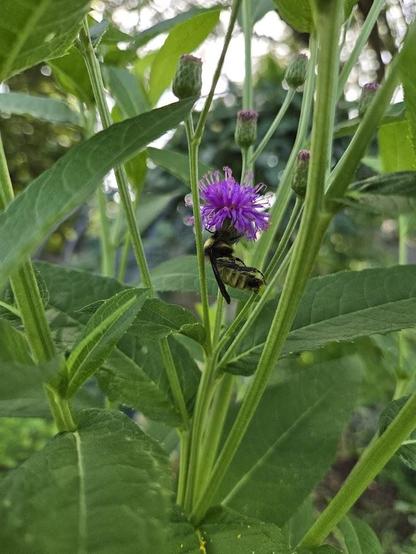
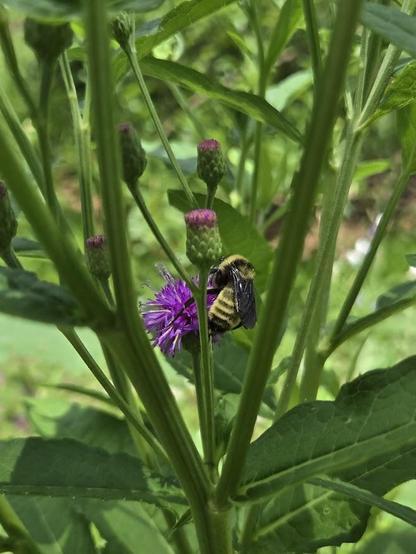
What I believe to be a male America Bumble Bee (Bombus pensylvanicus) hanging on my Missouri Ironweed (Vernonia missurica.) #invertebrateconservation, #entomology, #gardening, #nativeplants, #beeconservation, #bees, #wildflowers, #Texasnatives, #Texasgardens, #invertebrates, #naturephotography
🐝🔬 Oh, look! Scientists finally uncovered the mastermind behind the bee apocalypse, but apparently, you need to be a JavaScript wizard to unveil this earth-shattering revelation. 😂🖱️ Because, naturally, the fate of the bees hinges on cookie settings! 🍪🌐
https://www.science.org/content/article/scientists-identify-culprit-behind-biggest-ever-u-s-honeybee-die #beeApocalypse #JavaScriptScience #cookieSettings #environmentalImpact #beeConservation #HackerNews #ngated
A Field Day for the Bees – Cornflower & Thistle in Bloom

A few days ago, while hiking with my wife, we stumbled upon a sea of cornflowers (Centaurea cyanus) and thistles in full bloom — a buzzing paradise for bees. I grabbed my Canon 7D Mark II with the Sigma 100–400mm lens and captured three moments from this joyful dance of wings and petals.

Cornflowers and thistles are more than just wild beauty. They are nectar-rich species that play a crucial role in supporting pollinators like honeybees, bumblebees, and solitary bees. In an age where pollinator populations are under pressure due to habitat loss and pesticide use, seeing this thriving patch felt like a hopeful sign — a reminder of how small pieces of land can become sanctuaries.

The buzzing was almost musical, a chorus of life continuing its quiet work. It’s easy to overlook how vital these tiny creatures are. Without pollinators, most flowering plants — including many of our food crops — would struggle to reproduce.

Small flowers. Small insects. Huge impact.

#cornflower #thistle #wildflowers #pollinators #beesofinstagram #biodiversity #nederlandsenatuur #canon7dmarkii #sigma100400 #wildlifelovers #insectphotography #pollination #ecologicalbalance #natuurfotografie #summerblooms #naturemoments #meadowmagic #fieldofbees #savethebees #rewilding #beeconservation #flowersandbees #dutchlandscape #naturewalk #naturalharmony

Three beehives have been installed at Auckland Palace in County Durham to celebrate World Bee Day. The hives, part of a larger network in Bishop Auckland, will house an estimated 540,000 bees by the end of summer. The project, led by the Auckland Project, aims to restore the ecosystem and promote sustainability.

@goodnews

#goodnews #WorldBeeDay #Sustainability #BeeConservation
https://www.bbc.co.uk/news/articles/ckgxxed7lkjo

Auckland Palace's beehive project in Bishop Auckland marks World Bee Day

By the end of summer, the number of hives in Bishop Auckland will house an estimated 540,000 bees.

BBC News