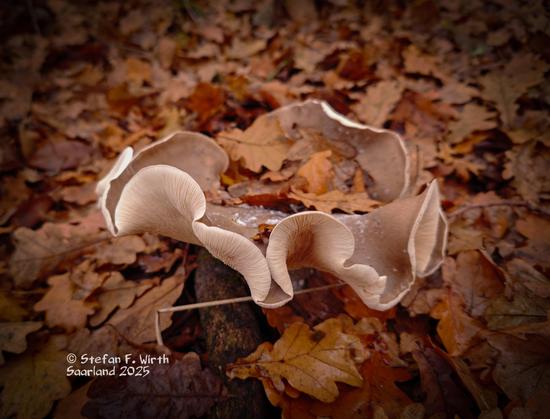
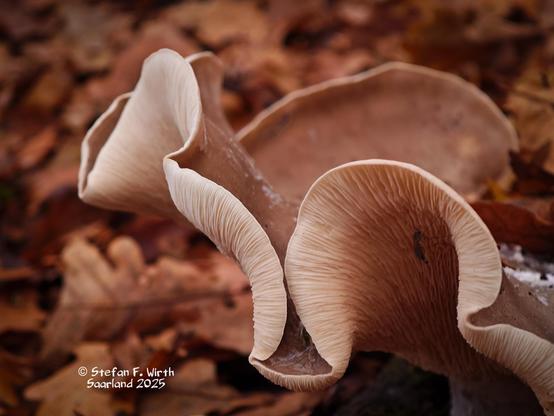
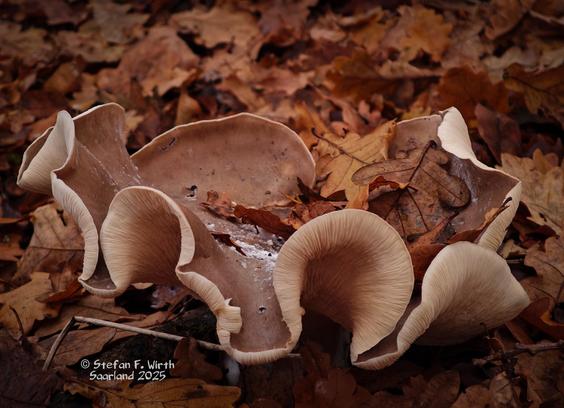
The #fungus #Clitocybe #nebularis (#Basidiomycota), also known as #cloudedagaric, is a #holarctic and often common #soildwelling #species, mostly found in open, nutrient-rich #forest #soils. It is occasionally #parasitized by the fungus #Volvariella #surrecta (Basidiomycota). C. Hears et al. (2013) point to its #antagonistic effect against phytopathogenic #oomycetes (Stramenopiles) species of the genus #Phytophthora.
Β©#StefanFWirth Saarland 2025

Ref
http://dx.doi.org/10.4236/nr.2013.42025
#Photos
Β©S F. Wirth

Leucocoprinus cretaceus (Bulliard, 1788)

Published under #CC0 here https://flic.kr/p/2rFxNKb

DxO PureRaw 5 + Darktable 5.2.1
The former is incredible for de-noising. The latter has quite the learning curve and it's gonna take a while before I build a decent workflow >_< So please consider this pic an experiment.

#Fungi #Basidiomycota #Agaricomycetes #Agaricales #Agaricaceae #Leucocoprinus #Pentax #Macro #Mushroom #Nature #Mywork #Photography

05.10.2025 16:26:28
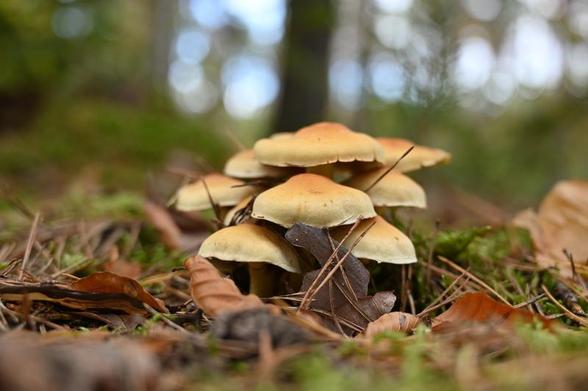
Dense cluster of gilled fungi on forest floor, with ochre to yellow-brown caps and pale stipes. Morphology suggests *Hypholoma* (sulphur tuft group). Several species in this group are toxic, making accurate identification essential. πŸ„πŸŒ²

#Mycology #Fungi #Mushrooms #Hypholoma #ForestEcology #Biodiversity #Basidiomycota

05.10.2025 15:36:19
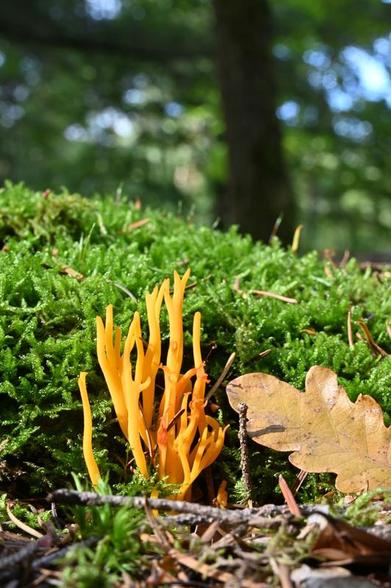
Brilliant yellow-orange basidiomycete forming slender, upright fruiting bodies on mossy forest floor. Likely Clavulinopsis fusiformis (golden spindle) or a related clavarioid fungus. πŸ„πŸŒΏ

#Mycology #Fungi #Mushrooms #Clavulinopsis #ForestEcology #Biodiversity #Basidiomycota

05.10.2025 16:29:55
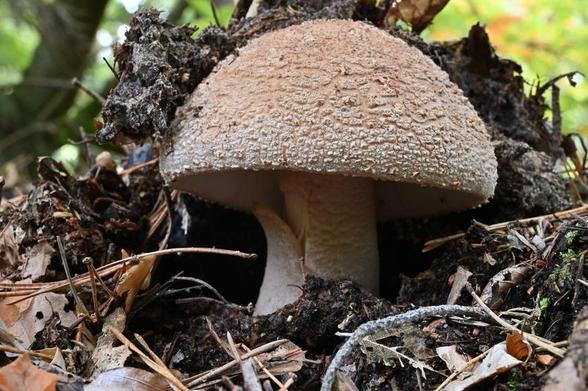
Emerging basidiomycete with scaly cap surface and pale gills, likely a young Macrolepiota (parasol mushroom) or similar taxon. Identification requires examination of stipe base, volva, and spore print. πŸ„πŸ”¬

#Mycology #Fungi #Mushrooms #FieldMycology #Biodiversity #ForestEcology #Basidiomycota

Phylogenomics, divergence times and notes of orders in Basidiomycota

https://link.springer.com/article/10.1007/s13225-024-00535-w

#fungi #mycology #basidiomycota #phylogenetics

Phylogenomics, divergence times and notes of orders in Basidiomycota - Fungal Diversity

Basidiomycota is one of the major phyla in the fungal tree of life. The outline of Basidiomycota provides essential taxonomic information for researchers and workers in mycology. In this study, we present a time-framed phylogenomic tree with 487 species of Basidiomycota from 127 families, 47 orders, 14 classes and four subphyla; we update the outline of Basidiomycota based on the phylogenomic relationships and the taxonomic studies since 2019; and we provide notes for each order and discuss the history, defining characteristics, evolution, justification of orders, problems, significance, and plates. Our phylogenomic analysis suggests that the subphyla diverged in a time range of 443–490 Myr (million years), classes in a time range of 312–412 Myr, and orders in a time range of 102–361 Myr. Families diverged in a time range of 50–289 Myr, 76–224 Myr, and 62–156 Myr in Agaricomycotina, Pucciniomycotina, and Ustilaginomycotina, respectively. Based on the phylogenomic relationships and divergence times, we propose a new suborder Mycenineae in Agaricales to accommodate Mycenaceae. In the current outline of Basidiomycota, there are four subphyla, 20 classes, 77 orders, 297 families, and 2134 genera accepted. When building a robust taxonomy of Basidiomycota in the genomic era, the generation of molecular phylogenetic data has become relatively easier. Finding phenotypical characters, especially those that can be applied for identification and classification, however, has become increasingly challenging.

SpringerLink
Mycoparasitism in Basidiomycota 

Among the over 31,000 recognized species within Basidiomycota, approximately 200 are documented as parasites of other fungi, so-called mycoparasites. They exhibit a remarkable diversity in morphological characteristics, host-parasite interaction struc

Authorea

Happy #FungiFriday!

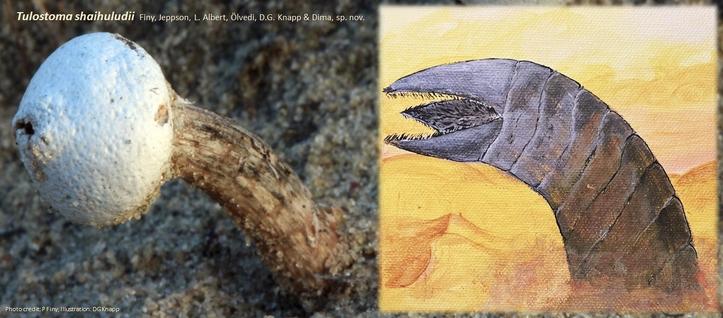
#Fungus from #Arrakis: #NewSpecies named after #Dune's giant worms https://phys.org/news/2023-11-fungus-arrakis-species-dune-giant.html

Exploring diversity within the genus #Tulostoma (#Basidiomycota, #Agaricales) in the #Pannonian sandy steppe: four fascinating novel species https://mycokeys.pensoft.net/article/112458/

"These discoveries have been particularly significant due to Hungary's #steppe vegetation on sandy soil being identified as a hotspot for the stalked #puffballs in Europe."

#Fungi #Mushrooms #Biodiversity

Fungus from Arrakis: New species named after Dune's giant worms

A new species of stalked puffball, a gasteroid fungus, has been named after the "Shai-Hulud" sandworms of Frank Herbert's iconic science fiction novel series "Dune."

I went for a #hike in the woods today and saw these beautiful #aphyllophorales.
Apparently, a polyphyletic and obsolete taxa of #basidiomycota.