#aliens #extraterrestrials #firstcontact #language #interspeciescommunication #animals #plants #bacteria #archea #protists #humans #intelligentlife

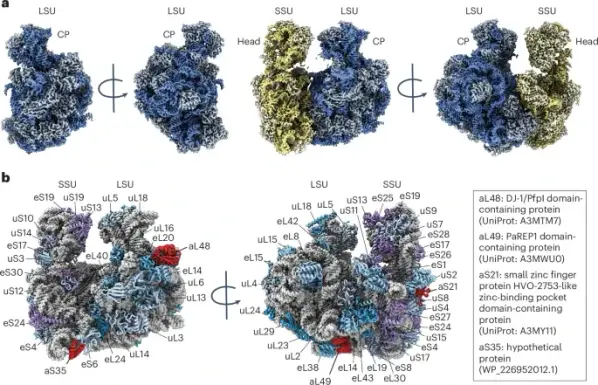
Gaze over this beautiful detail of the archeal ribosome, with the archea-only proteins in red. (The very core of the ribosome is thought to almost never change across all life)
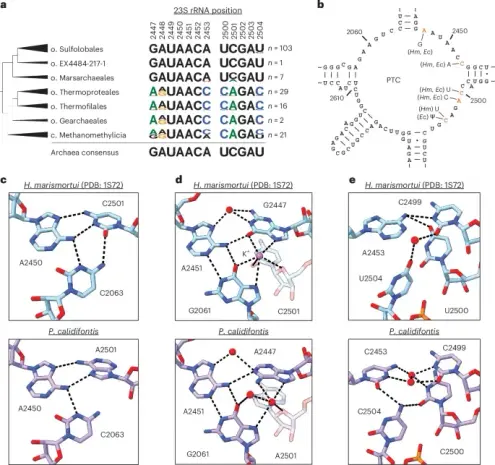
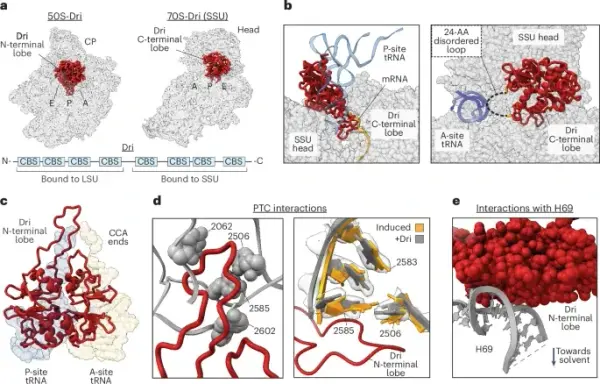
Then have a look at the amazing H-bonding network of the catalytic peptide transfer ribosomal-RNA site (Fig. 2). The tRNA entry point gets blocked by a unique protein "dual ribosomal subunit inhibitor (Dri)" under stress conditions and locks everything into place (Fig. 4).
Structure of an archaeal ribosome reveals a
divergent active site and hibernation factor | Nature Micro
"Ribosomes translate mRNA into protein. Despite divergence in ribosome structure over the course of evolution, the catalytic site, known as the peptidyl transferase centre (PTC) is thought to be nearly universally conserved. Here we identify clades of archaea that have highly divergent ribosomal RNA sequences in the PTC."
Thaumarchaeota (Mikrobiologie 🦠)
Thaumarchaeota je archeální kmen, jehož vyčlenění z kmene Crenarchaeota bylo navrženo v roce 2008 na základě sekvenace genomu Cenarchaeum symbiosum. Tato změna byla dále podpořena sekvenací genomů Nitrosopumilus maritimus a Nitrososphaera gargensis v roce 2010. Jedná se o amoniak oxidující archea. Specifickým znakem tohoto kmene je membránový lipid crenarchaeol, který se vys...
Simultaneous #aerobic and #anaerobic #respiration in a Yellowstone #thermophile challenges scientific norms
#mightymicrobes #extremophiles #chemolithotroph #genomic #metabolism #bacteria #archea #funded_by_NASA #funded_by_us
https://phys.org/news/2025-03-simultaneous-aerobic-anaerobic-respiration-yellowstone.html
Montana State University has long been a hub for research on the many unique features of nearby Yellowstone National Park, and now a doctoral student in one of the university's microbiology laboratories has published a paper on how some hot-spring-dwelling organisms thrive in their extreme environments.
Some plants are able to control soil nitrification by interfering with the activity of nitrifying bacteria and archea. Ardichvili et al. explore the consequences of control and plant preference for ammonium vs. nitrate on ecosystem productivity and more.
https://www.journals.uchicago.edu/doi/10.1086/729090
#plants #nitrifyingBacteria #archea #ammonium #nitrate #ecosystem
#Extracellular #cytochrome #nanowires appear to be ubiquitous in #microbes.
#bacteria #archea #Geobacter #bioinformatics #electron_transport #Pyrobaculum
https://phys.org/news/2023-07-extracellular-cytochrome-nanowires-ubiquitous-microbes.html
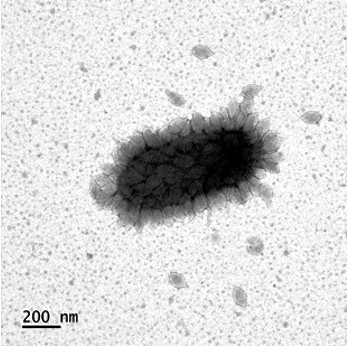
A Geobacter bacteria isolated from a contaminated ditch in Oklahoma has an unusual appendage—a long extracellular nanowire that can conduct electricity. The electron transport chain in this nanowire carries electrons from the bacteria to an insoluble external electron acceptor to help the microbe make energy. Such long-range electron transfers at a micron-scale are thought to have played an important role in microbial metabolism on the early Earth.