 HistoPol (#HP) 🏴 🇺🇸 🏴
Übersehene #Eilnachricht zur #Klimakrise:
https://mathstodon.xyz/@johncarlosbaez/114794445471034574
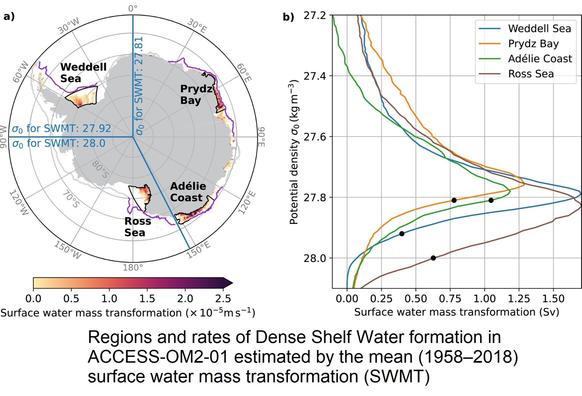
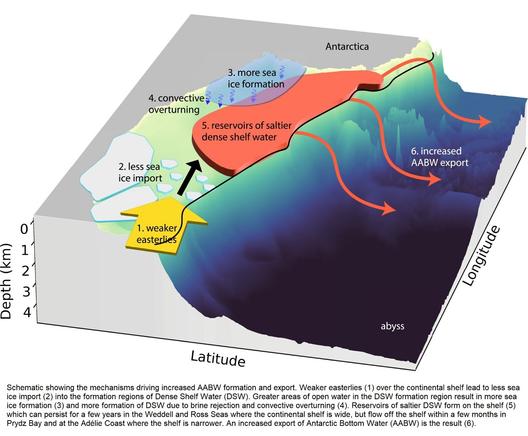
*👉Sehr bedeutsame Umkehrung der #Ozeanzirkulation im Südlichen Ozean (#SMOC) entdeckt, mit wichtigen Auswirkungen auf das #Klima👈
(1/n)
Seit längerem ist bekannt, dass sich die Zirkulation im Südozean abschwächt. So hieß es im Jahr 2023:
"Südliche #Umwälzpumpe schwächelt
#Antarktische Tiefenströmung (#AABW) könnte sich...
John Carlos Baez (@[email protected])
The Trump gang just took down a bunch of legally mandated climate assessments. Meanwhile, here in actual reality, the climate doesn't give a fuck: “We are witnessing a true reversal of ocean circulation in the Southern Hemisphere—something we’ve never seen before. While the world is debating the potential collapse of the AMOC [Atlantic Meridional Overturning Circulation] in the North Atlantic, we’re seeing that the SMOC is not just weakening, but has reversed. This could have unprecedented global climate impacts.” That's a quote from Antonio Turiel, one author of a new paper in the Proceedings of the National Academy of Sciences. This study found that since 2016, the water in parts of the Antarctic Ocean is getting more salty. This suggests that the deep ocean circulation in the southern hemisphere—known as the SMOC—has reversed. Instead of sinking into the depths, surface water is now being replaced by deep water coming up to the surface. This reversal seems to be driving the accelerated melting of sea ice in the Antarctic Ocean: https://www.icm.csic.es/en/news/major-reversal-ocean-circulation-detected-southern-ocean-key-climate-implications This web page from the Institut de Ciències del Mar says "In the long term, this process could double current atmospheric CO₂ concentrations by releasing carbon that has been stored in the deep ocean for centuries—potentially with catastrophic consequences for the global climate." But never mind, just close your eyes. Don't read this: • Alessandro Silvano et al, Rising surface salinity and declining sea ice: A new Southern Ocean state revealed by satellites, https://www.pnas.org/doi/10.1073/pnas.2500440122
 💧🌏 Greg Cocks


 Judith Hauck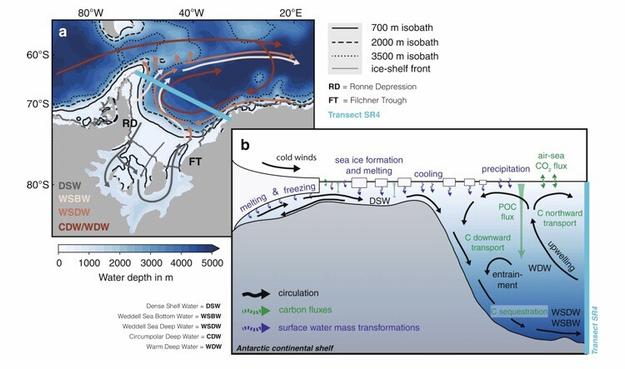
 Scientific Frontline